You may also like:
- 【Explained】How Long Does It Really Take to Charge a Car Battery? Complete Guide
- 【Explained】Can Audi Charge at Tesla Supercharger?
- 【Guide】Audi Electrify America Free Charging: (A Full Guide)
- 【Explained】Can BMW Charge at Tesla Supercharger? The NACS Adoption Timeline Explained
- 【2025】Top 5 Best Audi Electric Cars Ranked
The best EV charger for most homeowners in 2025 is a Level 2, UL-listed smart charger like the ChargePoint Home Flex ($549) or Emporia 48 Amp, offering WiFi connectivity for scheduling off-peak charging rates and tracking energy usage through mobile apps. For future-proofing with both J1772 and NACS connectors, the Tesla Universal Wall Connector provides compatibility with every electric vehicle on the market, while the Grizzl-E Classic ($379) remains the top choice for those wanting bulletproof durability without smart features.
Top 7 Best EV Chargers for 2025 (Ranked Reviews)
Selecting the right home EV charger transforms your electric vehicle ownership experience from range anxiety to confident daily driving. These seven models represent the pinnacle of home charging technology for 2025, each excelling in specific areas crucial to different EV owners.
1. ChargePoint Home Flex – Best Overall Smart Charger

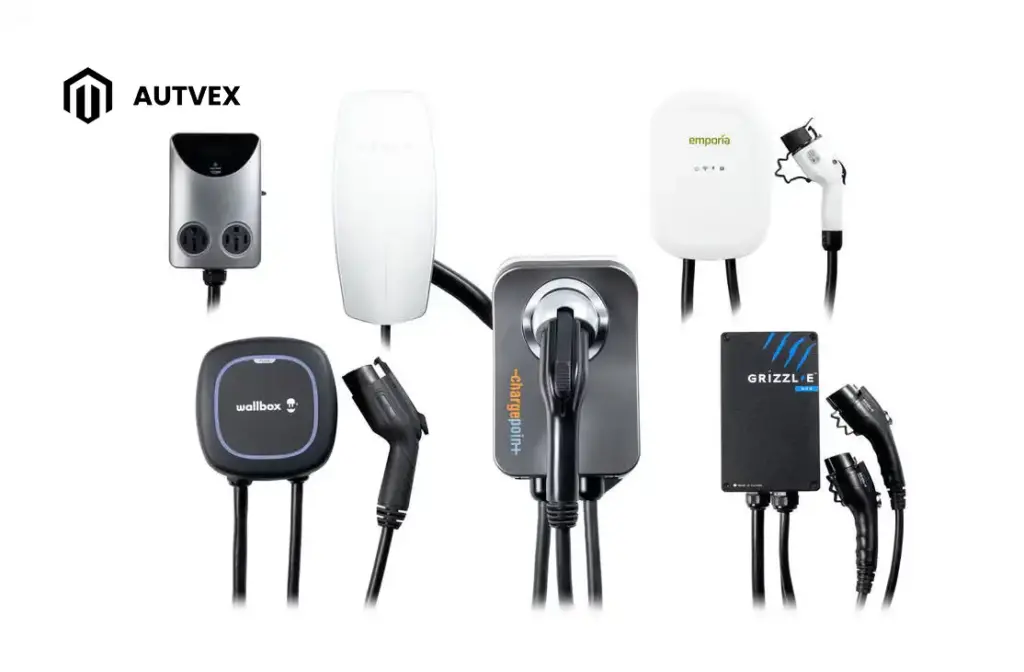
The ChargePoint Home Flex dominates the smart charging category with its adjustable 16-50 amp output and seamless integration into ChargePoint’s nationwide public charging network[1]. At $549 for the hardwired version and $599 for plug-in models, it delivers exceptional value through its comprehensive app ecosystem that tracks charging costs down to the penny.
The Home Flex’s standout feature is its nuanced cost tracking, allowing selection from dozens of utility rate plans to calculate exact charging expenses. The app displays real-time charging graphs, total energy output, and EPA miles added specific to your vehicle model. With 23-foot cable length and built-in cable management, installation proves straightforward whether you choose NEMA 14-50 or hardwired configuration.
ChargePoint’s three-year warranty and 24/7 phone support provide peace of mind, while over-the-air updates ensure your charger improves over time. The NEMA 3R outdoor rating handles most weather conditions, though it’s less robust than some competitors. Understanding Audi Electrify America free charging programs helps appreciate why smart chargers with detailed tracking matter for maximizing EV incentives.
2. Emporia 48 Amp EV Charger – Best Energy Monitoring

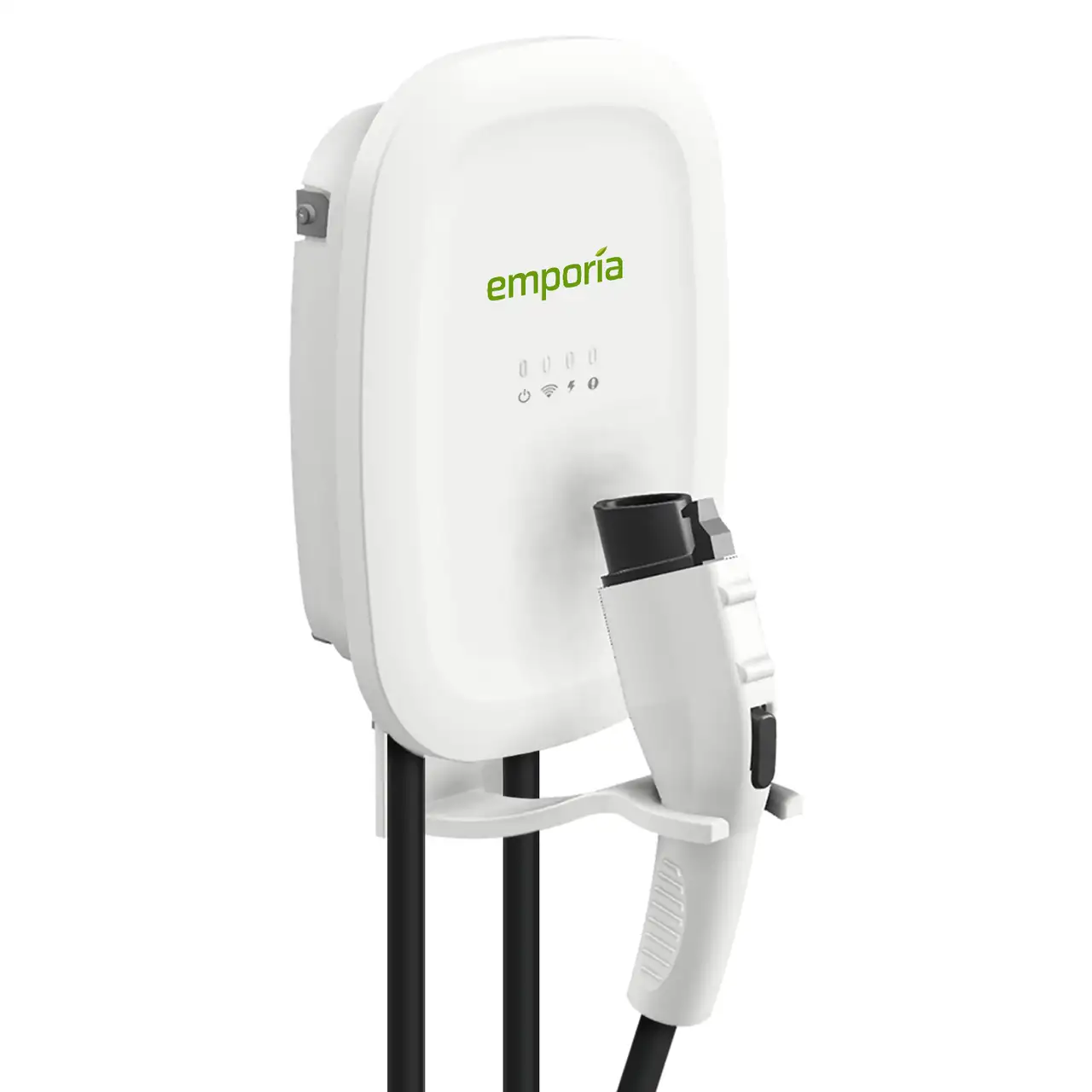
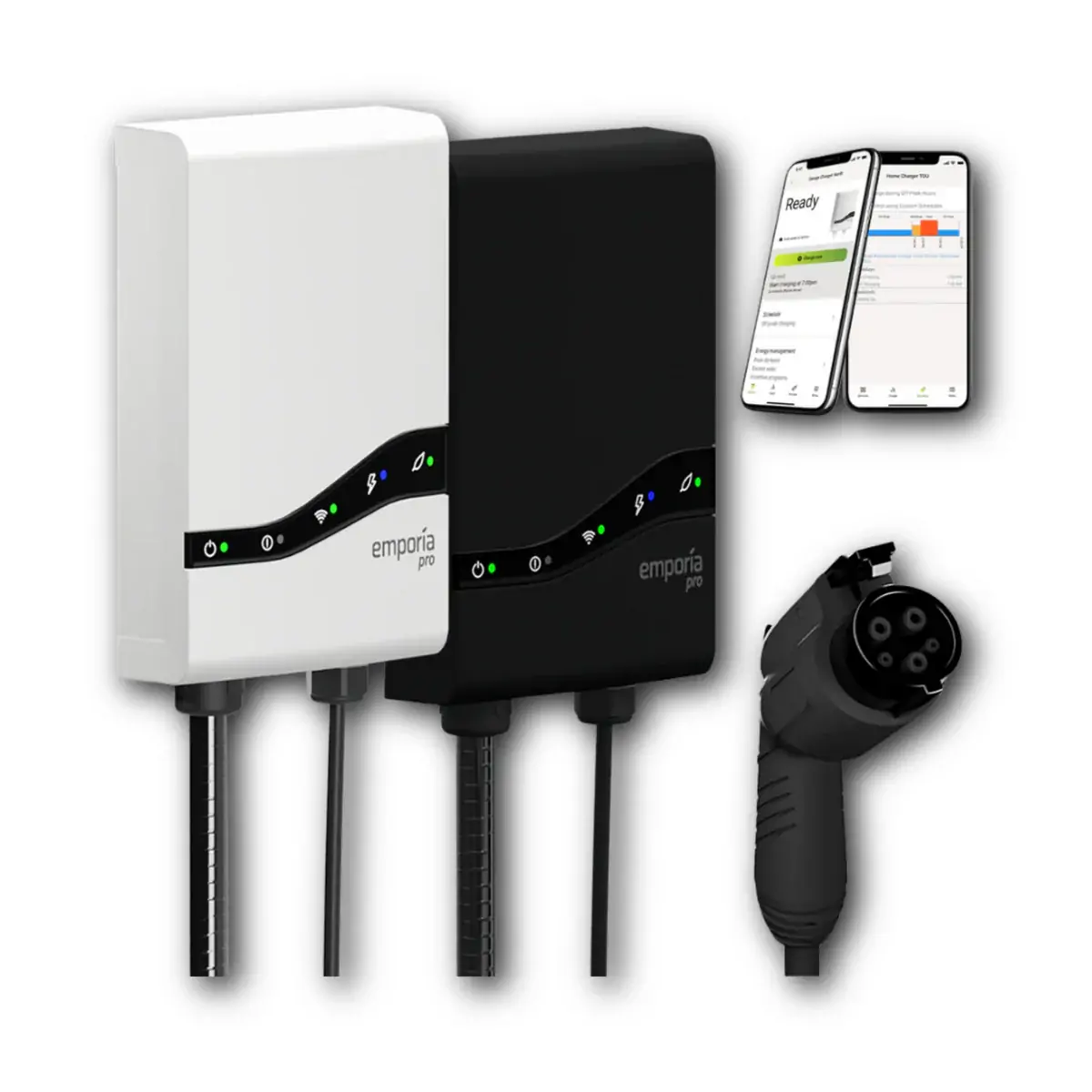
Emporia’s 48-amp charger excels at comprehensive energy monitoring, integrating with the company’s broader home energy management ecosystem. Priced competitively at around $400-450, it delivers 11.5kW charging speeds while providing granular insights into your home’s total energy consumption[2].
The Emporia app stands out for its ability to monitor your entire home’s electrical usage when paired with their Vue energy monitor. This integration lets you optimize charging schedules based on real-time solar production or identify the most cost-effective charging windows. The charger automatically adjusts output to prevent overloading your electrical panel during peak usage.
Budget-conscious buyers appreciate Emporia’s transparent pricing and frequent promotions. The WiFi-enabled unit receives regular firmware updates, and the company’s responsive customer service handles issues promptly. For solar homeowners or those focused on energy independence, Emporia provides unmatched visibility into charging efficiency.
3. Grizzl-E Classic – Most Reliable Non-Smart/Durable Option

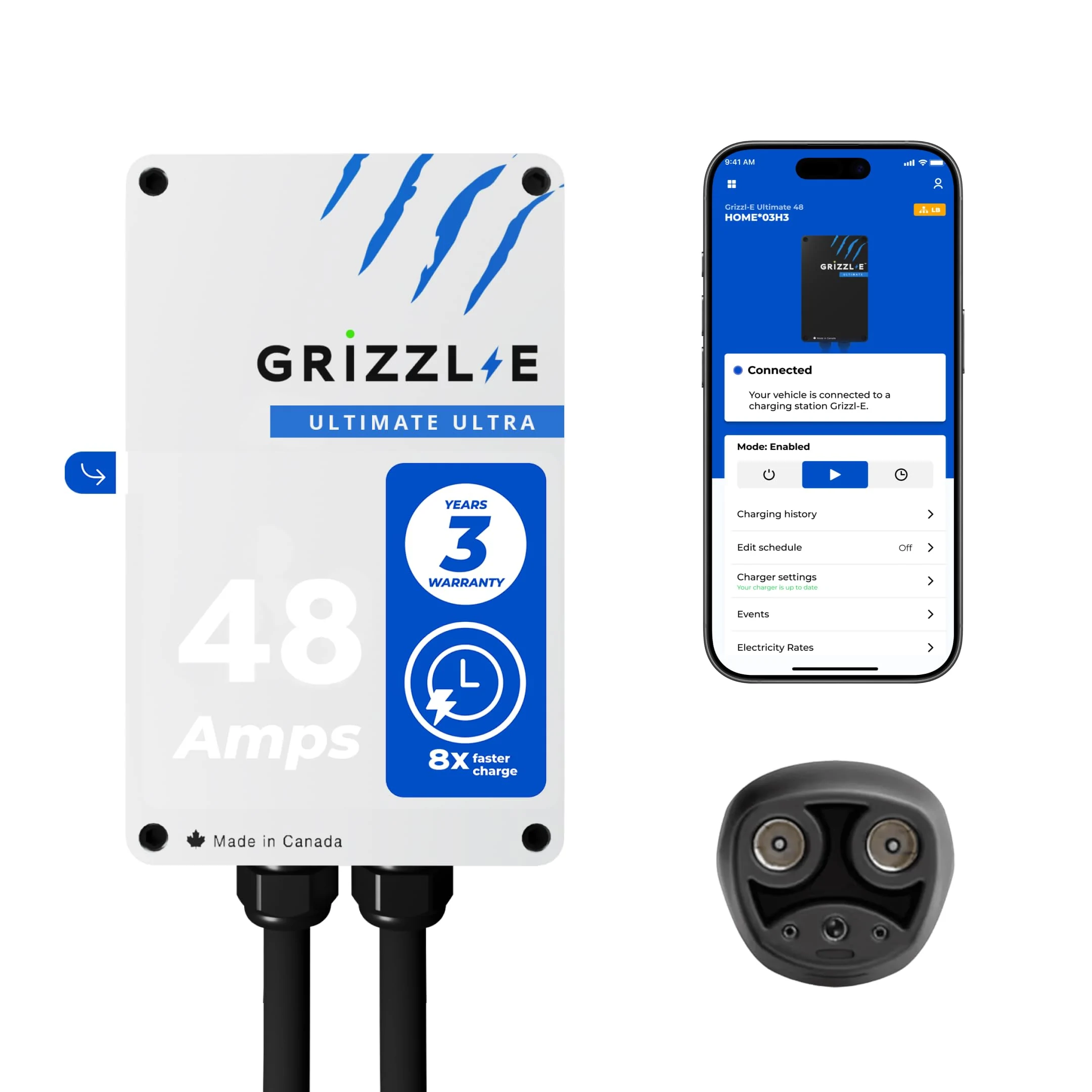
The Canadian-built Grizzl-E Classic proves that simplicity equals reliability. At $379-$432, this non-smart charger delivers consistent 40-amp charging through an incredibly durable aluminum housing rated IP67 for complete weather protection[3]. United Chargers demonstrated its toughness by driving over it with an SUV and dunking it in a frozen lake—it still worked perfectly.
Without WiFi or app connectivity, the Grizzl-E Classic eliminates potential failure points while maintaining adjustable amperage settings (16/24/32/40A) via internal DIP switches. The 24-foot cable remains flexible even at -9°F, crucial for outdoor installations in harsh climates. Its fire-resistant metal case and comprehensive safety certifications (UL, cUL) ensure worry-free operation for decades.
According to Autvex experts, the Grizzl-E Classic represents the best value for EV owners who simply want reliable charging without subscription services or app management. The unit’s proven track record in Canadian winters and desert heat makes it ideal for extreme climate installations.
4. Wallbox Pulsar Plus – Best Compact Design

Wallbox’s Pulsar Plus packs sophisticated features into the market’s smallest footprint at just 6.9″ x 3.1″ x 2.4″[2]. The $599 charger delivers 48-amp charging while offering both WiFi and Bluetooth connectivity, ensuring reliable app communication even during internet outages.
The compact design proves invaluable for tight garage spaces or aesthetic-conscious installations. Despite its size, Pulsar Plus includes advanced features like dynamic load balancing, power sharing between multiple units, and integration with solar systems through their Eco-Smart mode. The myWallbox app provides scheduling, energy tracking, and voice control through Alexa or Google Assistant.
European engineering shows in the build quality and attention to detail. The 25-foot cable provides adequate reach, though some competitors offer longer options. For homeowners prioritizing clean installation aesthetics without sacrificing functionality, Pulsar Plus delivers premium appeal. Compare this to the 2025 BMW 2-Series design philosophy of maximizing capability in compact dimensions.
5. Tesla Universal Wall Connector – Best for Tesla and NACS

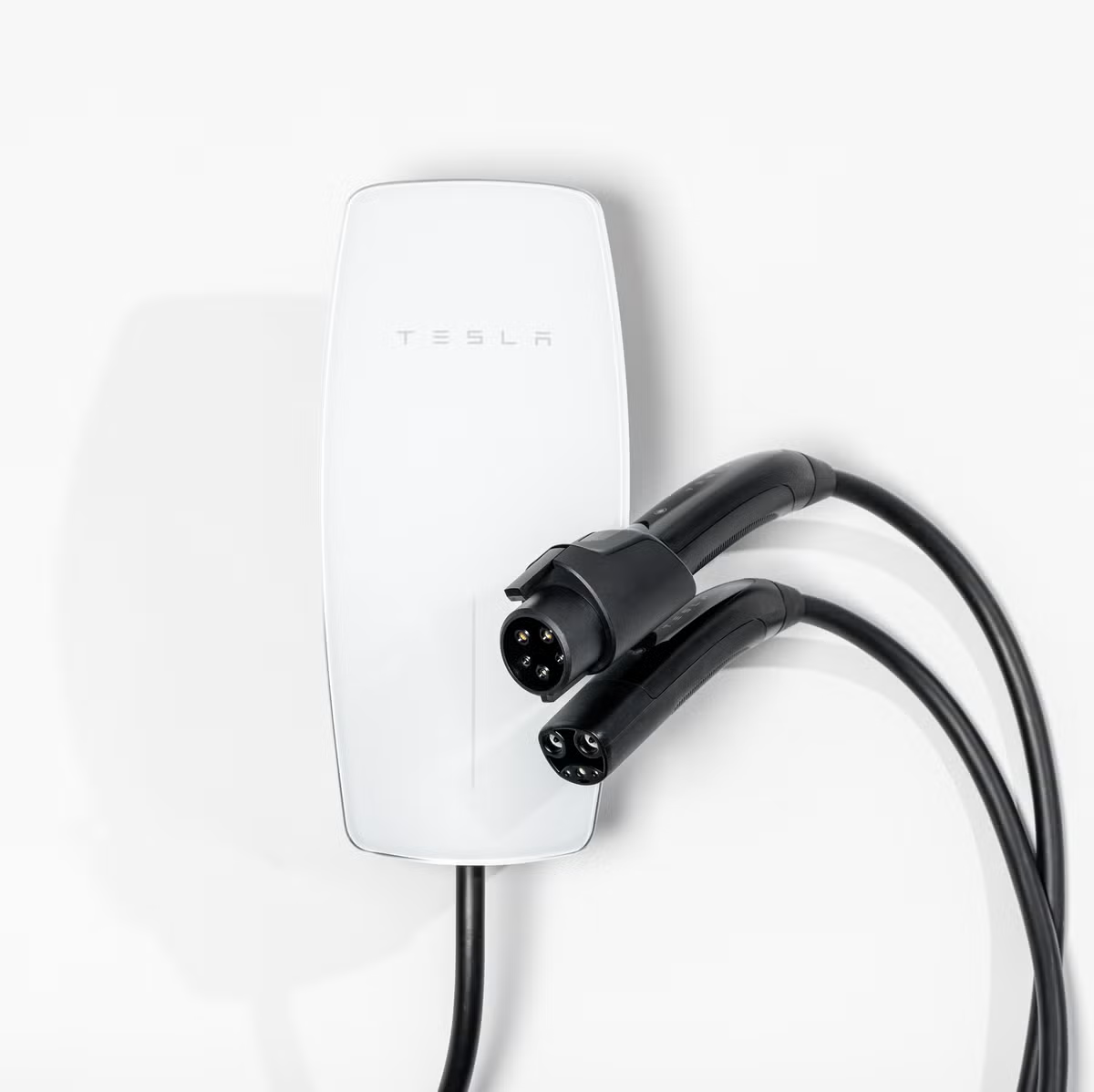
Tesla’s Universal Wall Connector revolutionizes charging compatibility with its integrated J1772 adapter that retracts into the charger body when not needed[4]. At approximately $595, it provides 48-amp charging for any EV while maintaining Tesla’s signature minimalist aesthetic and robust app integration.
The Universal model future-proofs your investment as automakers transition to Tesla’s NACS standard by 2025-2026. The built-in adapter eliminates the need for separate dongles, reducing clutter and potential failure points. Tesla’s app offers sophisticated features including Charge on Solar for Powerwall owners, dynamic power management, and group power sharing for multi-vehicle households.
Installation flexibility spans 15-60 amp circuits, with the charger automatically adjusting output based on breaker size. The 24-foot cable and outdoor-rated enclosure handle all weather conditions. For households with mixed Tesla and non-Tesla vehicles, or those anticipating the NACS transition, this charger eliminates compatibility concerns.
6. Enel X Way JuiceBox 40 – Best Smart Features

The JuiceBox 40 combines proven reliability with comprehensive smart features at a $500-600 price point. This 40-amp charger integrates with JuiceNet’s platform, offering sophisticated energy management including automatic charging during lowest carbon intensity periods and demand response programs that earn rebates[2].
JuiceBox’s strength lies in its open API and integrations with smart home platforms, solar systems, and time-of-use rate plans. The app provides detailed charging analytics, scheduled charging, and notifications. The unit’s rugged construction withstands outdoor installation, while the 25-foot cable reaches most parking configurations.
Long-term reliability proves excellent based on user reports, with many units operating flawlessly for 5+ years. The slightly dated app interface represents the main drawback compared to newer competitors. For tech-savvy users wanting maximum integration options and proven dependability, JuiceBox delivers exceptional value.
7. Autel MaxiCharger Home – Best Modern Design & App

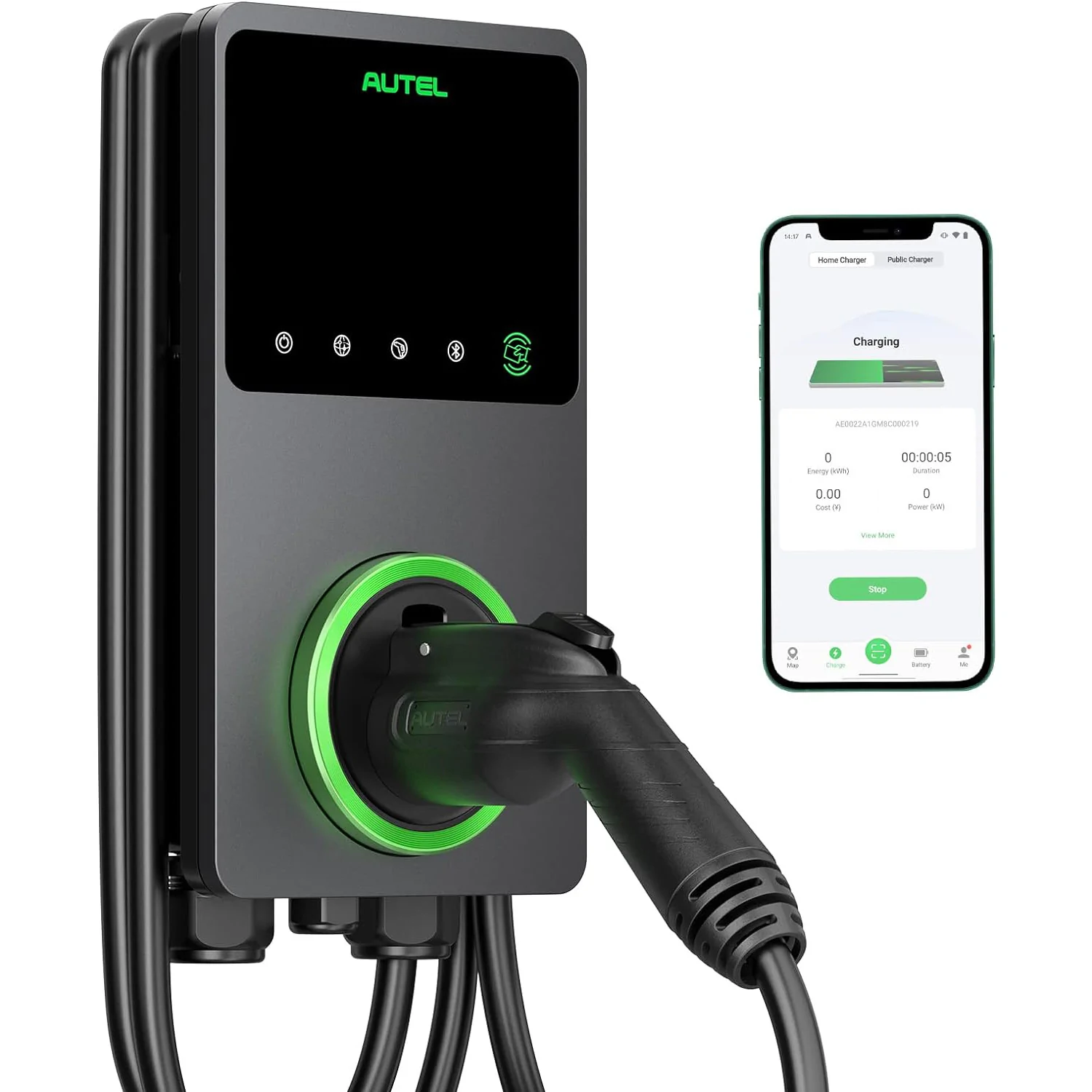
Autel’s MaxiCharger combines striking aesthetics with robust functionality, offering 50-amp charging capacity in a sleek package priced around $550-650. The charger features WiFi, Bluetooth, and optional 4G connectivity, ensuring reliable communication regardless of garage internet quality[2].
The Autel app stands out for its modern interface and comprehensive features including scheduled charging, dynamic load balancing, and detailed energy reports. The charger’s premium build quality includes a tempered glass faceplate and customizable LED status indicators. With IP65 weatherproofing and -22°F to 122°F operating range, it handles diverse climates confidently.
As a newer market entrant, Autel brings fresh innovation but lacks the long-term track record of established brands. However, their automotive diagnostic tool reputation and responsive customer support inspire confidence. For buyers prioritizing contemporary design and cutting-edge app functionality, MaxiCharger delivers impressive capability.
Level 2 vs Level 1 Charger Differences
Understanding the fundamental differences between charging levels helps justify the investment in Level 2 home charging infrastructure for serious EV ownership.
What’s the Difference Between Level 1 and Level 2 EV Charger
Level 1 charging uses a standard 120V household outlet, delivering approximately 1.4kW of power that adds 3-5 miles of range per hour. Level 2 charging requires a 240V circuit similar to a dryer outlet, providing 3.8-19.2kW that adds 12-60 miles of range hourly[5]. This fundamental voltage difference creates the dramatic charging speed disparity.
The practical impact becomes clear through real-world examples. A depleted Tesla Model 3 Long Range with a 75kWh battery takes approximately 3 days to fully charge on Level 1, versus 8-10 hours on Level 2. For daily commuters driving 40 miles, Level 1 requires 8-13 hours of charging overnight, while Level 2 completes the task in 1.5-3 hours.
240V EV Charger Speed Benefits
The 240V power delivery transforms EV ownership from careful planning to convenient flexibility. Level 2 chargers operating at 40 amps deliver 9.6kW, replenishing a typical EV battery from 20% to 80% in 4-6 hours[1]. This speed enables opportunity charging during short stops, making EVs practical for spontaneous trips.
Higher voltage also improves charging efficiency. Level 2 charging operates at approximately 88-94% efficiency compared to Level 1’s 85-90%, reducing electricity waste and lowering costs. The reduced charging time minimizes battery heating, potentially extending battery lifespan through gentler thermal cycling.
Why Level 2 is 5-7 Times Faster
The physics behind Level 2’s speed advantage involves both voltage and amperage increases. While Level 1 maxes out at 12-16 amps on a 120V circuit (1.4-1.9kW), Level 2 delivers 16-50 amps at 240V (3.8-12kW). This combination creates a 5-8x power delivery increase[5].
Modern EVs’ onboard chargers determine maximum AC charging acceptance. Most vehicles accept 7.2-11.5kW, making 32-48 amp Level 2 chargers ideal for maximizing charging speed without exceeding vehicle capabilities. Understanding these limits prevents overspending on excessive charging capacity your EV cannot utilize.
Home Electrical Requirements
Installing Level 2 charging requires adequate electrical service capacity. Most modern homes with 200-amp service panels easily accommodate a 40-50 amp EV charger circuit. Older homes with 100-amp panels may require panel upgrades costing $1,500-3,000[6].
Installation requirements include:
- Dedicated circuit breaker: 50-amp for 40-amp charger, 60-amp for 48-amp charger
- Appropriate wiring: 6 AWG copper for 50-amp, 4 AWG for 60-amp circuits
- NEMA outlet or hardwire connection: NEMA 14-50 most common for plug-in
- Proper grounding: Essential for safety and equipment protection
- Permit and inspection: Required by most jurisdictions
Smart vs Non-Smart EV Chargers
The choice between smart and non-smart chargers significantly impacts your charging experience, costs, and long-term satisfaction with home EV charging.
Best Smart EV Charger Features
Smart chargers justify their premium pricing through features that optimize charging costs and convenience. Scheduled charging allows programming to utilize off-peak electricity rates, potentially saving $500-1,000 annually[2]. Real-time monitoring provides insights into energy consumption patterns, helping identify optimization opportunities.
Advanced features include:
- Dynamic load balancing: Prevents circuit overload during peak home usage
- Solar integration: Charges using excess solar production
- Voice control: Alexa/Google Assistant compatibility
- Access control: Restrict charging to authorized users
- Over-the-air updates: Continuous improvement and bug fixes
Best WiFi EV Charger Benefits
WiFi connectivity transforms EV charging from a passive to an active energy management tool. Remote monitoring allows checking charging status from anywhere, eliminating garage trips to verify completion. Push notifications alert you to charging interruptions, complete charges, or unauthorized usage attempts.
Integration with utility programs provides additional value. Many utilities offer demand response programs paying EV owners to reduce charging during grid stress events. Time-of-use rate optimization can reduce charging costs by 30-50% compared to flat-rate billing. These savings often offset smart charger premiums within 1-2 years.
EV Charger with App Advantages
Mobile apps serve as command centers for modern EV charging, providing capabilities impossible with basic chargers. Detailed charging history helps track expenses for tax deductions or employer reimbursement. Energy reports identify patterns enabling further optimization.
The best apps offer:
- Vehicle-specific tracking: Multiple EV management
- Cost calculators: Real-time expense monitoring
- Guest access: Temporary charging permissions
- Maintenance reminders: Firmware updates and service alerts
- Integration capabilities: Smart home ecosystems
According to Autvex research, households with app-enabled chargers report 25% higher satisfaction scores than those with basic units, primarily due to cost savings visibility and convenience features.
Best ‘Dumb’ EV Charger (Non-Smart) Options
Non-smart chargers excel through simplicity, reliability, and value. The Grizzl-E Classic leads this category with bulletproof construction and straightforward operation at $379[3]. Without apps, WiFi modules, or cloud dependencies, these units eliminate common failure points and privacy concerns.
Benefits of non-smart chargers:
- Lower initial cost: $200-300 less than comparable smart units
- No subscription fees: Avoid monthly app charges
- Enhanced reliability: Fewer components to fail
- Privacy protection: No data collection or sharing
- Simple operation: Plug in and charge
For second homes, rental properties, or technology-averse users, non-smart chargers provide hassle-free charging without complexity. Understanding how long does it take to charge a car battery helps appreciate the consistency non-smart chargers provide.
Connector Types: J1772 vs NACS
The charging connector landscape is rapidly evolving as the industry transitions toward standardization, making connector compatibility crucial for future-proofing your investment.
Best J1772 EV Charger (For Non-Tesla)
J1772 remains the dominant standard for non-Tesla EVs in North America, used by virtually every EV manufacturer except Tesla through 2024[7]. This five-pin connector handles Level 1 and Level 2 AC charging up to 19.2kW, though most vehicles accept 7.2-11.5kW maximum.
Top J1772 chargers include:
- ChargePoint Home Flex: Industry-leading app ecosystem
- Wallbox Pulsar Plus: Compact design with full features
- JuiceBox 40: Proven reliability and smart features
- Emporia 48 Amp: Excellent energy monitoring
The J1772 standard’s maturity means extensive compatibility, competitive pricing, and proven reliability. Replacement parts and service remain widely available. For current non-Tesla EV owners not planning vehicle changes soon, J1772 chargers offer the best value.
Best NACS EV Charger (For Tesla)
Tesla’s North American Charging Standard (NACS) gains momentum as major automakers announce adoption by 2025-2026. Ford, GM, Rivian, Mercedes, and others committed to NACS, positioning it as the future charging standard[7]. Tesla’s Supercharger network access represents a significant advantage for NACS adoption.
NACS benefits include:
- Smaller, lighter connector: Easier handling
- Single connector for AC/DC: Simplified design
- Higher power potential: Supports up to 1MW theoretically
- Tesla Supercharger access: 12,000+ fast charging locations
Pure NACS home chargers remain limited primarily to Tesla’s offerings. However, the transition period means most buyers should consider dual-compatibility options rather than single-standard units.
Best EV Charger for Tesla and Non-Tesla
The Tesla Universal Wall Connector revolutionizes multi-standard charging with its integrated J1772 adapter, eliminating compatibility concerns for $595[4]. This elegant solution supports every current EV while preparing for the NACS future.
Dual-compatibility advantages:
- Universal charging: One charger for all household EVs
- Future-proof investment: Ready for NACS transition
- Simplified installation: Single unit versus multiple chargers
- Guest charging: Accommodate any visitor’s EV
- Resale value: Appeals to broadest buyer pool
ChargePoint and other manufacturers now offer NACS versions of popular models, recognizing the transitional market reality. Choosing dual-compatible chargers ensures your investment remains relevant regardless of future vehicle purchases.
J1772 to NACS Adapter Options
Adapters bridge the compatibility gap during the transition period. Tesla provides J1772-to-Tesla adapters with vehicles, while third-party manufacturers offer various solutions. Quality varies significantly, making OEM adapters preferable for safety and reliability.
Adapter considerations:
- Current rating: Ensure adapter matches charger output
- Build quality: Cheap adapters risk overheating
- Locking mechanism: Prevents unauthorized removal
- Weather resistance: Critical for outdoor use
- Warranty coverage: May void charger/vehicle warranties
Long-term adapter use proves cumbersome, making native dual-compatibility chargers preferable. Learn about can Audi charge at Tesla Supercharger to understand evolving charging compatibility.
Installation and Amperage Options
Choosing the right installation method and amperage rating significantly impacts charging speed, installation costs, and long-term flexibility.
Best NEMA 14-50 Plug-In EV Charger
NEMA 14-50 outlets provide the most popular plug-in charging solution, supporting up to 40-amp continuous loads (50-amp circuit). This configuration delivers 9.6kW charging, adding 30-35 miles of range hourly for most EVs[1]. Installation costs range from $300-800 for simple garage installations.
Top NEMA 14-50 chargers:
- Grizzl-E Classic: Bulletproof reliability at $379
- ChargePoint Home Flex: Smart features with plug flexibility
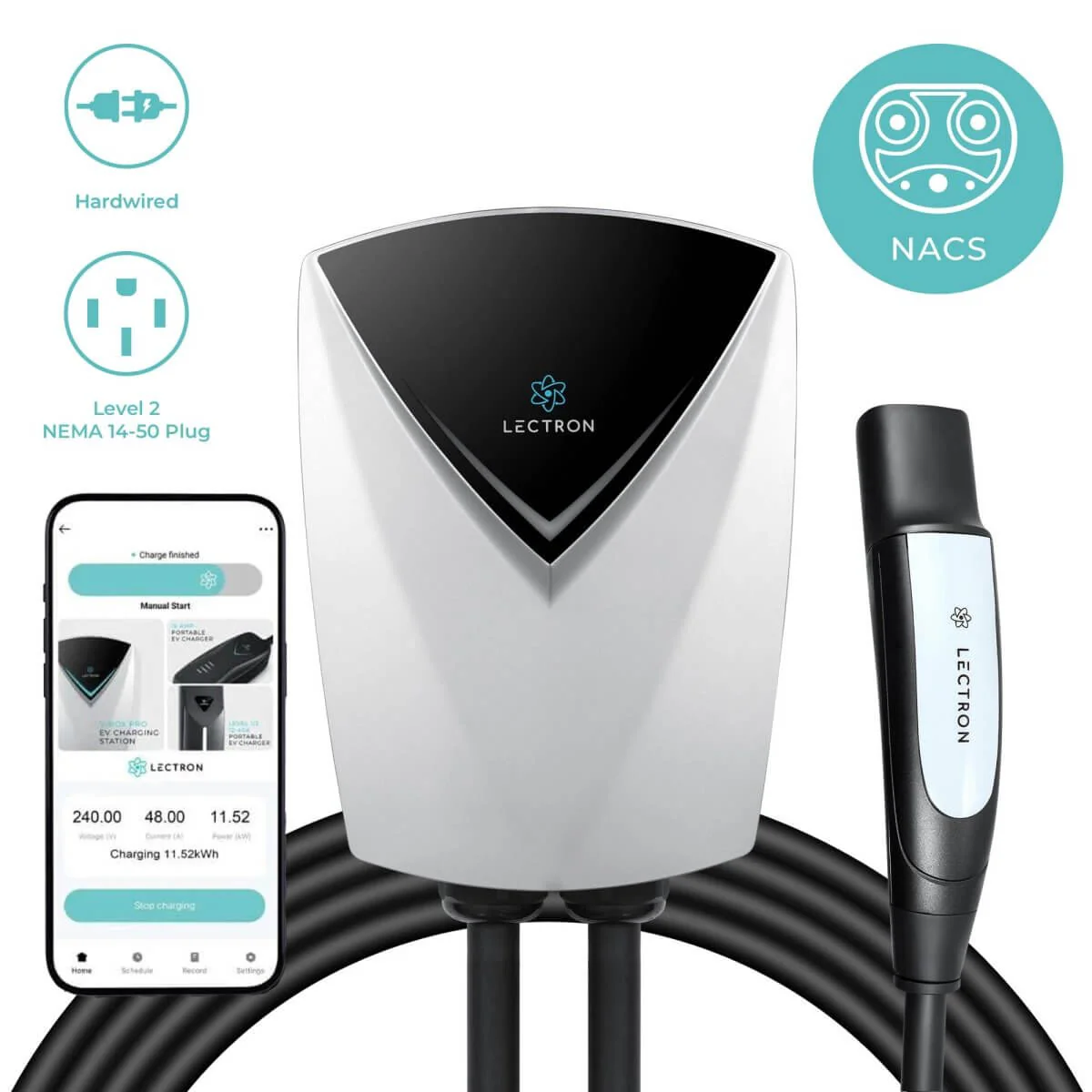
- Lectron V-Box: Budget option under $300
- ClipperCreek HCS-50P: Made in USA quality
Plug-in advantages include portability for renters, easy replacement if damaged, and lower installation costs versus hardwiring. However, plugs represent potential failure points and limit charging to 40 amps maximum.
Best Hardwired EV Charger
Hardwired installation enables maximum charging speeds up to 50-60 amps while eliminating plug connection concerns. Direct wire connections prove more reliable long-term and comply with some local codes requiring hardwired installations above 40 amps[6].
Leading hardwired options:
- Tesla Universal Wall Connector: 48-amp capacity
- ChargePoint Home Flex: Adjustable 16-50 amps
- Autel MaxiCharger: 50-amp maximum output
- Wallbox Pulsar Plus: 48-amp in compact form
Hardwiring costs $500-1,500 depending on circuit length and complexity. The permanent installation suits homeowners planning long-term residence. Professional installation ensures code compliance and safety.
48 Amp vs 40 Amp EV Charger Comparison
The 48-amp versus 40-amp decision impacts charging speed, installation requirements, and costs. A 48-amp charger delivers 11.5kW adding 35-44 miles hourly, while 40-amp provides 9.6kW adding 28-35 miles hourly[5].
| Specification | 40 Amp Charger | 48 Amp Charger |
|---|---|---|
| Power Output | 9.6kW | 11.5kW |
| Circuit Required | 50 amp | 60 amp |
| Wire Gauge | 6 AWG | 4 AWG |
| Installation Cost | $500-1,000 | $700-1,500 |
| Typical Range/Hour | 28-35 miles | 35-44 miles |
| Full Charge Time (75kWh) | 8 hours | 6.5 hours |
The 20% speed improvement from 48-amp charging rarely justifies the additional installation costs for most users. Vehicles with smaller batteries or lower acceptance rates cannot utilize the extra capacity. However, households with multiple EVs or long daily commutes benefit from faster charging.
Best Outdoor EV Charger for Weather
Outdoor installations require robust weatherproofing to ensure reliable operation and longevity. The Grizzl-E Classic’s IP67 rating and aluminum construction excel in harsh conditions from -22°F to 122°F[3].
Weather-resistant features to consider:
- IP/NEMA ratings: Minimum IP65 or NEMA 4
- Operating temperature range: -22°F to 122°F ideal
- Corrosion resistance: Aluminum or quality plastics
- Cable flexibility: Remains pliable in cold
- Drainage design: Prevents water accumulation
Covered installations extend charger lifespan even with weatherproof units. Consider adding a simple shelter or mounting under eaves for additional protection. Seasonal maintenance including cleaning and inspection ensures continued reliability.
Key Buyer’s Guide Considerations
Critical factors beyond basic specifications determine long-term satisfaction with your EV charger investment.
UL Listed EV Charger Requirements
Underwriters Laboratories (UL) certification ensures chargers meet rigorous safety standards required by insurance companies and local codes. UL certification is non-negotiable for legal installation and insurance coverage[6]. Non-certified chargers risk fire hazards, insurance claim denial, and code violations resulting in removal orders.
UL testing validates:
- Electrical safety: Shock and fire prevention
- Environmental protection: Weather resistance verification
- Electromagnetic compatibility: No interference with other devices
- Mechanical durability: Physical stress testing
- Thermal management: Overheating prevention
Always verify UL or ETL certification before purchase. Seemingly attractive import deals lacking certification create liability exposure far exceeding any savings.
Energy Star Certified EV Charger Rebates
Energy Star certification qualifies chargers for various rebate programs potentially saving hundreds of dollars. Certified units demonstrate minimum 85% efficiency and standby power under 3 watts[2]. Many utilities offer $200-500 rebates for Energy Star chargers, effectively reducing premium smart charger costs to basic unit prices.
Rebate opportunities include:
- Utility programs: $200-500 typical
- State incentives: Varies by location
- Federal tax credits: Up to 30% of costs (max $1,000)
- Time-of-use discounts: 30-50% electricity rate reductions
- Demand response payments: $50-200 annually
Research local programs before purchasing. Some utilities require pre-approval or specific charger models for rebate eligibility. Document installation costs for tax credit claims.
EV Charger with Load Balancing
Load balancing prevents electrical overload when multiple high-draw appliances operate simultaneously. Dynamic load balancing monitors total electrical usage, automatically reducing EV charging when approaching panel capacity[4]. This feature enables charger installation without expensive panel upgrades.
Benefits of load balancing:
- Avoid panel upgrades: Save $1,500-3,000
- Prevent breaker trips: Maintains household operation
- Maximize charging speed: Uses all available capacity
- Multiple charger support: Share circuits between EVs
- Future flexibility: Add appliances without concerns
Tesla’s Universal Wall Connector and ChargePoint Home Flex offer sophisticated load management. These features prove invaluable for older homes with limited electrical capacity or households planning multiple EVs.
Installation Cost Factors
Professional installation costs vary dramatically based on specific site requirements. Simple garage installations near panels cost $300-600, while complex runs exceeding 50 feet reach $1,500-2,500[6].
Cost variables include:
- Distance from panel: $10-20 per foot of wire
- Panel upgrade necessity: $1,500-3,000 if required
- Permit fees: $50-200 depending on jurisdiction
- Outdoor installation: Additional $200-500 for trenching
- Load management equipment: $300-800 for smart panels
Obtain multiple quotes from licensed electricians experienced with EV charger installations. Some manufacturers offer installation services with guaranteed pricing. Factor installation costs into total budget when comparing charger options.
Best EV Chargers by Use Case
Different priorities and circumstances favor specific charger characteristics, making use-case analysis valuable for selection.
Best Budget EV Charger
The Grizzl-E Classic at $379 delivers unbeatable value for budget-conscious buyers[3]. Despite lacking smart features, its 40-amp charging speed, exceptional durability, and safety certifications match chargers costing twice as much. The simple operation eliminates subscription fees and app frustrations.
Budget alternatives include:
- Lectron V-Box 40 Amp: $299 basic but functional
- Morec 40 Amp: $350 with basic delay timer
- VEVOR 32 Amp: $250 minimal features
- Used ChargePoint Home: $300-400 from upgrading owners
Consider total ownership costs including installation. A slightly more expensive charger requiring only NEMA 14-50 outlet installation might cost less overall than a cheaper hardwire-only model.
Best EV Charger for Cold Weather
Extreme cold challenges both charger electronics and cable flexibility. The Grizzl-E Classic excels with proven -22°F operation and cables remaining flexible at -9°F during testing[3]. Its aluminum housing dissipates internal heat while protecting components from moisture infiltration during freeze-thaw cycles.
Cold weather considerations:
- Operating temperature range: Minimum -22°F rating
- Cable flexibility: Remains manageable when frozen
- Connector heating: Prevents ice buildup
- Enclosed electronics: Protection from condensation
- Proven track record: Canadian winter testing
ChargePoint Home Flex and Tesla Universal Wall Connector also perform well in cold climates. Avoid chargers with exposed circuit boards or inadequate weather sealing. Regular connector cleaning prevents ice-related damage.
Best EV Charger for the Money
Value extends beyond purchase price to include features, reliability, and long-term costs. The ChargePoint Home Flex at $549 provides best overall value through its comprehensive feature set, proven reliability, and excellent app ecosystem[1]. Smart features typically save $300-500 annually through optimized charging schedules.
Value analysis factors:
- Energy savings: $300-500 annual from smart scheduling
- Rebate eligibility: $200-500 typical utility rebates
- Reliability record: Avoid replacement costs
- Warranty coverage: 3-year minimum preferred
- Resale value: Smart chargers command premiums
Emporia’s 48-amp charger offers exceptional value for energy-conscious users through comprehensive monitoring capabilities. The detailed insights enable optimization beyond simple scheduled charging.
Most Reliable Home EV Charger
Reliability trumps features for many buyers tired of gadget failures. The ClipperCreek HCS-50 builds on decades of commercial charger experience, offering legendary reliability in a basic package around $600. Made in USA with a 3-year warranty, these units routinely operate problem-free for 10+ years.
Reliability indicators:
- Track record: 5+ years market presence
- User reviews: Consistent 4.5+ star ratings
- Warranty length: 3+ years indicates confidence
- Simple design: Fewer failure points
- Commercial heritage: Built for heavy use
Grizzl-E Classic and older JuiceBox models demonstrate excellent long-term reliability. Newer entrants like Autel lack long-term data but show promise. Research user forums for real-world reliability reports. Discover what is MSRP to understand pricing strategies for emerging charger brands.
Key Takeaways
- ChargePoint Home Flex leads smart chargers with comprehensive features and proven reliability at $549
- Grizzl-E Classic delivers unmatched durability and value at $379 for those wanting simple, bulletproof charging
- Tesla Universal Wall Connector future-proofs with both J1772 and NACS compatibility for $595
- Level 2 charging is 5-7 times faster than Level 1, making it essential for practical EV ownership
- Smart features save $300-500 annually through optimized scheduling and utility program participation
- 40-amp charging suffices for most users; 48-amp only benefits those needing fastest possible charging
- UL certification is mandatory for safety, insurance, and code compliance
Next Steps
Begin by evaluating your electrical panel capacity—most 200-amp panels easily support 40-50 amp EV chargers, while 100-amp panels may require upgrades. Contact licensed electricians for installation quotes, specifying whether you prefer NEMA 14-50 outlet ($300-600) or hardwired installation ($500-1,500) based on your ownership situation and future plans.
Research local utility rebates and federal tax credits before purchasing. Many programs require pre-approval or specific Energy Star certified models. Document all costs for potential 30% federal tax credit up to $1,000. Consider your vehicle’s maximum AC charging rate—there’s no benefit buying a 48-amp charger if your EV only accepts 7.2kW.
Choose between smart and non-smart based on your comfort with technology and desire for cost optimization. Smart chargers typically pay for themselves within 2 years through energy savings. Select J1772 for current compatibility or Tesla Universal Wall Connector for future-proofing with NACS transition.
Install your charger in a convenient location considering cable reach, weather exposure, and potential second EV additions. Schedule installation during electrician slow periods for better pricing. Register your charger immediately for warranty coverage and enable auto-updates if applicable. Monitor initial charging sessions to ensure proper operation and optimize settings for your usage patterns.
According to Autvex analysis, properly selected and installed Level 2 chargers enhance EV ownership satisfaction while potentially increasing home value by $500-1,500. The convenience of home charging eliminates range anxiety and reduces lifetime vehicle operating costs by thousands compared to gasoline vehicles.
FAQs
What is the best Level 2 EV charger for home use in 2025?
ChargePoint Home Flex offers best overall features with 50A power, WiFi connectivity, comprehensive app ecosystem, and flexible installation options for $549.
What’s the difference between a Level 1 and a Level 2 EV charger?
Level 2 chargers use 240V delivering 12-60 miles of range per hour, while Level 1 uses standard 120V outlets adding only 3-5 miles hourly.
Should I get a “smart” charger or a “dumb” charger?
Smart chargers offer WiFi connectivity, scheduling for off-peak rates, and energy monitoring; dumb chargers like Grizzl-E Classic provide simple, reliable operation without apps.
Is a smart EV charger (like ChargePoint or Emporia) worth the extra cost?
Yes, smart chargers typically save $300-500 annually through scheduled off-peak charging and qualify for utility rebates that offset premium costs.
What is the difference between a NEMA 14-50 plug and a hardwired charger?
NEMA 14-50 plugs offer portability and easier DIY installation limited to 40 amps; hardwired installation allows up to 50-60 amps but requires professional installation.
How much does it cost to install a Level 2 EV charger?
Installation costs range from $300-600 for simple garage outlets to $1,500-2,500 for complex runs, with potential panel upgrades adding $1,500-3,000.
What is the difference between J1772 and NACS, and which charger should I buy?
J1772 is the current standard for non-Tesla EVs; NACS is Tesla’s connector becoming industry standard by 2025-2026; choose universal compatibility for future-proofing.
Is the Tesla Universal Wall Connector the best charger for all EVs?
It’s excellent for mixed Tesla/non-Tesla households and future-proofing with built-in J1772 adapter, though slightly more expensive at $595.
What is the most reliable EV charger for cold weather?
Grizzl-E Classic with aluminum casing and IP67 rating excels in harsh weather, tested to -22°F with cables remaining flexible at -9°F.
What is the best budget EV charger?
Grizzl-E Classic at $379 offers best value with 40A charging, exceptional durability, and UL certification without smart feature complexity.
Why is it important to get a UL-Listed EV charger?
UL certification ensures safety standards compliance required by insurance companies and local codes; non-certified chargers risk fire hazards and claim denial.
Do I need a 40-amp or 48-amp charger?
40-amp suffices for most users adding 28-35 miles hourly; 48-amp adds 35-44 miles hourly but requires 60A circuit and costlier installation.
References
- Car and Driver. (2025). Best Home EV Chargers for 2025, Tested. https://www.caranddriver.com/shopping-advice/best-home-ev-chargers-tested/
- EVchargerReviews.net. (2025). Best Level 2 Home EV Chargers, We Tested 20+. https://www.evchargerreviews.net/best-ev-chargers-for-home-use/
- EVChargingStations.com. (2025). Grizzl-E Classic Review. https://evchargingstations.com/chargerreviews/grizzl-e-classic/
- Tesla. (2025). Universal Wall Connector. https://shop.tesla.com/product/universal-wall-connector
- Energy.gov. (2025). Charging at Home. https://www.energy.gov/eere/electricvehicles/charging-home
- HomeAdvisor. (2025). EV Charger Installation Cost Guide. https://www.homeadvisor.com/cost/garages/install-an-electric-vehicle-charging-station/
- SAE International. (2025). J1772 and NACS Standards. https://www.sae.org/standards/

I am a senior automotive analyst at Autvex. Expert vehicle evaluations, in-depth reviews, and objective analysis helping readers make informed automotive decisions with years of industry experience.