

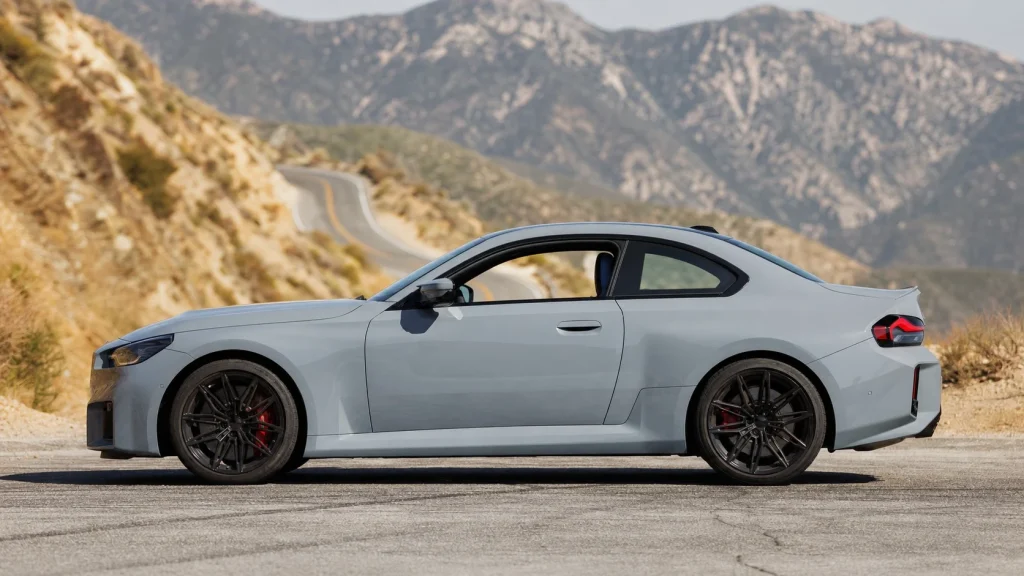
Quick answer: The G87-generation 2023 BMW M2 delivers 453 horsepower from its twin-turbo S58 inline-six engine and started at a total MSRP of $63,195, including destination. As of July 2026, used market depreciation has brought clean-condition trade-in values down to approximately $48,000, presenting a strong value for buyers who inspect for documented first-year recalls such as the power window software and potential S58 connecting rod bearing campaigns.
Key takeaways:
- The 2023 M2 features a twin-turbo 3.0L S58 engine producing 453 hp and 406 lb-ft of torque.
- Six-speed manual transmission is standard (3,814 lbs), while the eight-speed automatic is a no-cost option (3,867 lbs).
- Documented first-year concerns include front suspension creaking noises and iDrive 8 software glitches.
- Used retail pricing in July 2026 typically ranges from $49,000 to $62,000 depending on options and mileage.
G87 Generation Overview and Original MSRP
The 2023 model year introduced the completely redesigned G87 generation, representing a significant departure from the beloved F87 predecessor. The G87 generation is built on the shared rear-wheel-drive CLAR architecture, which it inherits from the larger M3 and M4 models. This generational shift increases the footprint of the M2, adding 4.7 inches of length and 0.6 inches of width.
Every G87 M2 is assembled at BMW’s San Luis Potosi plant in Mexico. At launch, the 2023 BMW M2 carried a base MSRP of $62,200, excluding options. When adding the mandatory $995 destination charge, the total starting price reached $63,195.
Standard equipment on the standard coupe includes the S58 engine, 19-inch front and 20-inch rear wheels, M adaptive suspension, and carbon fiber interior trim accents. The options list featured the popular Carbon Package priced at $9,900, which bundled an M carbon fiber roof, aggressive M Carbon bucket seats, and the M Driver’s Package that raised the top speed limiter.
Engine Specifications and Performance
At the core of the G87 M2 is the S58 3.0-liter twin-turbocharged inline-six engine. The S58 is a high-revving powerhouse with a 7,200 rpm redline, utilizing a closed-deck engine block and a forged steel crankshaft to handle high boost pressures. The S58 in the 2023 BMW M2 generates 453 horsepower at 6,250 rpm and 406 lb-ft of torque across a flat curve from 2,650 to 5,870 rpm.
| Specification | 6-Speed Manual | 8-Speed Automatic |
|---|---|---|
| Engine Code | S58 twin-turbo 3.0L I6 | S58 twin-turbo 3.0L I6 |
| Peak Horsepower | 453 hp @ 6,250 rpm | 453 hp @ 6,250 rpm |
| Peak Torque | 406 lb-ft @ 2,650-5,870 rpm | 406 lb-ft @ 2,650-5,870 rpm |
| Curb Weight | 3,814 lbs | 3,867 lbs |
| EPA Fuel Economy | 16 city / 24 highway / 19 combined | 16 city / 23 highway / 19 combined |
| Fuel Tank Capacity | 13.7 gallons (52 liters) | 13.7 gallons (52 liters) |
| Fuel Requirement | Premium 91+ octane | Premium 91+ octane |
According to official EPA fuel economy data, the manual transmission achieves 16 MPG city, 24 MPG highway, and 19 MPG combined. The automatic transmission achieves 16 MPG city, 23 MPG highway, and 19 MPG combined. Given the high performance orientation of the S58, premium 91+ octane gasoline is required. With a small 13.7-gallon fuel tank, the real-world highway range sits around 260 miles between fill-ups, which drops rapidly during spirited driving.
Instrumented Test Acceleration Results
BMW’s official acceleration estimates are conservative, stating 0-60 mph times of 3.9 seconds for the automatic and 4.1 seconds for the manual. However, instrumented testing published by MotorTrend revealed significantly quicker real-world acceleration. The automatic version sprinted from 0-60 mph in just 3.6 seconds, passing the quarter-mile in 11.8 seconds at 120.3 mph. The manual version reached 0-60 mph in 3.8 seconds and covered the quarter-mile in 12.2 seconds at 118.7 mph.
The top speed is electronically limited to 155 mph by default. Opting for the M Driver’s Package raises this limit to 177 mph. This package also includes a voucher for high-performance driver training at a BMW Performance Center.
Transmission Selection: Manual vs. Automatic
The standard six-speed manual transmission is equipped with a switchable gear-shift assistant that provides automatic rev-matching on downshifts. Opting for the manual transmission saves 53 pounds compared to the optional eight-speed automatic, resulting in a curb weight of 3,814 pounds. The automatic transmission raises the curb weight to 3,867 pounds.
According to a review by BMW Blog, the manual gearbox offers a highly engaging mechanical connection, though the turbocharged S58 engine displays a power delivery profile that feels more seamlessly paired with the rapid shifts of the automatic transmission. Manual transmission models remain highly sought after by enthusiasts as classic three-pedal performance cars become increasingly rare.
Handling, Controversial Steering, and Ride Comfort
The G87 M2 achieves a balanced 50:50 front-to-rear weight distribution. Road handling is characterized by immense lateral grip and high stability, managed by the Active M Differential at the rear axle. Under limit-handling conditions, the G87 is noticeably more planted and less tail-happy than its F87 predecessor, inspiring confidence on the track.
However, the steering system represents a major point of discussion. The speed-sensitive variable-ratio electric power steering has been criticized for feeling artificial and disconnected. Reviewers report that the wheel lacks the tactile road feedback of older hydraulic steering setups, requiring the driver to trust the front tires based on visual cues rather than hands-on communication.
Ride comfort is another area of compromise. The adaptive M suspension dampers are tuned for track performance. Even in Comfort mode, the ride remains firm and transmits expansion joints and road surface imperfections directly into the cabin. Choosing Sport or Sport Plus modes stiffens the dampers to a level that most drivers find too harsh for public roads.
Interior Technology and the iDrive 8 Experience
The interior of the 2023 M2 is highlighted by the standard Curved Display, which houses a 12.3-inch digital instrument cluster and a 14.9-inch touchscreen running the iDrive 8 operating system. While the screens are bright and crisp, the software interface has a steep learning curve. BMW eliminated the physical buttons for the climate control system, requiring drivers to navigate sub-menus on the touchscreen to adjust cabin temperature and fan speed.
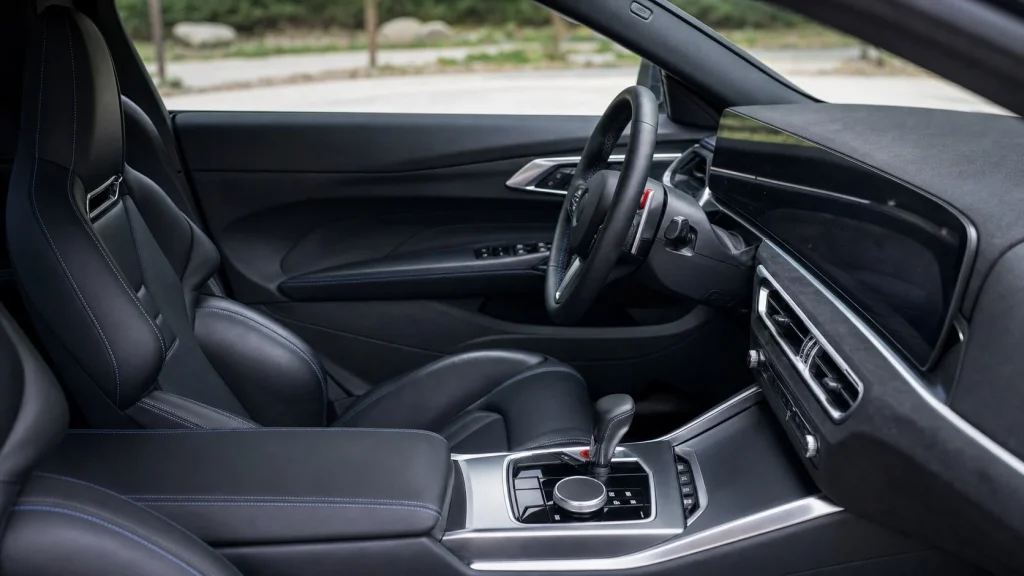
Standard M Sport seats are upholstered in Vernasca leather and offer power adjustment and deep side bolsters. The optional M Carbon bucket seats save roughly 24 pounds but feature extremely high bolster partitions that make entering and exiting the vehicle difficult during daily commuting. Rear passenger space is very limited, offering only 31 inches of legroom, which restricts the rear seats to emergency use or small children.
Analysis: The G87 cabin is a significant upgrade in material quality and isolation over the F87 model, bringing it closer to the premium feel of the M4. However, the heavy reliance on touchscreen controls for basic comfort adjustments represents a clear step backward in terms of daily driving ergonomics.
Documented 2023 M2 Common Problems and Recalls
When purchasing a first-year vehicle, verifying the specific chassis history is essential. Prospective buyers should always use the official NHTSA recall database to check for open campaigns by vehicle identification number (VIN).
NHTSA Recalls: Windows and Rod Bearings
The 2023 BMW M2 is associated with one primary safety recall:
- Recall 23V-099 (NHTSA 23V099000, Feb 16, 2023): The electronic control unit (ECU) software may still allow the power windows and sunroof to close after the digital key is removed. This violates federal safety standards and poses a pinching hazard. BMW dealers resolve this with a free ECU software update.
Additionally, certain S58 engines produced in early 2023 were flagged under a manufacturer service campaign for defective connecting rod bearings. A supplier manufacturing defect led to premature wear of the bearing shells, which could cause a loss of oil pressure, engine knocking noises, or complete engine failure. Affected vehicles received replacement bearing shells under warranty.
Real-World Suspension Noises and Brake Judder
Owners have reported two common mechanical complaints that are not subject to safety recalls:
- Front Suspension Creak: Under low-speed turning or when driving over speed bumps, the front suspension may emit a metallic creaking or clicking sound. According to technical investigations, this noise is caused by micro-movement between the front strut and the steering upright. The factory 8.8-tensile strut pinch bolt can stretch slightly under load; replacing this hardware and applying anti-seize to the joint resolves the clicking noise.
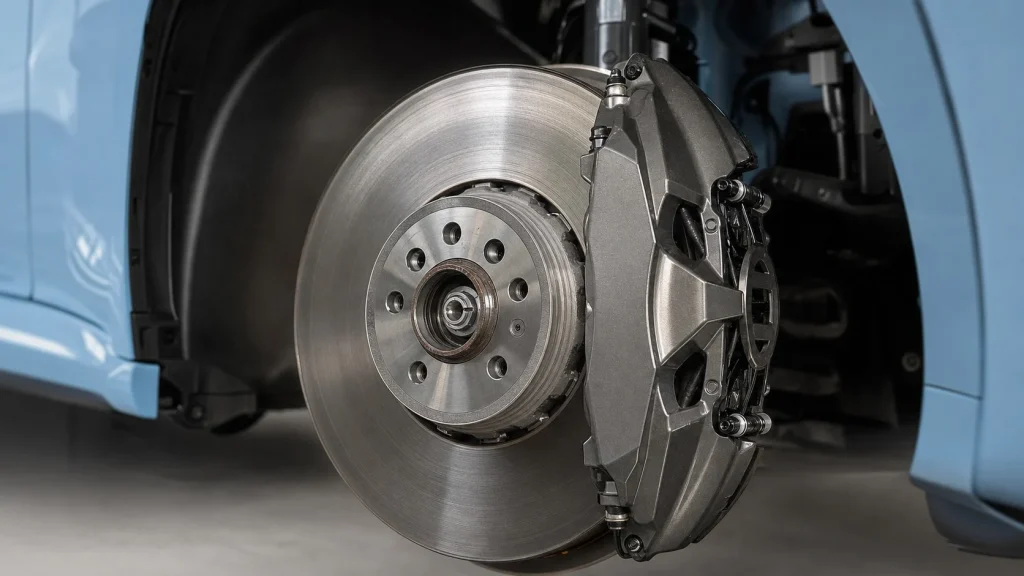
- Brake Vibration: Widespread reports describe a steering wheel vibration or judder when braking from high speeds. While some forum communities hypothesized that red-caliper equipped cars were more prone to this than blue or black caliper models, mechanical evidence shows that caliper color is not the cause. The vibration is caused by uneven pad material deposits (disc thickness variation) on the rotors, which occurs when the aggressive factory brake pads are heated and held against the rotor. Swapping to different pad compounds resolves the judder.
Note: The engine oil cooler is mounted low beneath the front bumper and is highly exposed to road debris. Road debris impacts can puncture the cooler and lead to rapid oil loss. Many owners install aftermarket metal skid plates to protect the oil cooler.
Used Market Value and Depreciation in July 2026
As of July 2026, the 2023 BMW M2 has spent approximately three years on the market. The vehicle has depreciated by roughly 17% from its original starting MSRP, indicating better value retention than the average luxury sports coupe. The used market value varies based on vehicle condition, mileage, and optional equipment.
| Vehicle Condition | Trade-In Value | Private Party Price | Dealer Retail Price |
|---|---|---|---|
| Outstanding | $48,777 | $50,474 | $52,246 |
| Clean | $48,018 | $49,582 | $51,213 |
| Average | $46,754 | $48,095 | $49,491 |
| Rough | $45,110 | $46,162 | $47,253 |
Values estimated based on a standard manual coupe in July 2026.
Market listings for well-optioned examples (such as those with the Carbon Package or carbon ceramic brakes) often range higher, with dealer listings asking between $55,000 and $64,000. Maintenance expenses for a used M2 average between $1,500 and $2,500 annually. Replacing worn carbon ceramic brake rotors can cost up to $15,000, so a thorough inspection of the friction surfaces is critical prior to purchase.
For buyers looking at other model years, the BMW M2 series hub index provides links to the 2024 BMW M2 used valuation details, which reflect minor production refinements. Those interested in newer options can check the 2025 BMW M2 performance changes or read about the latest 2026 BMW M2 model details to compare performance metrics and the updated infotainment setups.
Autvex Verdict: Who Should (and Shouldn’t) Buy a Used 2023 M2?
The 2023 BMW M2 represents a compelling value on the used market, but it is not the right fit for every buyer.
Who should buy:
- Track Day Enthusiasts: The CLAR platform offers excellent structural rigidity, highly effective cooling, and massive rear grip.
- Manual Purists: The M2 represents one of the final opportunities to purchase a brand-new or late-model rear-wheel-drive manual performance car.
- Value Seekers: Original owners absorbed the initial depreciation hit, allowing secondary buyers to obtain a highly capable S58-powered car at a discount.
Who should avoid:
- Comfort-Oriented Commuters: The stiff suspension tuning remains wearsome on poor quality asphalt, even in Comfort mode.
- Family Drivers: The rear seat legroom is too tight for adult passengers, and the trunk is limited compared to sports sedans.
- Steering Purists: Drivers expecting the high level of tactile steering feedback found in the older F87 chassis will likely be disappointed.
Frequently Asked Questions
Is the 2023 BMW M2 reliable?
Yes, the S58 engine has proven to be mechanically robust in M3 and M4 applications. The primary reliability items for the 2023 model year are early connecting rod bearing campaigns and minor software glitches in the infotainment system.
What are common problems with the 2023 M2?
The most common problems reported by owners are front suspension creaks, brake judder caused by pad material deposits, and software issues that affect the digital key and window control systems.
How much is a 2023 BMW M2 worth now?
In July 2026, clean-condition trade-in values sit near $48,018, while typical dealer retail asking prices range from $51,000 to $64,000 depending on mileage and options.
Is the G87 M2 better than the F87 M2?
The G87 G-Series M2 is objectively faster, has a more modern interior, and offers higher cornering limits. However, the older F87 M2 is lighter, has better steering feedback, and features more compact exterior dimensions.

