

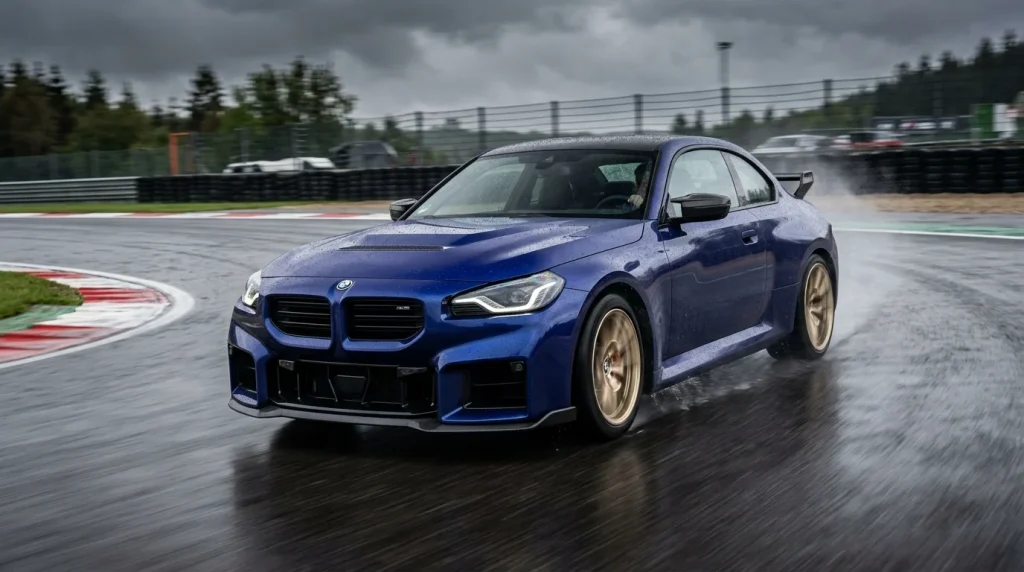
Quick answer: The base 2026 BMW M2 starts at $69,375 (including the $1,175 destination charge) with an unchanged 473-horsepower twin-turbo S58 inline-six engine, while the track-focused 2026 BMW M2 CS flagship variant debuts with 523 horsepower and a starting MSRP of $99,775.
Key takeaways:
- Base 2026 M2 pricing starts at $69,375, representing a $2,700 price bump from last year, with standard features carried over.
- The limited-production M2 CS starts at $99,775, featuring a 523-horsepower engine, automatic transmission only, and a 97-pound weight reduction.
- Power outputs remain 473 horsepower for standard M2 models, with torque at 443 pound-feet (automatic) and 406 pound-feet (manual).
- Standard M2 models continue to offer a choice between a 6-speed manual and an 8-speed automatic at no additional cost.
What’s New for the 2026 BMW M2
The 2026 model year represents a significant milestone for the BMW M2 lineup. While the standard coupe maintains its established mechanical formula, the big news is the introduction of a highly anticipated, limited-production track model. This two-tier lineup allows BMW to serve both everyday sports car enthusiasts and hardcore collectors who demand the ultimate track weapon.
Base M2 Changes and Standard Features
Following a substantial mid-cycle update for the previous model year, the standard 2026 BMW M2 receives minor refinements rather than mechanical overhauls. Power remains at the upgraded 473-horsepower level introduced on the 2025 BMW M2.
Inside, the cabin retains the flat-bottom steering wheel with a red center stripe and the curved digital display running BMW Operating System 8.5. Exterior paint options carry over, with Vegas Red and Zandvoort Blue serving as popular choices alongside traditional metallic options. The primary update for the standard model is a price adjustment, raising the base MSRP to $68,200 before delivery charges.
The Debut of the 2026 BMW M2 CS
The headline development for this model year is the return of the M2 CS (Competition Sport) after a five-year hiatus. Produced in limited numbers at BMW Group Plant San Luis Potosí in Mexico, production began in August 2025.
The M2 CS is designed as the ultimate expression of the G87 platform. It commands a base MSRP of $98,600 before destination, bringing the total starting price to $99,775. To justify this $30,400 premium, BMW has engineered the CS to be the most powerful rear-wheel-drive M car ever built, incorporating weight-saving carbon fiber components and chassis enhancements specifically tuned for track performance.
2026 BMW M2 CS vs. Base M2: Specifications and Pricing Comparison
To understand the value proposition of both variants, it is helpful to compare their mechanical specifications and standard equipment side by side.
| Specification | 2026 BMW M2 (Base) | 2026 BMW M2 CS |
|---|---|---|
| Base MSRP (excl. destination) | $68,200 | $98,600 |
| Base MSRP (incl. $1,175 destination) | $69,375 | $99,775 |
| Engine Type | S58 3.0L Twin-Turbo Inline-6 | Upgraded S58 3.0L Twin-Turbo Inline-6 |
| Horsepower | 473 hp @ 6,250 rpm | 523 hp @ 6,250 rpm |
| Torque | 443 lb-ft (Automatic) / 406 lb-ft (Manual) | 479 lb-ft @ 2,750-5,500 rpm |
| Transmission | 6-speed Manual or 8-speed Automatic | 8-speed Automatic only |
| 0-60 mph Acceleration | 3.9 seconds (Auto) / 4.1 seconds (Manual) | 3.7 seconds |
| Curb Weight | 3,867 lbs (Automatic) | 3,770 lbs (97 lbs lighter) |
| Wheel Sizes (Staggered) | 19-inch front / 20-inch rear | 19-inch front / 20-inch rear (Forged) |
| Top Speed | 155 mph (180 mph with M Driver’s Package) | 188 mph (Standard M Driver’s Package) |
2026 BMW M2 Performance and Driving Dynamics
At the heart of the BMW M2 lineup is the S58 twin-turbocharged 3.0-liter inline-six engine. This powerplant is a direct descendant of the engine used in the larger M3 and M4 models, featuring a closed-deck design, a forged crankshaft, and a 3D-printed cylinder head core that optimizes cooling.
Engine Performance of the S58 Powertrain
In the standard 2026 BMW M2, the S58 engine produces 473 horsepower. Torque output depends on the chosen transmission. Models equipped with the six-speed manual gearbox are limited to 406 pound-feet of torque to protect the clutch assembly. Choosing the eight-speed automatic transmission unlocks the full 443 pound-feet of torque, allowing the car to accelerate from 0 to 60 mph in 3.9 seconds.
For the M2 CS, BMW engineers retuned the S58 engine to deliver 523 horsepower and 479 pound-feet of torque. This represents a 50-horsepower increase and a 36-pound-foot gain over the automatic base model. This power increase is achieved through optimized ECU mapping and increased boost pressure. Acceleration from 0 to 60 mph takes just 3.7 seconds, and the standard M Driver’s Package raises the electronically limited top speed to 188 mph.
Manual vs. Automatic Transmission Dynamics
The transmission choice on the standard M2 represents a classic enthusiast dilemma. The standard six-speed manual transmission features a gear-shift assistant (rev-matching) that can be deactivated in the iDrive menu. It offers an engaging, tactile connection to the car that is increasingly rare in modern performance vehicles, even if it sacrifices two-tenths of a second in the 0-60 mph sprint.
The M2 CS is offered exclusively with the eight-speed M Steptronic automatic transmission with Drivelogic. BMW determined that the manual gearbox could not reliably handle the CS model’s 479 pound-feet of torque while meeting durability standards. The automatic transmission provides lightning-fast gear changes and includes three distinct shift programs, making it the superior tool for setting fast lap times on a circuit.
Fuel Economy and Practical Driving Range
Performance cars are rarely bought for fuel efficiency, but the M2 remains reasonable for daily driving duties. The standard 2026 BMW M2 is EPA-rated at 16 mpg in the city, 23 mpg on the highway, and 19 mpg combined.
With a fuel tank capacity of 13.5 gallons, the M2 has an estimated combined driving range of approximately 257 miles. Real-world highway driving can yield 25 to 27 mpg during steady cruising, but aggressive track driving will quickly drop fuel economy into the single digits. Premium fuel (91 octane or higher) is required for both the standard M2 and the M2 CS.
Exterior Design and Lightweight Aerodynamics
The G87 generation M2 features a muscular, wide-body stance that distinguishes it from standard 2-series models. At 179.4 inches long and 73.0 inches wide, the M2 has a compact footprint that enhances its agility on narrow roads.
Base M2 Styling and Color Palette
The standard M2 features wide, squared-off air intakes, a horizontal kidney grille orientation, and a rear bumper design with an integrated diffuser and quad exhaust tips. Standard colors include Alpine White and Zandvoort Blue at no extra charge. Metallic options like Black Sapphire, Brooklyn Grey, and Portimao Blue are available, while high-end BMW Individual finishes can be ordered for an additional charge. The standard wheels are staggered 19-inch front and 20-inch rear light-alloy rims.
Exclusive CS Design Elements and Aero Upgrades
The M2 CS is visually distinct from the base model due to its extensive use of exposed carbon fiber reinforced plastic (CFRP). The CS features a carbon fiber roof, a carbon fiber hood with a functional air vent, a carbon fiber front splitter, carbon mirror caps, and a unique trunk lid with an integrated ducktail spoiler. These components reduce vehicle weight by approximately 97 pounds compared to the automatic base model, lowering the center of gravity.
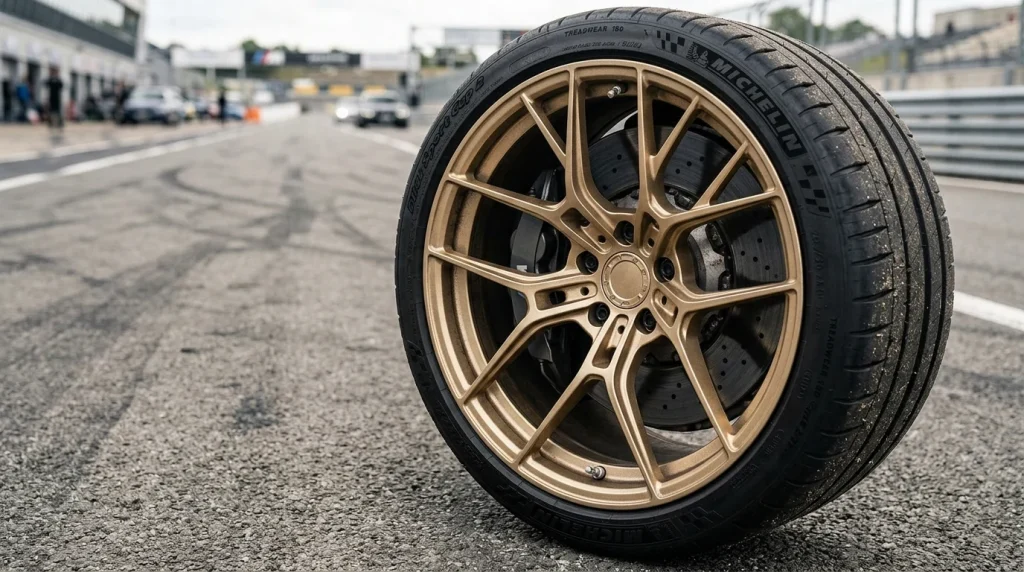
The CS also rides on unique forged alloy wheels, which are staggered in diameter: 19 inches at the front and 20 inches at the rear. These wheels are available in an exclusive gold-bronze finish or a matte black finish, paired with high-performance track tires. The suspension has been lowered by 0.2 inches and features CS-specific active dampers and stiffer anti-roll bars.
Interior Design, Comfort, and Technology
The interior of the 2026 BMW M2 balances track-day utility with modern premium amenities. The dashboard is dominated by the BMW Curved Display, which houses the digital instrument cluster and the touchscreen infotainment system.
Cabin Layout and Premium Materials
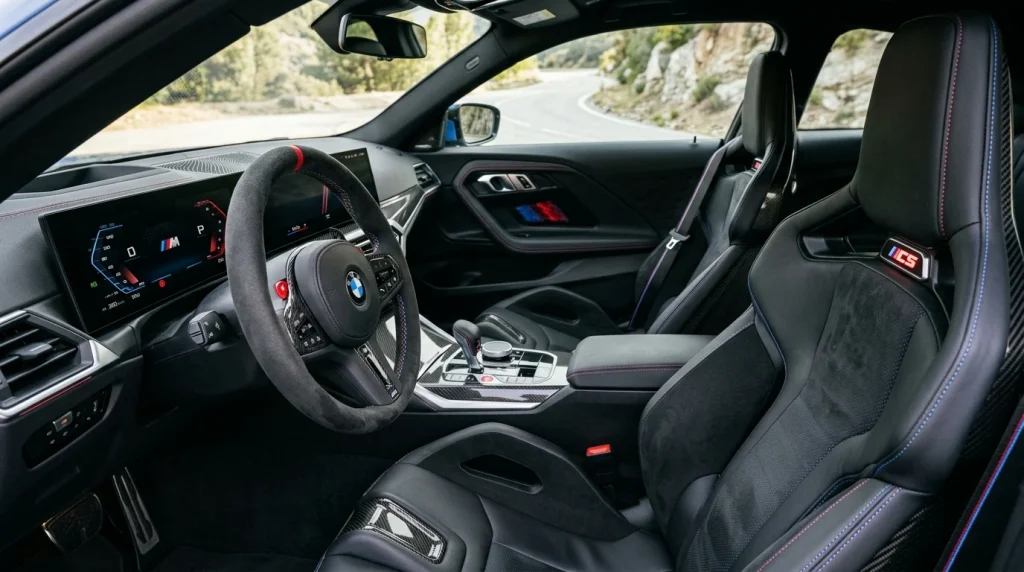
The base M2 interior features standard M Sport seats wrapped in Vernasca leather, carbon fiber interior trim, and an Alcantara-wrapped steering wheel. To save weight, the M2 CS replaces the standard center console armrest with a simple Alcantara-covered trim piece. The CS cabin also features extensive use of red contrast stitching, red “CS” embroidery on the dashboard, and Alcantara door panels.
Seating Comfort and Cargo Practicality
For the standard M2, buyers can upgrade to M Carbon bucket seats as part of the optional Carbon Package. These seats are standard equipment on the M2 CS. They feature aggressive side bolstering, a carbon fiber shell, and illuminated CS logos. They save substantial weight but make entering and exiting the vehicle more difficult.
In terms of practicality, the front seats offer 38.9 inches of headroom and 42.2 inches of legroom, accommodating tall drivers easily. The rear seats offer a tight 30.9 inches of legroom, making them suitable only for occasional use or children. The trunk provides 15.0 cubic feet of cargo space, which can be expanded using the 50/50 split-folding rear seats.
iDrive Infotainment and Driver Assistance Technology
Both M2 variants run BMW Operating System 8.5, displayed on a 12.3-inch driver info screen and a 14.9-inch center touchscreen. The system supports wireless Apple CarPlay and Android Auto, navigation with real-time traffic, and voice commands.
The M2 CS includes a head-up display as standard equipment, which projects key telemetry, gear indicators, and engine speed directly onto the windshield. Standard driver assistance features on both models include frontal collision warning, lane departure warning, and active park distance control.
2026 BMW M2 vs. Rivals: How it Compares
The premium sports car segment offers several distinct options around the $70,000 to $100,000 price range, each representing a different engineering philosophy.
BMW M2 vs. Porsche 718 Cayman
The base M2 competes directly with the Porsche 718 Cayman. The M2 has a power advantage, producing 473 horsepower compared to the base Cayman model’s 300 horsepower, and starts at a lower price point.
However, the Cayman features a mid-engine layout that provides superior weight distribution and steering feedback. The M2 is a more practical option, offering rear seats and a much larger trunk, whereas the Cayman is a strict two-seater. The high-performance M2 CS is priced closer to the track-focused Cayman GT4, where the BMW’s power advantage grows even larger, though the GT4 retains an option for a manual gearbox.
BMW M2 vs. Chevrolet Corvette C8
The Chevrolet Corvette C8 Stingray starts at a similar price point to the base M2. The Corvette features a mid-engine layout and a naturally aspirated 6.2-liter V8 engine producing 495 horsepower.
The Corvette offers supercar proportions and faster straight-line acceleration than a manual M2. The M2 counters with a more premium interior, a standard rear seat, and the availability of a manual transmission, which the automatic-only Corvette lacks. The M2 serves as a better daily driver, while the Corvette is geared toward buyers seeking an exotic mid-engine experience.
BMW M2 vs. Toyota GR Supra
The Toyota GR Supra shares its chassis architecture, electrical systems, and turbocharged inline-six engine family with BMW. The Supra 3.0 Premium is priced lower than the base M2 but produces 382 horsepower from its single-turbo B58 engine.
The M2 represents a step up in performance, utilizing the twin-turbo S58 engine with 473 horsepower, and offers a more sophisticated interior with rear seating. The Supra is lighter and more compact, making it a highly capable sports car for buyers who do not need the M2’s extra power or back seats.
Cost of Ownership and Reliability
Owning a high-performance BMW M vehicle requires budgeting for higher maintenance and running costs compared to standard passenger cars.
S58 Engine Reliability and Common Issues
The S58 engine has earned a reputation for being one of BMW’s most durable modern powerplants. Unlike older BMW turbocharged engines, the S58 rarely suffers from major mechanical failures under stock operating conditions.
However, long-term owners should watch for minor issues. The oil filter housing can develop slow oil leaks over time, and the coolant system components, such as the water pump and thermostat, should be inspected regularly. Some early G87 models have also experienced minor electrical sensor glitches and rear taillight assembly malfunctions, which are typically resolved under warranty.
Annual Maintenance and Ownership Expenses
Routine maintenance for the M2 is estimated to cost between $1,500 and $2,500 annually. This includes scheduled synthetic oil changes, cabin air filter replacements, brake fluid flushes every two years, and spark plug replacements at 60,000 miles.
High-performance summer tires (such as Michelin Pilot Sport 4S) wear out quickly under spirited driving, typically lasting 15,000 to 20,000 miles, and cost approximately $1,400 to $1,800 to replace as a staggered set. Track usage will significantly accelerate the wear of brake pads, rotors, and fluids, increasing running costs.
Should You Buy the 2026 BMW M2?
Choosing between the standard M2, the exclusive M2 CS, or a competitor depends on your driving habits, budget, and performance expectations.
Who Should Choose the Base M2
The standard 2026 BMW M2 represents the sweet spot for driving enthusiasts. It offers 90% of the real-world performance of the CS at a significantly lower price point. It is the only choice for drivers who insist on a manual transmission. Its comfortable ride settings make it a highly capable daily driver that can transition to weekend track duties without compromise.
Who Should Invest in the M2 CS
The M2 CS is designed for collectors and track enthusiasts who demand the absolute peak performance from the G87 chassis. If you value limited-production exclusivity (fewer than 2,000 units annually) and want a factory-engineered track car with carbon fiber body panels, the CS justifies its premium. It is also an attractive option for buyers who might have previously looked at models like the 2024 BMW M2 and wanted more aggressive styling and factory weight savings.
Who Should Look at Competitors
If you require standard all-wheel-drive capability for cold-weather climates, you may want to look elsewhere or wait for future model years, as the 2026 M2 remains rear-wheel-drive only. Buyers looking for maximum rear-seat legroom or top-tier fuel economy should avoid the M2 entirely. Similarly, if you want an exotic mid-engine driving experience, the Porsche Cayman or Chevrolet Corvette are more suitable choices.
Frequently Asked Questions
What is the difference between the 2026 BMW M2 and M2 CS?
The M2 CS produces 523 horsepower, which is 50 horsepower more than the standard M2. It is approximately 97 pounds lighter due to standard carbon fiber body panels and forged wheels, uses a track-tuned suspension, and comes standard with carbon bucket seats. The CS starts at $99,775, whereas the base M2 starts at $69,375. The CS is automatic-only.
Does the 2026 BMW M2 come with a manual transmission?
Yes, the standard 2026 BMW M2 is equipped with a six-speed manual transmission as a no-charge option. The higher-performance M2 CS is sold exclusively with an eight-speed automatic transmission.
Is the G87 M2 a reliable daily driver?
Yes, the S58 engine used in the G87 M2 is highly reliable when maintained properly. The car offers a comfortable ride in its standard suspension settings, a 15.0 cubic foot trunk, and modern driver assistance safety features.
How many units of the 2026 BMW M2 CS will be produced?
BMW intends to build the M2 CS in limited quantities, with global production estimated at roughly 2,000 units annually. U.S. allocations will make up the largest share of this total.
How does the 2026 M2 compare to previous generations?
The G87 generation is larger, heavier, and more powerful than the previous F87 generation. While the older model offered a more raw, analog driving feel, the newer model provides superior chassis rigidity, modern interior technology, and a much more robust engine platform. Drivers seeking comparison data on previous models can review our detailed guides on the 2023 BMW M2 for further context.

