

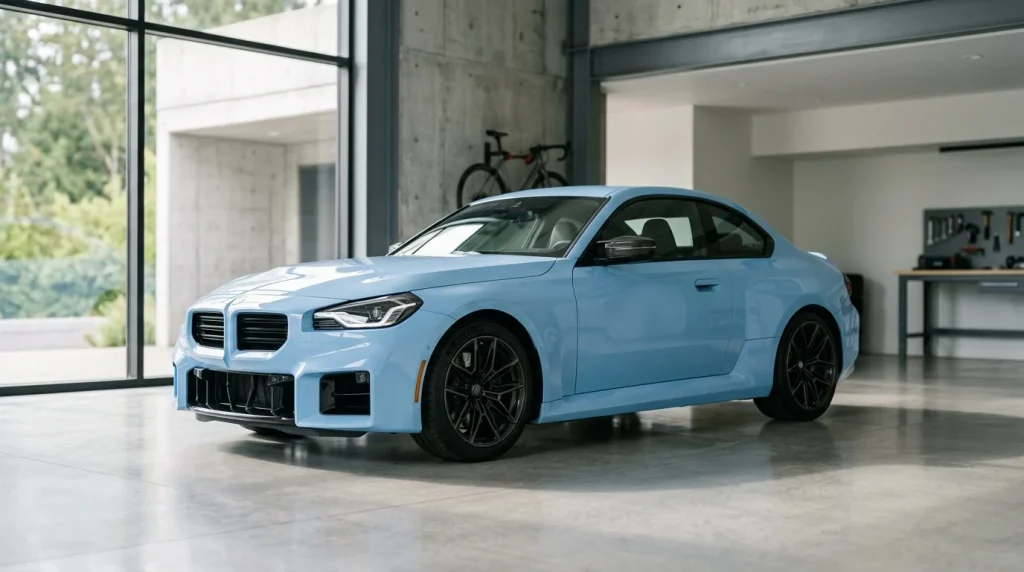
Quick answer: The 2024 BMW M2 delivers 453 horsepower from its 3.0-liter twin-turbo inline-six S58 engine for an original base MSRP of $63,200. As a carryover from the 2023 redesign, the second-year G87 generation model serves as a compelling performance purchase in 2026, with used examples trading between $53,900 and $65,000 depending on mileage, transmission, and optional equipment.
Key takeaways:
- The twin-turbocharged S58 inline-six engine generates 453 horsepower and 406 pound-feet of torque, enabling 0-60 mph sprints as quick as 3.6 seconds.
- A standard 6-speed manual and a no-cost 8-speed automatic are available, with manual transmission units commanding a premium on the used market.
- Fuel economy remains low at 19 mpg combined for both transmissions, which when paired with a small 13.7-gallon tank restricts highway range to roughly 260 miles.
- Used retail values in 2026 show strong resilience, with private-party sales averaging $53,900 and dealer listings ranging from $62,000 to $66,000.
Model Year Context: G87 Generation Positioning
The 2024 BMW M2 represents the second model year of the G87 generation, following the complete redesign introduced for the 2023 model year. While the first-year model addressed initial production adjustments, the 2024 version carries over completely unchanged, offering buyers a stable platform before the updates introduced for the 2025 model year.
Understanding where this model sits in the G87 lineage helps buyers evaluate its current market value:
- 2023 BMW M2: The launch year for the G87 generation, featuring a wider track, heavier curb weight, and a bold exterior design.
- 2024 BMW M2: A carryover model with an identical drivetrain, suspension tuning, and technology package, with only minor price adjustments new.
- 2025 BMW M2: An updated model featuring a 20-horsepower bump to 473 hp, an upgrade to the iDrive 8.5 infotainment system, and a redesigned steering wheel.
- 2026 BMW M2: The model year that introduces the highly anticipated, automatic-only CS variant alongside subtle updates to the base model.
By opting for a used 2024 model instead of a new 2025 or 2026 model, buyers bypass the steepest initial depreciation while securing the same structural foundation and mechanical package as the debut G87 model.
Engine Specifications and S58 Performance
At the heart of the 2024 model is the S58 engine, a 3.0-liter twin-turbocharged inline-six shared with the larger M3 and M4. This powerplant replaces the previous-generation F87 M2 engines, bringing closed-deck construction and forged internals to handle high thermal and mechanical loads.
| Specification | 6-Speed Manual | 8-Speed Automatic | Source |
|---|---|---|---|
| Engine Code | S58 twin-turbo 3.0L I6 | S58 twin-turbo 3.0L I6 | MotorTrend |
| Horsepower | 453 hp @ 6,250 rpm | 453 hp @ 6,250 rpm | KBB |
| Torque | 406 lb-ft @ 2,650-5,870 rpm | 406 lb-ft @ 2,650-5,870 rpm | KBB |
| Curb Weight | 3,814 lbs | 3,868 lbs | BMW USA |
| 0-60 mph (BMW claim) | 4.1 seconds | 3.9 seconds | BMW USA |
| 0-60 mph (Tested) | 3.8 seconds | 3.6 seconds | MotorTrend |
| Top Speed (Standard) | 155 mph (limited) | 155 mph (limited) | BMW USA |
| Top Speed (M Driver’s) | 177 mph | 177 mph | BMW USA |
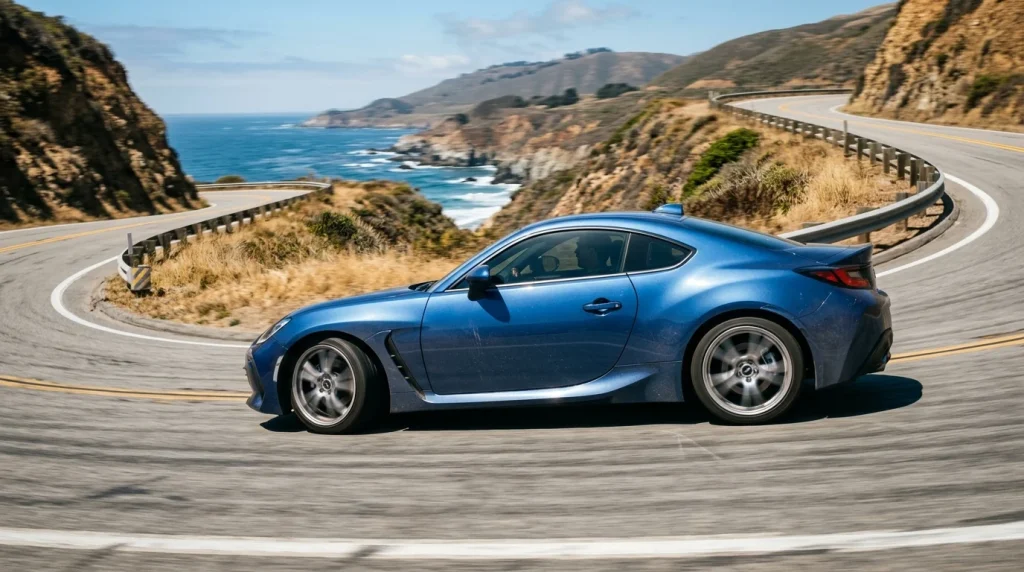
Independent instrumented testing reveals that the vehicle consistently outperforms BMW’s conservative manufacturer acceleration claims. With the 8-speed automatic, the M2 achieves a tested 0-60 mph time of 3.6 seconds, while the manual version registers 3.8 seconds under optimal track conditions.
The S58 engine delivers linear power with minimal turbo lag, pulling hard to its 7,200 rpm redline. The Active M Differential manages torque distribution across the rear axle, preventing unwanted wheelspin and optimizing cornering stability.
Fuel Economy and Daily Usability
The high-performance calibration of the twin-turbo inline-six results in high fuel consumption. According to EPA ratings, the vehicle achieves the following fuel economy figures:
- 6-Speed Manual: 16 mpg city, 24 mpg highway, 19 mpg combined.
- 8-Speed Automatic: 16 mpg city, 23 mpg highway, 19 mpg combined.
With a small fuel tank capacity of only 13.7 gallons, the real-world highway range drops to approximately 260 miles between fill-ups. Enthusiastic driving or track usage can easily push fuel consumption below 10 mpg. Premium fuel with an octane rating of 91 or higher is mandatory, which increases the ongoing cost of ownership.
Daily usability remains mixed. The front cabin provides excellent headroom and legroom for taller occupants, but the rear seats are tight with only 31 inches of legroom. They are best reserved for small children or luggage. The trunk capacity offers a respectable 14 cubic feet of space, making it practical for daily errands or weekend road trips.
Design, Cabin, and Optional Packages
The G87 generation features a polarizing wide-body design with pronounced fender flares and horizontal kidney grilles. This wider stance accommodates staggered 19-inch front and 20-inch rear light-alloy wheels wrapped in Michelin Pilot Sport 4S performance tires.
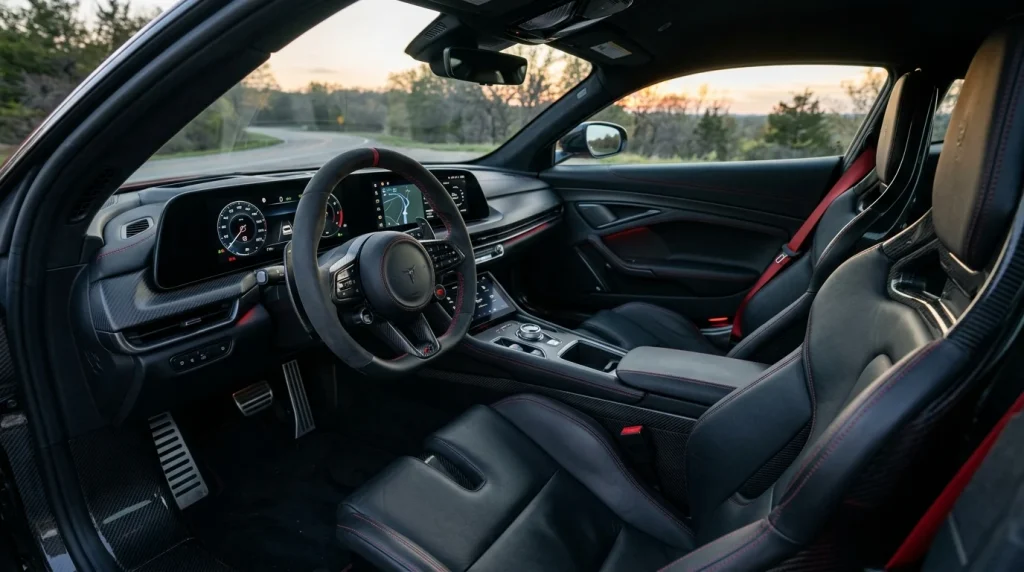
Inside, the cabin features the curved display housing a 12.3-inch digital gauge cluster and a 14.9-inch touchscreen running the iDrive 8 operating system. While the graphics are crisp, accessing climate controls via the touchscreen instead of physical buttons requires a learning curve and can distract the driver.
The most notable optional packages for the 2024 model year include:
- M Carbon Package ($9,900): Bundles a weight-saving carbon-fiber roof, highly bolstered carbon-fiber bucket seats, interior carbon trim, and the M Driver’s Package. This option saves approximately 48 pounds.
- M Driver’s Package ($2,500): Raises the top speed limiter to 177 mph and includes a voucher for professional driver training at a BMW Performance Center.
- Lighting Package ($650): Adds adaptive LED headlights with automatic high-beams.
On the used market, vehicles equipped with the M Carbon Package command a premium of $3,000 to $5,000, as buyers value the aesthetic and functional appeal of the carbon bucket seats.
Used Market Value Analysis in 2026
The 2024 model has shown excellent resale value. Enthusiast demand for the manual transmission combined with limited production numbers has kept depreciation low compared to the luxury sports car average.
Valuation metrics as of mid-2026 display the following pricing brackets:
- Kelley Blue Book Resale Value: Private-party values hover around $53,900 for standard models with average mileage (10,000 to 15,000 miles).
- Kelley Blue Book Trade-In Value: Dealership wholesale trade-in offers range from $50,000 to $51,600.
- Dealership Retail Listings: Used retail asking prices at franchise dealerships average between $62,000 and $66,000, depending on condition, warranty status, and options.
- Manual Transmission Premium: Manual models trade for $1,000 to $2,000 more than automatic equivalents due to their scarcity.
- Certified Pre-Owned (CPO) Premium: CPO examples command a $2,000 to $3,000 surcharge but extend the factory warranty by an additional year with unlimited mileage.
Original buyers absorbed the steepest initial 27% first-year depreciation, leaving used buyers in 2026 with a high-value entry point into G87 ownership.
Original Value Verdict: Who Should Buy the 2024 Model?
The 2024 model represents a sweet spot for performance enthusiasts seeking modern mechanical capability without the premium cost of a brand-new model.
Analysis: Buyers who prioritize driving dynamics and value over the latest software will find the 2024 model more compelling than a new 2025 or 2026 model. The 20-horsepower difference in the 2025 update is unnoticeable in street driving, and the older iDrive 8 system remains highly capable. Purchasing a well-maintained 2024 model saves approximately $10,000 to $15,000 compared to buying a new version, allowing enthusiasts to allocate those savings toward maintenance, tires, or high-performance driving events.
Who should buy the 2024 model:
- Enthusiasts seeking a manual transmission, rear-wheel-drive sports coupe before the manual transmission is retired.
- Track day drivers who want to install aftermarket modifications and do not want to pay a premium for a new car warranty.
- Value-focused buyers who want the performance of the modern G87 platform at a significant discount.
Who should look at alternatives:
- Buyers who require a comfortable, quiet highway cruiser, as the firm suspension and tire noise can become tiring.
- Families who need functional rear seats for daily passenger transport.
- Commuters looking for high fuel efficiency or all-weather all-wheel-drive capability.
For those considering the G87 lineup, exploring the broader BMW M2 model line provides context on how this generation compares to its predecessors. For detail on the preceding year, read our 2023 BMW M2 review. If you prefer the 473-horsepower output and software updates, look into the 2025 BMW M2 review. For track enthusiasts, the upcoming CS variant detailed in the 2026 BMW M2 review highlights the maximum capability of this platform.
G87 M2 Known Issues and Maintenance Costs
While the S58 engine is reliable and lacks the valve cover or oil pan gasket leaks that affected older BMW turbo engines at low mileages, the G87 platform has minor known issues:
- Rear Taillight Malfunctions: Condensation inside the taillight housing can cause the turn signals or brake lights to fail. This is the most common issue reported by owners and is typically resolved under warranty.
- Seat Bolster Wear: The aggressive side bolsters on the standard leather seats and optional Carbon bucket seats are prone to premature leather wear from ingress and egress.
- iDrive 8 Software Bugs: Occasional screen blackouts or connectivity drops with Apple CarPlay and Android Auto have occurred, though most are resolved via over-the-air updates.
Estimated Maintenance Costs
Standard maintenance for the vehicle follows a routine schedule. The table below outlines the estimated costs for common service items:
| Service Item | Interval | Estimated Cost (US Market) |
|---|---|---|
| Synthetic Oil Change | 10,000 miles / 1 year | $150 – $250 |
| Brake Fluid Flush | Every 2 years | $150 – $200 |
| Coolant Flush | 4 years / 50,000 miles | $200 – $300 |
| Spark Plug Replacement | 60,000 miles | $400 – $600 |
| Differential Fluid Service | 50,000 miles | $200 – $300 |
| Annual Maintenance Average | General driving | $1,500 – $2,500 |
Track usage accelerates wear on components. Replacing standard steel brake pads and rotors costs roughly $1,500 per axle. If equipped with the optional carbon-ceramic brakes, replacement rotors cost approximately $12,000 to $15,000 for a complete set, which represents a massive ongoing expense for track enthusiasts.
Frequently Asked Questions about 2024 BMW M2
Is the S58 engine in the 2024 BMW M2 reliable?
The S58 engine is highly reliable and represents a significant upgrade in durability over previous generation BMW engines. Its closed-deck block design and forged components prevent common turbo engine failures. Regular maintenance with high-quality synthetic oil is the most critical factor in ensuring long-term reliability.
How much does a used 2024 BMW M2 cost in 2026?
Used retail prices in 2026 range from $53,900 for private-party sales up to $66,000 for low-mileage dealership listings. Manual transmission models command a premium of $1,000 to $2,000 over automatics. Standard models trade near the lower end, while vehicles with the M Carbon Package command higher valuations.
What are the main differences between the 2024 and 2025 model years?
The 2025 model year receives a 20-horsepower increase, bringing the S58 engine to 473 horsepower. It also updates the infotainment system from iDrive 8 to iDrive 8.5, introduces a flat-bottom steering wheel with a red center marker, and expands the exterior paint palette to include Sao Paulo Yellow and Vegas Red.
Does the 2024 BMW M2 have a manual transmission?
Yes, a 6-speed manual transmission is standard equipment on the 2024 model year. An 8-speed automatic is available as a no-cost option. The manual transmission features automatic rev-matching, which can be disabled through the vehicle configuration menus for purists who prefer to heel-and-toe.

