

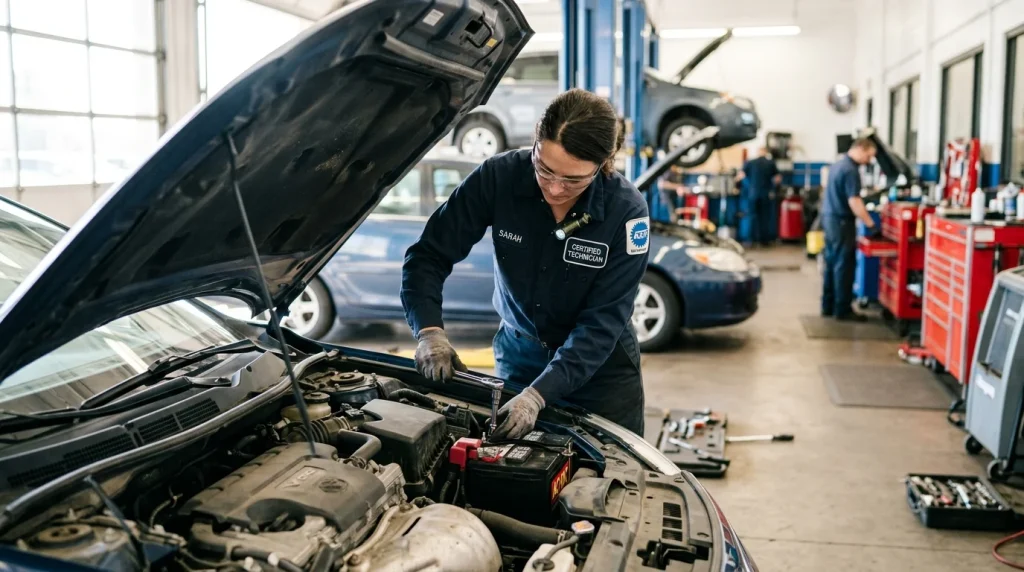
Quick answer: For most standard vehicles, replacing a car battery takes 15 to 30 minutes at a professional repair shop, or 30 to 60 minutes if you perform a DIY replacement. However, if your vehicle requires digital battery registration (such as modern BMW and Audi models) or has a battery hidden behind a wheel well or under the floorboards, the job can take 1 to 2 hours.
Key takeaways:
- Professional mechanics swap an accessible battery in 15 to 30 minutes, while first-time DIYers should allocate 30 to 60 minutes for preparation and cleaning.
- Modern luxury vehicles equipped with an Intelligent Battery Sensor require digital registration, adding 10 to 15 minutes of OBD2 programming.
- Hidden battery locations, such as the front wheel well of a Chrysler Sebring or the floorboards of a Jeep Grand Cherokee, extend replacement times significantly.
- Safety requires disconnecting the negative black cable first and reconnecting it last to prevent short circuits and electrical sparks.
Average Battery Replacement Times: Pro vs. DIY
The time required to change a car battery depends on your mechanical experience, tool availability, and the vehicle design. Experienced technicians can complete the swap quickly, whereas a DIY project requires extra time for safety checks and terminal cleaning.
For standard vehicles with the battery located directly in the engine bay, the physical swap is straightforward. Professional repair shops have specialized terminal pullers, memory savers, and pneumatic tools on hand. This setup allows a technician to complete the job in 15 to 30 minutes.
If you choose the DIY route, you should budget 30 to 60 minutes. As a beginner, you will spend time locating the battery, gathering tools like a 10mm wrench, and cleaning corrosion off the terminal clamps. For more auto maintenance resources and guides, you can visit the Autvex News category page.
| Replacement Method | Average Time | Equipment Required | Key Advantage |
|---|---|---|---|
| Professional Shop | 15 to 30 minutes | Professional hoist, diagnostic scan tools | Faster speed, warrantied labor |
| DIY Installation | 30 to 60 minutes | Basic hand tools, terminal cleaning brush | Cost savings, learning experience |
| Mobile Battery Service | 30 to 45 minutes | Service van, testing equipment | On-site convenience |
| Complex/Luxury Vehicles | 1 to 2 hours | Manufacturer-specific OBD2 scanner | Critical software adaptation |
According to the AAA battery service guide, the entire mobile process takes about 30 to 45 minutes on-site. This time frame includes diagnosing the existing electrical system, confirming whether the battery is dead, and installing the new unit.
Why BMW and Audi Cars Require Battery Registration
Modern European vehicles, including Audi, BMW, Mercedes-Benz, and Porsche, feature sophisticated energy management systems. These systems require a digital process called battery registration (or battery coding) when a new unit is installed. This step typically adds 10 to 15 minutes of electronic diagnostic work.
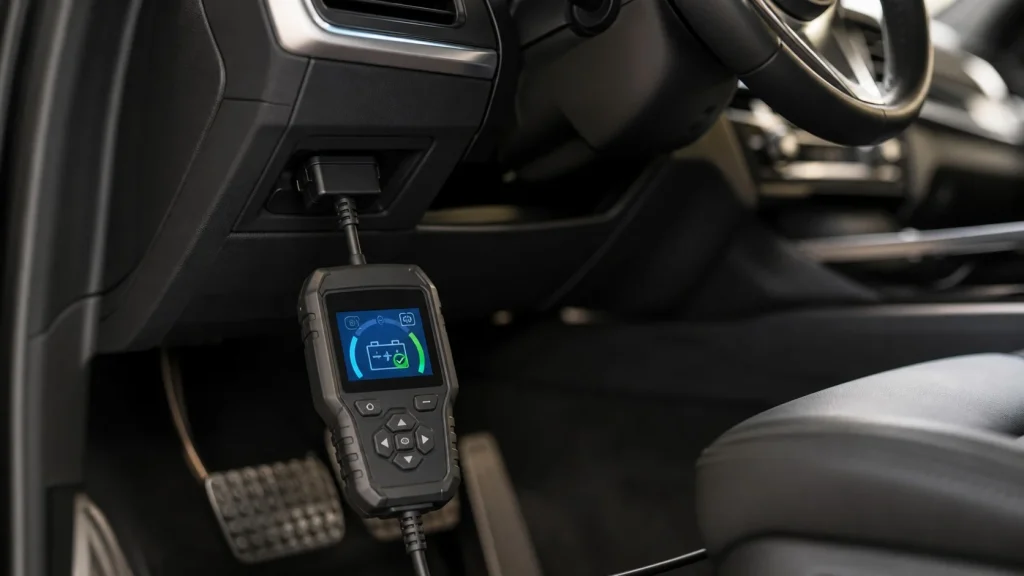
These vehicles use an Intelligent Battery Sensor, or IBS, connected to the negative battery terminal. The IBS constantly monitors the battery’s state of charge, temperature, and internal resistance. As the battery ages over four or five years, its internal resistance increases. In response, the vehicle control module instructs the alternator to increase the charging voltage to keep the system stable.
If you install a new battery without registering it, the vehicle’s computer continues to apply the high-voltage charging profile designed for the old, degraded battery. This leads to systematic overcharging. As explained by BimmerTech, skipping the software reset can ruin a new AGM battery in 12 to 24 months.
Analysis: Battery registration is not a dealer gimmick to increase repair fees. It is an engineering necessity. The alternator adapts its output dynamically based on battery chemistry and aging data. Resetting this history prevents alternator wear and battery overheating.
A technical guide from Banner Batterien warns that without proper registration, the battery may be improperly charged by the alternator, leading to a compromised service life and disabled Start-Stop functions.
Performing this software reset requires connecting a specialized diagnostic scanner to the OBD2 port. This configuration process is similar to the technical steps involved in installing the latest BMW software update to calibrate vehicle computer modules. If you are researching electrical and maintenance issues on pre-owned German cars, you can read our buyer guide on the Audi A4 years to avoid to understand how digital diagnostics impact ownership costs.
Hidden Battery Locations That Extend Replacement Time
Engineers often move the battery out of the engine bay to improve weight distribution, protect the battery from engine heat, or accommodate larger engines. When a battery is hidden in an inaccessible location, the replacement time can easily extend to 1 or 2 hours due to the extensive disassembly required.
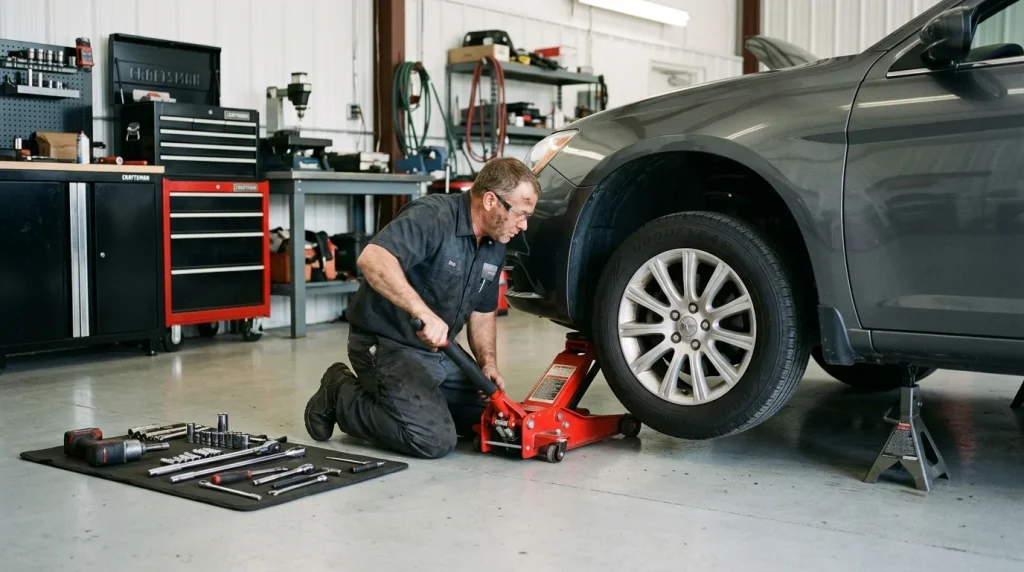
- The Front Wheel Well: In vehicles like the Chrysler Sebring or Dodge Journey, the battery sits behind the front fender lining. A technician must jack up the car, remove the front passenger wheel, and unbolt the inner fender splash shield. This labor-intensive process takes 1 to 2 hours.
- Under the Floorboards: In the Jeep Grand Cherokee and certain Mercedes-Benz SUV models, the battery is hidden under the front passenger seat. To access it, you must slide the seat fully forward, remove the plastic trim, and cut or peel back a carpet flap. This increases replacement time to 45 to 90 minutes.
- The Trunk Compartment: Many sedans, such as various BMW models and the Chevrolet Camaro, mount the battery in the trunk. Accessing it requires removing the spare tire, the trunk floor lining, and plastic trim panels. This structure typically takes 30 to 45 minutes to service.
Common Physical Hurdles That Delay the Job
Even a standard under-hood installation can be delayed by physical obstacles. If your car is older or has been driven in humid climates, these mechanical issues can add 15 to 30 minutes of labor:
- Terminal Corrosion: Leaking battery acid reacts with metal clamp terminals, creating a crusty buildup of white, green, or blue lead sulfate. If the terminals are corroded, they become cemented to the battery posts. You must clean them with a wire brush and a baking soda solution before removing the battery.
- Seized Hold-Down Brackets: The J-hooks and brackets that secure the battery to its tray are exposed to moisture and road salt. If the bolts are rusted, they can easily seize or snap during disassembly. A snapped bolt must be drilled out, which adds unexpected repair time.
Free Battery Installation at Auto Parts Stores: What to Know
Retailers like AutoZone, O’Reilly Auto Parts, and Advance Auto Parts offer free battery installation if you purchase the replacement battery from their store. The swap usually takes about 15 to 20 minutes in the parking lot.
However, retail employees are not certified mechanics. Corporate policies restrict them from performing complex or risky procedures. Auto parts stores will generally decline the installation if your vehicle requires:
- Jacking up the car or removing tires (wheel-well batteries).
- Removing seats or cutting carpet (under-seat batteries).
- Digital battery registration via OBD2 scanners (modern European and domestic cars).
If your car falls into these categories, you can buy the battery at the store to save on parts cost, but you will need to pay an independent shop or dealership to complete the installation.
Safety Procedures and DIY Tips to Save Time
You can complete a DIY battery replacement safely and efficiently by preparing your workspace and following standard safety protocols:
- Gather the Correct Tools: Most car battery terminals use a 10mm or 8mm nut. Have a socket set, safety glasses, gloves, and a wire brush ready before you disconnect the cables.
- Use a Memory Saver: A memory saver plugs into the OBD2 port or cigarette lighter to supply low voltage to the vehicle electrical system while the battery is disconnected. This preserves your radio presets, clock, and ECU memory.
- Observe the Negative-First Safety Rule: Always disconnect the negative black cable first. If you try to remove the positive red cable first and your metal wrench touches the metal body of the car, it will cause a massive electrical short circuit. Once the negative cable is removed, the electrical circuit is broken, and you can safely remove the positive cable. When installing the new battery, reverse the order: connect the positive cable first, and the negative cable last.
Frequently Asked Questions about Car Battery Replacement
Can I replace my car battery myself?
Yes, replacing an accessible, under-hood battery is a beginner-friendly DIY project. It requires basic hand tools and takes 30 to 60 minutes. However, if your car has a hidden battery or requires computer registration, professional tools are necessary.
How long does it take at AutoZone or O’Reilly?
For vehicles with standard engine-bay batteries, the free installation at AutoZone or O’Reilly takes about 15 to 20 minutes. Keep in mind that they will not install batteries on cars requiring computer registration or disassembly of wheels and seats.
Why does luxury car battery replacement take longer?
Luxury car battery replacement takes longer because the vehicle’s computer must be programmed to accept the new battery. Connecting the OBD2 scanner, navigating the diagnostic menus, and writing the new battery specifications adds 10 to 15 minutes of electronic configuration.
What is the fastest way to get my battery replaced?
The fastest option for a standard car is visiting a drive-through quick-lube center or purchasing a battery at an auto parts store for on-the-spot installation. These services typically take 15 to 20 minutes and do not require booking an appointment.
Note: The estimates provided in this guide are averages. Always consult your vehicle owner’s manual for specific battery locations, safety warnings, and system requirements.

