

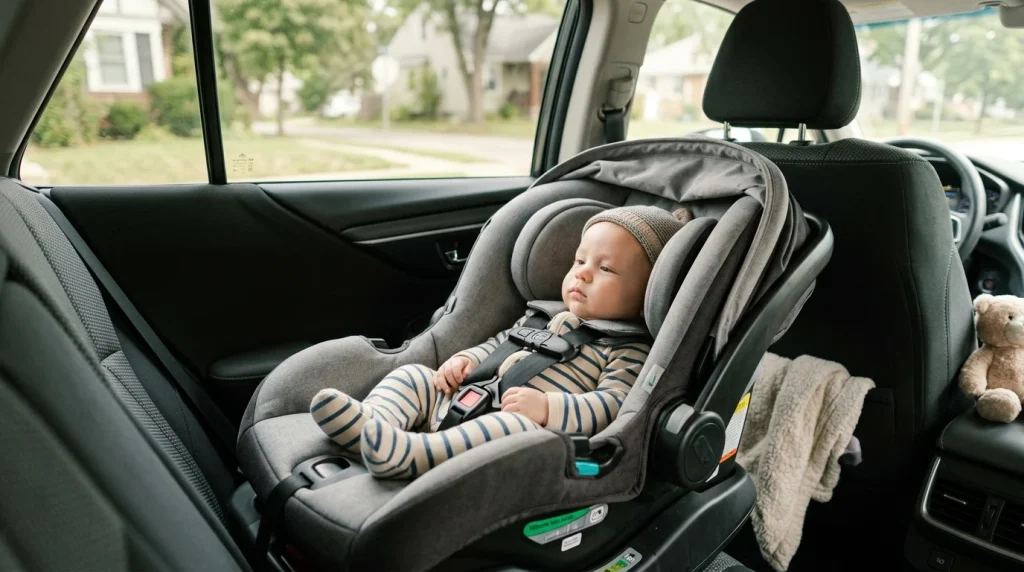
Quick answer: The 2-hour car seat rule becomes less critical once your baby reaches 4 to 6 months of age, as this is when infants typically develop full head and neck control and can sit up unassisted. However, pediatric experts recommend taking regular breaks every 2 hours on long journeys for children of all ages to ensure comfort, circulation, and spinal safety.
Key takeaways:
- The rule prevents positional asphyxia, a dangerous airway restriction caused by a baby’s head slumping forward in a semi-upright seat.
- Newborns under 4 weeks require a stricter 30-minute limit due to their highly immature airway structures and lack of neck muscle strength.
- Car safety seats should only be used for active transport, not as a main sleeping space or general seat outside the vehicle.
What Is the 2-Hour Car Seat Rule?
The 2-hour car seat rule is a safety guideline endorsed by pediatricians, infant health charities, and car seat manufacturers. It advises that babies should not remain in a car seat for more than 2 hours at a time within a 24-hour period. This recommendation applies whether the infant is traveling in a moving vehicle or clicked into a stroller as part of a travel system.
While the rule is a widely accepted standard of care, health organizations such as the UK’s Lullaby Trust note that there is no published clinical study defining a precise, scientifically proven hourly threshold. Instead, the 2-hour limit serves as a practical, evidence-based rule of thumb established by medical consensus to protect developing babies from physiological strain. Car seats are engineered to absorb impact during road accidents, but their semi-upright, curved design is not intended for prolonged sitting or routine sleep.
Why the 2-Hour Rule Matters: The Risk of Positional Asphyxia
The primary reason behind the 2-hour rule is the prevention of positional asphyxia, a life-threatening condition where an infant’s breathing is restricted due to the posture of their body. In a car seat, a baby sits in a semi-reclined position. If the baby’s head slumps forward onto their chest, it can narrow or block their soft trachea, reducing oxygen levels.
Newborns and infants under 4 months are highly vulnerable to this risk because they lack the muscular strength to raise their heads and clear their airways if they slump. Premature infants, low birth weight babies, and children with pre-existing respiratory or cardiovascular issues face an even greater hazard.
Positional asphyxia can occur silently. A baby may experience a decline in oxygen levels without showing obvious signs of distress or crying, eventually losing consciousness. Dr. Erich Batra, MD, FAAP, a researcher at the Pennsylvania State College of Medicine who led a landmark study in the journal Pediatrics on infant deaths in sitting devices, emphasized the critical importance of supervision: “Infants and young children should not be left unsupervised when using a sitting or carrying device due to the risk of suffocation and death.”
When Does the 2-Hour Car Seat Rule End?
The strict necessity of the 2-hour rule ends when a baby achieves two key developmental milestones: full, independent head and neck control, and the ability to sit up unassisted. For the majority of healthy, full-term infants, these physical capabilities develop between 4 and 6 months of age.
Once your baby can hold their head steady without support and adjust their position when their airway is compromised, the risk of positional asphyxia decreases significantly. However, the rule does not disappear completely. While the threat of airway obstruction fades, infants and toddlers still face issues related to restricted blood circulation and spinal strain when seated in a fixed position for too long. For older babies and toddlers, parents should continue to offer regular breaks during long road trips to allow the child to stretch, move, and change postures.
Analysis: Pediatricians caution that motor development is individual. Parents should never relax travel safety precautions based on age alone. If a 5-month-old infant still exhibits head lag or struggles to maintain an upright posture during daily play, the strict 2-hour travel limit must remain in place.
Note: The safety guideline refers to cumulative time spent in the seat. If an infant spends an hour in the car seat during a drive and is then immediately transferred to a stroller while remaining in the same car seat, the clock does not reset. The total elapsed time continues toward the 2-hour limit.
Age-by-Age Car Seat Time Limits
To help parents navigate travel planning safely, safety organizations and healthcare trusts recommend specific maximum continuous time limits based on the baby’s developmental stage:
| Age and Stage | Recommended Travel Limit | Primary Concerns and Safety Actions |
|---|---|---|
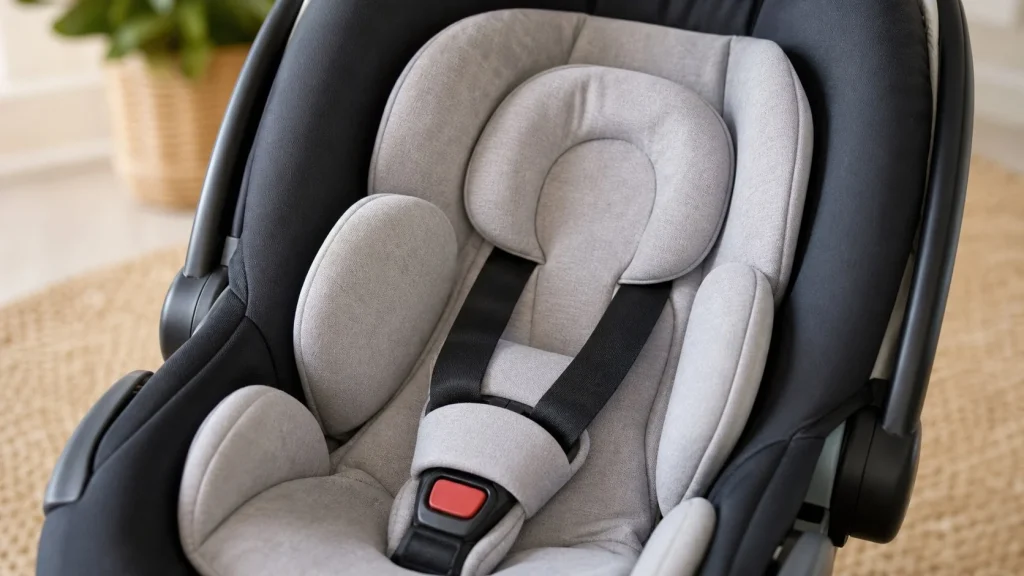
| Newborns (0 to 4 Weeks) | Maximum 30 minutes | Highly vulnerable airways; avoid long journeys; ensure proper use of safety-approved newborn inserts. |
| Infants (1 to 3 Months) | 30 to 60 minutes | Developing neck strength; monitor closely with an additional adult in the rear seat if possible. |
| Infants (3 to 4 Months) | Maximum 2 hours | Strict adherence to the 2-hour limit; plan mandatory stops to remove the baby from the seat. |
| Infants (4 to 6 Months) | 2 hours (cautious flexibility) | Risk decreases as head control improves; monitor posture during long travel stretches. |
| Babies (6 to 12 Months) | 2 hours (flexible with breaks) | Stronger airway control; breaks shift focus to physical comfort, active stretching, and circulation. |
| Toddlers (Over 12 Months) | Flexible with regular stops | Safe for longer stretches; stop every 2 hours to prevent muscle fatigue and support circulation. |
During the first month of life, infants are at the highest risk of oxygen desaturation in car seats. Organizations such as the Royal Society for the Prevention of Accidents (RoSPA) advise keeping travel to a minimum and limiting individual car seat stretches to 30 minutes. When transporting a newborn, utilizing appropriate newborn inserts helps keep their body positioned correctly to keep their airway open, but it does not eliminate the need for strict time limits.
The Danger of Sleeping in Car Seats Outside the Vehicle
A common mistake is allowing a baby to continue sleeping in their infant car seat once the vehicle journey has ended. Car seats are designed to sit at a specific, safe angle when clicked into their dedicated in-car base. When placed on the floor, a table, or a couch, the seat can tilt forward, increasing the risk that the infant’s airway will collapse.
A comprehensive study published in Pediatrics analyzed 11,779 sleep-related infant deaths and found that 348 occurred in sitting devices, with car seats accounting for 62.9% of those cases. Crucially, the vast majority of these car seat deaths occurred when the seat was used as a sleep environment outside of the vehicle, often without supervision or proper harnessing.
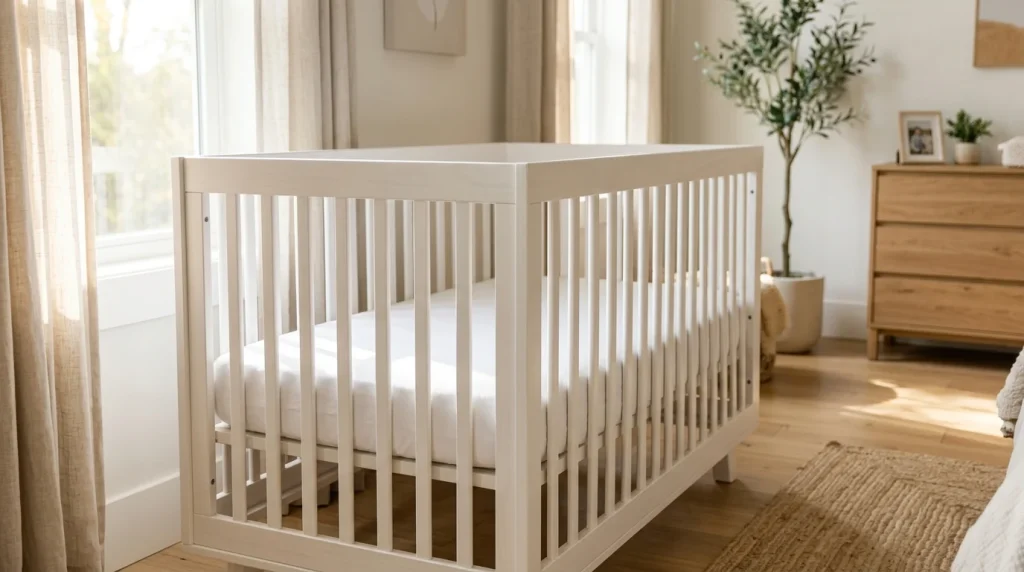
Co-author of the study, Dr. Jeffrey D. Colvin, MD, JD, FAAP, from Children’s Mercy Hospital, stated: “While car seats are always the best place for babies when they are being transported in a vehicle, that doesn’t mean they are the safest place when they’re sleeping outside of the car.” He added: “But you just have to remember that car seats are for cars and when you get out of the car, the safest thing to do, if your infant is still sleeping, would be to put them in a bassinet or a crib.”
For parents seeking more information on choosing safety-certified seats that position babies properly during active travel, the NHS guidelines on choosing a baby car seat provide clear standards on seat categories and fitting protocols.
Practical Tips for Safe Infant Travel
Planning ahead is key to managing long-distance travel with an infant while keeping within the safe limits of car seat use. The following practices help minimize risks:
- Schedule Breaks: Plan your route to include safe stops every 1.5 to 2 hours. Take the baby completely out of the car seat, lay them flat on a clean blanket, and allow them to stretch their limbs, feed, and play for at least 15 to 20 minutes.
- Never Leave a Baby Unattended: A baby in a car seat must always be supervised. This safety rule is paramount both during active travel and when stationary. In addition to airway concerns, leaving children alone in hot or cold environments carries severe heatstroke risks and legal consequences. Refer to the guide on leaving children unattended in a vehicle to understand the safety laws and physical dangers involved.
- Check Equipment Expiration: Before embarking on family road trips, inspect manufacturer labels to confirm where the car seat expiration date is located and ensure materials have not degraded past their safety lifespan.
- Monitor Recline Angles: Ensure your infant car seat is installed at the correct recline angle recommended by the manufacturer. Most infant seats include a color-coded level indicator to ensure the seat is not installed too upright.
- Use Stroller Bassinets for Extended Walks: If you are running errands or going for a long walk at your destination, transfer your baby from the car seat to a flat stroller bassinet attachment. Flat surfaces are the gold standard for infant safety and are fully recommended under the American Academy of Pediatrics safe sleep recommendations.
- Have a Rear Observer: Whenever possible, one adult should sit in the back seat next to the infant to monitor their breathing, head position, and overall comfort during the drive.
Frequently Asked Questions
Can a baby stay in a car seat longer than 2 hours if they are sleeping?
No. Even if a baby is sleeping soundly, you should not exceed the 2-hour limit. Sleeping infants are at risk of head slumping, which can silently restrict their breathing. Plan to stop, remove the baby from the seat, and let them lie flat to stretch before continuing your journey.
Does the 2-hour rule apply to strollers and travel systems?
Yes. The rule measures cumulative time spent in the car seat. If a baby is in the car seat for an hour during a drive, and then clicks onto a stroller for another hour, they have reached the 2-hour limit. To extend your stroller outings safely, use a flat carrycot or bassinet attachment instead of the car seat.
What should I do if my baby falls asleep in the car seat during a trip?
It is safe for a baby to sleep in a properly installed car seat while the vehicle is in motion, provided they are supervised. However, once you arrive at your destination, you must transfer your baby to a firm, flat surface such as a crib, bassinet, or play yard for sleep. Do not leave a sleeping baby in a car seat inside the house.
When is it safe to travel long distances with a premature baby?
Premature babies and low birth weight infants are more vulnerable to oxygen desaturation and breathing difficulties in car seats. You should consult your pediatrician before planning any long journeys. Many neonatal units perform a “car seat challenge” test before discharge to ensure the baby can maintain a stable airway while seated.

