You may also like:
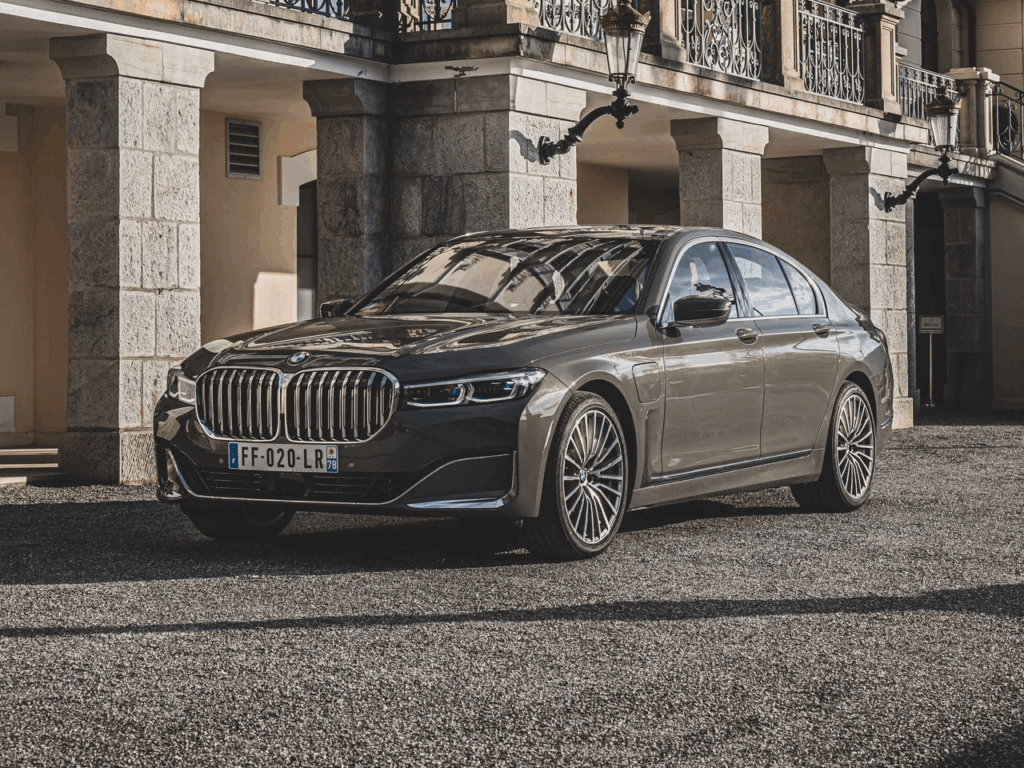
The 2023 BMW 7-Series marks a bold redesign that finally gives BMW’s flagship sedan the presence to challenge the Mercedes-Benz S-Class[1]. This isn’t just an evolution—it’s a complete reimagining with futuristic tech like a 31.3-inch rear Theater Screen and hands-free highway driving, wrapped in a polarizing exterior that will either win you over or send you running to the Audi dealer[2]. For buyers who prioritize tech wizardry and want something different from the understated German luxury playbook, the new 7-Series delivers—though its reliability track record already shows some concerning patterns.
Overview Table
| Specification | 740i | 760i xDrive |
|---|---|---|
| Starting MSRP | $92,295 | ~$117,395 |
| Engine | 3.0L Turbo I6 + 48V Mild Hybrid | 4.4L Twin-Turbo V8 + 48V Mild Hybrid |
| Horsepower | 375 hp | 536 hp |
| 0-60 mph | 5.0 sec (BMW est.) / 5.2 sec (KBB) | 3.5 sec (tested) |
| Drivetrain | RWD | AWD |
| EPA Combined | 27 mpg | 21 mpg |
| Trunk Space | 19 cu ft | 19 cu ft |
Data from Car and Driver[1], Kelley Blue Book[3], and TrueCar[4]
Design and Practicality
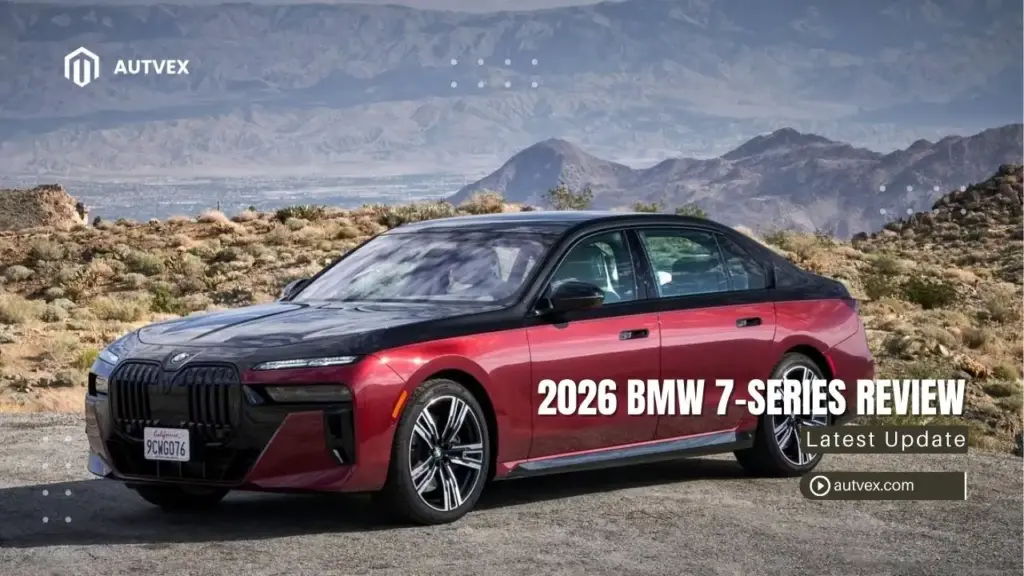
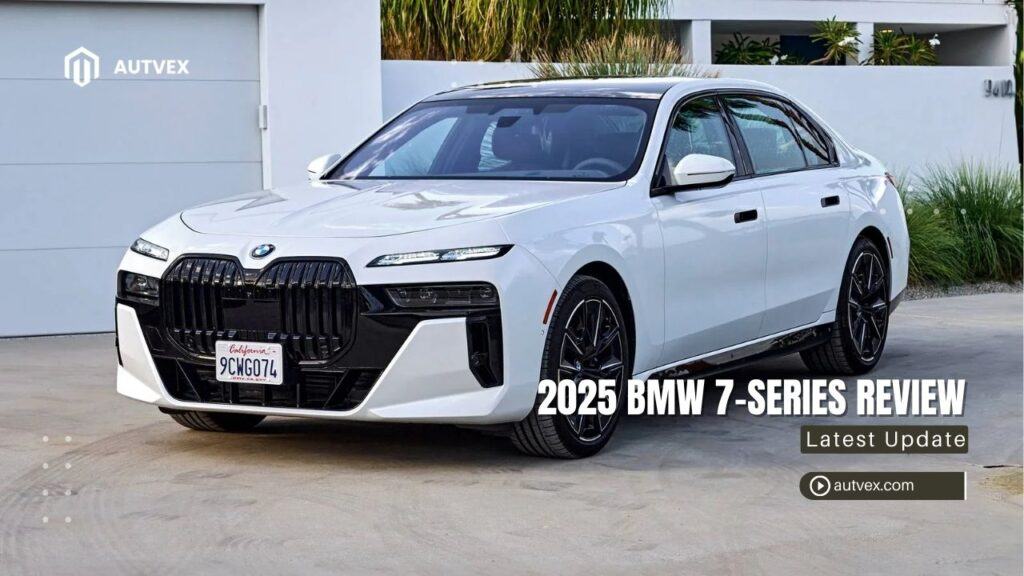
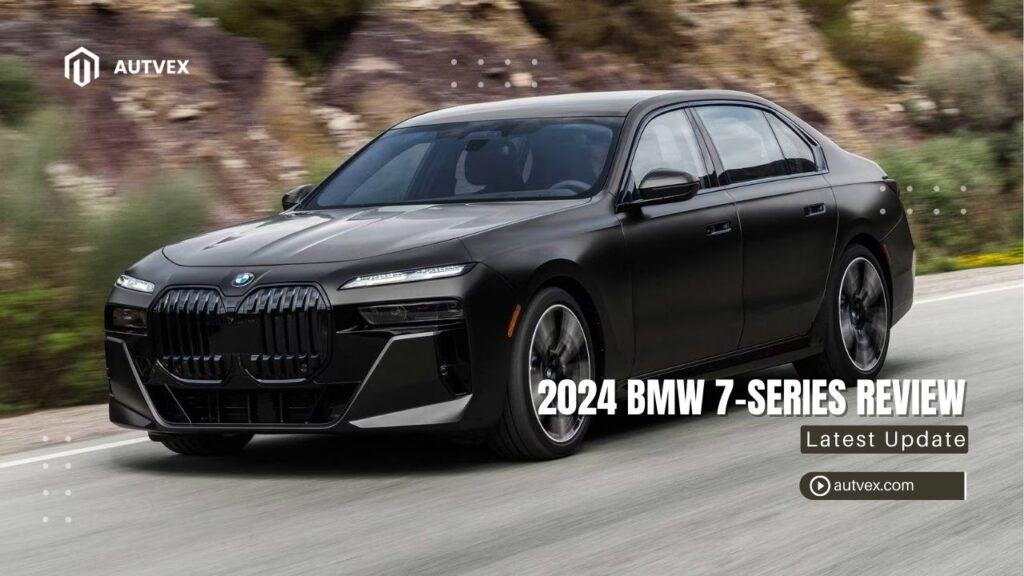
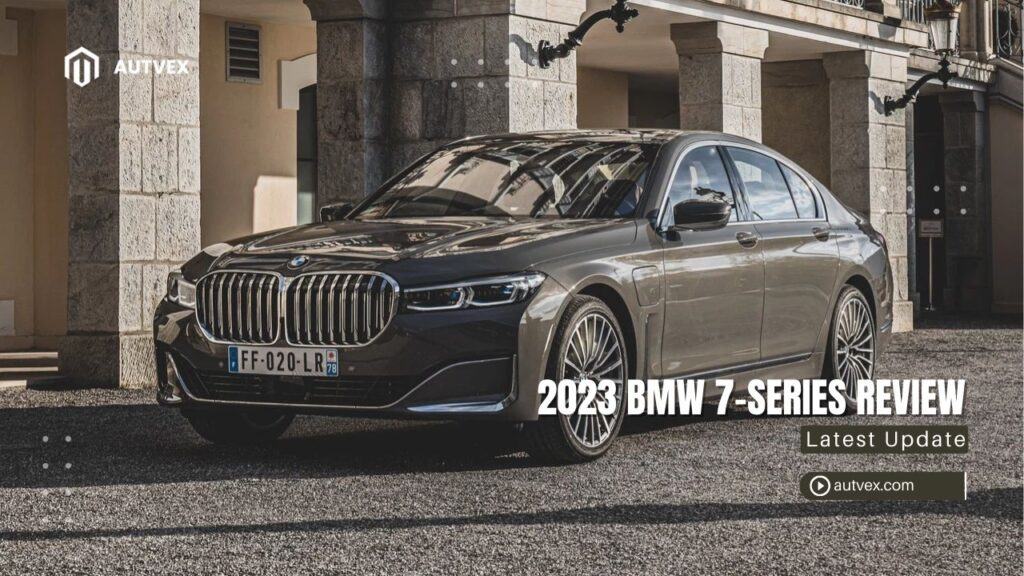
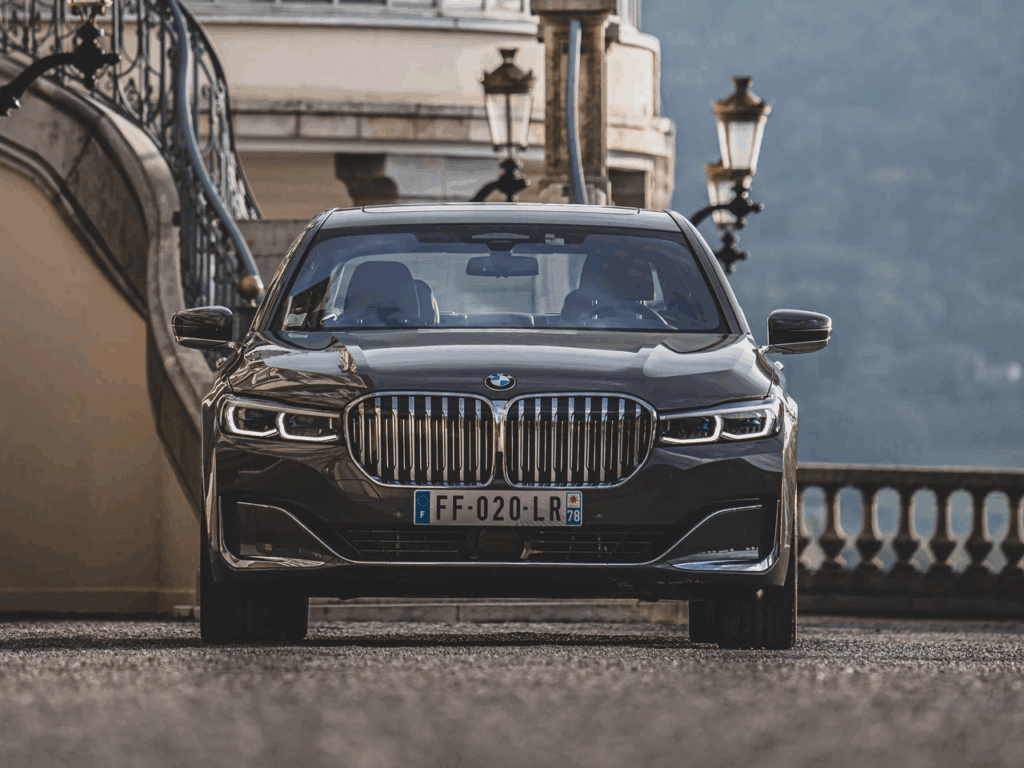
BMW took massive risks with the 2023 7-Series exterior—and reactions have been mixed. The split headlight design and oversized kidney grilles aren’t subtle, but they’re distinctive. Where the previous generation looked like a stretched 5-Series, this one announces itself from a block away[2].
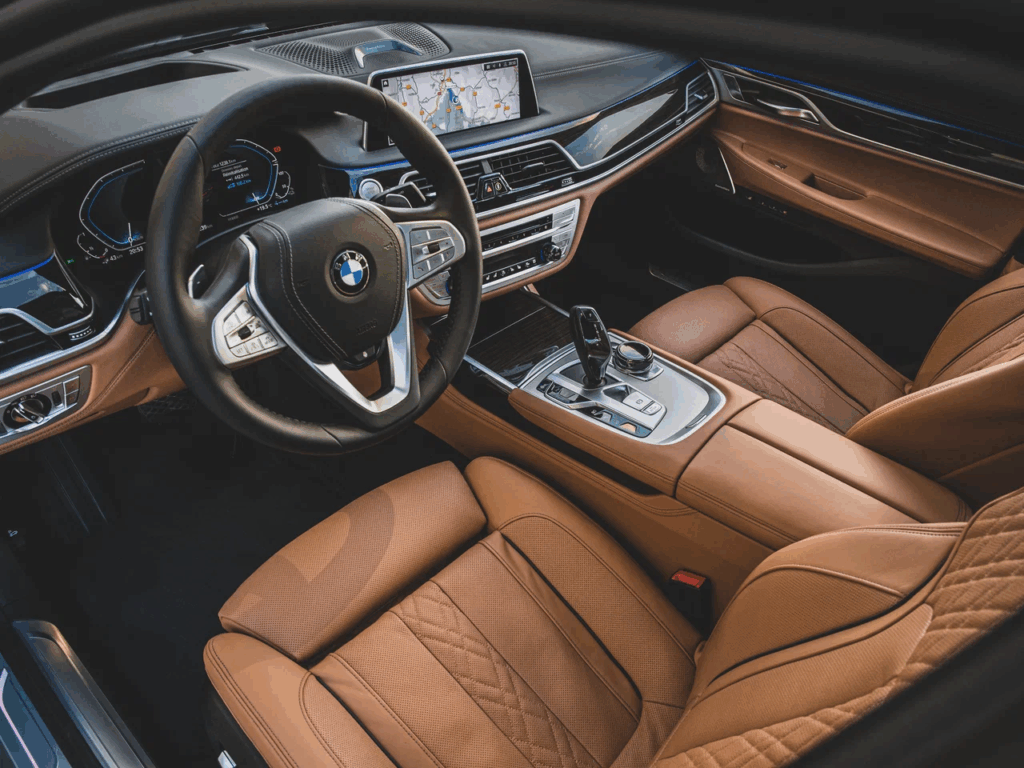
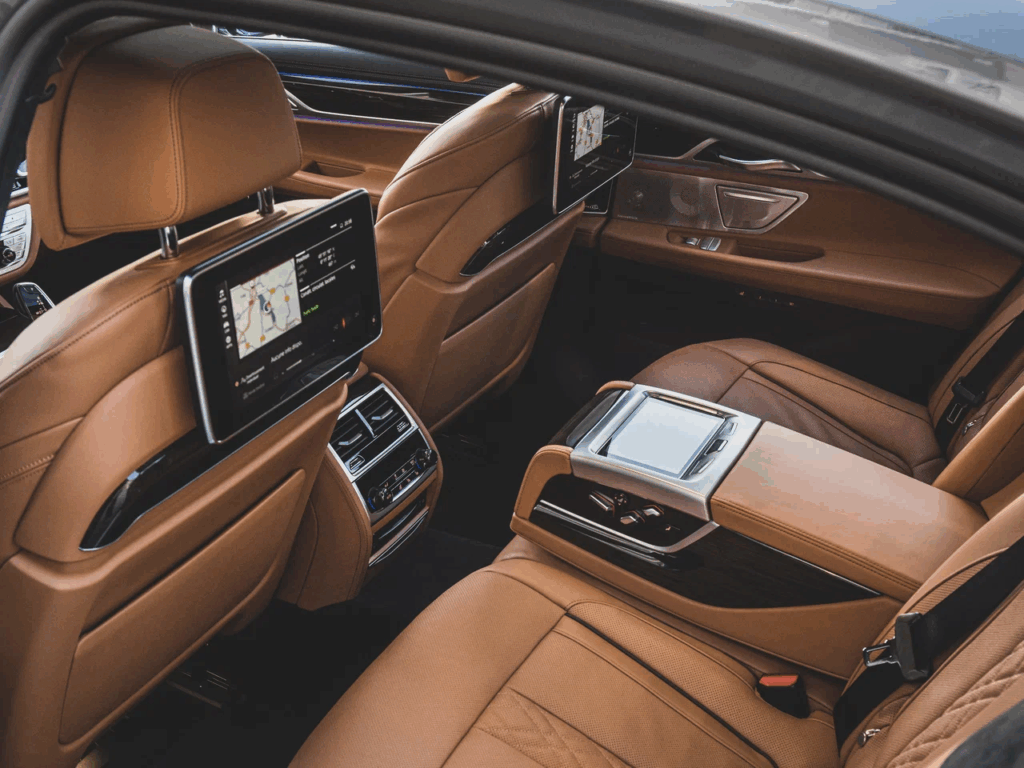
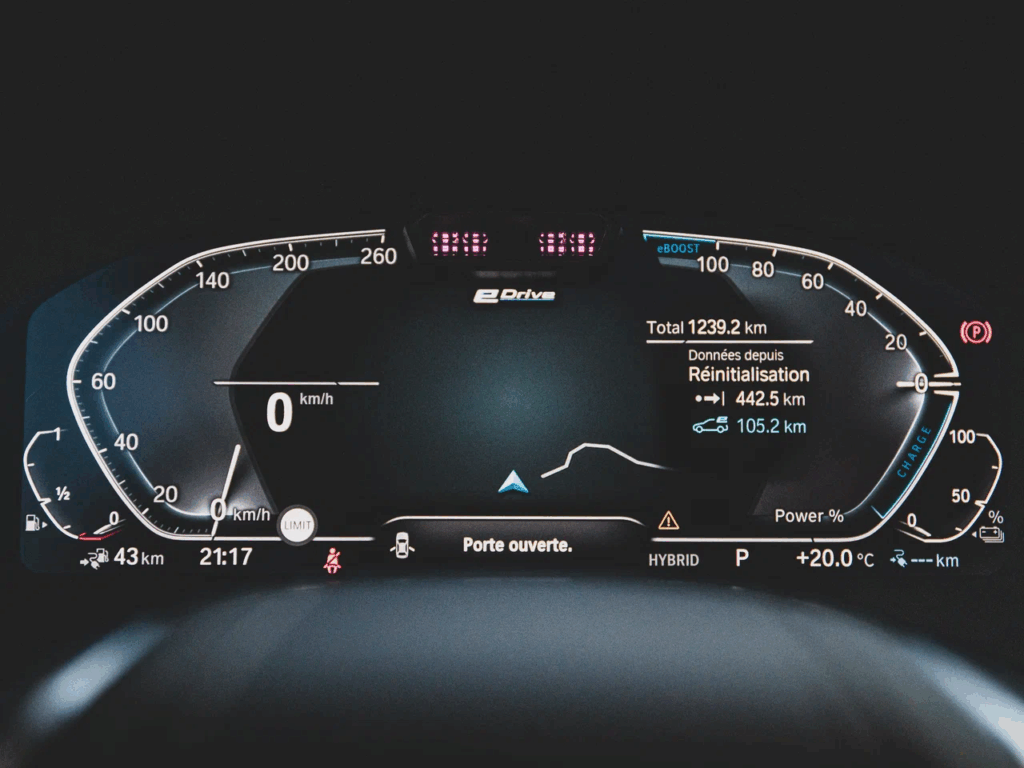
Inside is where things get genuinely special. Rich-smelling leathers, stainless steel accents, and fancy glass and wood trim give the cabin a posh vibe that rivals anything from Stuttgart[1]. BMW even lets you spec cashmere upholstery if that suits your aesthetic. The 7-Series uses the same dashboard layout as the iX SUV, with a large digital gauge display mounted under the same curved glass panel as the infotainment touchscreen[1].
Here’s the thing: passenger space is generous front and rear, but the 7-Series impresses most with the Executive Lounge package. You get power-adjustable reclining rear seats with massage, a wireless smartphone charging pad for rear passengers, and adjustable neck cushions—the kind of stuff that makes backseat duty actually enjoyable on long trips[1]. The 19 cubic-foot trunk handles luggage duty capably, with a rear-seat pass-through for hauling longer items like skis.
Performance and Efficiency
Two powertrains. Choose wisely.
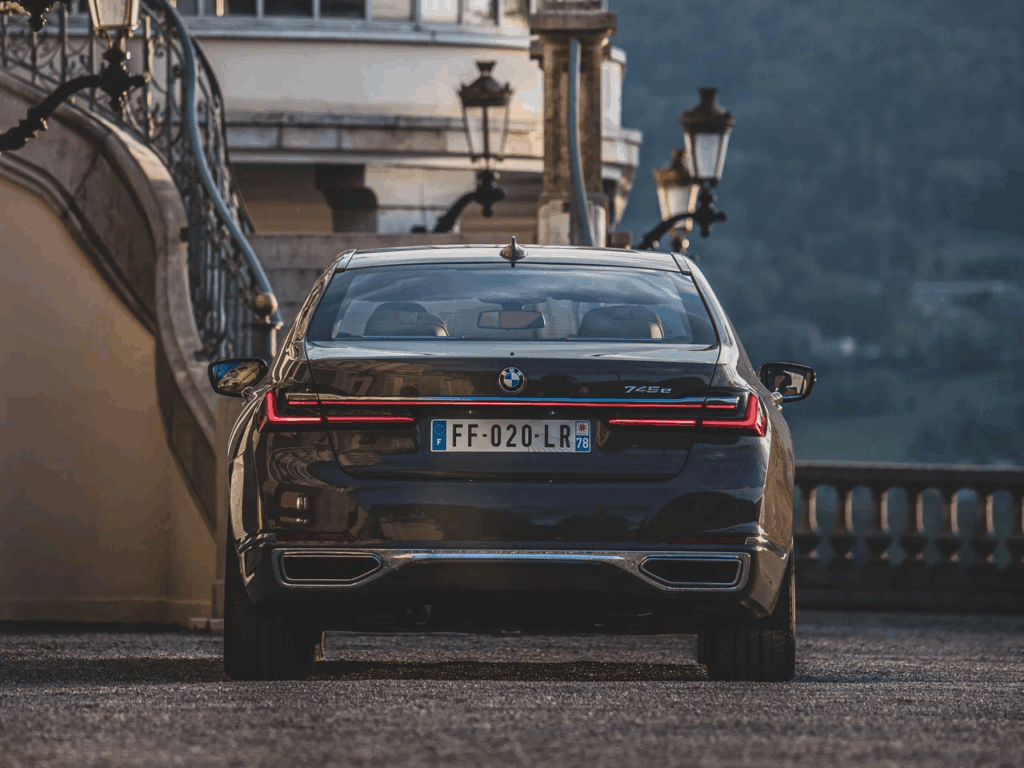
The 740i runs BMW’s silky turbocharged inline-six making 375 horsepower, assisted by a 48-volt mild hybrid system[1]. Edmunds recommends this engine—and I’d agree—because it’s more than enough power for a car this size while saving roughly $25,000 over the V8[5]. BMW estimates 0-60 in 5.0 seconds, which is plenty quick for real-world driving.
The 760i xDrive steps up to a 536-hp twin-turbocharged 4.4-liter V8 with standard all-wheel drive[1]. Car and Driver tested it at 3.5 seconds to 60 mph—faster than BMW’s own 4.2-second claim[1]. On their 75-mph highway fuel economy test, the 760i returned 30 mpg despite its V8 power, beating the EPA’s 26 mpg highway estimate[1].
Where does the 7-Series surprise? Handling. An air suspension comes standard, with adaptive dampers and rear-wheel steering helping shrink this big sedan’s turning radius[1]. Edmunds notes the steering effort is light, but the car never feels sloppy or imprecise[2]. That said, there’s a catch: from a stop, the car tilts back too far as you accelerate, creating a swaying motion before things rebalance[2]. It rides better than most vehicles, but the S-Class still has the edge for pure isolation.
Technology and Features
The tech story here is wild. Start with that 31.3-inch Theater Screen that drops from the ceiling like something out of a private jet[1]. With 8K resolution and Amazon Fire integration, rear passengers can stream Netflix or browse the web using the onboard 5G hotspot[2]. There’s also an HDMI plug for connecting a game console—useful for the kids, or the kid in you.
But here’s what the spec sheet doesn’t tell you: that massive Theater Screen can obstruct rearward visibility when deployed[2]. The car’s camera systems compensate, but it’s something to consider if you prefer unobstructed sightlines.
BMW’s Highway Assistant allows hands-free driving up to 80 mph on mapped highways[2]. Edmunds found the system keeps the car well-centered and accelerates smoothly—though you’re still responsible for paying attention. For long highway slogs, it’s genuinely useful tech that puts the 7-Series ahead of some competitors.
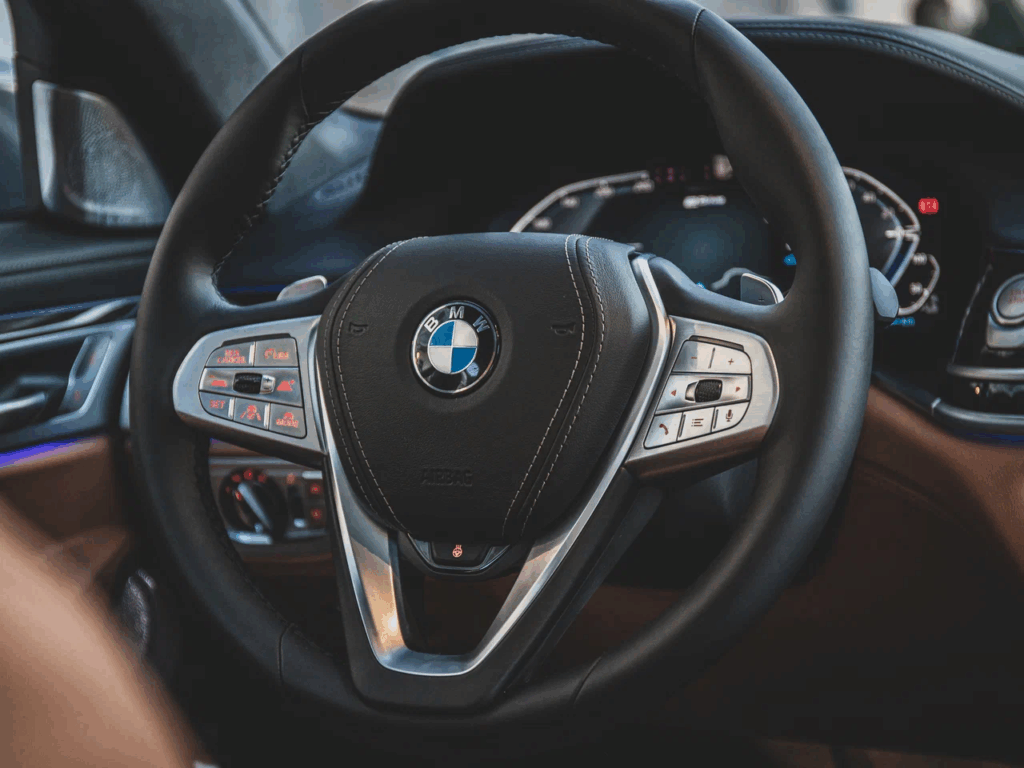
The iDrive 8.5 infotainment (available via over-the-air update) delivers crisp resolution and snappy responses[1]. One frustration: BMW eliminated many physical buttons, which Edmunds calls out as potentially frustrating for owners who prefer tactile controls[2]. If you’re the type who memorizes button locations, the learning curve might annoy you.
Standard features across both trims include 20-inch wheels, adaptive headlights, heated power-folding mirrors, soft-close doors, a panoramic sunroof, four-zone climate control, leather upholstery, heated front seats, and a heated steering wheel[4]. That’s a solid baseline for a car in this class.
Ownership Costs and Reliability
This is where enthusiasm should meet caution.
BMW includes three years or 36,000 miles of complimentary scheduled maintenance—a perk that Mercedes-Benz and Audi don’t match[1]. The Genesis G90 matches BMW’s free maintenance but comes with longer warranty terms overall. BMW’s warranty runs four years or 50,000 miles for basic and powertrain coverage.
The reliability picture is concerning. RepairPal gives the 7-Series a 2 out of 5 reliability rating, ranking it #40 out of 48 among luxury full-size cars[2]. And the 2023 model has already accumulated 10 recalls, including multiple issues related to the integrated brake system that could result in loss of power brake assist[2].
Edmunds’ cost-to-drive estimate runs about $161 per month, accounting for depreciation, fuel, insurance, and maintenance[2]. Premium fuel is required. If you’re cross-shopping with the Genesis G90, that Korean competitor delivers similar luxury with better predicted reliability—something worth weighing against BMW’s badge prestige.
Pros and Cons
Strengths
- Engines deliver smooth, powerful acceleration—the inline-six handles daily driving effortlessly while the V8 provides genuine performance when you want it[2]
- Interior finally matches S-Class levels of luxury with high-quality materials, futuristic design, and that wild 31.3-inch Theater Screen option[1]
- Hands-free Highway Assistant works as advertised up to 80 mph, making long interstate drives significantly less fatiguing[2]
- Three years of complimentary maintenance saves money compared to Mercedes and Audi competitors[1]
- More agile handling than expected for a car this size, with rear-wheel steering helping in tight spaces[2]
Weaknesses
- Lack of interior buttons can frustrate owners who prefer tactile controls over touchscreen-only interfaces[2]
- Optional rear Theater Screen obstructs rearward visibility when deployed, forcing reliance on camera systems[2]
- RepairPal’s 2/5 reliability rating and 10 recalls already on record raise long-term ownership concerns[2]
- Suspension doesn’t quite match the S-Class or even BMW’s own i7 for buttery-smooth isolation at low speeds[2]
- Polarizing exterior styling won’t appeal to buyers who prefer understated luxury like the Audi A8[2]
Final Verdict
The 2023 BMW 7-Series is the most ambitious flagship sedan BMW has ever built. It takes design risks, pushes technology boundaries, and delivers driving dynamics that belie its size. For buyers who want to be noticed and prioritize tech over tradition, it’s genuinely compelling.
But that ambition comes with trade-offs. The reliability concerns are real—10 recalls in its first production year isn’t reassuring, and RepairPal’s rating suggests ownership may require patience. The button-free interior will frustrate some, and the ride quality still trails the S-Class benchmark.
- Choose the 2023 BMW 7-Series if: You want the most tech-forward luxury sedan available, prefer BMW’s sportier driving character, and can tolerate potential reliability hiccups during the warranty period.
- Consider the Mercedes-Benz S-Class if: Ride quality and isolation matter most, or you want a more refined, button-heavy interior experience.
- Look at the Genesis G90 if: You want similar luxury and technology at a lower price point with better predicted reliability and a longer warranty.
FAQs
Is the 2023 BMW 7-Series reliable?
Early signs suggest caution. The 2023 7-Series has accumulated 10 recalls, including brake system issues affecting multiple vehicle functions[2]. RepairPal rates the 7-Series at 2 out of 5 for reliability, ranking it #40 out of 48 luxury full-size cars. BMW’s three-year free maintenance helps offset costs, but buyers should expect more dealer visits than the class leaders.
How much does a fully-loaded 2023 BMW 7-Series cost?
A well-equipped 760i xDrive can reach $151,845 or higher with popular options[1]. That includes packages like the Rear Executive Lounge Seating ($7,250), Bowers & Wilkins sound system ($4,800), Executive package with automatic doors ($3,700), and the Driving Assistance Pro package ($2,100). The Theater Screen is bundled with Executive Lounge Seating.
Which 2023 BMW 7-Series trim should I buy?
Edmunds recommends the 740i because the turbocharged inline-six provides more than enough power while saving roughly $25,000 versus the V8[5]. Put that savings toward the Driving Assistance Professional package for hands-free highway driving and the Executive package for ventilated and massaging seats with automatic doors.
How does the 2023 BMW 7-Series compare to the Mercedes S-Class?
The S-Class prioritizes ride comfort and has a more conventional (some would say refined) interior with physical controls[2]. The 7-Series counters with more aggressive styling, that 31.3-inch Theater Screen, hands-free highway driving, and sportier handling. The S-Class starts about $23,000 higher than the base 740i.
References
- Car and Driver. (2023). 2023 BMW 7-Series Review, Pricing, and Specs. https://www.caranddriver.com/bmw/7-series-2023
- Edmunds. (2023). 2023 BMW 7 Series Review & Ratings. https://www.edmunds.com/bmw/7-series/2023/
- Kelley Blue Book. (2023). 2023 BMW 7 Series Specs, Features & Options. https://www.kbb.com/bmw/7-series/2023/specs/
- TrueCar. (2023). 2023 BMW 7 Series Review | Pricing, Trims & Photos. https://www.truecar.com/overview/bmw/7-series/2023/
- Edmunds. (2023). 2023 BMW 7 Series Trims Comparison. https://www.edmunds.com/bmw/7-series/2023/trims/

I am a senior automotive analyst at Autvex. Expert vehicle evaluations, in-depth reviews, and objective analysis helping readers make informed automotive decisions with years of industry experience.