

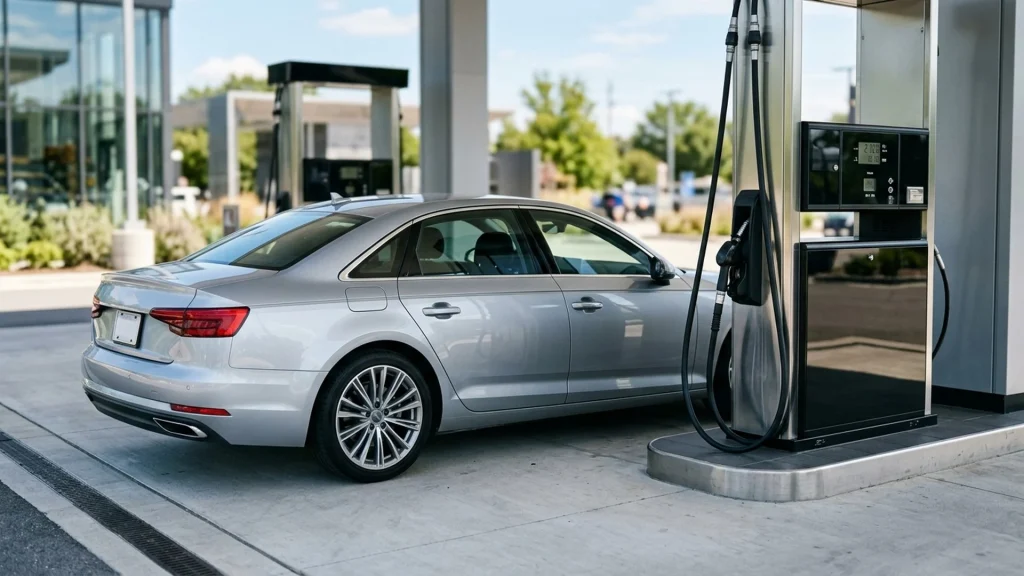
Quick answer: Most Audi vehicles can technically run on regular 87-octane gasoline in emergencies, but it is not recommended for daily use. Except for specific models like the redesigned 2026 Audi Q3, standard Audi turbocharged engines require premium 91-octane fuel. Using lower octane fuel triggers knock sensors to retard ignition timing, which directly reduces engine horsepower and fuel economy.
Key takeaways:
- Most Audi turbocharged engines require a minimum of 91-octane premium gasoline to function optimally.
- The redesigned 2026 Audi Q3 is a rare exception that is engineered to run on regular 87-octane fuel.
- Using regular gas in an engine designed for premium reduces fuel economy by 5% to 10%.
- Repeated use of low-octane fuel leads to carbon buildup and can void your manufacturer warranty.
Understanding Audi Engine Design: Why Octane Matters
Audi engines are engineered for high-performance driving. To achieve this, the German automaker utilizes turbochargers and high compression ratios. For instance, the widely used EA888 Gen 4 2.0-liter TFSI engine features a compression ratio of up to 11.7:1. In a high-compression environment, air and fuel are squeezed tightly in the cylinders before ignition, creating a high-heat environment that generates substantial horsepower.
The fuel’s octane rating measures its stability under pressure. Regular 87-octane gasoline is less stable and ignites easily under high temperatures. If you put regular gas in a high-compression Audi engine, the fuel may detonate prematurely. This early combustion is known as engine knocking or pre-ignition, which can cause severe mechanical damage over time. Premium 91-octane or 93-octane fuel is chemically formulated to resist pre-ignition, ensuring that the fuel ignites only when the spark plug fires.
Modern Audi vehicles feature active engine management systems equipped with sensitive knock sensors. When these sensors detect premature detonation, the engine control unit immediately retards the ignition timing. This delayed spark prevents immediate engine damage, but it reduces the overall efficiency of the combustion cycle. Consequently, the driver experiences sluggish throttle response, reduced acceleration, and lower efficiency.
Short-Term vs. Long-Term Effects of Using Regular Gas
If you accidentally fill your Audi with 87-octane regular gasoline once, there is no need to panic. The onboard computer adjusts the ignition parameters within milliseconds to protect the internal components. You can continue driving normally, though you should avoid towing heavy loads or accelerating aggressively until you can refill the tank with premium fuel.
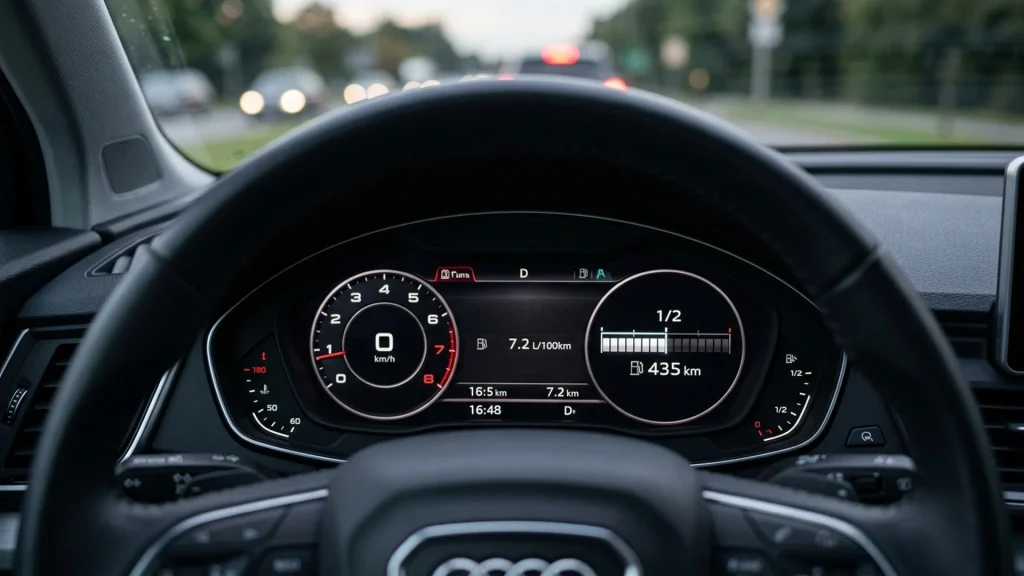
However, using regular gasoline consistently leads to progressive engine degradation. In direct-injection engines, incomplete combustion results in rapid carbon buildup on the intake valves and fuel injectors. Over time, these deposits restrict airflow and disrupt fuel spray patterns, leading to rough idling, engine misfires, and expensive cleaning services.
The differences in engine behavior between a single occurrence and repeated regular gasoline usage are outlined in the comparison table below:
| Feature / Metric | Short-Term Effect (One Tank) | Long-Term Effect (Consistent Use) |
|---|---|---|
| Engine Knock Risk | Low (managed by knock sensors) | Moderate to High (under heavy acceleration or heat) |
| Horsepower Output | 5% to 10% reduction in peak power | Permanent sluggishness and loss of performance |
| Fuel Economy (MPG) | 5% to 10% decrease per gallon | Consistent drop in miles per gallon |
| Engine Deposits | Negligible carbon accumulation | Heavy carbon buildup on valves and injectors |
| Maintenance Costs | Zero immediate repair costs | High costs for decarbonization ($300 to $500) |
| Warranty Status | Unaffected (temporary usage) | High risk of voiding engine warranty coverage |
Under high-load driving conditions, such as driving up steep inclines or carrying heavy cargo, the engine requires maximum ignition stability. Operating on regular gasoline during these times increases the likelihood of pre-ignition, which can damage pistons, cylinder walls, and spark plugs.
Which Audi Models Can Accept Regular Gas?
Fuel requirements vary across different Audi models and model years. You should always check the sticker inside your vehicle’s fuel door or refer to the owner’s manual to confirm the specific fuel requirements.

Audi Q3: The 2026 Regular Gas Exception
The standout exception in the manufacturer’s lineup is the redesigned 2026 Audi Q3. Equipped with a redesigned 2.0-liter turbocharged four-cylinder engine generating 255 horsepower, the 2026 model is officially engineered to accept regular 87-octane gasoline. This update represents a major shift, allowing crossover owners to save money at the pump without risking engine damage. According to Car and Driver’s analysis of regular-gas luxury vehicles, the 2026 Audi Q3 does not require premium fuel for daily operation, though using premium fuel is still recommended if you want to achieve the maximum rated horsepower.
Audi A3: Base Configurations
Select base configurations of older Audi A3 sedans also accept regular gasoline. These models feature lower-output engine tunes that tolerate 87-octane fuel without triggering severe timing retards. However, similar to the Q3, the manufacturer still recommends premium fuel to ensure optimal engine performance and efficiency.
Audi A4 Fuel Requirements
Unlike the smaller Q3, the standard Audi A4 sedan requires premium gasoline. The turbocharged 2.0-liter engine in the A4 is tuned for higher boost pressure, meaning that regular 87-octane fuel will cause the engine computer to retard timing immediately. If you own an Audi A4, you must use 91-octane or higher to maintain standard performance.
Audi Q5 Fuel Requirements
The popular Audi Q5 SUV is designed with a high-output variant of the turbocharged engine. The manufacturer requires premium gasoline for the Q5. Using 87-octane regular gas in the Audi Q5 reduces fuel economy significantly and increases the risk of long-term carbon buildup, making premium fuel the only logical choice for daily driving.
Performance Models (S, RS, and R8)
For high-performance Audi models, including the S3, S4, S5, SQ5, RS models, and the R8, premium gasoline is mandatory. These engines feature extreme boost pressures and specialized calibration. Running 87-octane fuel in an RS model can trigger emergency limp mode, generate check engine lights, and cause immediate engine knock.
Expert view: Running regular gasoline in a performance-oriented Audi Q5 or A4 is a counterproductive practice. The electronic control unit will safeguard the engine from immediate damage, but you will experience sluggish throttle response and a rougher idle. To keep your vehicle in prime mechanical condition, check the general news section for automotive maintenance tips, or consult our detailed Audi servicing guidelines to understand how premium maintenance preserves vehicle resale value.
The Math: Does Regular Gas Actually Save You Money?
Many owners choose regular gasoline hoping to reduce their daily driving costs. However, a basic cost analysis reveals that the savings are largely illusory due to the decrease in fuel efficiency.
Let us evaluate a typical driving scenario:
- Fuel Tank Capacity: 16 Gallons
- Regular Gas Price: $3.50 per gallon ($56.00 to fill)
- Premium Gas Price: $3.90 per gallon ($62.40 to fill)
- Immediate Pump Savings: $6.40 per fill-up
If your Audi achieves an average of 25 miles per gallon on premium fuel, you can drive 400 miles on a full tank. When you use regular 87-octane gasoline, the engine’s combustion efficiency drops, reducing your fuel economy by approximately 8%. This reduces your average fuel economy to 23 miles per gallon, yielding a total driving range of only 368 miles.
To drive 400 miles on regular gasoline, you will need to burn an additional 1.4 gallons of fuel, which costs $4.90. This cuts your real savings down to just $1.50 per tank. When you factor in the long-term risk of carbon cleaning services, which cost between $300 and $500, or potential ignition system repairs, the temporary savings disappear entirely.
Similar fuel efficiency losses occur across other turbocharged performance powertrains when octane drops below factory ratings, as detailed in our analysis of Civic Type R gas mileage under real-world conditions.
The Verdict: Should You Use Premium Gas in Your Audi?
Protecting your engine’s longevity should be your primary concern. Unless you drive a model specifically calibrated for regular fuel, such as the 2026 Audi Q3, you should always invest in premium 91-octane or 93-octane fuel.
To determine your vehicle’s requirements, perform these simple checks:
- Locate the fuel door release and open the fuel flap.
- Read the factory sticker on the inside of the fuel door.
- Check the warning label for phrases such as “Premium Fuel Required” or “Minimum 91 Octane.”
- Check the gas cap itself, as some model years print the octane requirement directly on the cap.
Using gasoline that falls below the manufacturer’s required octane rating can also lead to warranty issues. If a major engine component fails and the dealership detects low-octane fuel in the system, your warranty claim may be denied. For more information on handling unexpected mechanical problems, refer to our Audi transmission malfunction guide to learn how the vehicle’s computer handles critical component failures.
Note: Fuel octane requirements can change by model year and regional market. Always verify the specifications inside the fuel door before filling up your vehicle.
Frequently Asked Questions
Which Audis do not need premium gas?
Most Audi models require premium fuel, but select base configurations accept regular gas. The redesigned 2026 Audi Q3 is engineered to run on regular 87-octane fuel, representing a major exception in the 2026 luxury crossover market.
What kind of gas can you put in an Audi?
You can use regular 87-octane, mid-grade 89-octane, or premium 91-octane and higher gasoline in an Audi, depending on the model. However, standard turbocharged models recommend or require 91-octane fuel to prevent knocking and maintain performance.
Will one tank of regular gas damage my Audi?
No, a single tank of regular 87-octane gasoline will not cause permanent damage to your Audi. The engine management system detects the lower octane fuel using knock sensors and adjusts the ignition timing automatically to protect the components.
Does using premium gas improve performance in an Audi that only requires regular?
No, using premium 91-octane fuel in an Audi that is designed to run on regular gas will not yield significant improvements in horsepower or fuel efficiency. You will simply be paying more at the pump without receiving tangible engine benefits.
Can using regular gas void my Audi warranty?
Yes, using regular gas can void your Audi warranty if the owner’s manual specifies that premium fuel is required and the engine suffers damage linked to the use of lower-octane fuel. Always check the fuel door sticker for the minimum required octane.
Why does my Audi knock when I use regular gas?
Knocking occurs because regular 87-octane fuel ignites prematurely under the high pressure and temperature of Audi’s turbocharged cylinders. While knock sensors mitigate this by retarding timing, persistent knocking indicates that you need to switch to premium fuel immediately.

