

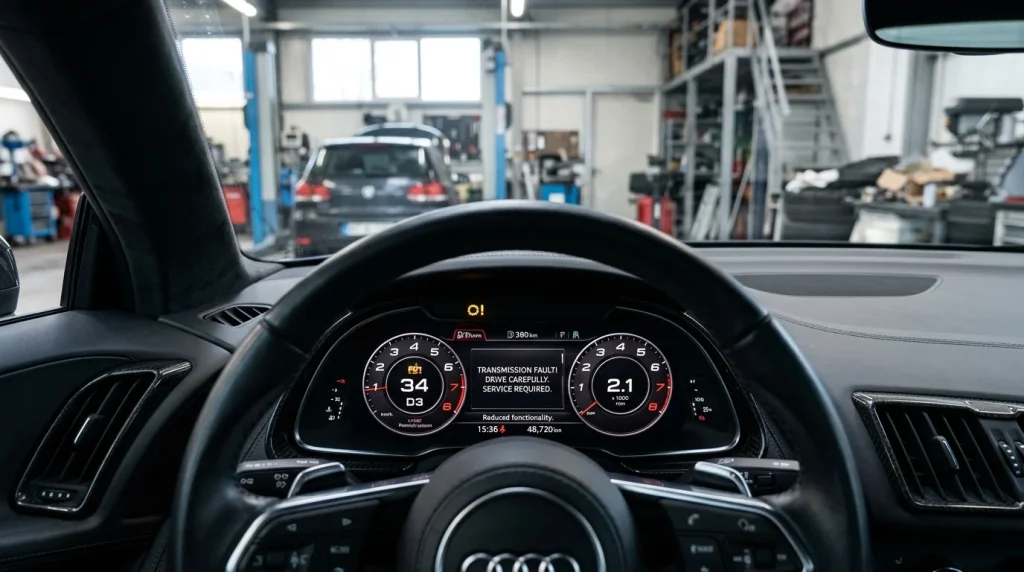
When asking can you continue driving with an Audi transmission malfunction, the general answer is no for regular driving conditions. While the vehicle may still move if it enters protective limp mode, continued operation risks severe mechanical or electronic destruction to the gearbox and engine. If you notice harsh shifting, slipping gears, or restricted power, safely pull over and arrange diagnostic scanning as soon as possible.
Key takeaways:
- Amber warnings allow low-speed driving directly to a safe location or workshop, while red warnings require parking and shutting off the engine immediately.
- Limp mode protects internal clutches and gears by restricting engine output and locking the gearbox in a safe gear ratio.
- Mechatronic circuit defects, solenoid valve sticking, clutch pack wear, and sensor communication loss are the primary triggers.
- Temporary electronic reset sequences only clear transient glitches and do not fix mechanical wear or hardware faults.
- Dedicated diagnostic tools like VCDS or OBDeleven retrieve manufacturer-specific fault codes to prevent unnecessary gearbox replacements.
Quick Answer: Can You Continue Driving With an Audi Transmission Malfunction?
An active transmission malfunction alert on an Audi instrument cluster indicates that the onboard computer has detected an abnormal operating condition within the drivetrain. Whether you can continue moving depends entirely on the color of the warning indicator and the physical behavior of the vehicle.
If the instrument panel displays a yellow or amber gear icon accompanied by the message “Transmission malfunction: you can continue driving,” the Transmission Control Module (TCM) has engaged a failsafe strategy. Drivers encountering sudden amber alerts often compare them with an Audi drive system malfunction warning, which can trigger similar cluster notifications when sensors detect powertrain communication dropouts. You can drive the vehicle cautiously at low speeds for a short distance to clear active traffic or reach a nearby repair facility. However, highway speeds, heavy acceleration, and steep inclines must be avoided.
If the alert appears in red, or if the text instructs you to stop safely, the transmission has lost hydraulic pressure, overheated, or suffered a critical mechanical disconnect. Drivers researching persistent gearbox warnings on pre-owned sedans should also inspect documented Audi A5 transmission problem years to determine whether earlier dual-clutch revisions are prone to rapid clutch plate wear. Continuing to drive under a red alert or while experiencing violent shuddering will quickly destroy internal clutch friction plates, overheat the mechatronic valve body, and potentially damage the engine flywheel.
| Dashboard Warning Status | System Operating State | Immediate Driving Action | Next Step |
|---|---|---|---|
| Amber Light + “You Can Continue Driving” | Protective Limp Mode active; performance restricted | Drive at moderate speed (under 40 mph) to a safe location | Scan fault codes with a specialized OBD tool |
| Amber Light + Rapid Gear Skipping | Partial mechanical or sensor fault; clutch slippage | Pull over safely into a parking area | Avoid restarting without checking oil and codes |
| Red Light + “Stop Vehicle Safely” | Critical hydraulic failure or clutch overheat | Pull off the road and shut off the engine immediately | Call a flatbed tow truck to prevent gearbox seizure |
| Flashing Gear Symbol + Loss of Reverse | Shaft pressure drop or mechatronic board disconnect | Park vehicle; do not attempt uphill travel | Arrange professional shop inspection |
Why Audi Displays a Transmission Malfunction Warning
Modern Audi vehicles use advanced dual-clutch (S tronic) and torque-converter automatic (Tiptronic) gearboxes managed by sophisticated electronic control networks. The Transmission Control Module constantly monitors dozens of data channels in real time, including input and output shaft speeds, hydraulic line pressures, clutch temperature readings, and gear actuator positions.
According to the Motronix diagnostic guide, the transmission malfunction warning is triggered whenever the transmission control system detects an operating state outside its safe operating window. This monitoring covers mechanical tolerances as well as electrical signals across the CAN-BUS network.
Modern Audi control architectures integrate transmission diagnostics into the central drivetrain bus, allowing sensor thresholds to trigger protective warnings before minor electrical resistance turns into permanent hardware damage.
| TCM Monitoring Stage | Monitored Operating Parameters | System Response and Action |
|---|---|---|
| Parameter Tracking | Fluid temperature, line pressure, clutch pack slip rates, solenoid response times, gear position sensor signals | Continuously evaluates drivetrain operational tolerances |
| Within Safe Window | All sensor data within calibrated factory tolerances | Maintains normal gear shifting and optimal torque delivery |
| Outside Safe Window | Parameter exceeds calibrated operational threshold | Triggers failsafe: restricts engine torque, locks safe gear ratio, illuminates alert |
Transmission Protection and Limp Mode Behavior
When the TCM identifies an internal conflict, such as abnormal clutch slip or delayed solenoid actuation, it immediately engages limp-home mode. As detailed by Motronix diagnostic documentation, the vehicle limits performance to protect itself from catastrophic mechanical destruction.
During limp mode, the engine computer truncates available horsepower and torque. In S tronic dual-clutch systems, the TCM may isolate an entire sub-gearbox. Because dual-clutch transmissions house two separate input shafts (one for odd gears 1, 3, 5, 7 and one for even gears 2, 4, 6, plus reverse), an issue on one clutch pack prompts the computer to lock the car into second or third gear on the unaffected shaft. This prevents the driver from shifting into higher gears, ensuring the car can limp out of harm’s way without generating excessive heat.
Common Culprits Behind the Warning
Transmission malfunction warnings stem from a combination of electrical sensor failures, hydraulic control issues, and natural mechanical wear. The Tibao technical documentation highlights that frequent culprits in S tronic and Tiptronic transmissions include mechatronic unit malfunctions, clutch wear, or gear ratio errors.
- Mechatronic Control Unit Defects: The mechatronic assembly combines the electronic control module with hydraulic valves. Thermal stress and vibration cause microscopic cracks in the internal printed circuit tracks (flexible conductor foils), disrupting power to shift solenoids.
- Solenoid Valve Contamination: Electro-hydraulic solenoids (such as N436 and N440) regulate clutch pressure. When microscopic metal debris suspends in aged transmission fluid, solenoids can stick open or closed, triggering pressure mismatch faults.
- Clutch Pack Friction Wear: Dual-clutch systems rely on friction plates that wear over time. When the measured gap between plates exceeds the computer’s adaptive compensation limits, the TCM registers clutch slip.
- Gear Position and Speed Sensor Glitches: The G676 drive position sensor monitors selector lever range and parking lock engagement, while separate transmission speed sensors measure input and output shaft rotational data. A damaged sensor head or corroded harness connector interrupts signal transmission, prompting the TCM to enter failsafe limp mode.
- Fluid Degradation and Thermal Overload: Low transmission fluid from a leaking pan gasket or oil cooler line causes localized overheating, reducing hydraulic pressure and accelerating component wear.
High-performance models like the 2023 Audi S3 dual-clutch transmission and the updated 2024 Audi S3 powertrain utilize high-pressure hydraulic circuits that require clean fluid and steady voltage to prevent shifting faults. Transmission warning lights are often misdiagnosed as purely mechanical gearbox failures when the actual root cause is an electronic voltage dip or a hairline crack on a mechatronic ribbon cable. Replacing the complete gearbox before verifying solenoid circuits and fluid condition often results in thousands of dollars in unnecessary repairs.
The Risks of Continuing to Drive With an Active Transmission Malfunction
Ignoring a transmission warning light and driving as if the vehicle were operating normally is a recipe for severe mechanical breakdown. While modern German engineering includes extensive electronic failsafes, those failsafes are designed to protect the vehicle during a brief exit from traffic, not during daily commuting.
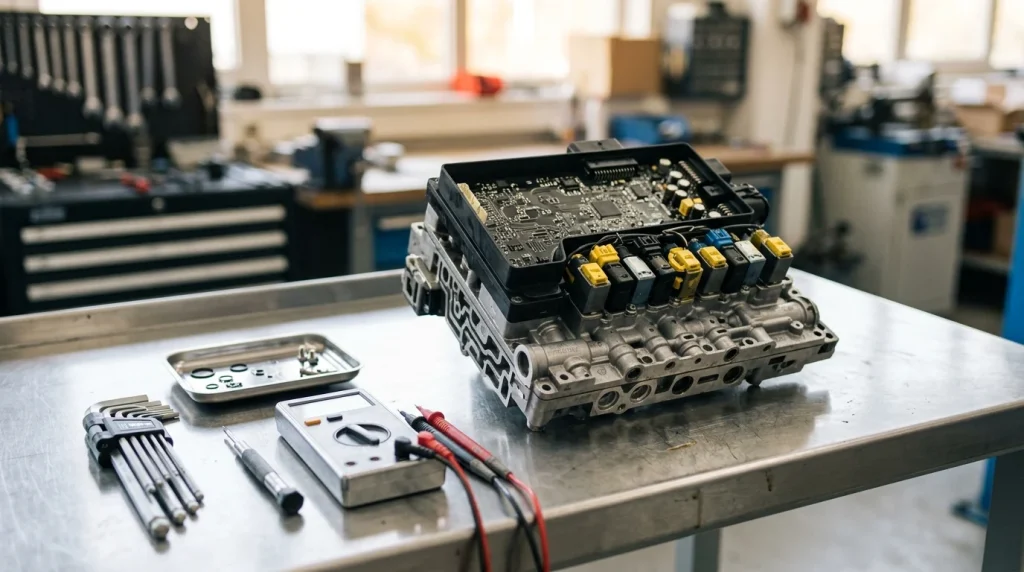
Data from Tibao technical documentation confirms that continuing to drive with an active malfunction can cause further mechanical or electronic damage, particularly to the engine or transmission.
Long-term reliability statistics seen across Audi Q5 reliability records and historical Audi Q7 model years to avoid demonstrate that ignoring early drivetrain warnings frequently turns a localized valve repair into a full transmission replacement.
Mechanical and Electronic Damage Escalation
When an Audi transmission operates in a compromised state, the mechanical stresses multiply rapidly throughout the entire powertrain:
- Friction Plate Burnout: If a solenoid fails to deliver full clamping pressure, the dual-clutch plates slip under engine load. This slippage generates extreme heat within seconds, glazing the friction surfaces and warping the steel drive plates.
- Flywheel and Drivetrain Shock: Erratic shifting and sudden clutch re-engagement place harsh torsional shock loads on the dual-mass flywheel. This can damage the internal damping springs and crack the flywheel housing.
- Hydraulic System Contamination: Glazed clutches shed burnt friction material directly into the transmission fluid. This contaminated oil circulates through the fine micro-passages of the valve body, clogging neighboring solenoids and destroying hydraulic seals.
- Thermal Stress on Mechatronic Electronics: Elevated gearbox oil temperatures exceed the thermal rating of the internal electronic circuit board, melting solder joints and permanently destroying the TCM processor.
Sophisticated all-wheel-drive setups with active torque distribution depend on smooth torque handoffs from the transmission. Operating with slipping clutches creates driveline bind that strains rear differentials and transfer cases.
Warning Symptoms That Require Immediate Stopping
Automotive technicians warn that if you notice harsh shifts, slipping, or limp mode, you must reduce driving immediately and schedule diagnostics because repeated events accelerate internal gear wear.
The following physical warning signs indicate severe mechanical compromise and require pulling over immediately:
- Metal-on-Metal Grinding or Whining: Loud mechanical grinding from beneath the center console signifies bearing failure or broken gear teeth. Shut the car off immediately to prevent housing puncture.
- Complete Loss of Reverse Gear: A dual-clutch transmission that drives forward but will not engage reverse has lost pressure on sub-gearbox 2. Continuing to drive will place abnormal load on sub-gearbox 1.
- Severe Jerking or Shuddering During Takeoff: Violent hesitation when pulling away from a standstill indicates that the clutch engagement point cannot be regulated, risking total clutch seizure.
- Acrid Burning Smell: A strong smell of burnt hydraulic fluid inside the vehicle cabin indicates that transmission oil is overheating past its critical threshold or leaking onto hot exhaust pipes.
- Red Warning Message on Virtual Cockpit: Any red transmission icon accompanied by a chime requires an immediate, controlled stop.
Warning: Do not attempt to merge onto fast highway traffic or climb steep parking garage ramps if your Audi displays a transmission alert. Loss of throttle response can occur without warning if the TCM opens both clutches to protect the mechanical gear set.
Immediate Roadside Steps and Temporary Reset Procedures
If a transmission alert appears while you are driving, handling the situation calmly and methodically will help protect both your personal safety and your vehicle’s mechanical components.
| Step | Action Stage | Immediate Roadside Procedure |
|---|---|---|
| 1 | Signal & Pull Over Safely | Exit active traffic smoothly, shift into Park (P), and engage the electronic parking brake |
| 2 | Thermal & Fluid Assessment | Idle engine for 60 seconds, then inspect underbody for red or dark brown fluid leaks |
| 3 | Temporary System Reset | Perform accelerator pedal sequence or 10-15 minute negative battery disconnect |
| 4 | Post-Reset Evaluation | If warning clears, drive cautiously to scan; if persistent or red alert, arrange flatbed towing |
- Signal and Move to Safety: Activate your hazard lights, ease off the accelerator, and steer smoothly toward the shoulder or into an adjacent parking lot. Avoid aggressive braking.
- Park on Level Ground: Bring the car to a full stop, shift into Park (P), and apply the electronic parking brake. Allow the engine to idle for 60 seconds to let the coolant circulate before turning off the ignition.
- Visual Fluid Check: Look under the front and center of the vehicle for signs of red or dark brown fluid pooling on the ground. If fluid is pouring out, do not attempt to restart the engine.
- Document the Exact Message: Take a photo of the dashboard message and note any specific text displayed on the Audi MMI screen.
Ignition and Accelerator Pedal Reset Sequence
Modern Audi electronic control modules store temporary adaptation parameters that can occasionally experience communication glitches. Electronic adaptation procedures help restore throttle synchronization on newer performance platforms such as the 2025 Audi S3 torque splitter system, where dual clutches and rear differential actuators recalibrate their baseline biting points following a temporary voltage sag.
According to Tibao technical documentation, temporary electronic reset procedures allow drivers to clear minor communication faults before pursuing mechanical repairs. You can perform an electronic throttle and transmission adaptation reset by cycling the ignition and engaging the throttle calibration sequence without starting the engine.
Follow these exact steps:
- Turn the vehicle ignition to the “ON” position without pressing the engine start button with your foot on the brake (press the Start/Stop button once without holding the brake pedal so the instrument cluster lights up).
- Press the accelerator pedal firmly to the floor and hold it down for 15 to 20 seconds.
- While holding the pedal, press the Start/Stop button once to turn the ignition OFF.
- Release the accelerator pedal.
- Wait two full minutes for the onboard computers to cycle power and store default baseline adaptations.
- Start the engine normally and check if the transmission warning indicator has cleared.
10-15 Minute Battery Disconnect Reset
If an amber warning light persists after the pedal reset, performing a hard power cycle on the electronic control units can clear residual volatile memory. Resetting the control modules by discharging capacitance is often tested on adventure-oriented wagons like the 2023 Audi A4 allroad gearbox, though persistent fault codes indicate genuine hardware distress rather than a simple sensor glitch.
Disconnecting the battery for 10-15 minutes resets the ECU if the warning persists, or you may visit an Audi-certified center for software updates.
To perform a battery disconnect reset safely:
- Turn off the ignition, remove the key fob from the cabin, and open the trunk or floorboard where your Audi 12V battery is situated.
- Using a 10mm wrench, loosen the nut on the negative (-) battery terminal clamp.
- Lift the negative terminal off the battery post and secure it to one side so it cannot accidentally touch any metal surface.
- Leave the terminal disconnected for a full 10 to 15 minutes to allow all electronic capacitors in the TCM and ECU to discharge completely.
- Reconnect the negative terminal clamp securely and tighten the 10mm nut.
- Start the vehicle. You will notice several steering and stability lights illuminate on the dashboard; these will clear automatically after driving in a straight line for 50 yards as the steering angle sensor re-initializes.
Note: Electronic resets only clear transient software bugs and communication glitches. If a mechanical clutch is worn down or a solenoid is physically jammed with debris, the transmission fault code will return the moment the vehicle attempts its first gear shift.
Diagnosing and Resolving the Fault
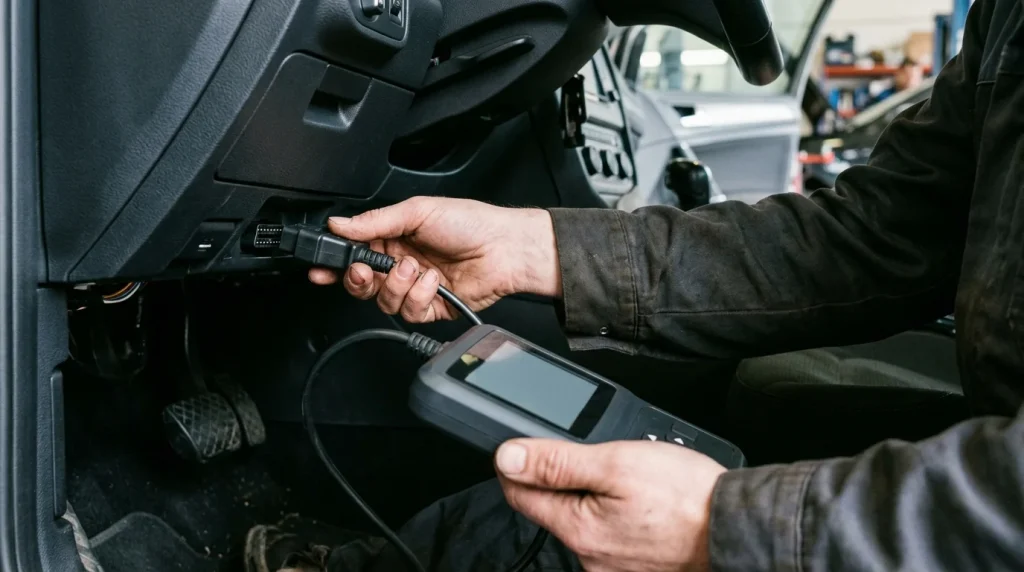
Once the vehicle is in a secure location, accurate diagnosis requires connecting professional scan tools to read the specific Diagnostic Trouble Codes (DTCs) stored within the transmission computer. Generic OBD2 readers found at retail auto parts stores typically only read basic engine emission codes (P0xxx series) and fail to communicate with Audi’s proprietary transmission sub-modules.
Diagnostic Scanning with VCDS and OBDeleven
To retrieve detailed engineering parameters, specialized diagnostic software is required. Specialized Audi diagnostic software such as VCDS (VAG-COM) or OBDeleven accesses manufacturer-specific modules for detailed fault info.
These diagnostic platforms allow technicians and owners to view live sensor telemetry, including:
- Specific Diagnostic Trouble Codes such as P17D8 (Torque limitation due to clutch temperature), P17D4 (Valve 3 in sub-gearbox 1 mechanical malfunction), and P17D5 (Valve 3 in sub-gearbox 2 mechanical malfunction).
- Real-time clutch oil temperatures and differential clutch slip speeds.
- Hydraulic line pressure readings across individual solenoid circuits.
- Adaption values for clutch engagement biting points.
| Diagnostic Tool Type | Module Access Level | Live Sensor Data | Best Used For |
|---|---|---|---|
| Basic Generic OBD2 Scanner | Engine ECM only (Generic P0xxx codes) | Basic RPM, coolant temp | Checking check-engine light for emissions |
| OBDeleven Pro Bluetooth | Full Audi modules (TCM, ABS, ECU, Airbag) | Live clutch pressures, temperature logs | Roadside diagnosis, coding, adaptation resets |
| Ross-Tech VCDS (VAG-COM) | OEM-level factory access | Full hexadecimal DTC logs, adaptation curves | Deep shop-level diagnostics and component testing |
| Audi ODIS Factory Tool | Official dealership diagnostic network | Direct connection to Audi AG factory servers | Software flashing, component protection removal |
Next Steps and Professional Service
After scanning the fault codes, you can determine whether the repair requires a simple electronic replacement or mechanical teardown.
If diagnostic scans indicate internal solenoid failure on models equipped with the DL501 (0B5) 7-speed transmission, installing an official mechatronic repair kit (circuit foil and solenoid set) resolves common shifting errors without requiring a full unit replacement. However, if the diagnostic log displays internal gear ratio mismatches or mechanical sensor destruction, schedule service with an Audi certified service facility.
Maintaining regular transmission fluid service intervals every 40,000 miles is the most reliable way to protect dual-clutch systems. Clean fluid ensures proper lubrication during aggressive driving, whether executing high-speed shifts on an Audi R8 or handling demanding horsepower output through dual-clutch gear assemblies.
Frequently Asked Questions about Audi Transmission Malfunction
Can I drive my Audi with a transmission malfunction warning?
You can drive cautiously at reduced speeds only if the warning light is yellow or amber and the instrument cluster indicates that you can continue driving. If the warning is red, if the car shudders violently, or if gears slip, you must stop driving immediately and call a flatbed tow truck.
What happens if I keep driving when my Audi goes into limp mode?
Continuing to drive in limp mode beyond a short trip to safety causes excessive thermal stress on the remaining active clutch pack. It circulates metallic debris through the hydraulic valve body, potentially ruining the mechatronic unit, flywheel, and transmission gears.
How do you temporarily reset an Audi transmission warning?
You can perform an electronic throttle and transmission reset by turning the ignition ON without starting the engine, pressing and holding the accelerator pedal to the floor for 15 to 20 seconds, and turning the ignition OFF. Alternatively, disconnecting the negative battery terminal for 10-15 minutes will power-cycle the vehicle control modules.
What causes the transmission malfunction light on an Audi S tronic or Tiptronic?
The most common causes include cracked circuit tracks on the mechatronic control board, sticking electro-hydraulic shift solenoids, worn clutch friction plates, low transmission fluid, and corroded gear position sensor connectors.

