Quick answer: A car air conditioning system blowing warm air is typically caused by low refrigerant levels, a failed compressor clutch, a blocked condenser, or a malfunctioning blend door actuator. Fixing the issue requires checking the cabin air filter, inspecting the condenser, and measuring refrigerant pressures. Minor fixes like cleaning the condenser can be done at home, while replacing a failed compressor or repairing a refrigerant leak requires professional service.
Key takeaways:
Low refrigerant from a system leak is the most frequent cause of warm air.
A stuck blend door actuator can blow hot air even when the refrigerant is full.
A broken cooling fan causes the AC to blow hot air at idle but cool while driving.
Visual inspections of the compressor clutch and fuses can narrow down electrical issues.
Professional repair costs in 2026 range from $150 for a recharge to over $1,000 for a compressor.
5 Common Causes of a Car AC Blowing Hot Air
An automotive air conditioning system operates in a closed loop, circulating refrigerant to absorb heat from the cabin and release it outside. When this cycle is interrupted, the vents will blast warm air. Understanding the five most common causes helps diagnose the issue without replacing working parts.
Low Refrigerant and System Leaks
Refrigerant is the medium that transfers heat. If a leak develops in the hoses, seals, or the condenser, refrigerant levels drop. When the system is low on gas, it cannot absorb heat effectively. A primary sign of low refrigerant is a compressor clutch that cycles rapidly, clicking on and off every few seconds. Oily residue around AC line fittings or the condenser also indicates a leak, as the oil escapes along with the refrigerant.
Faulty AC Compressor or Clutch
The compressor is the pump that circulates refrigerant. If the internal pump fails or the electromagnetic clutch does not engage, refrigerant will not circulate, resulting in zero cooling. A failing compressor often produces loud squealing or grinding noises when turned on. If the clutch refuses to click and spin when the AC button is pressed, the system remains completely inactive.
Clogged or Damaged Condenser
Located at the front of the vehicle behind the grille, the condenser releases heat from the refrigerant. Over time, it can become clogged with leaves, bugs, or dirt, blocking crucial airflow. Bent aluminum fins also restrict heat transfer. A blocked condenser will cause the AC to blow hot air when idling but cool down as the vehicle accelerates on the highway, where natural airflow helps lower the system temperature.
Failing Condenser Cooling Fans
Electric cooling fans pull air through the condenser when the vehicle is stationary or driving slowly in traffic. If the fan motor burns out or is damaged by road debris, the condenser cannot release heat. If your AC blows warm air at stoplights but works fine while driving at highway speeds, a failed cooling fan is the most likely culprit.
Malfunctioning Temperature Blend Door Actuator
A blend door actuator is a small electric motor that controls the mixing of cold air from the evaporator and hot air from the heater core. If the actuator fails or gets stuck, hot air from the engine’s cooling system will overpower the cold AC air. This mechanical issue is the primary reason why a car AC blows hot air even with freon full. It also causes the AC to blow hot air on the driver’s side only in dual-zone climate systems, as one zone’s blend door remains stuck in the heat position while the other opens properly.
Diagnostic Steps: Why is Your Car AC Blowing Warm?
Analysis: When troubleshooting car AC issues, starting with the simplest, low-cost checks is the most efficient path. Professional shops charge $100 to $200 just for diagnostics, but a basic visual inspection can often pin down the root cause of the warm air.
According to Dax Haak, director of Car Care Operations for AAA Club Alliance, having the system checked out before extreme seasonal temperatures set in is critical to preventing costly compounding damage. His advice on air conditioning maintenance emphasizes that ignoring weak performance can lead to total compressor failure. To locate the problem at home, follow this logical diagnostic order:
Step 1: Inspect the Cabin Air Filter
A severely clogged cabin air filter restricts the volume of air flowing over the evaporator core. This restriction makes the air feel weak or warm, even if the cooling system is physically cold. Locate the filter, typically behind the glove box, and inspect it. If it is grey and loaded with debris, replace it. Learn more about the air distribution system in our guide detailing what is a car blower motor to understand how air is circulated into the cabin.
Step 2: Check Fuses and Relays
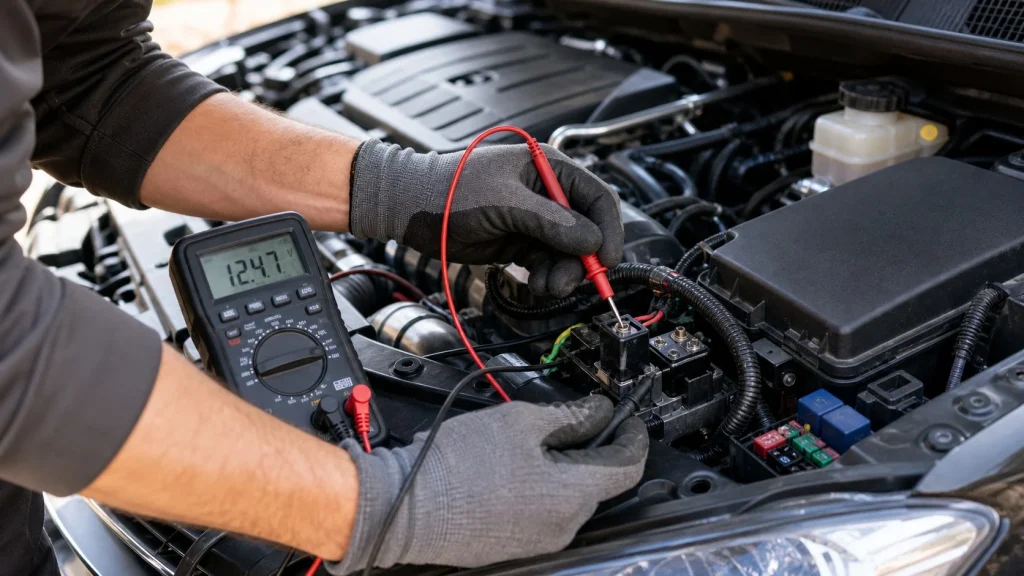
Locate your vehicle’s engine bay fuse box and inspect the fuse labeled for the AC clutch or compressor. A blown fuse will cut electrical power to the compressor clutch, shutting down the entire cooling loop. Replace any blown fuse with one of the exact same amperage. If the fuse blows again immediately, a short circuit or a failing compressor coil is present, which requires professional electrical testing.
Step 3: Observe the Compressor Clutch
Start the engine, turn the AC to the maximum cold setting, and look under the hood. Locate the AC compressor pulley. The outer ring of the pulley will spin with the engine belt. Watch the center plate of the pulley. If the center plate remains stationary, the clutch is not engaging. If it clicks on and off every few seconds, the low-pressure switch is shutting the system down, indicating low refrigerant. For a complete troubleshooting workflow, review our detailed guide on how to check if your car AC compressor is working to isolate clutch and electrical issues.
Step 4: Examine the Condenser and Fans
Look through the front grille of the car. Check the condenser for large accumulations of dirt, mud, leaves, or bugs. With the engine running and the AC turned on, verify that the electric cooling fans are spinning. If the fans are stationary, tap the motor housing gently to check for loose connections, or test the fan relay.
Step 5: Test the Blend Door Actuator
Turn the ignition on without starting the engine, and switch the climate control from hot to cold. Listen carefully for clicking or whirring noises behind the dashboard. A repeating clicking sound indicates stripped gears inside the blend door actuator motor, meaning the door cannot route air correctly.
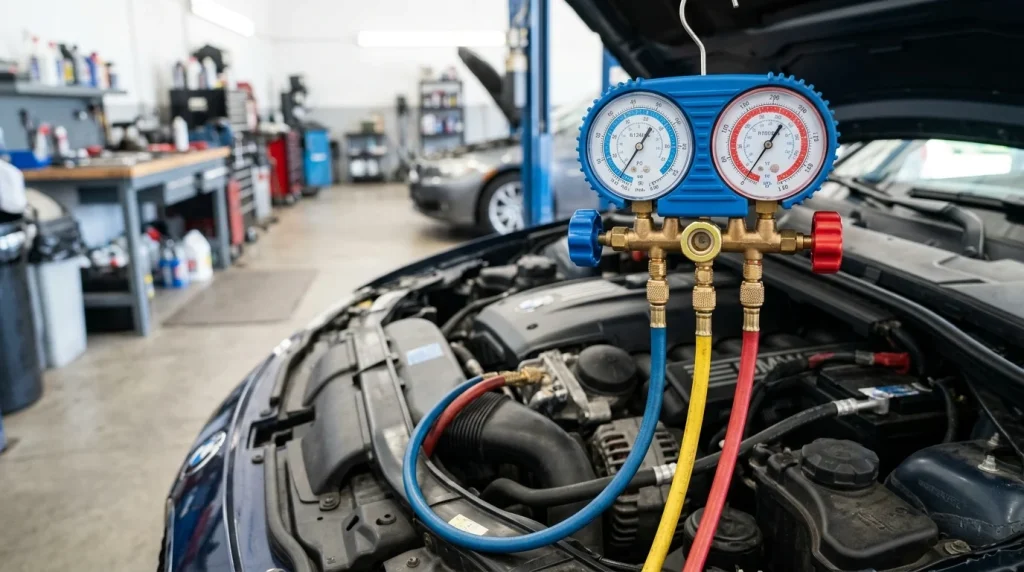
Warning: Refrigerant R-134a and R-1234yf are highly pressurized chemical compounds. Servicing or recharging an AC system at home without proper training can result in severe skin frostbite or eye injuries. In addition, venting refrigerant into the atmosphere violates Section 608 of the U.S. Clean Air Act and is subject to strict penalties. Always wear protective gloves and safety glasses if conducting pressure checks.
2026 Car AC Repair Costs: What to Expect
In 2026, professional car AC repair costs vary widely depending on the failed component and the type of refrigerant your vehicle uses. Older vehicles manufactured before 2014 typically use R-134a, which is relatively inexpensive. Vehicles built after 2014 are equipped with R-1234yf, an environmentally friendly refrigerant that requires specialized recovery equipment and costs significantly more per ounce.
Repair Service
DIY Parts Cost
Professional Cost (2026 Average)
Cabin Air Filter Replacement
$15 – $45
$45 – $80
AC System Fuse or Relay
$5 – $15
$50 – $90
AC Refrigerant Recharge (R-134a)
$30 – $70
$150 – $300
AC Refrigerant Recharge (R-1234yf)
$90 – $180
$350 – $600
Blend Door Actuator Replacement
$40 – $100
$180 – $350
Condenser Fan Assembly
$60 – $150
$250 – $500
AC Condenser Replacement
$100 – $250
$450 – $900
AC Compressor Replacement
$250 – $550
$1,050 – $1,400
Refrigerant Recharge vs. Leak Repair
Adding refrigerant to a leaking system is only a temporary fix. Because an AC system is a hermetically sealed loop, it does not consume refrigerant. A drop in level means a leak is present. A professional technician will use UV dye to trace the leak, repair the seals or components, and then evacuate and recharge the system. Simply using a DIY recharge can will result in the gas leaking out again within a few days or weeks.
FAQs: Car AC Troubleshooting
Can I just add refrigerant to fix my car AC?
Adding refrigerant can temporarily restore cold air if the system has a very slow leak, but it will not resolve the underlying issue. The system is sealed, meaning any loss of gas is due to a physical leak. Recharging a system with a major leak is a waste of money, as the gas will escape quickly, and overcharging a system can destroy the compressor.
Why is my car AC blowing hot air suddenly?
A sudden loss of cooling is usually caused by an electrical failure, such as a blown fuse, a failed relay, or a faulty pressure sensor that cuts power to the compressor clutch. It can also occur if a hose ruptures, causing all refrigerant to escape rapidly.
Why is the AC cold while driving but hot when idling?
This symptom indicates poor airflow through the condenser. The most common causes are a broken condenser cooling fan or a condenser blocked by road debris. When the vehicle is moving at high speeds, natural airflow cools the condenser, but at idle, the system relies on the electric fans to draw air.
Why is the AC blowing hot air on the driver’s side only?
This is typically caused by a failed blend door actuator on the driver’s side. Many modern vehicles have dual-zone climate systems with separate actuators for the driver and passenger sides. When one actuator fails, that side’s vents will blow hot air from the heater core while the other side continues to blow cold air.
Founder and editor of Autvex. I research manufacturer specifications, safety data, ownership reports, and market pricing to publish practical car reviews and buying guides for U.S. readers.