

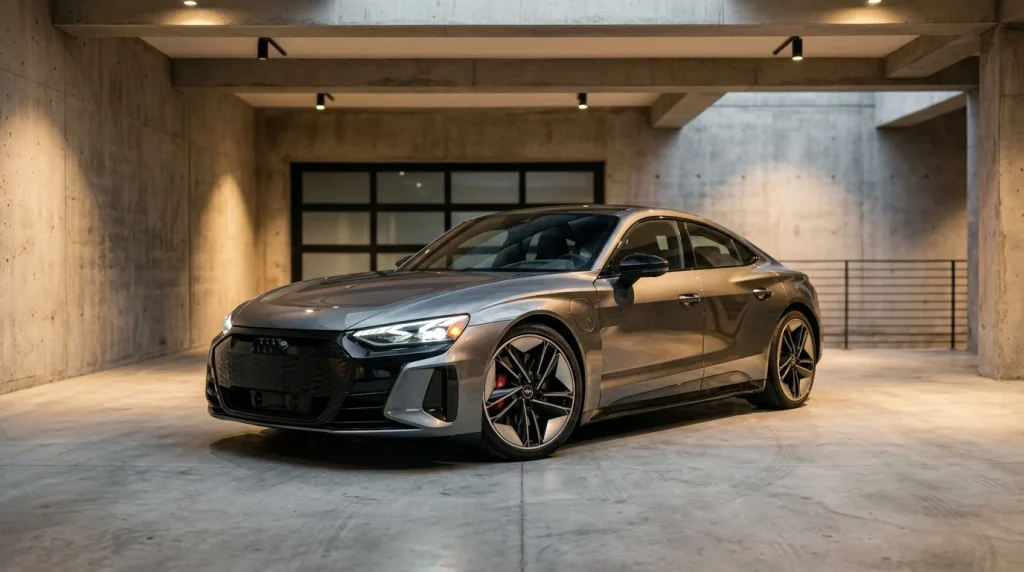
When determining what Audi has the most horsepower, the 2025/2026 Audi RS e-tron GT performance is the most powerful production vehicle Audi has ever built, generating up to 912 horsepower (680 kW / 925 PS) through its dual electric motors when launch control overboost is active. For drivers seeking internal combustion engines, the 2025/2026 Audi RS Q8 performance leads the gasoline lineup with 631 horsepower and 627 lb-ft of torque from its twin-turbocharged 4.0-liter V8.
Key takeaways:
- The RS e-tron GT performance produces 912 hp, reaching 60 mph in an instrumented 2.1 seconds.
- The RS Q8 performance delivers 631 hp, making it the most powerful production combustion model in Audi history.
- Audi’s electric grand tourer lineup occupies the top three power positions with 670 hp, 844 hp, and 912 hp ratings.
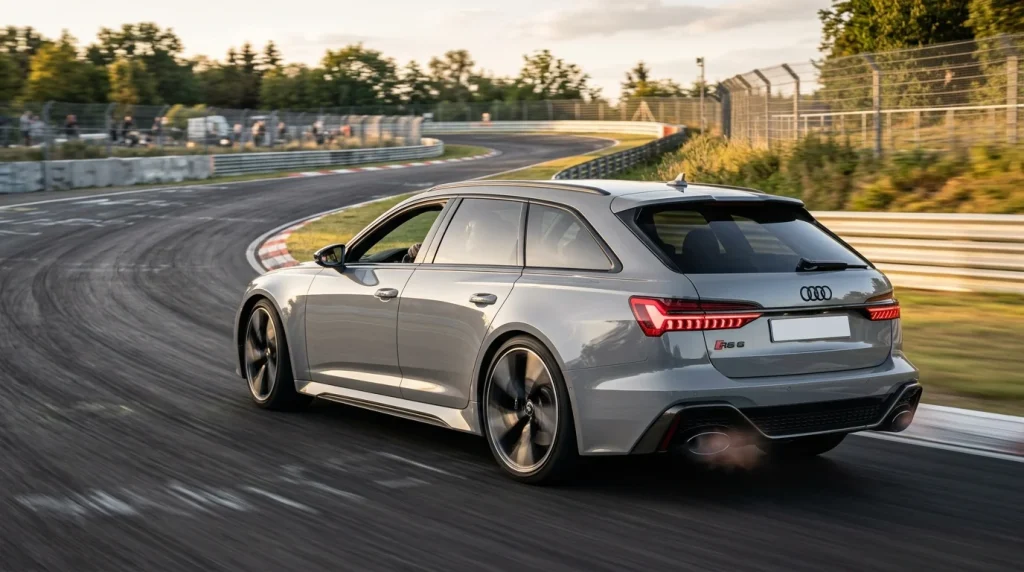
- Classic performance benchmarks like the RS 6 Avant performance and RS 7 performance produce 621 hp.
Defining horsepower across Audi’s lineup
Automotive horsepower represents the rate at which an engine or electric motor performs mechanical work. In modern vehicles, understanding what Audi has the most horsepower requires navigating multiple international measurement standards. German manufacturers historically document output in metric horsepower (Pferdestarke or PS) under DIN 70020 standards, whereas American technical documentation reports mechanical horsepower (bhp) certified under SAE J1349 guidelines established by SAE International. One metric horsepower equals approximately 0.9863 mechanical horsepower, meaning the European 925 PS rating of the flagship electric grand tourer translates to 912 horsepower in North America.
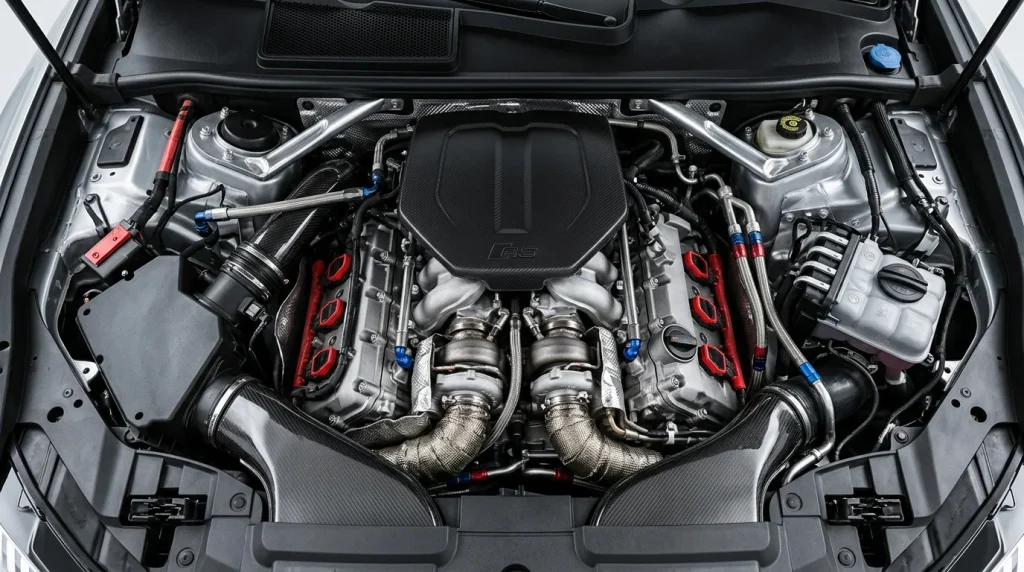
Power delivery in modern Audi models is split into two distinct engineering philosophies. Battery-electric vehicles (BEVs) use dual permanent-magnet synchronous motors (PSM) that deliver immediate full torque from zero RPM, supplemented by brief thermal overboost windows during launch control. Internal combustion engine (ICE) models rely on forced-induction turbochargers and high-octane gasoline to build peak horsepower higher in the rev band. Buyers exploring different performance tiers can consult the Audi model price guide to see how these engine outputs align with base retail pricing across the broader portfolio.
The leaderboard: top horsepower Audis by model/year
The hierarchy of peak power at Audi has transformed rapidly due to high-voltage electric drivetrain development. Electric grand tourers now hold the top three positions on the official factory leaderboard, surpassing the highest-output supercars and twin-turbo V8 models from previous model years.
| Rank | Model | Model Year | Powertrain Architecture | Peak Horsepower | Peak Torque | 0-60 mph (sec) | Top Speed (mph) |
|---|---|---|---|---|---|---|---|
| 1 | Audi RS e-tron GT performance | 2025-2026 | Dual-Motor Electric (800V) | 912 hp (overboost) | 757 lb-ft | 2.1 (tested) | 155 (limited) |
| 2 | Audi RS e-tron GT | 2025-2026 | Dual-Motor Electric (800V) | 844 hp (overboost) | 637 lb-ft | 2.8 (claimed) | 155 (limited) |
| 3 | Audi S e-tron GT | 2025-2026 | Dual-Motor Electric (800V) | 670 hp (overboost) | 590 lb-ft | 3.4 (claimed) | 152 (limited) |
| 4 | Audi RS Q8 performance | 2025-2026 | 4.0L Twin-Turbo V8 (ICE) | 631 hp | 627 lb-ft | 3.4 (claimed) | 190 |
| 5 | Audi RS 6 Avant performance | 2024-2026 | 4.0L Twin-Turbo V8 (ICE) | 621 hp | 627 lb-ft | 3.3 (claimed) | 177 / 190 |
| 6 | Audi RS 7 performance | 2024-2026 | 4.0L Twin-Turbo V8 (ICE) | 621 hp | 627 lb-ft | 3.3 (claimed) | 177 / 190 |
| 7 | Audi R8 V10 performance quattro | 2020-2024 | 5.2L Naturally Aspirated V10 | 602 hp | 413 lb-ft | 3.2 (claimed) | 205 |
| 8 | Audi RS Q8 (Standard) | 2020-2024 | 4.0L Twin-Turbo V8 (ICE) | 591 hp | 590 lb-ft | 3.7 (claimed) | 190 |
This comprehensive ranking confirms that electric propulsion holds a decisive lead in raw horsepower figures, while gasoline-powered models maintain higher unrestricted top speeds due to traditional multi-ratio transmissions.
How Audi achieves high horsepower: technology overview
Audi achieves extreme power levels through sophisticated powertrain engineering across both electric and combustion platforms. In the RS e-tron GT performance, engineers redesigned the rear axle electric motor, incorporating silicon carbide (SiC) power electronics, hairpin windings in the stator, and a lighter rotor that sheds 22 pounds while increasing output by 107 horsepower over the previous RS motor. The vehicle operates on an 800-volt electrical architecture paired with a customized two-speed transmission on the rear axle, enabling high torque multiplication off the line and sustained efficiency at higher road speeds.
On the combustion side, Audi’s high-horsepower models use a “hot-V” cylinder configuration for the 4.0-liter EA825 V8 engine. By locating the twin-scroll turbochargers inside the 90-degree valley between the cylinder banks, exhaust gas pathways are shortened to mere inches, virtually eliminating turbo lag and maximizing boost pressure up to 2.6 bar absolute. High-pressure direct fuel injection operating at 350 bar ensures complete fuel atomization, allowing combustion chambers to extract maximum energy from every stroke while minimizing knock risk under heavy engine load. For smaller displacement architectures, the 2025 Audi S3 performance review highlights how Audi adapts similar forced-induction turbocharging techniques to extract 328 horsepower from a 2.0-liter 4-cylinder engine.
Real-world vs. claimed horsepower
Manufacturer horsepower ratings recorded in laboratory conditions often differ from real-world chassis dynamometer measurements. Automotive manufacturers certify engine outputs using standardized test procedures specified by the U.S. Environmental Protection Agency and international regulatory bodies. However, driveline losses through Audi’s permanent mechanical quattro all-wheel-drive system (incorporating a center differential and heavy half-shafts) typically consume 15% to 20% of engine power between the crankshaft and the tire contact patch.
Furthermore, thermal conditions dramatically impact power output. Electric vehicles experience reduced peak output when high-voltage battery temperatures climb after repeated acceleration runs, or when the state of charge drops below 50%. Independent testing conducted by Car and Driver revealed that the RS e-tron GT performance delivers on its performance claims: the car rocketed from 0 to 60 mph in just 2.1 seconds and completed the quarter-mile in 9.8 seconds at 138 mph, proving that Audi’s electronic launch control manages thermal loads effectively for short-duration acceleration sprints.
Historical context and evolution
The pursuit of peak horsepower at Audi began in earnest during the 1980s motorsport era. The original 1980 Audi Quattro introduced turbocharged all-wheel-drive performance to the street with 200 horsepower, culminating in the homologation-special 1984 Sport Quattro producing 302 horsepower from a 2.1-liter inline-5 engine. The brand crossed the 400-horsepower mark in 2002 with the C5-generation RS 6, whose Cosworth-developed 4.2-liter biturbo V8 generated 450 horsepower.
By 2009, the introduction of the 5.2-liter naturally aspirated V10 in the mid-engine R8 supercar elevated output to 525 horsepower, eventually topping out at 602 horsepower in the final R8 V10 performance quattro before production ceased in 2024. The specialized production of these flagship high-output models expanded across dedicated Audi manufacturing facilities in Germany and Hungary. The transition to twin-turbocharged 4.0-liter V8 engines raised production wagon and SUV ratings past 600 horsepower, setting the stage for the modern electric era where dual-motor architectures comfortably exceed 900 horsepower.
Primary engine families and their outputs
Audi categorizes its production powertrains into distinct modular engine families developed in collaboration with the wider Volkswagen Group. Each family is engineered to fulfill specific packaging, efficiency, and performance parameters:
- EA888 2.0L Turbo Inline-4: The foundation of Audi’s compact lineup, generating between 201 horsepower in standard A4/Q5 models and 328 horsepower in high-output S3 configurations.
- EA839 2.9L / 3.0L Turbo V6: Uses a single turbocharger in S4/S5/SQ5 models (349 hp) or twin turbochargers in RS 4 and RS 5 models (444 hp and 442 lb-ft of torque).
- EA825 4.0L Twin-Turbo V8: Audi Sport’s premier combustion powerplant, generating 493 hp in SQ7/SQ8 trims, 591 hp in standard RS models, 621 hp in RS 6/RS 7 performance editions, and 631 hp in the RS Q8 performance.
- 5.2L Naturally Aspirated FSI V10: High-revving atmospheric engine featuring dry-sump lubrication, producing 562 to 602 horsepower with an 8,700 rpm redline.
Extracting maximum rated power from these internal combustion engines requires adherence to strict fuel grades; owners can read the detailed guide on octane requirements for Audi engines to understand why premium fuel is necessary to prevent electronic timing retardation.
Specific high-horsepower models
The 2025/2026 Audi RS Q8 performance stands as the undisputed pinnacle of gasoline-powered Audi engineering. By modifying the V8’s electronic engine control unit, optimizing exhaust gas routing, and lowering backpressure through a redesigned sport exhaust system, Audi unlocked 631 horsepower and 627 lb-ft of torque. To validate this performance, Audi Sport test driver Frank Stippler piloted the RS Q8 performance to a certified lap time of 7:36.698 on the Nurburgring Nordschleife, establishing a new lap record for production SUVs.
Rolf Michl, Managing Director of Audi Sport GmbH, summarized the philosophy behind this flagship combustion model in official release materials from the Audi USA Newsroom: “The new RS Q8 performance embodies sportiness and elegance. The top model of the Q8 series combines a passion for performance, prestige, and suitability for everyday use to create an exhilarating experience.”
For buyers interested in supercar heritage, detailed technical breakdowns are available in our guide covering Audi R8 horsepower specifications. Enthusiasts looking to acquire the naturally aspirated V10 can also review the Audi R8 pricing guide to evaluate current market valuations across new and pre-owned model years.
Hybrid and electric contributions
Electrification has fundamentally redefined performance ceilings across Audi’s portfolio. In the RS e-tron GT performance, two electric motors coordinate with millisecond precision through electric torque vectoring. A high-voltage lithium-ion battery with 105 kWh gross capacity (97 kWh usable) provides continuous discharge rates sufficient to feed 912 horsepower to the wheels. This battery supports 320 kW DC fast charging, replenishing 10% to 80% charge in approximately 18 minutes.
Audi also integrates 48-volt mild-hybrid systems (MHEV) into its V8 combustion models to power active electromechanical roll stabilization (eAWS). To see how electrified powertrains are expanding across the entire lineup, readers can explore our comprehensive overview of Audi hybrid powertrains. Owners of full-electric Audi vehicles can also review the details on Audi Electrify America charging plans to take advantage of complimentary fast-charging allowances.
Market positioning and pricing context
In the competitive luxury landscape, Audi’s highest-horsepower offerings compete directly against premium performance benchmarks from Porsche, BMW M, and Mercedes-AMG. The 912-horsepower RS e-tron GT performance shares its J1 high-voltage architecture with the Porsche Taycan Turbo GT (up to 1,019 hp), yet positions itself as a more comfortable long-distance grand tourer starting around $167,000 in North America.
In the internal combustion segment, the $136,000 RS Q8 performance competes against the 617-horsepower BMW X5 M Competition and the 631-horsepower Porsche Cayenne Turbo GT. Audi’s inclusion of standard carbon-ceramic brake discs (measuring 440 mm front and 370 mm rear) and standard all-wheel steering offers substantial equipment value compared to rivals that charge steep premiums for equivalent chassis hardware.
Reliability and maintenance considerations for horsepower-focused builds
Operating vehicles with extreme power density demands stringent maintenance protocols. High-horsepower twin-turbo V8 engines place immense thermal load on engine oil, requiring strict 5,000 to 7,500-mile synthetic oil change intervals using VW 511.00 specification lubricants to prevent turbocharger bearing coking. Dual-clutch S tronic and 8-speed Tiptronic transmissions require scheduled fluid flushes to preserve clutch pack friction characteristics under heavy torque transfer.
For electric models like the RS e-tron GT performance, mechanical wear is concentrated primarily on high-performance summer tires and suspension bushings due to curb weights exceeding 5,100 pounds. While electric motors require minimal regular servicing, maintaining battery health through sensible daily charging habits (capping home charging at 80% state of charge for routine commutes) preserves long-term discharge capability and peak horsepower output over the life of the vehicle. High horsepower in modern Audi vehicles requires differentiating between burst power and sustained output. While electric models deliver unmatched launch thrust and immediate throttle response, twin-turbocharged V8 engines offer continuous thermal endurance for track driving and extended high-speed cruising without battery thermal derating.
Note: Official manufacturer performance metrics such as sub-3-second 0-60 mph times and overboost horsepower depend on high-voltage battery state of charge (ideally above 80% SoC) and optimal ambient operating temperatures.
Frequently asked questions about what Audi has the most horsepower
What Audi model currently holds the highest horsepower rating?
The 2025/2026 Audi RS e-tron GT performance holds the record as the most powerful Audi ever made, producing up to 912 horsepower (680 kW) with launch control overboost engaged.
Which gas-powered Audi has the highest horsepower?
The 2025/2026 Audi RS Q8 performance is the most powerful gasoline-powered Audi in the brand’s history, generating 631 horsepower and 627 lb-ft of torque from its twin-turbocharged 4.0-liter V8 engine.
Does horsepower differ between Audi US and European specifications?
Yes. European technical documentation reports power in metric horsepower (PS), whereas United States models are rated in mechanical horsepower (bhp / hp) under SAE standards. For example, the RS e-tron GT performance is rated at 925 PS in Europe and 912 hp in the United States.
How does Audi measure electric vehicle horsepower?
Audi measures peak electric horsepower by combining the simultaneous electrical power output delivered by the front and rear electric motors during launch control overboost, verified under standardized laboratory testing protocols.

