

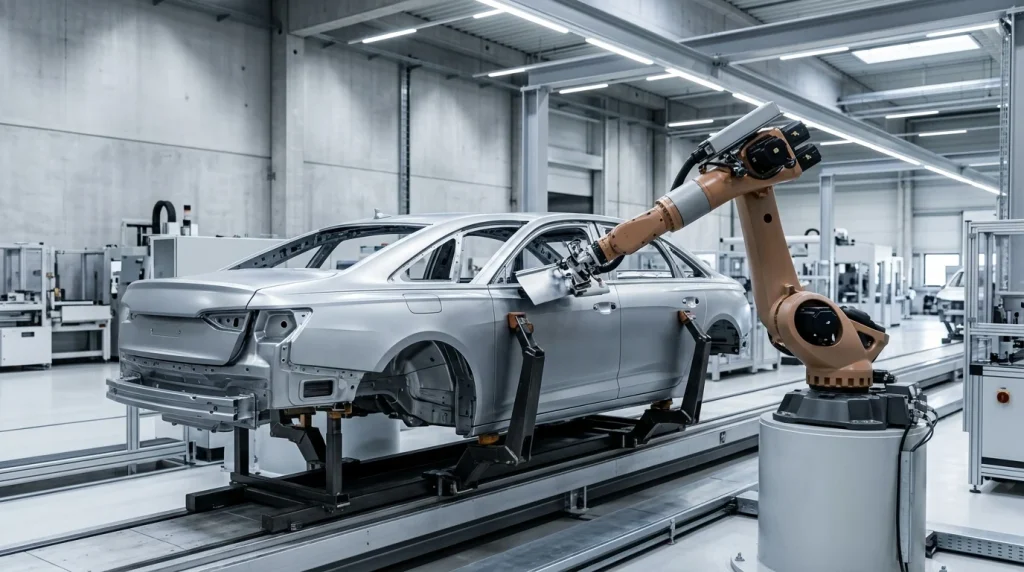
For drivers asking where are Audi’s built, the brand manufactures vehicles across a global network of assembly plants led by two main facilities in Germany at Ingolstadt and Neckarsulm. Additional primary production plants operate in Hungary, Mexico, Slovakia, Belgium, Spain, China, India, and Brazil. Models sold in the United States are imported from Germany, Mexico, and Slovakia, as Audi currently operates zero manufacturing facilities in the US.
Key takeaways:
- Audi is a German automobile manufacturer headquartered in Ingolstadt, Bavaria, Germany.
- Main German production facilities operate in Ingolstadt (headquarters and primary manufacturing) and Neckarsulm.
- Audi owns zero assembly plants in the US; 100 percent of Audi vehicles sold in America are imported.
- Audi officially entered the US market in late 1969 for the 1970 model year with the Audi 100.
Is Audi a German company?
Yes, Audi is definitively a German company. The company operates under the official legal name AUDI AG and maintains its global corporate headquarters in Ingolstadt, a city located in Bavaria, Germany.
As a premium brand within the Volkswagen Group, Audi represents the core of the group’s luxury automotive development. While corporate parentage resides with Volkswagen Group, Audi retains dedicated engineering departments, design studios, and corporate management in Germany. Readers looking for details on corporate structure and brand ownership can explore who makes Audi cars for further context on Volkswagen Group hierarchy. Audi functions as an independent technical unit within Volkswagen Group. While sharing platform engineering across group brands, vehicle tuning, cabin ergonomics, and brand-specific technologies remain strictly under Audi engineering supervision in Ingolstadt.
Note: Corporate registration and engineering leadership remain permanently based in Ingolstadt, Germany, regardless of where individual vehicle components or sub-assemblies are sourced globally.
What country does Audi come from?
Audi originates from Germany, with a complex automotive heritage dating back to the early 20th century. The company traces its founding to August Horch, who established Horch & Cie. in 1899 and later founded Audi Automobilwerke GmbH in Zwickau, Saxony, in 1910. The name “Audi” is the Latin translation of “Horch,” which means “harken” or “listen” in German.
In 1932, four Saxon auto manufacturers (Audi, DKW, Horch, and Wanderer) merged to form Auto Union AG. This merger gave birth to the iconic four-ring logo used today, with each interlocking ring representing one of the four founding companies. Following World War II, Auto Union was re-established in Ingolstadt, Bavaria, in 1949. Volkswagen acquired a controlling stake in Auto Union from Daimler-Benz in 1964. Following a merger with NSU Motorenwerke in 1969, the entity eventually took the modern name AUDI AG in 1985.
Are Audi’s German cars?
Audi vehicles are universally categorized as German cars because their design, engineering, brand identity, and corporate management stem entirely from Germany. Every Audi model, regardless of assembly location, undergoes core technical development at Audi facilities in Ingolstadt and Neckarsulm.
However, modern auto manufacturing relies on international supply chains. While an Audi model assembled in Mexico or Slovakia carries 100 percent German engineering, its physical assembly occurs outside German borders using components sourced globally. Core performance innovations like what Quattro in Audi means reflect proprietary German engineering that defines the vehicle’s driving dynamics across all assembly locations.
Where are Audi cars built? Full factory list by country
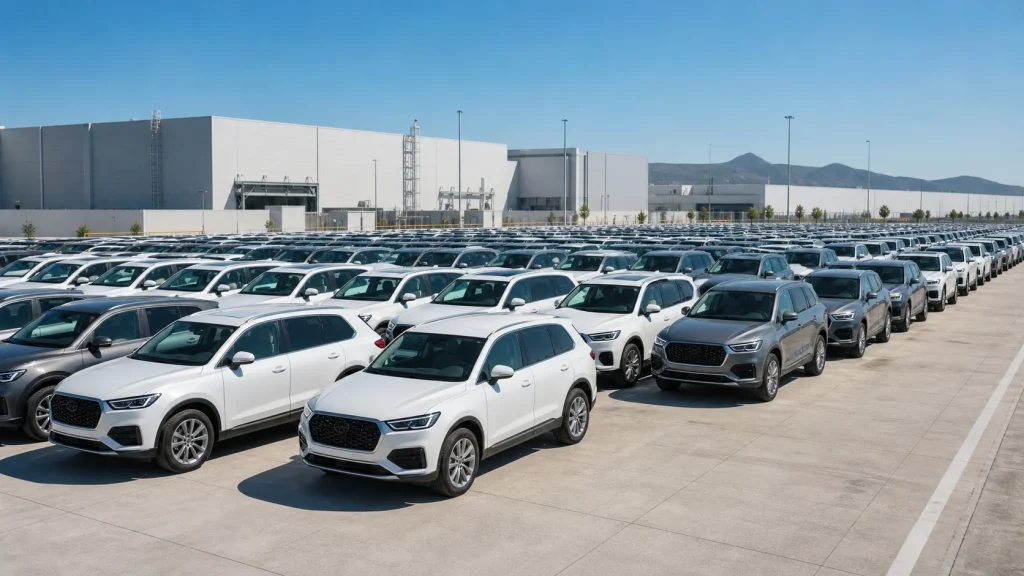
Audi operates manufacturing and assembly facilities in nine countries worldwide to supply regional and global markets. Drivers interested in comparing vehicle lines produced across these international plants can explore our guide to the best Audi cars currently on the market. The comprehensive breakdown below details every major production site and the specific models manufactured at each location.
| Country | Production Site | Major Models Manufactured |
|---|---|---|
| Germany | Ingolstadt | Audi A3, A4, A5, Q2, Q6 e-tron |
| Germany | Neckarsulm | Audi A6, A7, A8, e-tron GT |
| Hungary | Győr (Audi Hungaria) | Audi TT (historic), A3 Sedan, Q3, Q3 Sportback, engine production |
| Mexico | San José Chiapa | Audi Q5, Q5 Sportback, Q5 TFSI e |
| Slovakia | Bratislava | Audi Q7, Q8, SQ7, SQ8 |
| Belgium | Brussels | Audi Q8 e-tron, Q8 Sportback e-tron |
| Spain | Martorell (SEAT Plant) | Audi Q3 (historic A1 production) |
| China | Changchun, Foshan, Tianjin | Audi A4L, A6L, Q5L, Q3 (China-exclusive long-wheelbase variants) |
| India | Aurangabad | Audi A4, A6, Q5, Q7 (SKD assembly for local market) |
| Brazil | São José dos Pinhais | Audi Q3, Q3 Sportback (local market assembly) |
According to Audi’s official production sites documentation, the company continues to expand e-tron electric vehicle production across its German and European manufacturing network.
What country makes Audi automobiles sold in the US?
The Audi vehicles sold at dealerships across the United States are manufactured primarily in three countries: Germany, Mexico, and Slovakia.
- Germany (Ingolstadt & Neckarsulm): Supplies US-market sedans, coupes, and wagons, including the A3, A4, A5, A6, A7, A8, and performance S/RS variants. High-end electric models like the e-tron GT are built at the Böllinger Höfe facility near Neckarsulm. Car enthusiasts comparing high-output performance models assembled at Neckarsulm can check which Audi model has the most horsepower for exact output rankings.
- Mexico (San José Chiapa): Assembles all Audi Q5 models sold in North America. Opening in 2016, this facility is Audi’s first manufacturing plant in the Americas. Shoppers considering midsize luxury crossovers built in North America can read our guide comparing the Audi Q5 vs BMW X3 to evaluate assembly locations and specifications.
- Slovakia (Bratislava): Builds full-size luxury SUVs for North America, specifically the Audi Q7 and Audi Q8 series. For families planning to use these large Slovakian-built SUVs for hauling trailers or boats, examining the towing capacity of an Audi Q7 provides detailed weight limits.
Does Audi build any cars in the United States?
Audi does not build or assemble any vehicles in the United States. Zero manufacturing facilities belong to Audi within US borders. Every Audi model sold in America is imported via ocean freight from international production hubs.
While corporate parent Volkswagen Group operates an assembly plant in Chattanooga, Tennessee (which builds the VW Atlas and VW ID.4), that facility does not produce any Audi vehicles. Audi executives have periodically evaluated constructing a dedicated US manufacturing facility to qualify for North American electric vehicle tax incentives, but no US plant has been established to date.
How can you tell where your Audi was made?
You can definitively identify where your specific Audi vehicle was built by inspecting its 17-character Vehicle Identification Number (VIN). The VIN is visible on the driver-side dashboard near the windshield, on the driver-side door pillar sticker, or on vehicle registration paperwork. Vehicle owners checking their VIN and planning routine maintenance for imported models can review whether Audi cars can be serviced anywhere for dealership and independent shop guidance.
Additionally, if you are checking the VIN near your windshield or door jamb in an emergency, knowing what to do when your Audi key battery dies ensures you can access the cabin manually.
Two key positions within the VIN reveal the assembly origin:
- 1st Character (Country of Origin):
* W: Germany (or Slovakia for certain European VIN standards)
* 3: Mexico
* T: Hungary
* L: China - 11th Character (Assembly Plant Code):
* A or 8: Ingolstadt, Germany
* N: Neckarsulm, Germany
* C: San José Chiapa, Mexico
* D: Bratislava, Slovakia
* 1: Győr, Hungary
* R: Martorell, Spain
For example, a VIN beginning with 3 and carrying C in the 11th position confirms your Audi Q5 was assembled at the San José Chiapa plant in Mexico.
When did Audi enter the US?
Audi officially entered the US retail market in October 1969 for the 1970 model year. Distribution was organized under the newly created Porsche+Audi Division of Volkswagen of America, established to market European premium automobiles alongside high-volume Volkswagen models.
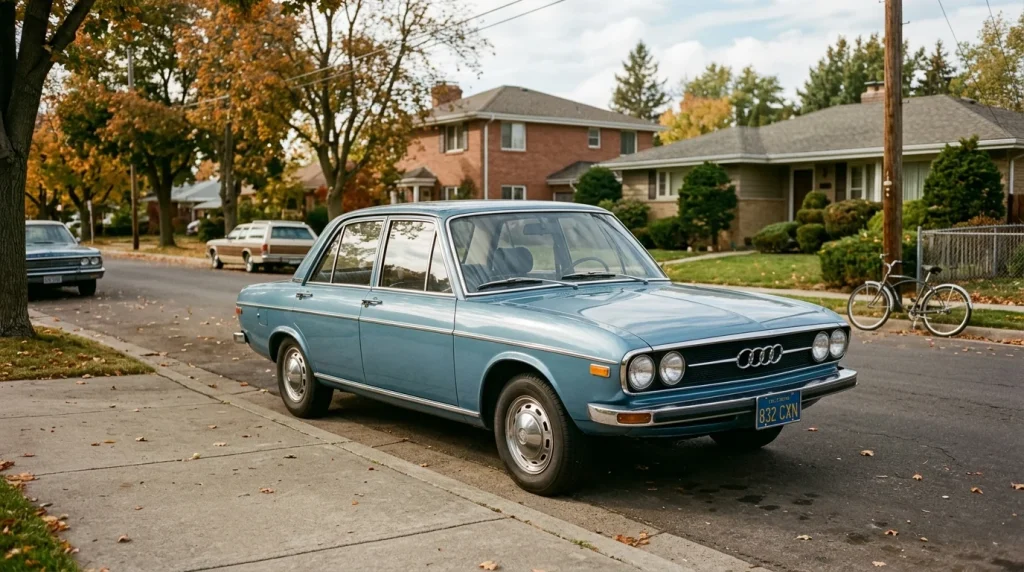
According to Audi USA’s 50th-anniversary announcement, the first Audi vehicle offered to American buyers was the Audi 100 sedan, powered by a 1.8-liter four-cylinder engine. During its inaugural sales year in 1970, Audi sold 6,696 vehicles in the US. Introduction of the Audi Fox (1973) and Audi 5000 (1978) helped establish Audi as a recognized German luxury competitor in North America.
Where are Audi’s made, Germany or elsewhere?
Audi vehicles are made in Germany as well as eight other countries worldwide. Primary German manufacturing hubs in Ingolstadt and Neckarsulm produce sedan, coupe, and electric lines. Major international plants in Mexico, Slovakia, and Hungary manufacture popular SUV models and engine components for global distribution.
Where are Audi cars from originally?
Audi originally comes from Saxony, Germany, where founder August Horch established Audi Automobilwerke in Zwickau in 1910. The modern corporate structure took shape in Ingolstadt, Bavaria, following the post-war re-establishment of Auto Union in 1949.
What country makes Audi vehicles sold worldwide?
Nine countries make Audi vehicles for global markets: Germany, Hungary, Mexico, Slovakia, Belgium, Spain, China, India, and Brazil. German factories handle core European volume and specialty performance models, while overseas facilities supply regional market demands.

