


When asking what is a microfilter on a BMW, it refers to the manufacturer’s official designation for the cabin air filter that purifies air entering the passenger cabin through the climate control system. It traps pollen, road dust, exhaust soot, and exterior odors before they enter the interior. BMW vehicles monitor filter status through the Condition Based Service (CBS) system, with standard replacement recommended every 15,000 to 20,000 miles.
Key takeaways:
- The microfilter cleans passenger cabin air and is completely distinct from the engine intake air filter.
- Common symptoms of a clogged filter include reduced vent airflow, musty odors, and persistent window fogging.
- Dealership replacement costs between 150 USD and 340 USD, whereas DIY replacement using OEM parts costs 15 USD to 80 USD.
- Most modern BMW models locate the filter behind the glovebox or under the passenger footwell panel, requiring under 15 minutes to replace.
What is a microfilter in a BMW and why it matters
The microfilter is the primary barrier between outside roadway pollution and the interior of your BMW. While many automotive brands refer to this part simply as a cabin air filter, BMW uses the term microfilter across its technical documentation, factory service schedules, and onboard iDrive displays.
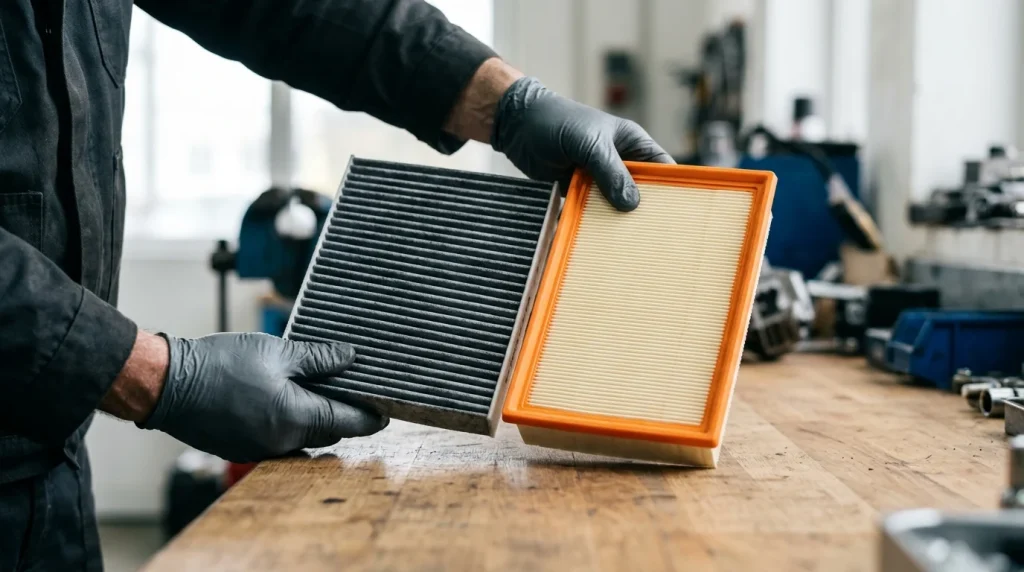
Whenever the blower fan runs, outside air passes through the HVAC intake cowl, travels through the microfilter media, and circulates through the interior dashboard vents. A clean filter prevents road grime, allergens, and fine soot from accumulating on interior surfaces or entering passenger lungs.
Where the microfilter is located in common BMW models
Filter placement varies across vehicle generations and body styles, but modern BMW engineering concentrates the housing in two primary locations:
- Passenger Footwell (Under Dash): The vast majority of modern sedans and crossovers, including the 3 Series (F30, G20), 4 Series (F32, G22), 5 Series (G30), and popular sport utility models like those reviewed in our 2024 BMW X3 review, place the microfilter directly underneath the passenger glovebox area. Access requires removing the lower kick panel trim.
- Engine Bay Cowl Panel: Older BMW generations, such as the E90 3 Series and E60 5 Series, feature the microfilter housing in the rear engine bay directly beneath the windshield cowl. This design uses a long rectangular filter assembly secured by external mounting screws.
How the microfilter works and why it affects cabin air quality
BMW microfilters use advanced synthetic media designed to balance high airflow volume with microscopic particle capture. According to technical documentation from the U.S. Environmental Protection Agency (EPA), high-efficiency automotive cabin filtration significantly lowers occupant exposure to ambient traffic pollution, fine particulate matter, and diesel exhaust.
Standard factory microfilters use electrostatically charged non-woven fibers that attract dust, tree pollen, and tire debris. Premium versions, such as those included with the BMW premium package multi-zone climate systems, incorporate an activated carbon layer. According to filtration engineering data from Bosch, activated carbon chemically adsorbs harmful gaseous pollutants such as nitrogen dioxide, sulfur dioxide, ozone, and unburnt hydrocarbon vapors that cause foul traffic smells.
| Feature | Cabin Microfilter | Engine Air Filter |
|---|---|---|
| System Protected | Passenger Compartment HVAC | Engine Intake and Turbochargers |
| Primary Task | Traps dust, pollen, soot, and odors | Traps abrasive grit and road debris |
| Standard Location | Behind glovebox or under passenger dash | Sealed airbox inside engine compartment |
| Filter Media | Electrostatic fiber with optional carbon | Heavy pleated cellulose or synthetic fabric |
| Service Interval | 15,000 to 20,000 miles | 30,000 to 45,000 miles |
| Failure Result | Weak AC airflow, musty smells, allergies | Loss of engine power, reduced fuel economy |
Signs your BMW microfilter needs replacement
A clogged microfilter restricts airflow and allows moisture and trapped organic material to decay within the HVAC housing. Watch for these distinct warning indicators:
- Weak Dashboard Vent Airflow: Even when the climate control blower is set to maximum speed, the volume of air exiting the dashboard vents feels sluggish.
- Persistent Musty or Vinegar Odor: Moisture trapped in decaying dust inside the filter media creates mold and bacterial growth, causing a foul smell when the AC compressor switches on.
- Slow Defroster Performance: Reduced air volume prevents rapid clearing of condensation on the front windshield during humid or rainy weather.
- Excessive Interior Dust: A saturated or damaged filter allows fine road soot to bypass the media, creating a visible grey film on the center console and navigation screen.
- iDrive CBS Warning Notification: The onboard computer displays a routine maintenance alert on the central display, distinct from a mechanical BMW drivetrain malfunction alert that requires urgent diagnostic scanning.
Allowing a clogged microfilter to persist restricts HVAC airflow, forcing the interior blower motor to draw excessive electrical current. Over time, this extra electrical load can burn out the blower final stage resistor, adding an avoidable climate control failure to the common mileage milestones when BMWs break down.
How to replace or service the microfilter
Replacing a BMW cabin microfilter is one of the most accessible DIY maintenance procedures. For most modern models, the job requires only basic hand tools and takes between 10 and 20 minutes.
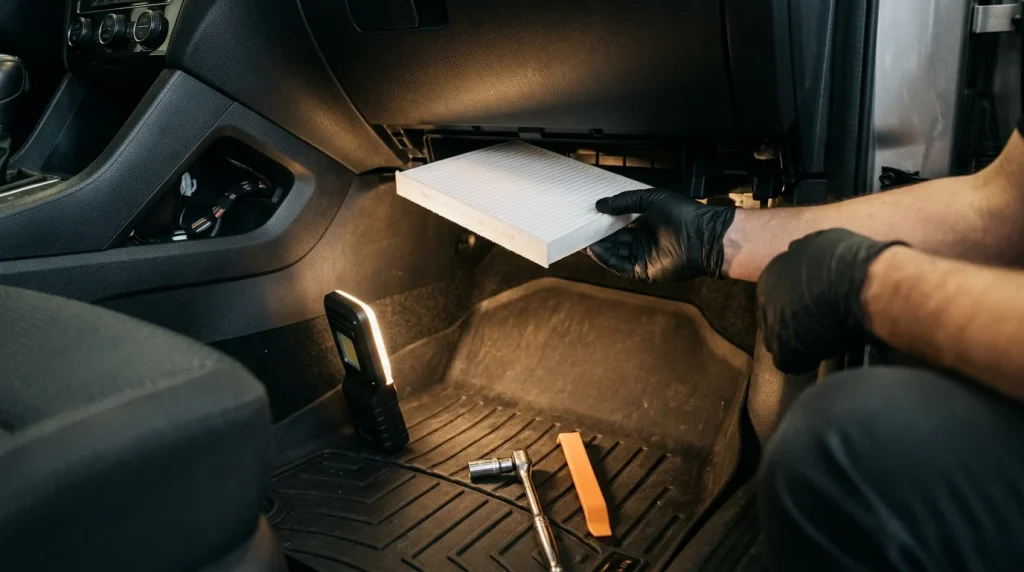
Tools and steps for DIY replacement
Before beginning, confirm the specific filter part number for your vehicle generation. Unlike major engine repairs that require specialized wrenches used on a BMW engine, cabin filter replacement requires only simple trim tools:
- T20 Torx driver or 8 mm socket (model dependent)
- Small flathead screwdriver or plastic interior trim pry tool
- Clean shop towel or small shop vacuum
- Replacement OEM or premium aftermarket microfilter set
Step 1: Lower the passenger footwell trim panel.
Locate the two plastic twist-lock fasteners or T20 Torx screws securing the panel beneath the glove compartment. Carefully lower the panel, disconnecting the footwell light connector if equipped.
Step 2: Remove the microfilter housing access cover.
Locate the curved plastic filter door on the HVAC box. Release the locking tabs or remove the single retaining screw, then slide the cover downward.
Step 3: Extract the old microfilter media.
Gently pull the old filter out of the housing channel. Note the direction of the airflow arrow printed on the plastic frame or filter edge.
Step 4: Clean the interior housing cavity.
Wipe the housing channel with a clean microfiber cloth or vacuum loose leaves and dust that accumulated around the evaporator inlet.
Step 5: Insert the replacement microfilter.
Slide the new filter into the tracks, ensuring the printed airflow arrow points toward the rear of the vehicle or in the direction of blower flow.
Step 6: Reinstall the access cover and footwell panel.
Snap the housing lid securely into place and reattach the lower footwell panel with the retaining screws.
When to seek professional service
While DIY replacement is straightforward on models like the 3 Series and X3, certain executive models such as the 7 Series or specialized hybrid configurations feature dual filter housings tucked deep inside the center console. If reaching the housing requires dismantling center dashboard trim, or if you detect coolant moisture indicating a heater core leak inside the HVAC housing, scheduling service with a qualified technician is advisable. According to EPA Motor Vehicle Air Conditioning (MVAC) technical guidance, the evaporator core circulates refrigerant while engine coolant flows through the heater core, meaning sweet-smelling fluid inside the airbox points to cooling system issues rather than an AC evaporator defect. Modern service centers also verify electronic module communication following any latest BMW software update to ensure climate control flaps calibrate correctly.
Maintenance, costs, and recommendations
Planning cabin filter replacement into your regular maintenance schedule prevents unnecessary strain on the HVAC blower motor while keeping interior air fresh.
Replacement intervals and cost ranges
BMW Condition Based Service (CBS) schedules calculate microfilter replacement dynamically based on vehicle operating time, mileage, and engine service cycles, typically prompting service every second engine oil change (around 15,000 to 20,000 miles or two years) according to BMW Value Service guidelines. Because CBS relies on algorithmic vehicle data rather than environmental air quality sensors, it does not detect particulate saturation from active construction zones or seasonal wildfire smoke. In severe operating environments with continuous dust or heavy traffic soot, vehicle owners should inspect and replace the microfilter manually around 10,000 miles rather than waiting for an automated dashboard prompt.
Understanding the cost breakdown allows owners to keep overall ownership expenses low when comparing routine items to the average BMW maintenance cost:
| Service Route | Parts Cost | Labor Cost | Total Estimated Cost |
|---|---|---|---|
| BMW Authorized Dealership | $50 to $90 | $100 to $250 | $150 to $340 |
| Independent Specialist Shop | $35 to $70 | $45 to $110 | $80 to $180 |
| DIY (OEM Tier Supplier) | $30 to $65 | $0 | $30 to $65 |
| DIY (Standard Aftermarket) | $15 to $35 | $0 | $15 to $35 |
Tracking these service intervals ensures that basic wearable climate items do not lead to secondary electrical or blower motor issues over time.
Official BMW guidance and reputable sources
BMW relies on its Condition Based Service (CBS) platform to alert drivers when routine maintenance items come due. Dealerships frequently bundle cabin microfilter replacement with every second oil service. When completing other routine fluid services, such as checking engine oil specifications for a BMW 328i, inspecting the physical cleanliness of the cabin filter ensures you do not discard a perfectly functional unit prematurely. Factory-branded BMW microfilters are manufactured by tier-one German automotive suppliers including Mann+Hummel, Mahle, and Bosch. Purchasing these OEM supplier branded filters directly from reputable parts distributors provides identical filtration efficiency and fitment as dealer-counter boxes while eliminating significant retail markup.
Note: Performing your own microfilter replacement does not void the BMW new vehicle limited warranty. The United States Magnuson-Moss Warranty Act protects consumer rights to perform routine maintenance using parts meeting original manufacturer specifications.
After completing a DIY filter installation, reset the CBS notification through the instrument cluster:
- Switch on the vehicle ignition without starting the engine.
- Press and hold the instrument cluster odometer reset button for approximately 10 seconds until the service menu appears.
- Tap the button sequentially until the microfilter or cabin ventilation icon displays.
- Press and hold the button again until the prompt asks “Reset?”. Release and hold once more to confirm the reset.
Frequently asked questions about BMW microfilters
Is a microfilter the same as a pollen filter?
Yes. In automotive terminology, microfilter, cabin air filter, and pollen filter refer to the exact same component. BMW officially uses the designation microfilter across its repair manuals and iDrive software menus, whereas other European manufacturers may label it a pollen filter.
Can a clogged microfilter affect engine performance?
No. The cabin microfilter operates entirely within the passenger compartment ventilation system. It has no physical or mechanical connection to the engine intake manifold or turbocharging system. While a severely clogged microfilter reduces cabin airflow and climate control efficiency, it has zero impact on engine horsepower, fuel economy, or powertrain reliability.
How to dispose of used filters properly?
Used microfilters contain trapped soot, synthetic microfibers, and environmental dust. They cannot be recycled through standard residential paper programs due to composite fiber construction. Place the old filter inside a sealed plastic bag and dispose of it with ordinary household municipal solid waste.

