

For drivers asking what’s the maintenance cost for BMW vehicles, annual upkeep averages $968, which is 48% higher than the broader automotive industry average of $652. Over a 10-year ownership timeline, cumulative maintenance and repair expenses reach approximately $16,021. New vehicles benefit from 3 years or 36,000 miles of complimentary factory maintenance through BMW Ultimate Care, keeping out-of-pocket costs at zero initially. Expenses begin climbing steeply around year 4 once the factory warranty expires and routine wear items require replacement.
Key takeaways:
- The nationwide average annual maintenance and repair cost for a BMW is $968.
- New vehicles receive 3 years or 36,000 miles of free scheduled maintenance via BMW Ultimate Care.
- 10-year cumulative ownership maintenance totals $16,021, with large SUVs costing significantly more than sedans.
- BMW vehicles carry a 47.26% probability of needing at least one major repair during their first 10 years.
- Choosing independent certified European auto specialists can reduce hourly labor charges by 30% to 50% compared to dealership rates.
Overview of BMW Maintenance Cost Landscape
Maintaining a German luxury vehicle involves a distinct financial profile compared to mass-market consumer cars. According to data published by RepairPal, the average annual repair and maintenance cost for a BMW is $968, ranking it 30th out of 32 major car brands in overall brand reliability. Owners visit a repair facility for unscheduled issues an average of 0.9 times per year, compared to the industry average of 0.4 visits annually. Furthermore, 15% of those repairs are classified as severe, meaning the repair bill exceeds three times the average annual repair cost across all vehicle models.
Understanding this cost landscape requires separating routine scheduled service from unexpected mechanical failures. Routine service includes predictable fluid exchanges, filter replacements, and brake inspections mandated by the factory schedule. Unexpected repairs involve diagnosing and fixing failed mechanical, cooling, or electrical components that wear out prematurely.
Several technical factors drive higher maintenance figures across the lineup:
- Specialized Diagnostic Equipment: Modern BMW models rely on complex networked electronic control units that require proprietary software tools, such as BMW ISTA, for accurate troubleshooting.
- Premium Fluid Specifications: Engines require certified synthetic motor oils meeting strict high-temperature high-shear standards, alongside dedicated European coolant formulations.
- OEM Component Pricing: High-tolerance engine and suspension components command premium prices relative to domestic or Asian vehicle parts.
- Labor Complexity: Tightly packaged engine bays often require additional disassembly labor to access common wear components.
Owners can evaluate their long-term budget by tracking how vehicle systems degrade over time. Reviewing the BMW breakdown mileage thresholds provides practical benchmarks on when critical systems demand attention. Additionally, optional trim packages can influence servicing needs, as detailed in our breakdown of BMW Premium Package features and options.
The following table summarizes core reliability and cost metrics for BMW ownership based on automotive industry benchmarks:
| Metric | BMW Brand Average | Industry Average | Variance vs. Industry |
|---|---|---|---|
| Average Annual Cost | $968 | $652 | +48.5% |
| Unscheduled Shop Visits / Year | 0.9 visits | 0.4 visits | +125.0% |
| Probability of Severe Repair | 15.0% | 12.0% | +25.0% |
| 10-Year Estimated Total Spend | $16,021 | $19,503 (Luxury Avg) | -17.8% (Below Luxury Avg) |
| 10-Year Major Repair Probability | 47.26% | 35.00% | +35.0% |
BMW Maintenance Costs by Model Segment and Powertrain
Maintenance costs vary widely depending on the chassis configuration, engine layout, and powertrain type. Smaller four-cylinder sedans incur lower fluid capacities and simpler brake configurations, whereas high-performance twin-turbocharged V8 models and three-row SUVs carry much higher ongoing running costs.
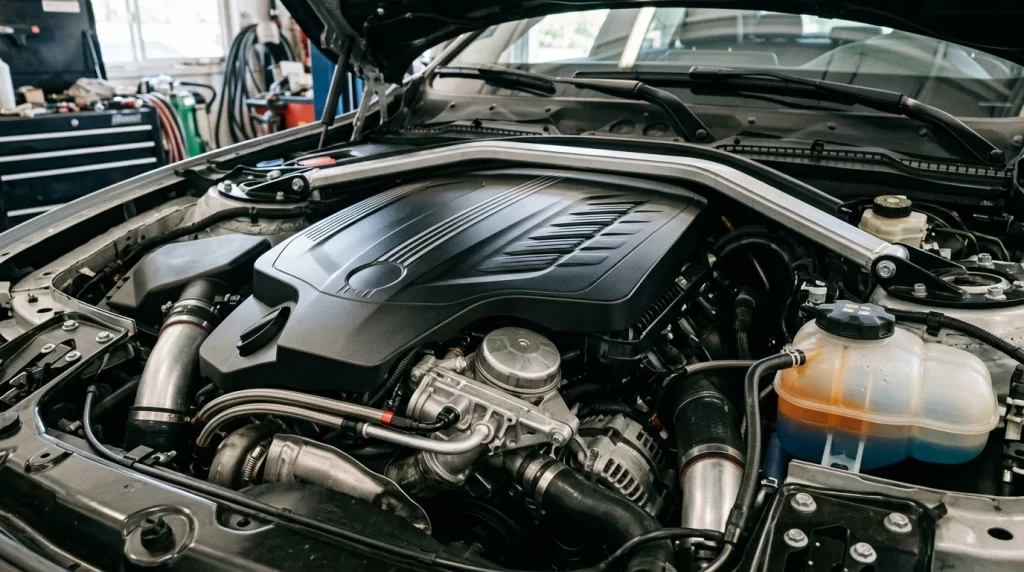
According to long-term ownership projections from CarEdge, a standard BMW 3 Series sedan costs approximately $13,219 to maintain over 10 years, while a flagship BMW X7 full-size SUV averages $18,550 during the same operating window. The probability of experiencing a major component repair during the first decade ranges from 42% on entry-level four-cylinder models to over 60% on heavy, all-wheel-drive crossovers.
Compact and Midsize Sedans
Sedans like the 330i and 530i powered by the B48 2.0-liter turbocharged four-cylinder engine represent the most economical end of the gas-powered BMW maintenance spectrum. These engines require fewer spark plugs, smaller oil capacities (around 5.3 to 5.7 quarts), and standard single-piston floating brake calipers on base trims.
Electric sedans offer an even leaner routine service schedule. The all-electric BMW i4 eliminates engine oil changes, spark plug replacements, fuel filter maintenance, and exhaust repairs entirely. However, because electric vehicles carry heavy battery packs, tire wear can accelerate by 20% to 30%, and cabin air filters and brake fluid flushes remain necessary at standard two-year intervals.
Luxury Crossovers and SUVs
BMW utility vehicles, including the X3, X5, and X7, feature standard xDrive all-wheel drive and heavier suspension hardware that increase service costs. Transfer case fluid flushes, front differential service, and rear differential maintenance must be completed periodically to prevent drivetrain binding.
For a comprehensive look at how an all-wheel-drive crossover performs over multiple years of daily driving, check our 2024 BMW X3 performance and ownership review. Larger models equipped with dynamic air suspension systems also introduce long-term risks of air spring bladder leaks and compressor fatigue after 70,000 miles.
High-Performance M Models
Dedicated BMW M vehicles, such as the M3, M4, and M5, use bespoke high-output engines with specialized cooling circuits, multi-piston fixed brake calipers, and electronic limited-slip differentials. For instance, maintaining the high-revving twin-turbocharged inline-six requires specialized knowledge, as outlined in our technical analysis of S58 engine specifications on the BMW M4. M models require shorter fluid change intervals, specialized BMW Longlife-approved 0W-30 or 0W-40 synthetic performance lubricants, and high-performance replacement brake rotors and multi-piston calipers that can reach $1,100 to $1,500 per axle at dealership rates.
The table below outlines estimated annual and 10-year maintenance figures across key BMW model segments:
| BMW Model | Powertrain / Drivetrain | Est. Annual Cost | 10-Year Total Spend | 10-Year Major Repair Risk |
|---|---|---|---|---|
| BMW 330i | 2.0L Turbo I4 / RWD | $850 – $1,000 | $13,219 | 42.1% |
| BMW i4 eDrive40 | Single Electric Motor / RWD | $600 – $750 | $9,800 | 28.5% |
| BMW 540i | 3.0L Turbo I6 / RWD | $950 – $1,150 | $14,800 | 48.0% |
| BMW X3 xDrive30i | 2.0L Turbo I4 / AWD | $1,000 – $1,200 | $19,051 | 56.4% |
| BMW X5 xDrive40i | 3.0L Turbo I6 / AWD | $1,150 – $1,400 | $18,389 | 54.6% |
| BMW X7 xDrive40i | 3.0L Turbo I6 / AWD | $1,300 – $1,650 | $18,550 | 60.2% |
| BMW M3 Competition | 3.0L Twin-Turbo I6 / RWD | $1,500 – $2,200 | $22,500 | 62.8% |
Ownership Timeline: How Costs Evolve by Age and Mileage
The financial trajectory of BMW ownership follows a distinct two-stage curve. During the initial three years, factory programs protect the owner from routine servicing expenses. Once the vehicle enters its fourth year, out-of-pocket costs rise steadily as consumable parts reach the end of their operational lifespan.
Factory Warranty and Complimentary Service (Years 1 to 3)
Every new vehicle sold in the United States includes complimentary scheduled service through BMW Ultimate Care. This program covers engine oil and filter changes, routine BMW cabin microfilter replacement, engine air filters, spark plugs, and brake fluid flushes for the first 3 years or 36,000 miles. Additionally, the four-year or 50,000-mile new vehicle limited warranty protects against manufacturing defects and mechanical breakdowns. Consequently, typical out-of-pocket expenditure during this initial window remains near zero, excluding tire replacements and wheel alignments.
Post-Warranty Inflection Points (Years 4 to 10)
Between years 4 and 6 (approx. 45,000 to 75,000 miles), the factory warranty lapses, and primary wear items require renewal. Front and rear brake pads and rotors, auxiliary 12V AGM batteries, transmission fluid flushes, and driveline fluids come due.
Between years 7 and 10 (approx. 80,000 to 120,000 miles), age-related plastic and rubber degradation begins affecting engine gaskets, coolant hoses, water pumps, and suspension control arm bushings. Internal timing mechanisms also face wear from thermal cycles, frequently exhibiting BMW VANOS variable valve timing failure signs that demand mechanical attention. Without preventative care, repair bills can cluster together during this phase.
The table below illustrates the projected annual expenditure timeline for a typical BMW over a 10-year operating period:
| Ownership Year | Mileage Range | Scheduled Maintenance | Estimated Repairs | Total Projected Annual Cost |
|---|---|---|---|---|
| Year 1 | 0 – 12,000 | $0 (Ultimate Care) | $0 (Warranty) | $0 |
| Year 2 | 12,001 – 24,000 | $0 (Ultimate Care) | $0 (Warranty) | $0 |
| Year 3 | 24,001 – 36,000 | $0 (Ultimate Care) | $0 (Warranty) | $0 |
| Year 4 | 36,001 – 48,000 | $950 | $350 | $1,300 |
| Year 5 | 48,001 – 60,000 | $1,100 | $550 | $1,650 |
| Year 6 | 60,001 – 72,000 | $1,350 | $750 | $2,100 |
| Year 7 | 72,001 – 84,000 | $1,500 | $950 | $2,450 |
| Year 8 | 84,001 – 96,000 | $1,750 | $1,200 | $2,950 |
| Year 9 | 96,001 – 108,000 | $1,900 | $1,450 | $3,350 |
| Year 10 | 108,001 – 120,000 | $2,100 | $1,700 | $3,800 |
Common BMW Service and Wear-and-Tear Costs
To properly budget for vehicle upkeep, owners should understand the going rates for standard preventative jobs and common mechanical repairs. Labor charges typically range from $130 to $180 per hour at independent European repair shops and $200 to $275 per hour at franchised dealerships.
Routine Preventative Services
Preventative maintenance forms the backbone of vehicle longevity. Sticking strictly to manufacturer fluid intervals avoids costly downstream failures:
- Engine Oil and Filter Service: $150 to $250. Modern BMW powerplants require full synthetic motor oil meeting BMW Longlife-01 or Longlife-04 specifications. For detailed oil capacity and viscosity charts, refer to our LL-01 oil specifications for the BMW 328i.
- Brake Fluid Exchange: $130 to $220. Recommended every two years regardless of mileage to prevent internal hydraulic corrosion.
- Cabin Air Microfilter Replacement: $90 to $180. Keeps the climate control system operating efficiently by trapping airborne particulates, pollen, and dust before entering the cabin.
- Cooling System Flush: $180 to $320. Essential every four years to maintain corrosion inhibitors using approved coolant formulations for BMW.
- Automatic Transmission Service: $450 to $850. ZF eight-speed transmissions benefit from fluid and integrated pan-filter replacement every 60,000 miles.
- Spark Plug Replacement: $250 to $450 on four-cylinder engines; $350 to $650 on six-cylinder engines.
Common Mechanical Failure Points
As mileage accumulates beyond 75,000 miles, specific engineering subsystems require refurbishment:
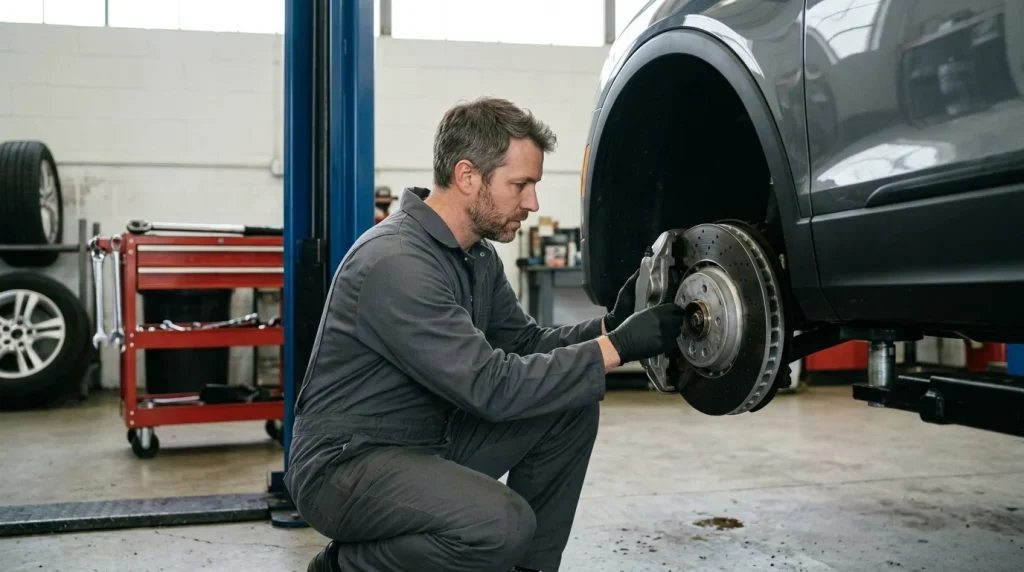
- Brake Pads and Rotors (Per Axle): $650 to $1,300. BMW uses softer rotor compounds for superior bite and thermal dissipation, requiring rotor replacement alongside pads.
- Electric Water Pump and Thermostat: $1,100 to $1,800. Composite plastic impellers and electronic controls often fail around 80,000 to 100,000 miles.
- Oil Filter Housing and Valve Cover Gaskets: $850 to $1,600. Rubber gaskets harden from engine heat cycles, resulting in oil seeping onto the drive belt area.
- Variable Valve Timing Solenoids: $400 to $900. Sludge buildup or electrical degradation can trigger timing faults, sluggish throttle response, and rough idling.
The table below breaks down estimated component and labor costs for typical maintenance and repair jobs:
| Service Item | Typical Frequency | DIY / Part Cost | Indie Shop Cost | Dealership Cost |
|---|---|---|---|---|
| Synthetic Oil Change | 10,000 miles / 1 Year | $55 – $85 | $140 – $200 | $220 – $290 |
| Brake Pads & Rotors (Front) | 35,000 – 50,000 miles | $220 – $400 | $650 – $950 | $1,100 – $1,500 |
| Brake Fluid Flush | Every 2 Years | $25 – $40 | $130 – $180 | $200 – $260 |
| Engine & Cabin Filters | 20,000 – 30,000 miles | $40 – $70 | $120 – $190 | $220 – $310 |
| Transmission Fluid Service | 60,000 miles | $180 – $260 | $480 – $700 | $850 – $1,200 |
| Electric Water Pump & Thermostat | 80,000 – 100,000 miles | $380 – $550 | $1,100 – $1,500 | $1,700 – $2,200 |
| Valve Cover Gasket Replacement | 75,000 – 90,000 miles | $60 – $140 | $750 – $1,100 | $1,250 – $1,750 |
BMW vs. Audi vs. Mercedes: Maintenance Costs Compared
When shopping for a luxury automobile, comparing ownership costs among the leading German manufacturers is essential. While BMW leads in performance dynamics, its ongoing maintenance profile differs from its direct competitors.
According to comparative data from RepairPal and automotive cost indexes, BMW carries an average annual maintenance expense of $968, compared to Mercedes-Benz at $908 and Audi at $987. Audi benefits from shared component architecture with the Volkswagen Group for certain baseline replacement parts. However, BMW vehicles equipped with modern B48 four-cylinder and B58 six-cylinder engines show strong powertrain reliability, often suffering fewer catastrophic engine failures than older generations.
Mercedes-Benz models exhibit similar mechanical reliability but can incur higher diagnostic costs due to proprietary multiplex electrical systems. You can read our detailed BMW versus Mercedes maintenance cost comparison and review our study on the long-term dependability of BMW and Mercedes to evaluate brand tradeoffs.
The table below contrasts 10-year ownership costs across major German luxury brands:
| Brand | Average Annual Cost | 10-Year Maintenance Total | Frequency (Visits/Year) | Severe Repair Probability |
|---|---|---|---|---|
| BMW | $968 | $16,021 | 0.9 visits | 15.0% |
| Mercedes-Benz | $908 | $15,986 | 0.7 visits | 13.0% |
| Audi | $987 | $13,222 | 0.8 visits | 13.0% |
| Porsche | $1,192 | $22,075 | 0.8 visits | 21.0% |
| Lexus (Benchmark) | $551 | $7,786 | 0.5 visits | 8.0% |
While BMW incurs higher routine maintenance charges than non-luxury benchmarks like Lexus, modern BMW powertrains such as the B58 inline-six have established a reputation for solid mechanical durability when oil change schedules are respected. High maintenance totals stem primarily from labor rates, cooling system replacements, and premium wear parts rather than spontaneous internal engine failures.
Practical Strategies to Lower BMW Maintenance Expenses
Owning a BMW does not have to result in unmanageable repair invoices. Implementing practical ownership habits and using alternative service channels can significantly reduce total operating costs.
Use Independent Certified European Specialists
Dealership service departments carry high overhead expenses, translating to hourly labor rates of $200 to $275 in most metropolitan markets. Independent repair shops specializing in BMW, Audi, and Mercedes employ certified technicians who use identical diagnostic tooling but charge labor rates between $130 and $180 per hour. Choosing an established independent specialist routinely saves 30% to 50% on total labor costs.
Evaluate Prepaid Maintenance Plans (BMW Ultimate Care+)
Owners planning to keep their vehicle beyond the initial three-year lease or ownership period can purchase BMW Ultimate Care+ extensions. These packages extend scheduled maintenance coverage up to 7 years. Crucially, Ultimate Care+ covers consumable wear items such as brake pads, brake rotors, and wiper blades. If your driving style leads to rapid brake wear, pre-purchasing coverage can effectively lock in labor and parts pricing against inflation.
Handle Basic Filter and Fluid Tasks at Home
Simple routine tasks require minimal specialized equipment. Replacing engine air filters and cabin microfilters takes 15 to 30 minutes with basic hand tools. Performing these jobs at home saves up to $150 in dealer labor charges per visit. Enthusiast owners can also tackle oil changes, spark plugs, and brake pads using specialized tools and wrenches for BMW engines.
Invest in an OBD-II Diagnostic Scanner
When an instrument cluster warning light illuminates, an OBD-II diagnostic scanner compatible with BMW protocols (such as BimmerLink or Carly) allows you to read fault codes directly. Identifying error codes before visiting a mechanic protects you from unnecessary part replacements when troubleshooting BMW drivetrain malfunction alerts.
Note: When buying replacement parts independently, prioritize OEM brands such as Bosch, Lemförder, Mahle, and Mann-Filter over unbranded aftermarket alternatives. Genuine OEM suppliers provide factory-level fitment and reliability without dealership retail markups.
Real-World Ownership Scenarios: Total Cost of Ownership
To put ongoing maintenance into perspective, buyers should consider how maintenance interacts with vehicle depreciation. Over the first five years of ownership, depreciation represents the single largest cost factor, averaging 48% to 54% across luxury vehicle lineups.
Consider two contrasting ownership profiles:
- Scenario A: New BMW 330i Leased for 3 Years (36,000 Miles)
- Scheduled Maintenance: $0 (Covered by BMW Ultimate Care)
- Mechanical Repairs: $0 (Covered by 4-Year / 50,000-Mile Factory Warranty)
- Wear Items: $150 (Tire rotation, alignment check)
- Total Maintenance Outlay: $150 over 3 years.
- Scenario B: Pre-Owned BMW X3 Purchased at 5 Years Old (60,000 Miles), Kept for 5 Years
- Scheduled Maintenance: $4,500 (Fluid flushes, filters, spark plugs, transmission service)
- Wear Items: $2,400 (Two sets of brake pads/rotors, tires, battery)
- Mechanical Repairs: $3,200 (Water pump, oil filter housing gasket, control arm bushings)
- Total Maintenance Outlay: $10,100 over 5 years (approx. $2,020 annually).
Purchasing a late-model used BMW offers substantial savings on purchase price due to depreciation, but buyers must maintain a dedicated liquid reserve of $2,000 to $3,000 annually to handle aging vehicle systems effectively.
Frequently Asked Questions
What is the average annual maintenance cost for a BMW?
The average annual maintenance and repair cost for a BMW is $968 across all models, based on repair tracking data from RepairPal. This figure includes both scheduled servicing (oil changes, filters, inspections) and unscheduled mechanical repairs. Costs remain near $0 during the first three years under factory coverage, then rise to $1,500 to $2,500 annually as the vehicle exceeds 60,000 miles.
Does BMW include free scheduled maintenance?
Yes. Every new BMW sold in the United States includes complimentary BMW Ultimate Care for the first 3 years or 36,000 miles, whichever comes first. This program covers factory-scheduled maintenance, including synthetic engine oil changes, microfilters, engine air filters, spark plugs, and brake fluid flushes.
How much does it cost to maintain a BMW X3 annually?
Maintaining a BMW X3 averages approximately $1,000 to $1,200 per year over a typical ownership cycle. According to CarEdge estimates, cumulative 10-year maintenance and repair expenses for an X3 reach $19,051, with a 56.41% probability of requiring at least one major repair during the first decade.
Are BMW extended maintenance plans worth the cost?
Extended maintenance plans, such as BMW Ultimate Care+, are generally worth the investment if you plan to keep your vehicle between years 4 and 7 and drive in stop-and-go urban conditions. Because Ultimate Care+ covers high-wear items like brake pads and rotors, which can cost $1,100 to $1,500 per axle at dealerships, the plan often pays for itself on a single brake replacement cycle.
Do BMW electric vehicles require less maintenance?
Yes. All-electric models like the BMW i4, i5, and iX eliminate engine oil changes, spark plug replacements, fuel system repairs, and exhaust upkeep. Consequently, routine scheduled maintenance costs are roughly 30% to 40% lower than comparable gas-powered models, although tire replacement costs may be slightly higher due to vehicle curb weight.

