

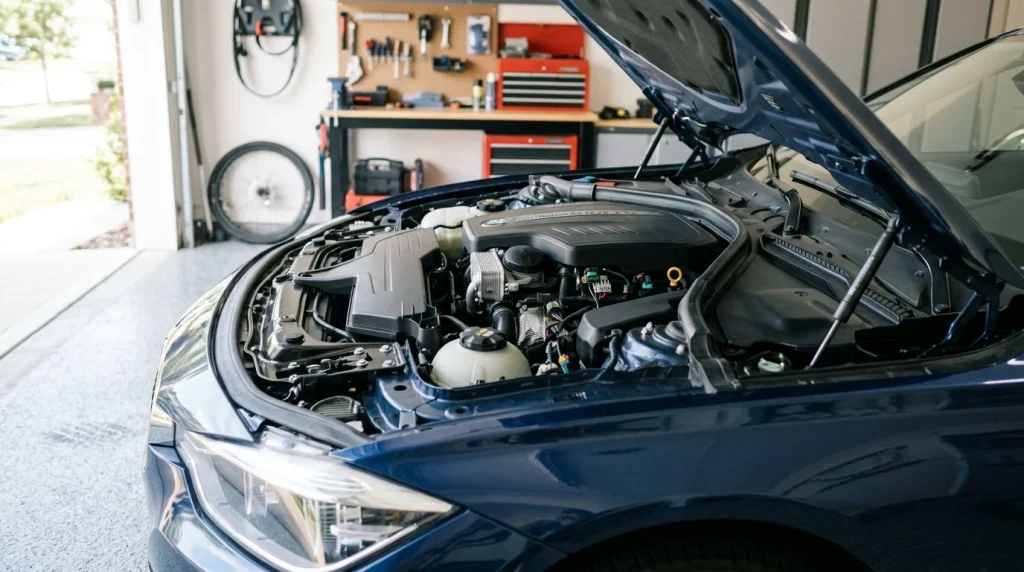
When determining what type of oil does a BMW 328i take, the vehicle requires full synthetic motor lubricant meeting BMW Longlife-01 (LL-01) or Longlife-04 (LL-04) specifications, with SAE 5W-30 serving as the factory recommended viscosity grade. Crankcase volume ranges between 5.1 quarts and 6.9 quarts (5.0 to 6.5 liters), determined by whether the chassis houses the naturally aspirated 3.0-liter inline-six engine (N52) or the turbocharged 2.0-liter inline-four engine (N20). Approved premium synthetic formulations maintain high thermal stability and deliver 3% to 8% better fuel efficiency than conventional mineral blends.
Key takeaways:
-
Recommended specification: BMW Longlife-01 (LL-01) for standard gasoline variants; BMW Longlife-04 (LL-04) low-ash synthetic formulation is also approved.
-
Recommended viscosity grade: SAE 5W-30 full synthetic motor lubricant (standard requirement for models including the 2011 BMW 328i).
-
Crankcase specifications: 6.9 quarts (6.5 liters) for naturally aspirated six-cylinder engines (N52); 5.1 to 5.3 quarts (5.0 liters) for turbocharged four-cylinder engines (N20).
-
Formulation standard: Certified full synthetic formulations are required to maintain molecular stability and high oxidation resistance under BMW LL-01 and LL-04 standards.
-
Efficiency advantage: Premium synthetic motor lubricants achieve 3% to 8% better fuel economy compared to conventional mineral products.
Recommended Oil Types and Viscosity Grades for the BMW 328i
Determining what type of oil a BMW 328i takes starts with selecting the proper viscosity rating and base formulation. The BMW 328i demands full synthetic motor lubricant with a recommended viscosity grade of 5W-30 to provide dependable hydrodynamic protection across varied operating temperatures. Synthetic lubricants maintain consistent molecular structure under heavy shear stress, preventing the rapid thermal breakdown common to conventional mineral products.
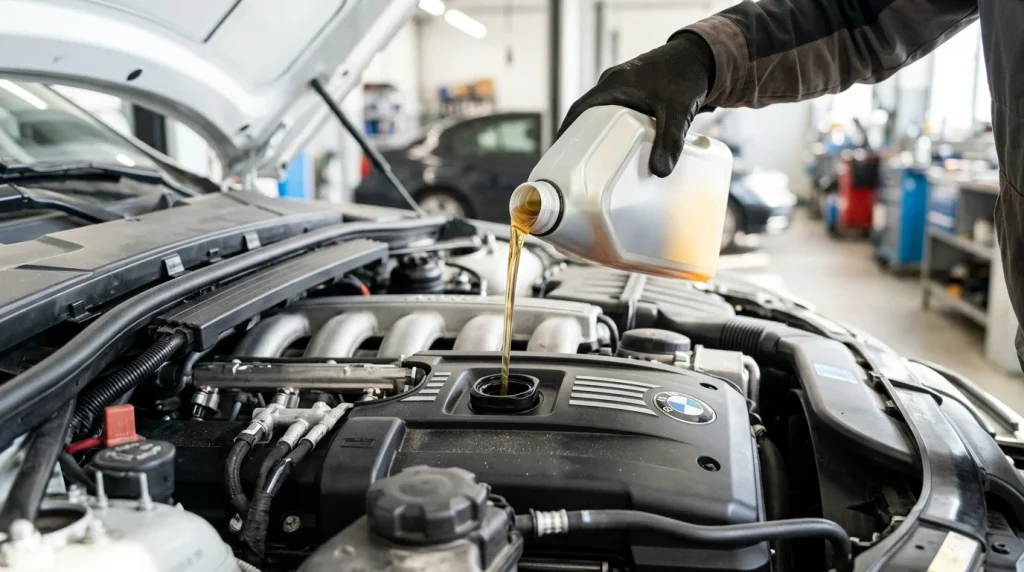
According to technical documentation published by Heavy Vehicle Inspection, BMW 328i engines require 5W-30 or 0W-30 viscosity ratings to provide proper lubrication across -20°F startup conditions to 250°F operating temperatures. A multi-grade 5W-30 fluid flows rapidly during cold morning starts to protect camshaft journals, while remaining thick enough at normal operating temperatures to prevent metal-to-metal contact on connecting rod bearings. In extreme sub-zero winter climates, a 0W-30 synthetic lubricant serves as an approved alternative, flowing freely down to -35°F (-37°C) to reduce initial cranking resistance.
Beyond internal mechanical protection, base formulation directly influences operating efficiency. Data demonstrates that BMW 328i owners can achieve 3% to 8% better fuel economy when using premium synthetic formulations compared to conventional motor lubricants. Lower internal fluid friction reduces parasitic drag on the crankshaft and lubrication pump.
| Viscosity Grade | Temperature Operational Window | Kinematic Viscosity @ 100°C | Cold Cranking Viscosity (CCS Limit) | Primary Application / Climate Fit |
|---|---|---|---|---|
| SAE 5W-30 Full Synthetic | -20°F to 250°F (-29°C to 121°C) | 11.5 to 12.2 cSt | < 6,600 mPa*s @ -30°C | Factory default standard; all-season daily driving across temperate zones |
| SAE 0W-30 Full Synthetic | -35°F to 250°F (-37°C to 121°C) | 11.8 to 12.4 cSt | < 6,200 mPa*s @ -35°C | Sub-zero winter regions; maximizes cold cranking speed and rapid oil flow |
| SAE 5W-40 Full Synthetic | -15°F to 260°F (-26°C to 127°C) | 13.8 to 14.5 cSt | < 6,600 mPa*s @ -30°C | High-mileage chassis (>100,000 miles) or sustained high ambient heat |
| SAE 0W-40 Full Synthetic | -40°F to 260°F (-40°C to 127°C) | 13.5 to 14.2 cSt | < 6,200 mPa*s @ -35°C | High-performance driving cycles; wide thermal range protection |
Proper engine lubrication also ties directly into broader vehicle maintenance habits. Pairing high-grade motor fluid with the recommended fuel octane grades for BMW ensures complete combustion, keeping unburnt fuel from washing past piston rings into the crankcase. Maintaining clean fluid and proper fuel delivery preserves long-term powertrain health, supporting strong BMW long-term vehicle reliability rankings over years of daily driving. Selecting the correct viscosity grade protects delicate hydraulic actuators inside German powertrains. Modern European motor fluids balance tight bearing clearances (often 0.0015 to 0.0022 inches) with high thermal stability, meaning standard big-box conventional fluids cannot provide adequate protection for extended driving cycles.
BMW Oil Approval Specifications: LL-01 vs. LL-04
Viscosity rating alone does not determine whether a lubricant is safe for a BMW engine. BMW establishes proprietary certification standards based on rigorous laboratory bench tests and dyno validation. The primary manufacturer approval for gasoline-powered BMW 328i models in North America is BMW Longlife-01 (LL-01).
According to parts technical data from AutohausAZ, engine fluid meeting BMW Longlife-01 specifications is the factory-designated suitable option for most BMW 328i models. The LL-01 standard requires a High Temperature High Shear (HTHS) viscosity of at least 3.5 mPa*s at 150°C. This high threshold ensures that the fluid film will not shear thin under intense mechanical loads between connecting rod bearings and camshaft lobes. Additionally, LL-01 requires a high Total Base Number (TBN ≥ 10.0 mg KOH/g) to neutralize acidic blow-by gases generated by combustion.
The secondary standard encountered by owners is BMW Longlife-04 (LL-04). While engineered primarily for European diesel models equipped with Diesel Particulate Filters (DPF), certain low-ash, fully synthetic products such as Top Tec 4200 also hold official LL-04 approval. These low-SAPS (sulfated ash ≤ 0.8% wt, phosphorus, and sulfur) lubricants prevent exhaust catalyst fouling while still offering dependable engine wear protection.
| Approval Standard | Chemical SAPS Level | Minimum HTHS Viscosity | Target Applications | Key Performance Metric |
|---|---|---|---|---|
| BMW Longlife-01 (LL-01) | Full SAPS (Sulfated Ash 1.0-1.6% wt) | ≥ 3.5 mPa*s @ 150°C | Standard gasoline engines (N52, N20) | High detergent reserve (TBN ≥ 10.0); resists fuel dilution degradation |
| BMW Longlife-04 (LL-04) | Low SAPS (Sulfated Ash ≤ 0.8% wt) | ≥ 3.5 mPa*s @ 150°C | European diesels and select gasoline applications | Reduced ash deposit formation; protects catalytic converters and DPFs |
| BMW Longlife-01 FE | Mid SAPS (Fuel Economy profile) | ≥ 3.0 mPa*s @ 150°C | Newer turbo gasoline applications | Lower HTHS friction for reduced CO2 output and higher fuel savings |
Maintaining the correct approval standard protects intricate variable valve timing mechanisms, particularly the BMW VANOS variable valve timing mechanism. The VANOS system relies on high-pressure fluid flow through fine electromagnetic solenoids to advance or retard camshaft timing. Lubricants lacking proper detergent additive packs can leave varnish deposits, sticking the solenoids and causing timing errors. High-output engines across the brand share similar fluid cleanliness requirements, as seen in the advanced powertrain layout of the BMW i8, where tight clearances demand high additive stability.
Note: Always look for the explicit text “BMW Longlife-01” or “BMW LL-01 Approved” on the back label of the container. Generic labels claiming “Recommended for European Vehicles” without official manufacturer certification may not meet BMW shear stability requirements.
Oil Capacity by BMW 328i Engine Generation (N52 vs. N20)
Crankcase fluid capacity on the BMW 328i varies significantly depending on the generation and engine architecture. The 328i nameplate spans multiple engine families, most notably the naturally aspirated 3.0-liter inline-six (N52) found in the E90 chassis and the turbocharged 2.0-liter inline-four (N20) found in the F30 chassis.
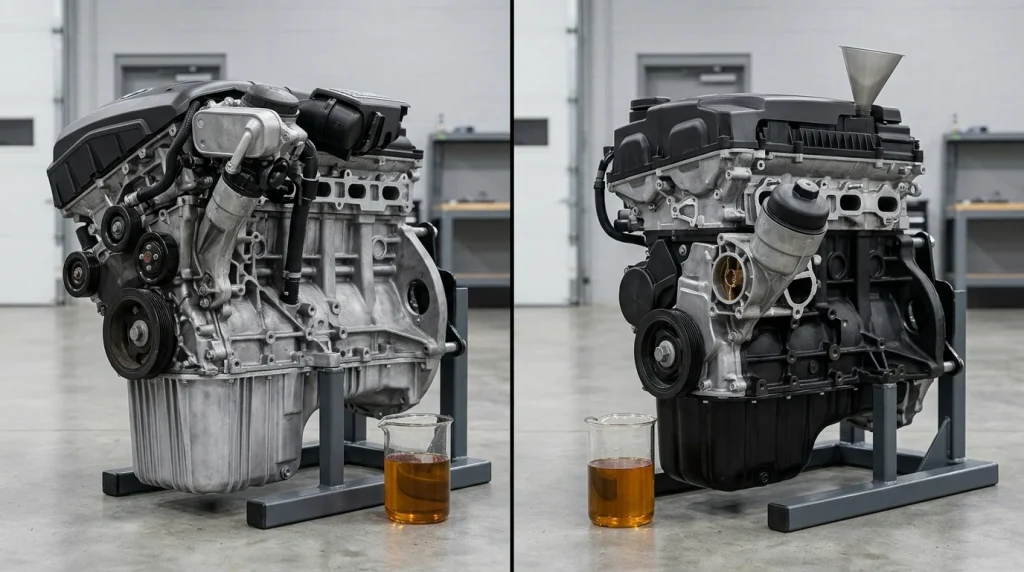
According to fluid specifications recorded by WhatCarOil, the volume of engine lubricant in the BMW 328i ranges on average from 5.3 quarts (5.0 liters) to 6.9 quarts (6.5 liters), depending on the specific engine and production year. Naturally aspirated six-cylinder engines utilize a larger crankcase sump to provide sufficient reserve volume for the extended internal galleries of an inline-six block.
In contrast, turbocharged four-cylinder models feature a more compact crankcase capacity of 5.1 to 5.3 quarts (5.0 liters). Because the N20 uses a smaller sump volume while subjecting the fluid to extreme turbocharger heat, fluid shearing occurs more rapidly per quart than in the larger N52 sump.
| Generation / Model Years | Chassis Code | Engine Designation | Displacement & Configuration | Sump Capacity (Quarts / Liters) | Drain Plug Torque Specification |
|---|---|---|---|---|---|
| 2007 to 2013 BMW 328i | E90 / E91 / E92 / E93 | BMW N52B30 | 3.0-Liter Naturally Aspirated Inline-6 | 6.9 Quarts (6.5 Liters) | 25 Nm (18.5 lb-ft) with copper crush washer |
| 2012 to 2016 BMW 328i | F30 / F31 | BMW N20B20 | 2.0-Liter Twin-Scroll Turbo Inline-4 | 5.1 to 5.3 Quarts (5.0 Liters) | 25 Nm (Metal Pan) / 8 Nm (Composite Pan) |
| 2014 to 2016 BMW 328i GT | F34 Gran Turismo | BMW N20B20 | 2.0-Liter Twin-Scroll Turbo Inline-4 | 5.1 to 5.3 Quarts (5.0 Liters) | 25 Nm (Metal Pan) / 8 Nm (Composite Pan) |
To confirm your exact displacement and configuration, consult our detailed BMW 328i engine generation guide before purchasing maintenance supplies. Understanding performance trim history, such as the meaning of the BMW iS designation, also helps owners distinguish standard commuter setups from sport-tuned factory packages that may run higher fluid temperatures. When performing a fluid change on an N52 engine, adding 6.5 quarts initially rather than dumping all 7 quarts prevents accidental overfilling. Because these engines lack a manual dipstick, draining excess fluid requires loosening the drain plug or removing the filter housing cap.
Recommended BMW 328i Oil Change Intervals and Driving Conditions
Factory Condition Based Servicing (CBS) computers on the BMW 328i calculate service intervals dynamically based on engine temperature, fuel consumption, and trip patterns rather than fixed calendar dates. While onboard computer estimates often suggest extended service windows of 10,000 to 15,000 miles (or up to 24 months) under light highway cruising, automotive technicians and independent European specialists advise shorter service windows to protect internal components from premature wear.
Severe driving conditions, including frequent cold starts, trips under 10 miles, and stop-and-go city traffic, accelerate fuel dilution and moisture accumulation in the crankcase. Fuel vapors that pass the piston rings lower kinematic viscosity, reducing the fluid’s ability to cushion rod bearings. In turbocharged N20 engines, exhaust turbine housings reach temperatures exceeding 1,800°F (982°C) while turbine shafts rotate at over 150,000 RPM. Extended drain intervals in turbocharged engines can lead to fluid coking in the turbocharger feed lines, risking turbocharger failures that cost $2,500 to $4,200 to replace.
| Operating Environment | Recommended Service Interval | Maintenance Priority | Target Hardware Protected |
|---|---|---|---|
| Normal Highway Commuting | 7,500 Miles / 12 Months | Prevents long-term varnish accumulation | Valvetronic eccentric shaft and VANOS solenoids |
| City Traffic / Short Commutes | 5,000 Miles / 6 Months | Critical for turbocharged N20 variants | Turbocharger journal bearings and oil feed lines |
| Track / Extreme Climate Duty | 3,000 to 4,000 Miles | Prevents thermal shear breakdown | Connecting rod bearings and piston ring lands |
Planning timely fluid services keeps long-term ownership expenses manageable. Comparing routine service costs against overall BMW maintenance costs shows that a routine $75 to $95 DIY fluid service (or $150 to $220 at an independent shop) prevents $3,200 to $5,800 in timing chain guide or bearing repairs. Understanding key BMW mileage breakdown thresholds allows owners to catch gasket seepage and fluid degradation before they lead to roadside breakdowns. Enthusiast owners frequently utilize used fluid analysis kits ($25 to $45 per sample) to monitor TBN depletion and wear metal concentrations over consecutive drain intervals.
How to Check Electronic Oil Level on the BMW 328i
Both the E90 (N52) and F30 (N20) generations of the BMW 328i eliminate the traditional underhood dipstick in favor of an electronic oil level sensor (OELS) mounted at the base of the crankcase sump. This sensor measures both static fluid depth and dielectric capacitance to monitor fluid quantity and degradation.
To obtain an accurate digital readout, follow this standard diagnostic procedure:
-
Park the vehicle on a level surface. Sloped driveways can distort sensor calculations by up to 0.5 quarts.
-
Warm the engine to full operating temperature. The digital system locks the measurement feature until fluid temperature reaches approximately 140 degrees Fahrenheit (60 degrees Celsius).
-
Keep the engine running at idle speed in Park (automatic) or Neutral (manual).
-
On iDrive equipped vehicles, navigate to Vehicle Info, select Vehicle Status, and click on Engine Oil Level. Choose Start Measurement and allow the progress bar to complete (approximately 60 to 90 seconds).
-
On models without iDrive, use the turn signal stalk toggle button to scroll through the instrument cluster display until the oil can icon appears, then press and hold the BC button on the tip of the stalk until the clock icon finishes cycling.
| Digital Sensor Display | Indicated Sump Condition | Required Action | Technical Risk if Ignored |
|---|---|---|---|
| OK (Bar at MAX line) | Crankcase fluid level is nominal (Full) | No action needed; continue normal operation | None |
| OK (Bar mid-way) | Fluid level is between MIN and MAX | Monitor during subsequent drives; top-up not urgent | Minor fluid loss over normal service |
| +1.0 qt (At MIN line) | Fluid level has reached the minimum safe threshold | Add exactly 1.0 quart of approved 5W-30 synthetic fluid | Cavitation risk under hard cornering |
| > MAX (Overfill Warning) | Fluid exceeds upper crankcase limit | Drain excess fluid immediately via sump plug | Fluid aeration and crankshaft foaming |
If the digital display indicates that the fluid level is at or near the MIN line, add exactly one quart of approved 5W-30 synthetic lubricant. Never add more than one quart at a time unless prompted by the system.
Ignoring low fluid warnings can trigger broader powertrain alerts. Low fluid pressure or severe viscosity breakdown often manifests as BMW drivetrain malfunction warnings on the main instrument cluster. When performing a fluid drain and refill at home, using specialized BMW oil service wrenches prevents cracking the composite filter housing cap (torqued to 25 Nm) or stripping aluminum drain pan threads.
Note: A malfunctioning electronic sensor can occasionally display erratic readings. If the system shows conflicting fluid levels within a 15-minute window, have the sensor and wiring harness inspected before adding additional lubricant.
Common Lubrication Issues and Preventative Maintenance
As BMW 328i models accumulate mileage, several distinct lubrication-related issues tend to develop. Proactive inspection during every routine maintenance service prevents minor seepage from escalating into severe mechanical failures.
The most critical leak point on both N52 and N20 engines is the Oil Filter Housing Gasket (OFHG). Over repeated heat cycles (often failing between 60,000 and 80,000 miles), the rubber profile gasket hardens and flattens. Fluid weeping from this housing drips directly onto the serpentine accessory drive belt below. If saturated with fluid, the rubber belt can slip off its pulleys, shred, and get forced past the front crankshaft seal directly into the timing chain assembly, causing catastrophic engine failure.
A second common maintenance item is managing fluid consumption rates. Standard BMW consumption guidelines classify fluid usage up to 1.0 quart per 1,500 miles as normal for high-mileage engines. However, consumption exceeding 1.0 quart per 1,000 miles indicates failing valve stem seals or a torn crankcase ventilation (PCV) diaphragm integrated into the composite valve cover. If consumption exceeds 1.0 quart per 500 miles, immediate mechanical diagnosis is required.
| Component Area | Typical Failure Mileage | Inspection Symptom | Preventative Action | Mechanical Consequence if Neglected |
|---|---|---|---|---|
| Oil Filter Housing Gasket | 60,000 to 80,000 Miles | Fluid pooling on thermostat housing and belt | Replace housing and cooler profile gaskets ($45-$75 parts) | Belt shredding and crankshaft seal ingestion |
| Valve Cover Gasket (VCG) | 70,000 to 90,000 Miles | Burning fluid smell; seepage into spark plug wells | Replace perimeter gasket and spark plug tube seals | Ignition coil misfires and catalytic converter fouling |
| Oil Pan Gasket (OPG) | 90,000 to 120,000 Miles | Wet residue on lower subframe and steering rack | Replace sump gasket and aluminum stretch bolts | Gradual sump depletion between service intervals |
| Filter Housing Cap O-Rings | Every Service Interval | Minor seepage around cap flange | Replace large and small O-rings included with OEM filter | Internal fluid bypass and low pressure codes |
Another vital maintenance task during fluid service is inspecting surrounding powertrain cooling and filtration systems. Maintaining recommended BMW engine coolant formulations ensures optimal cylinder head temperatures, preventing localized thermal hotspots. Similarly, checking BMW cabin microfilter replacement intervals during your seasonal maintenance keeps interior airflow clean and prevents debris accumulation around the underhood cowl.
Frequently Asked Questions About BMW 328i Motor Oil
What oil type is required for a 2011 BMW 328i?
The 2011 BMW 328i uses the naturally aspirated 3.0-liter N52 inline-six engine and requires SAE 5W-30 full synthetic motor lubricant meeting the BMW Longlife-01 (LL-01) specification. Total crankcase capacity is 6.9 quarts (6.5 liters), and the drain plug torque specification is 25 Nm.
Can you put conventional oil in a BMW 328i?
No, conventional mineral lubricants should never be used in a BMW 328i. BMW powertrains operate at high thermal loads and feature intricate variable valve timing mechanisms that require the molecular stability, high shear resistance (HTHS ≥ 3.5 mPa*s), and detergent additive reserves found only in certified full synthetic products. Using conventional fluid can void warranties and cause severe sludge buildup.
How much oil does a BMW 328i hold?
A BMW 328i holds 6.9 quarts (6.5 liters) if equipped with the 3.0-liter naturally aspirated inline-six engine (N52, 2007-2013). Models equipped with the 2.0-liter turbocharged inline-four engine (N20, 2012-2016) have a crankcase capacity of 5.1 to 5.3 quarts (5.0 liters).
What is the difference between BMW LL-01 and LL-04 oils?
BMW Longlife-01 (LL-01) is a full-SAPS formulation engineered for gasoline engines, offering high detergent reserves (TBN ≥ 10.0) and a minimum HTHS viscosity of 3.5 mPa*s. BMW Longlife-04 (LL-04) is a low-SAPS formulation designed with reduced sulfated ash (≤ 0.8% wt) to protect diesel particulate filters and exhaust catalytic systems.

