

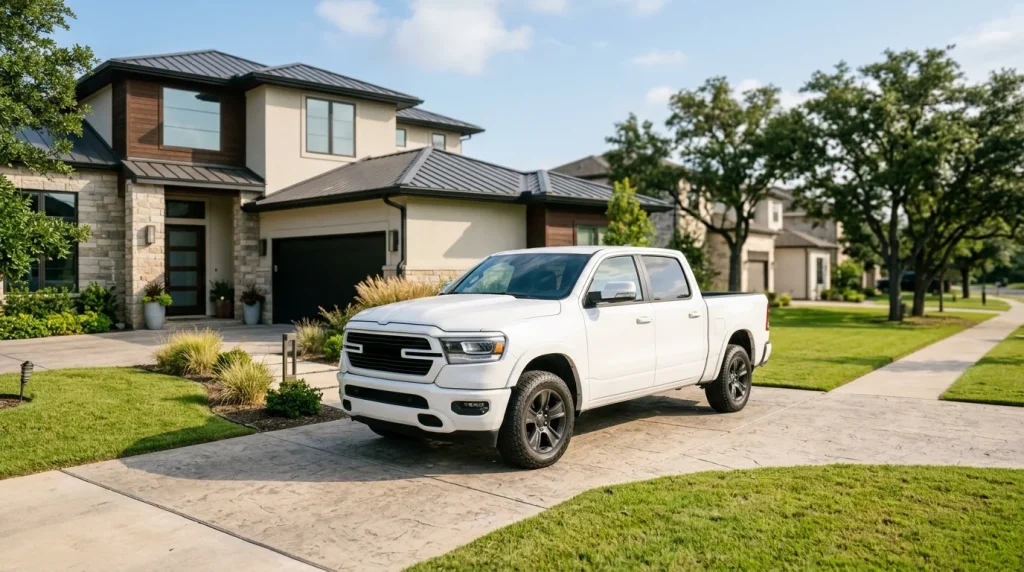
Quick answer: A 4×2 drivetrain means the truck has four wheels but only two of them receive power from the engine, typically the rear wheels. Synonymous with two-wheel drive (2WD) or rear-wheel drive (RWD), this configuration is lighter, more fuel-efficient, and less expensive than four-wheel drive (4×4) systems, offering optimal payload and towing capacities on paved roads.
Key takeaways:
- A 4×2 truck delivers engine torque to only one axle (typically the rear wheels on pickup trucks), while the other axle steers.
- Upgrading to a 4×4 system adds 200 to 400 lbs of weight, reducing the truck’s maximum payload capacity.
- Selecting a 4×2 truck saves $3,000 to $4,500 in upfront MSRP and improves fuel economy by 1 to 2 MPG.
- 4×2 trucks struggle on mud, deep snow, and unpaved off-road trails where 4×4 traction is necessary.
How a 4×2 Drivetrain Works on a Pickup Truck
A 4×2 drivetrain works by routing engine power through the transmission to a single drive axle, usually the rear differential. This differential distributes torque to the two rear tires, which push the truck forward, while the front wheels handle steering and receive no engine power.
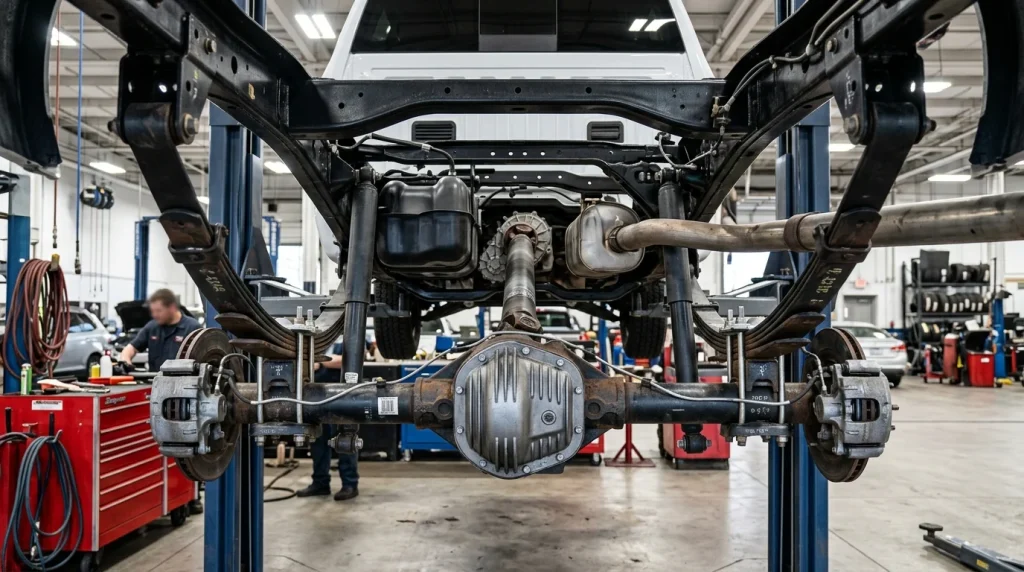
To understand the mechanical flow, it helps to trace the path of torque from the front of the vehicle to the road. In a standard front-engine, rear-wheel drive (RWD) pickup truck, the combustion engine or electric motor sends rotational force through the transmission. A long metal tube called the driveshaft carries this force to the rear differential. The differential is a set of gears that allows the rear wheels to rotate at different speeds when turning corners, preventing tire scrubbing and unstable handling.
Many modern 4×2 trucks are equipped with a limited-slip differential (LSD) or an automatic locking rear differential. In a standard open differential, power takes the path of least resistance. If one rear wheel is on ice and the other is on dry pavement, the wheel on ice will spin uselessly while the other receives no torque. A limited-slip differential solves this by mechanically transferring power to the wheel with more grip, improving traction without the complexity of a four-wheel drive system.
Additionally, modern electronic traction control systems use selective wheel braking to mimic a locking differential, stabilizing the truck in rain or on gravel. Understanding how power reaches the road is key to choosing the right vehicle, which is a major focus at the Autvex news hub.
4×2 vs. 4×4: Key Drivetrain Differences
The primary difference between 4×2 and 4×4 is how many wheels receive power from the engine. While a 4×2 powers only two wheels, a 4×4 can engage all four wheels, giving it superior traction in off-road and winter settings at the expense of fuel efficiency and payload.
The mechanical differences introduce additional hardware into the vehicle’s chassis. A four-wheel drive (4×4) truck requires several components that are completely absent in a two-wheel drive (2WD) configuration. These include a transfer case, a front differential, a front driveshaft, and CV axles that send power to the front wheels. The transfer case sits behind the transmission and allows the driver to select between different drive modes, such as 2H (two-wheel drive high), 4H (four-wheel drive high), and 4L (four-wheel drive low).
Because a 4×2 truck does not carry these heavy drivetrain parts, it benefits from a much simpler design. The table below outlines the practical differences between these two configurations.
| Feature | 4×2 Truck | 4×4 Truck |
|---|---|---|
| Driven Wheels | 2 (Typically the rear wheels) | 4 (All wheels receive power) |
| Curb Weight | Lighter (Reduces chassis weight) | Heavier (Adds 200 to 400 lbs of gear) |
| Fuel Economy | Better (Saves 1 to 2 MPG combined) | Lower (Additional mechanical drag) |
| Starting MSRP | Base price (More budget-friendly) | Premium (Adds $3,000 to $4,500) |
| Maintenance Costs | Lower (Fewer mechanical components) | Higher (Needs transfer case servicing) |
| Towing / Payload | Higher maximum payload capacity | Lower payload due to drivetrain weight |
| Off-Road Capability | Limited to light trails and gravel | Superior traction on rough, loose terrain |
The choice between these systems impacts every aspect of ownership. While consumer publications like J.D. Power point out that 4×4 trucks are more versatile in severe weather, automotive guides like CarParts.com emphasize that 2WD models remain the practical choice for urban commuters and commercial users who stay on paved roads.
Advantages of a 4×2 Drivetrain on a Truck
The advantages of a 4×2 truck include a lower purchase price, improved fuel economy, reduced maintenance requirements, and higher payload and towing capacities due to its lighter overall curb weight compared to a heavier 4×4 truck, making it the financially optimal choice for paved-road driving.
Better Fuel Economy on Paved Roads
Without the weight and friction of front-drive hardware, a 4×2 truck operates with less drag. The engine does not have to spin a front driveshaft or turn heavy CV axles, which improves efficiency.
EPA ratings show that a 4×2 truck typically earns 1 to 2 MPG more than an identical 4×4 model. For example, a 4×2 Ford F-150 equipped with a 3.5L EcoBoost engine gets an EPA-estimated 20 MPG combined, while the 4×4 version drops to 19 MPG combined. Over a standard driving year of 15,000 miles, this difference saves hundreds of dollars in fuel costs.
Lower Acquisition Price and MSRP
Upgrading a pickup truck from 4×2 to 4×4 is a costly factory option. Across major manufacturers, the price premium for a four-wheel drive system ranges from $3,000 to $4,500.
For instance, buyers of a new Ram 1500 or Ford F-150 can save thousands of dollars upfront by opting for a two-wheel drive model. This price gap allows budget-conscious buyers to purchase a higher trim level, opt for a stronger engine, or add luxury interior packages while keeping the overall cost of the vehicle within their budget.
Higher Towing and Payload Ratings
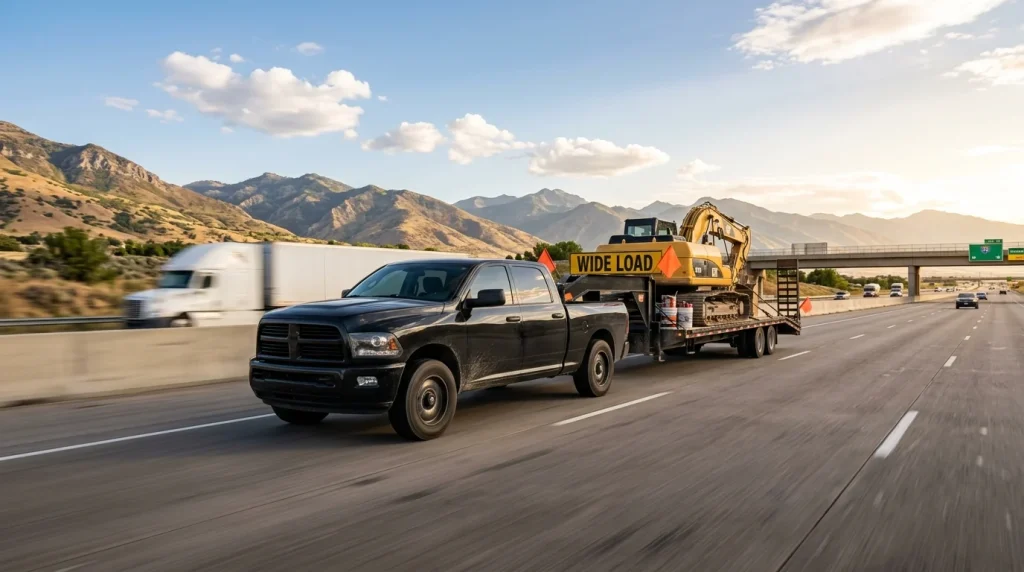
A common misconception is that 4×4 trucks can tow and haul more than 4×2 trucks. In reality, the opposite is often true. A vehicle’s Gross Vehicle Weight Rating (GVWR) is the absolute maximum weight the truck can weigh, including its own curb weight, passengers, and cargo. Because a 4×2 truck weighs 200 to 400 lbs less than a 4×4, that weight savings is added directly to its payload capacity.
According to official Ford F-150 towing specifications, the max payload capacity for an F-150 is up to 2,440 lbs, which is achieved in a 4×2 regular cab configuration. The same truck can pull up to 13,500 lbs under specific towing packages.
For comparison, check the towing capacity of an Audi Q7 which maxes out at 7,700 lbs, illustrating the vast capability difference between light-duty passenger vehicles and dedicated pickup platforms.
Reduced Maintenance and Operating Costs
A 4×2 truck has fewer moving parts, which minimizes the risk of mechanical failure over the life of the vehicle. Owners do not need to worry about front differential fluid changes, transfer case gear wear, or torn front axle CV boots.
According to a comprehensive Government Fleet cost comparison, light-duty 4×2 service trucks achieve lower maintenance expenses and improved fuel economy, lowering the total cost of ownership (TCO) for commercial fleets that operate primarily on paved streets.
Smoother Ride and Handling
Because the front end of a 4×2 truck is lighter and does not contain driven axles, the steering feel is often lighter and more responsive. The front suspension can be tuned purely for comfort and road compliance rather than having to accommodate front-drive shafts. This results in a smoother, quieter ride on highways and during daily city driving.
Disadvantages of choosing a 4×2 Truck
The main disadvantages of a 4×2 truck are limited traction off-road, poor performance on snow and ice, and a lower resale value. These limitations make 4×2 trucks less desirable in cold climates and rural markets, where all-wheel traction is standard.
Limited Off-Road Traction
Because all the engine’s power is concentrated on the rear tires, a 4×2 truck is highly susceptible to spinning its wheels on loose surfaces. If the rear tires sink into deep sand or thick mud, the truck has no front-wheel pull to help extract itself. While high-quality all-terrain tires and a limited-slip differential help mitigate this, serious trail driving, rock crawling, and beach driving require a true 4×4 system with a low-range transfer case.
Reduced Stability in Snow and Ice
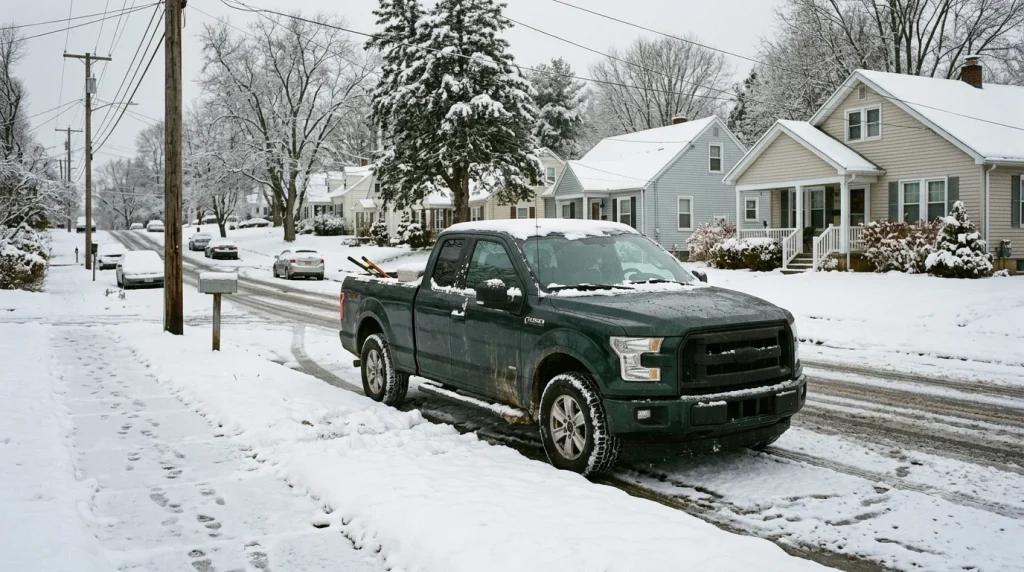
Pickup trucks naturally carry most of their weight over the front axle where the heavy engine is located. The cargo bed in the rear is relatively light. In rear-wheel drive trucks, this uneven weight distribution creates a traction deficit on slippery winter roads. Without sufficient weight over the driven rear wheels, they are prone to slipping and sliding.
Although drivers can improve traction by placing sandbags in the truck bed directly over the rear axle, a 4×4 system remains far safer and more effective for driving through winter snowstorms.
Steeper Resale Value Depreciation
In the used truck market, buyers prioritize versatility. Consequently, 4×4 trucks hold their value significantly better than 4×2 models. In Northern states and mountainous regions, selling a used 2WD truck can be difficult, resulting in steeper depreciation.
When shopping for a pre-owned truck, review how many miles is good for a used car to gauge longevity, keeping in mind that a 4×4 variant will command a higher resale price at any mileage bracket.
Original Drivetrain Analysis: Who Should Buy 4×2?
Deciding between 4×2 and 4×4 depends on your budget, climate, and planned use. A 4×2 truck is ideal for fleet operators, dry-climate highway drivers, and heavy towing on paved surfaces, while 4×4 is necessary for those facing mud, snow, or steep unpaved grades.
To make an informed purchase, compare the lifetime cost-of-ownership math against your geographical requirements.
You should choose a 4×2 truck if:
- You drive almost exclusively on paved highways and city streets.
- You live in the Southern United States, a dry climate, or an area that does not experience winter snow.
- You want to maximize your payload capacity for hauling cargo in the bed.
- You operate a commercial business or fleet and want to minimize fuel and maintenance expenses.
- You plan to keep the vehicle for a long time, minimizing the impact of lower resale value.
You should choose a 4×4 truck if:
- You live in a region with heavy winter snowfall or frequent mud.
- You drive off-road on unpaved trails, construction sites, or sandy areas.
- You need to pull boat trailers up wet, slippery boat ramps.
- You plan to trade the truck in within three to five years and want to maximize resale value.
Expert view: For highway towing and commercial fleets operating in temperate regions, a 4×2 configuration is the most cost-effective choice, saving thousands of dollars in fuel, acquisition, and maintenance costs over the vehicle’s lifespan.
Frequently Asked Questions about 4×2 Trucks
This FAQ section answers the most common questions regarding 4×2 truck configurations, helping you determine whether a two-wheel drive setup fits your driving environment and towing needs, without requiring further research.
Is a 4×2 truck the same as a 2WD truck?
Yes, a 4×2 truck is identical to a two-wheel drive (2WD) truck. The notation indicates that the vehicle has four wheel ends and two driven wheel ends. In the pickup truck segment, this almost always refers to a rear-wheel drive (RWD) configuration where power goes to the rear axle.
Can a 4×2 truck tow more than a 4×4?
Often yes, because a 4×2 truck is 200 to 400 lbs lighter than an equivalent 4×4 model, which increases its available payload and towing capacity within the same Gross Combined Weight Rating (GCWR). For example, the Ford F-150 achieves its maximum payload rating in its 4×2 configuration.
Are 4×2 trucks safe to drive in the rain?
Yes, modern 4×2 trucks with active traction control, stability control, and proper tires handle rain safely on paved highways. However, they require careful throttle control on wet, unpaved surfaces or steep ramps where the rear wheels might slip.
Can you convert a 4×2 truck to a 4×4?
While technically possible, converting a 4×2 truck to a 4×4 is highly impractical and expensive. The conversion costs at least $5,000 in parts and labor, requiring a new front differential, transfer case, driveshafts, front suspension components, and transmission modifications, making it cheaper to trade in for a factory 4×4.

