

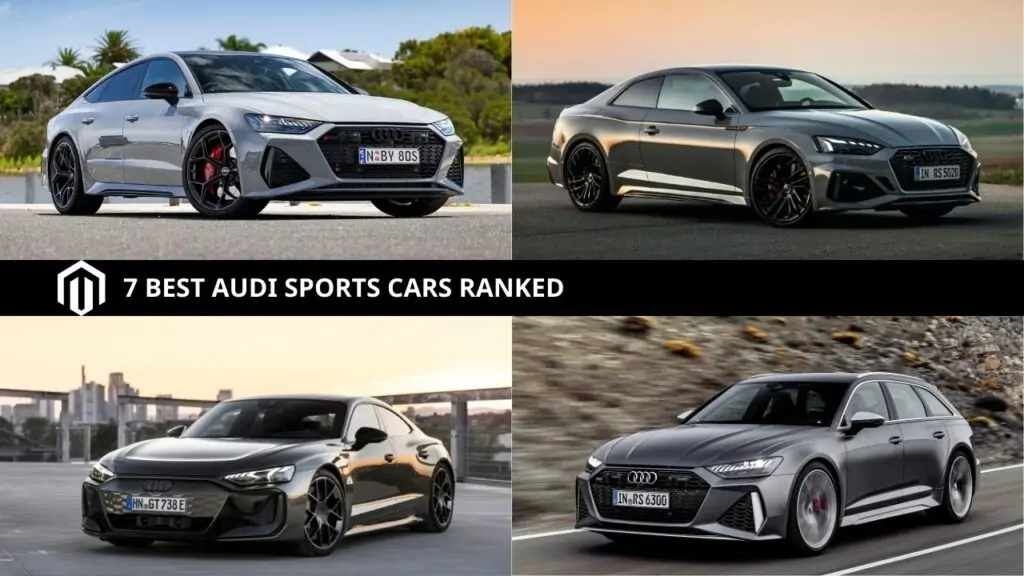
The best Audi sports car for most performance buyers in mid-2026 is the RS e-tron GT Performance at $170,500, producing 912 horsepower with a tested 2.1-second 0-60 sprint — the fastest production Audi ever built. For ICE enthusiasts, the RS 6 Avant (~$130,700) delivers 621 HP in a practical wagon body. Budget performance seekers should consider the RS 3 at ~$66,100 with its legendary 394-HP turbocharged 5-cylinder. The all-new Audi Nuvolari (1,001 PS, 499 units worldwide) now serves as the R8’s official successor.
Key takeaways:
- The RS e-tron GT Performance is the fastest production Audi ever, with 912 HP and a tested 2.1-second 0-60
- The Audi Nuvolari (unveiled June 2026) replaces the R8 as Audi’s flagship supercar — 1,001 PS, V8 hybrid, limited to 499 units
- The new-generation RS 5 is Audi Sport’s first plug-in hybrid, producing 639 HP from a twin-turbo V6 + electric motor
- Audi’s performance lineup spans ~$52,000 (S3) to approximately €590,000 (Nuvolari), covering electric, hybrid, and ICE
- The R8 and TT were discontinued after 2023 — the Nuvolari is the official mid-engine successor
Which Audi Sports Car Should You Buy?
Your choice depends on powertrain preference, budget, and how you intend to use the car daily. The RS e-tron GT Performance offers the fastest straight-line acceleration in Audi’s entire history. The RS 6 Avant delivers supercar speed with wagon practicality for families who refuse to compromise. The RS 3 provides the most accessible RS experience with its iconic 5-cylinder engine. The new-generation RS 5 PHEV bridges ICE and electric with 639 HP and electric-only commuting capability.
| Buyer Profile | Recommended Model | Starting Price | Why |
|---|---|---|---|
| Ultimate acceleration | RS e-tron GT Performance | $170,500 | 912 HP, 2.1s tested 0-60, electric |
| Performance + practicality | RS 6 Avant Performance | ~$130,700 | 621 HP V8 wagon, 59.3 cu ft cargo |
| Four-door fastback | RS 7 Performance | ~$130,700 | 621 HP, 2.9s tested 0-60 |
| Electric grand touring | S e-tron GT | $104,900 | 670 HP, 300-mile range, comfort-tuned |
| Hybrid performance | RS 5 (new gen) | TBD (US) | 639 HP PHEV, ~50 mi electric range |
| Entry RS | RS 3 | ~$66,100 | 394 HP 5-cylinder, compact |
| Daily sport sedan | S5 | ~$63,300 | 362 HP V6, balanced for commuting |
| Most affordable | S3 | ~$52,000 | 328 HP, 32 mpg highway |
| Halo supercar | Nuvolari | ~€590,000+ | 1,001 PS, 499 units, R8 successor |
Complete Audi Sports Car Comparison
Audi’s mid-2026 performance lineup spans nine models across electric, plug-in hybrid, and internal combustion powertrains — a breadth unmatched in the brand’s history. Following the R8’s discontinuation after 2023, the newly unveiled Nuvolari serves as the flagship supercar. The RS tier delivers track-capable performance, while the S tier provides spirited daily driving at more accessible prices.
| Model | MSRP | Power | 0-60 | Powertrain | Body Style | Best For |
|---|---|---|---|---|---|---|
| RS e-tron GT Perf. | $170,500 | 912 HP | 2.1s* | Electric | Sedan | Fastest ever |
| RS 6 Avant Perf. | ~$130,700 | 621 HP | 3.5s | V8 ICE | Wagon | Performance + cargo |
| RS 7 Performance | ~$130,700 | 621 HP | 2.9s* | V8 ICE | Fastback | GT styling |
| S e-tron GT | $104,900 | 670 HP | 3.3s | Electric | Sedan | Electric luxury |
| RS 5 (new gen) | TBD | 639 HP | 3.6s | V6 PHEV | Sedan | Hybrid RS |
| RS 3 | ~$66,100 | 394 HP | 3.6s | I5 ICE | Sedan | Entry RS |
| S5 | ~$63,300 | 362 HP | ~4.5s | V6 ICE | Sedan/SB | Daily sport |
| S3 | ~$52,000 | 328 HP | ~4.4s | I4 ICE | Sedan | Most affordable |
*Car and Driver tested figure
Detailed Model Rankings
#1. RS e-tron GT Performance — Fastest Audi Ever ($170,500)
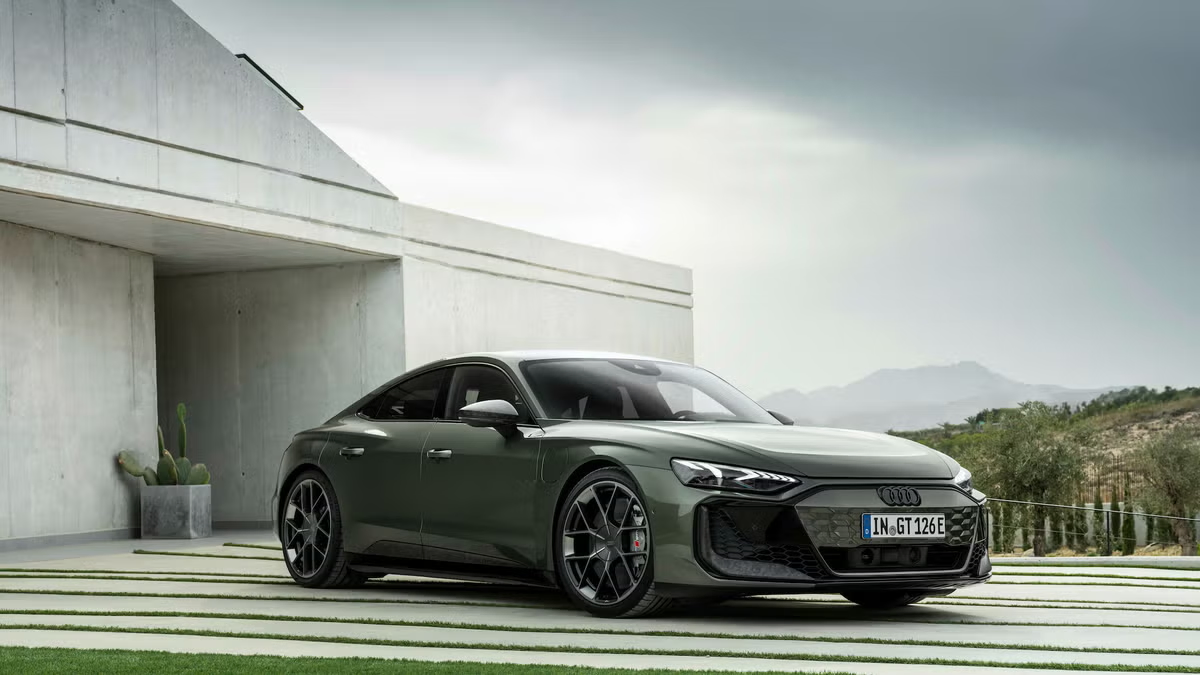
The RS e-tron GT Performance produces 912 horsepower from its dual-motor electric powertrain — a 275-HP increase over the previous generation. Car and Driver achieved a 2.1-second 0-60 in testing, making it quicker than even the Porsche Taycan Turbo S with which it shares the J1 platform. The 105 kWh battery provides 278 miles of EPA range with 320 kW charging capability.
| Feature | Specification |
|---|---|
| Motors | Dual electric (front/rear) |
| Power | 912 HP with launch control |
| 0-60 mph | 2.4s claimed / 2.1s tested |
| Quarter Mile | 9.8s @ 138 mph |
| EPA Range | 278 miles |
| Max Charging | 320 kW |
| Platform | J1 (shared with Porsche Taycan) |
The two-speed rear transmission enables efficient high-speed cruising while optimizing low-end launch performance. The Audi delivers a marginally softer ride than the Taycan equivalent, prioritizing grand touring comfort over raw track focus.
Strengths: Most powerful Audi ever built, 2.1-second tested acceleration, 320 kW ultrafast charging, four-door practicality, Porsche-derived engineering.
Limitations: $170,500 entry price, 278-mile range compromised for performance, limited rear headroom, extreme performance rarely usable on public roads.
#2. RS 6 Avant Performance — Best Performance Wagon (~$130,700)
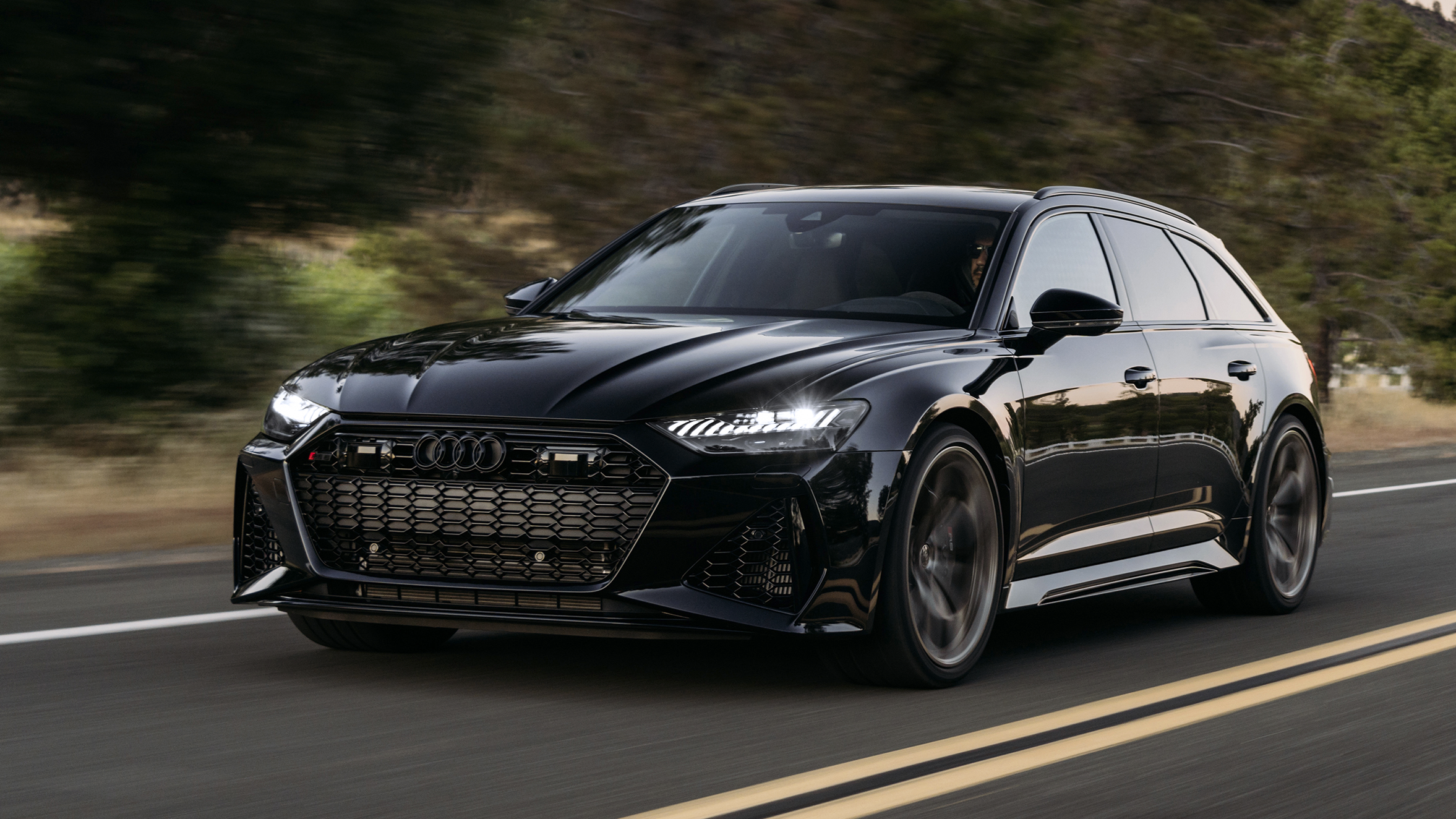
The RS 6 Avant delivers the rare combination of supercar acceleration and family-hauling capability. Its 4.0L twin-turbo V8 produces 621 horsepower while the wagon body provides 59.3 cubic feet of cargo space with rear seats folded. Top speed reaches 190 mph with the Dynamic Plus package.
| Feature | Specification |
|---|---|
| Engine | 4.0L Twin-Turbo V8 TFSI |
| Power | 621 HP / 627 lb-ft |
| 0-60 mph | 3.5 seconds |
| Top Speed | 190 mph (Dynamic Plus) |
| Drivetrain | quattro AWD with sport differential |
| Cargo Space | 59.3 cu ft (seats folded) |
The limited RS 6 Avant GT ($198,900) features an exclusive heritage livery inspired by the Audi 90 quattro IMSA GTO race car, restricted to just 85 units in the US.
Strengths: 621 HP V8 with visceral exhaust note, 59.3 cu ft cargo capacity, 190 mph top speed, limited GT edition available, daily-drivable versatility.
Limitations: ~$130,700 starting price, 17 mpg combined, high insurance and maintenance costs, wagon body style may limit resale in some markets.
#3. RS 7 Performance — Best Four-Door Fastback (~$130,700)
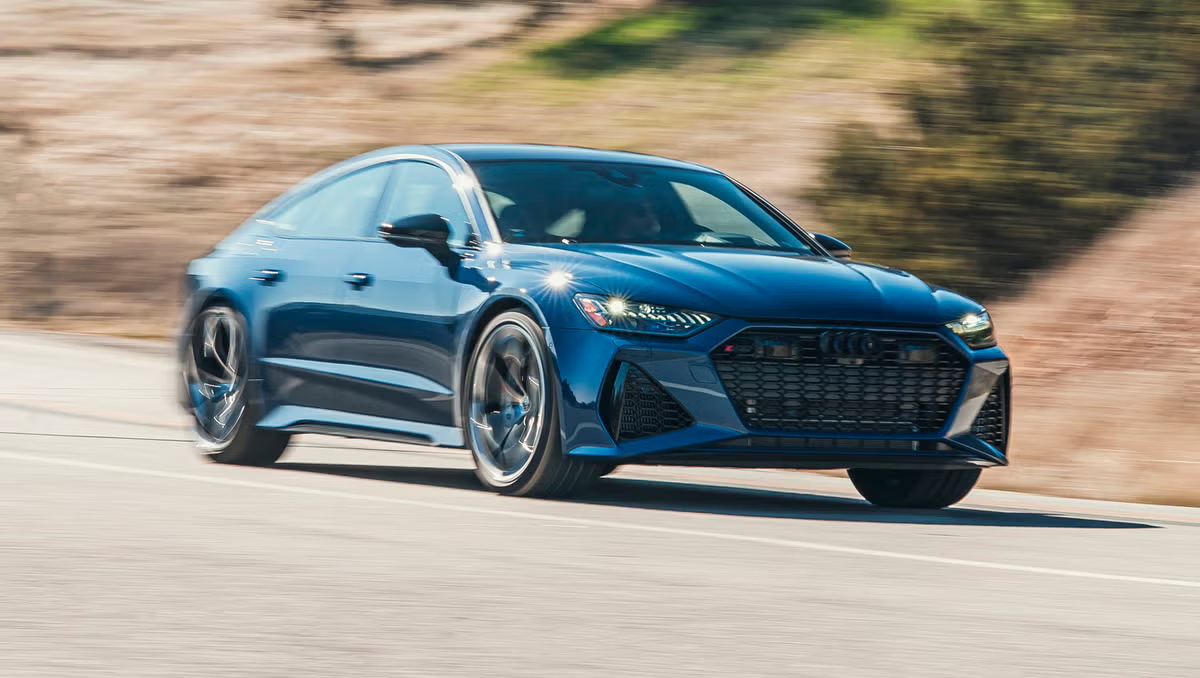
The RS 7 Performance delivers identical powertrain specifications to the RS 6 Avant but in a sleek four-door fastback body. Car and Driver achieved a 2.9-second 0-60 in testing — significantly quicker than the RS 6’s 3.5-second time — likely due to the RS 7’s more aerodynamic profile and slightly lower curb weight.
| Feature | Specification |
|---|---|
| Engine | 4.0L Twin-Turbo V8 TFSI |
| Power | 621 HP / 627 lb-ft |
| 0-60 mph | 2.9 seconds (C&D tested) |
| Top Speed | 190 mph |
| Braking 70-0 | 143 feet (ceramic brakes) |
| Skidpad | 1.06 g |
Standard adaptive air suspension and rear-wheel steering deliver exceptional handling dynamics for a vehicle of this size. The fastback design creates a distinctive silhouette with 25 cubic feet of cargo space — less than the RS 6 wagon but still hatchback-practical.
Strengths: 2.9-second tested 0-60 (fastest V8 Audi), striking fastback design, rear-wheel steering improves agility, 25 cu ft cargo with hatchback access.
Limitations: Same price as RS 6 with less cargo space, similar performance to competitors like the BMW M8, fastback roofline limits rear headroom.
#4. S e-tron GT — Electric Grand Touring ($104,900)
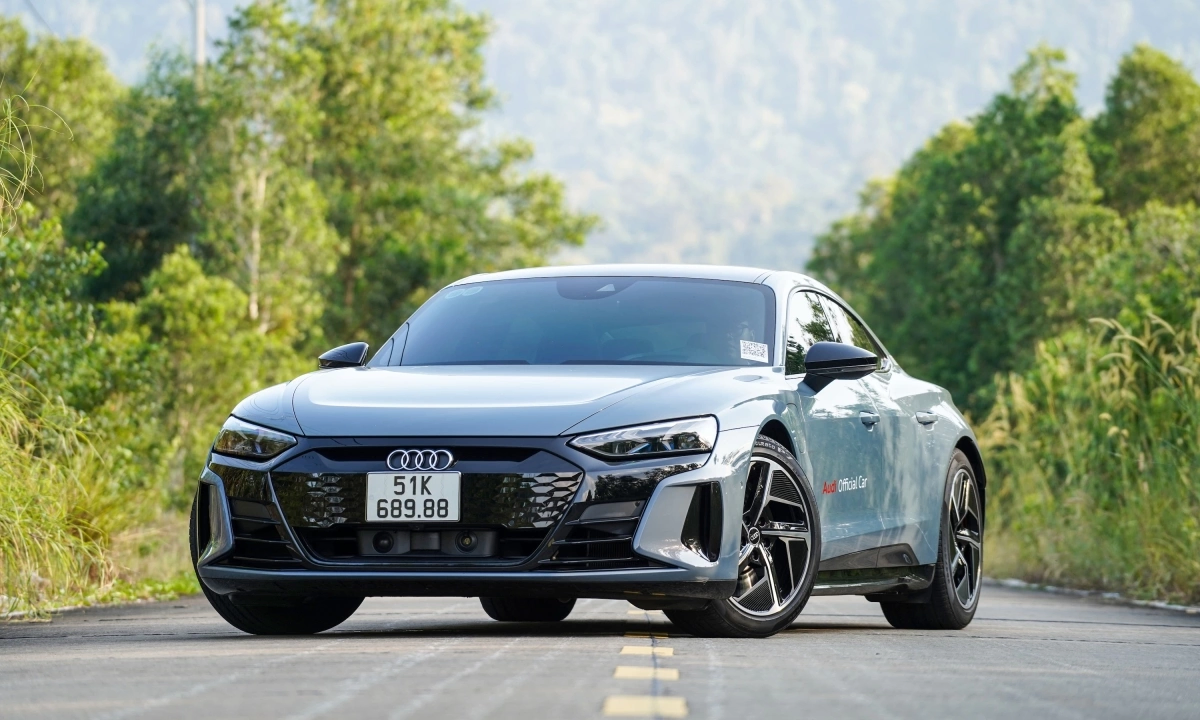
The S e-tron GT produces 670 horsepower with launch control, achieving 3.3-second 0-60 acceleration while maintaining a comfort-oriented character that distinguishes it from the track-focused RS variant. Its 300-mile EPA range and 800-volt architecture make it the more practical electric performance choice.
| Feature | Specification |
|---|---|
| Power | 670 HP (launch control) |
| 0-60 mph | 3.3 seconds |
| EPA Range | 300 miles |
| Charging | 270 kW |
| Platform | J1 (800-volt) |
All Audi EV buyers receive two years of complimentary charging on the Electrify America network.
Strengths: Supercar acceleration with grand touring comfort, 300-mile range exceeds RS variant, $65,600 less than RS e-tron GT, refined interior quality.
Limitations: Still over $100,000, less engaging steering than Porsche Taycan, low rear headroom, limited rear seat space.
#5. RS 5 — First RS Plug-In Hybrid (US Pricing TBD)
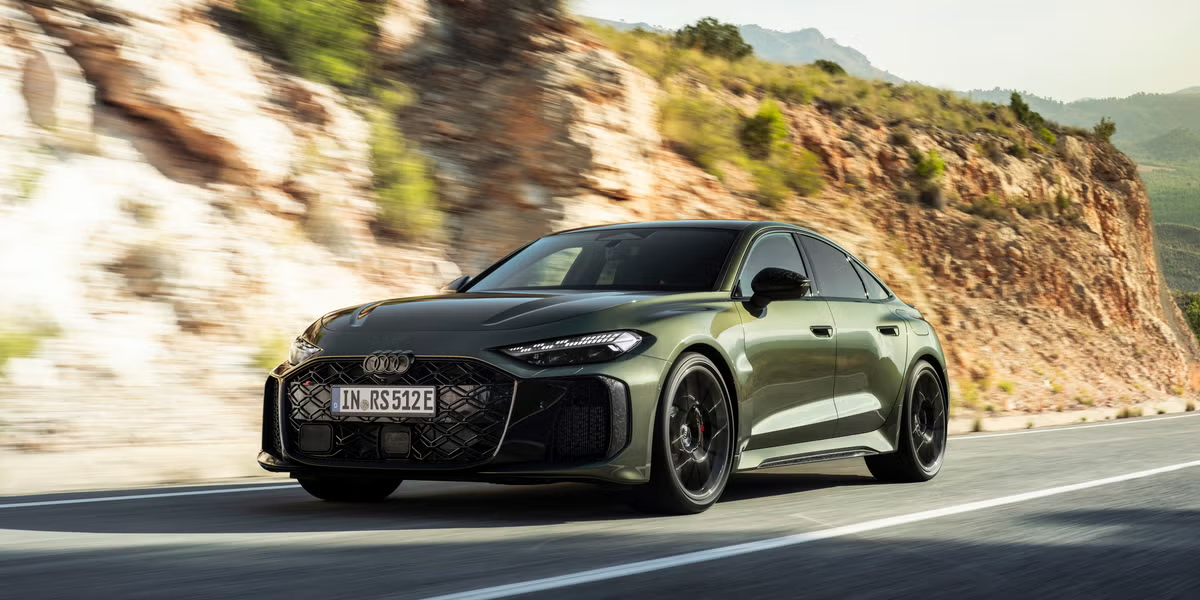
The all-new RS 5 represents Audi Sport’s most significant powertrain shift: its 639 horsepower comes from a 2.9-liter twin-turbo V6 paired with a 130 kW electric motor and 25.9 kWh battery. This makes it the first RS model with plug-in hybrid capability, offering approximately 50 miles of electric-only range (WLTP) for silent commuting and combined V6+electric performance for spirited driving.
| Feature | Specification |
|---|---|
| Powertrain | 2.9L Twin-Turbo V6 + 130 kW electric motor |
| Total Power | 639 HP / 825 Nm |
| 0-62 mph | 3.6 seconds |
| Electric Range | ~50 miles (WLTP) |
| Battery | 25.9 kWh (22 kWh usable) |
| Drivetrain | quattro with Dynamic Torque Control |
European deliveries began summer 2026. Audi has confirmed the RS 5 Sedan for the US market, though US pricing and exact availability have not been finalized. The RS 5 Avant (wagon) is not currently planned for US sale.
Strengths: First RS plug-in hybrid (639 HP), ~50 miles electric-only commuting, Dynamic Torque Control quattro (world-first electromechanical torque vectoring), substantially more powerful than predecessor (444 HP → 639 HP).
Limitations: US pricing and availability not yet confirmed, significantly heavier than previous generation (2,300+ kg), electric-only range is WLTP (EPA likely lower), Avant not coming to US.
#6. RS 3 — Best Entry RS Performance (~$66,100)
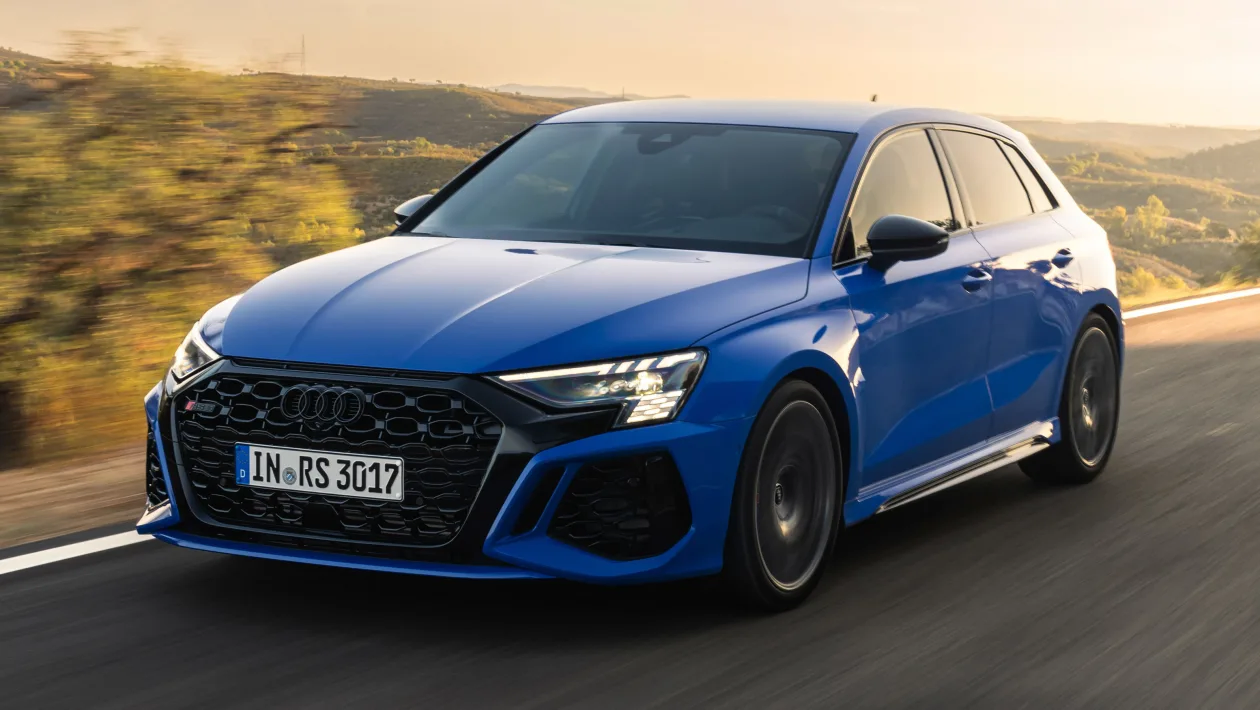
The RS 3 delivers the most accessible entry to Audi’s RS lineup with its legendary 394-horsepower 2.5-liter turbocharged 5-cylinder — an engine celebrated for its distinctive sound and motorsport heritage. The torque-splitter rear differential enables rear-biased power distribution for engaging handling in a compact body.
| Feature | Specification |
|---|---|
| Engine | 2.5L Turbo 5-cylinder |
| Power | 394 HP / 354 lb-ft |
| 0-60 mph | ~3.6 seconds |
| Top Speed | 180 mph |
| Drivetrain | quattro with torque splitter |
Strengths: Iconic 5-cylinder engine character, most affordable RS model, compact dimensions ideal for daily driving, torque-splitter technology for rear-biased dynamics.
Limitations: ~$66,100 is still premium pricing, well-equipped builds approach $77,000, tight rear seat space, fewer luxury amenities than larger RS models.
#7. S5 — Best Daily Sports Sedan (~$63,300)
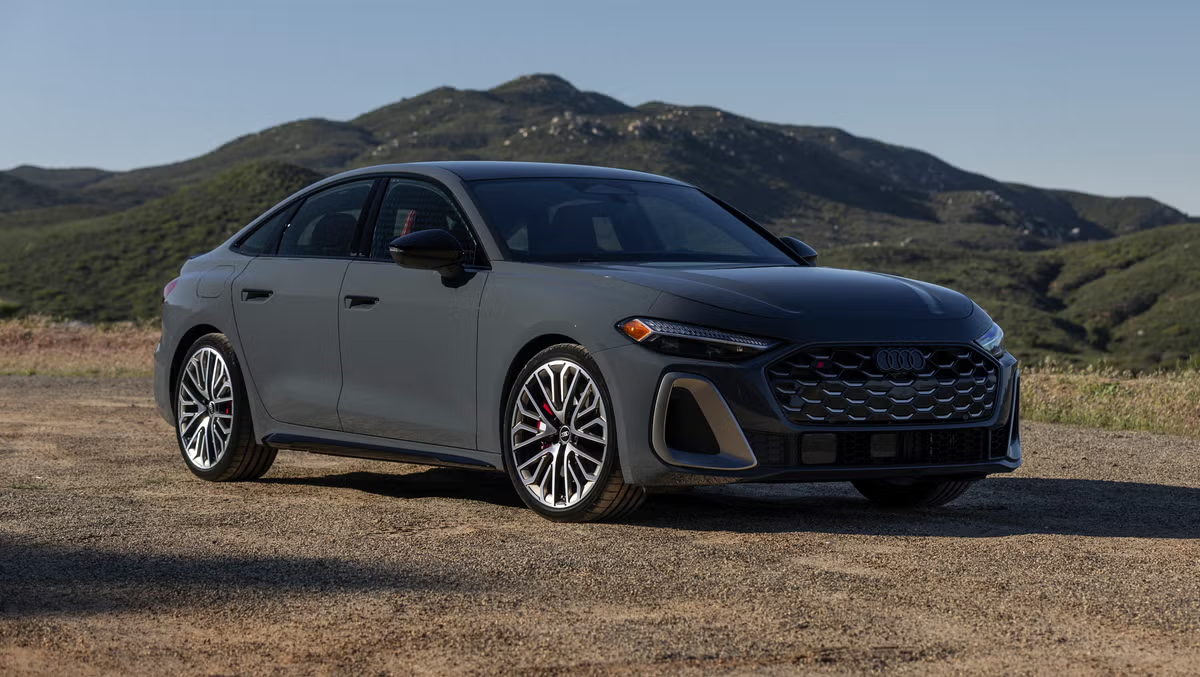
The S5 bridges the gap between everyday comfort and enthusiast driving with 362 horsepower from its 3.0-liter turbo V6. It provides the performance character of the RS lineup in a more refined, daily-friendly package with standard quattro AWD.
| Feature | Specification |
|---|---|
| Engine | 3.0L Turbo V6 TFSI |
| Power | 362 HP |
| Drivetrain | quattro AWD |
| Body Styles | Sedan, Sportback |
Strengths: Balanced daily driver with strong V6 performance, available as Sedan and Sportback, more comfortable ride than RS models, reasonable fuel economy.
Limitations: Less visceral than RS 5, similar price to competitors with more power, positioned awkwardly between S3 and RS 5 in the lineup.
#8. S3 — Most Affordable Performance (~$52,000)
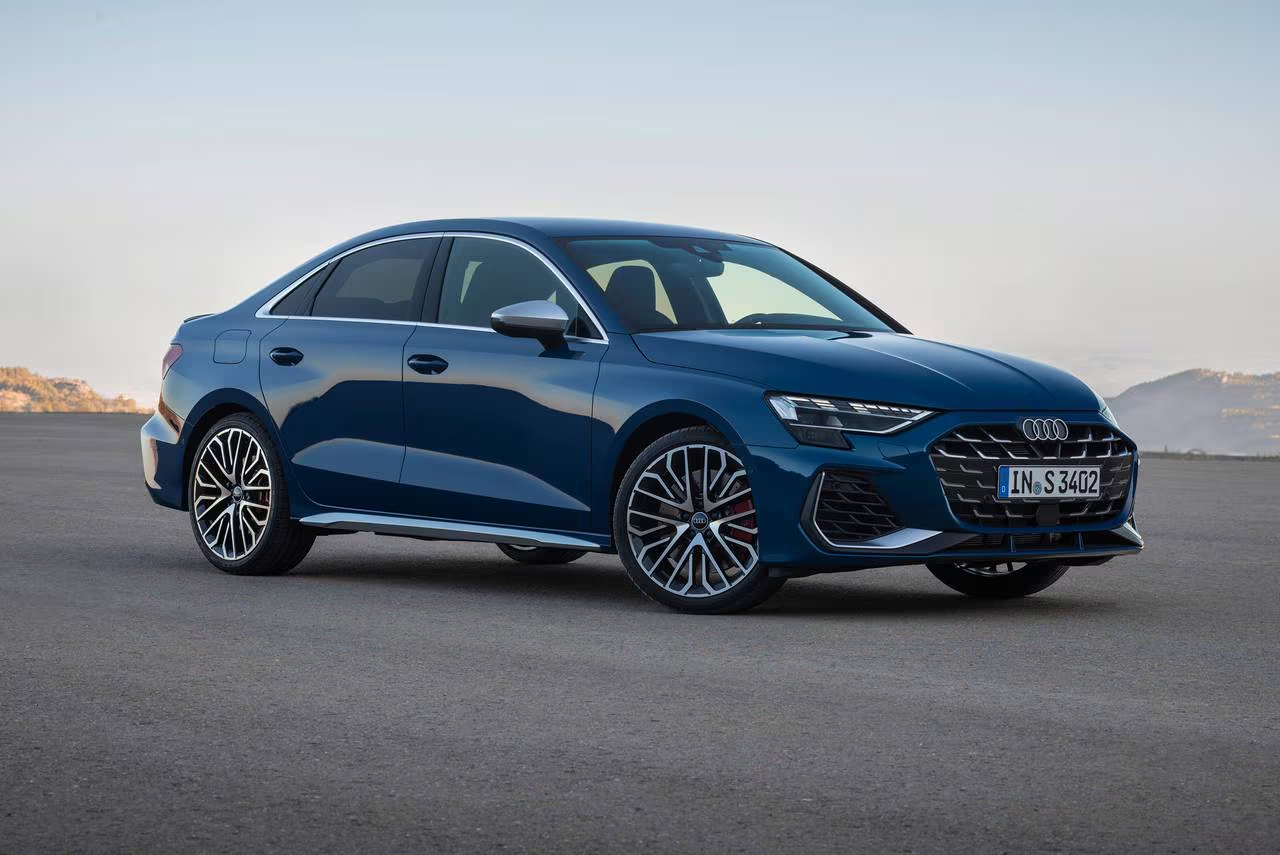
The S3 provides entry-level Audi Sport performance with 328 horsepower from its 2.0-liter turbocharged four-cylinder. For 2026, Audi consolidated the S3 into a single well-equipped trim with Sonos audio and the technology package included as standard, offsetting the price increase from 2025.
| Feature | Specification |
|---|---|
| Engine | 2.0L Turbo 4-cylinder |
| Power | 328 HP |
| 0-60 mph | ~4.4 seconds |
| Highway MPG | 32 mpg |
| Drivetrain | quattro with torque splitter |
Strengths: Most affordable Audi Sport model, 32 mpg highway for daily efficiency, torque-splitter technology shared with RS 3, consolidated trim includes more standard equipment.
Limitations: Lacks the V6/V8 character of larger S/RS models, tight rear seat space, ~$52,000 faces stiff competition from non-luxury performance cars.
The Audi Nuvolari: The R8’s Successor Has Arrived
Unveiled in June 2026, the Audi Nuvolari is a limited-production hybrid supercar producing 1,001 PS (~987 HP) from a 4.0-liter twin-turbo V8 paired with three electric motors. Limited to 499 units worldwide at approximately €590,000, it replaces the R8 as Audi’s flagship — but as a V8 hybrid, not the pure electric successor that had been previously rumored.
The carbon-fiber Audi Space Frame (ASF) chassis reaches 0-62 mph in 2.6 seconds with a top speed exceeding 217 mph (350 km/h). The Nuvolari shares its platform and powertrain technology with the Lamborghini Temerario, positioning it as the Audi-branded interpretation of the same engineering.
The name honors Tazio Nuvolari, the legendary Italian racing driver who competed for Auto Union (Audi’s predecessor) in the 1930s. Customer deliveries are expected in the first half of 2027.
Should you consider the Nuvolari? At approximately €590,000 for 499 units, the Nuvolari is a collector’s proposition rather than a performance car buying decision. For buyers seeking the most powerful Audi experience at attainable pricing, the RS e-tron GT Performance at $170,500 offers 912 HP with immediate availability.
ICE vs Electric vs Hybrid: Choosing Your Audi Performance Powertrain
Audi now offers performance cars across all three powertrain types — a first in the brand’s history. Pure electric (S/RS e-tron GT), plug-in hybrid (new RS 5), and traditional ICE (RS 3, S5, RS 6, RS 7) each serve different driving priorities. The choice increasingly depends on how you drive rather than how fast you want to go.
| Factor | RS e-tron GT (Electric) | RS 5 (PHEV) | RS 6 Avant (ICE) |
|---|---|---|---|
| Power | 912 HP | 639 HP | 621 HP |
| 0-60 | 2.1s tested | 3.6s | 3.5s |
| Range | 278 mi (battery) | ~50 mi EV + gasoline | ~400+ mi (tank) |
| Exhaust Sound | Silent | V6 + electric | V8 twin-turbo |
| Annual Fuel Cost | ~$600 | ~$1,200 (mixed) | ~$3,400 |
| Charging/Refuel | 320 kW DC / overnight L2 | Plug-in + gas station | Gas station only |
Who should go electric
Buyers who want the fastest possible acceleration, have home charging access, and value cutting-edge technology. The RS e-tron GT Performance is objectively the quickest Audi ever made — no ICE model matches its 2.1-second sprint. Annual energy costs are roughly $600 versus $3,400 for the RS 6.
Who should stay ICE
Buyers who value the V8 exhaust note, mechanical engagement, and unrestricted range without charging dependency. The RS 6 and RS 7 deliver a driving experience that electric models cannot replicate — the visceral feedback of a twin-turbo V8 at full throttle remains irreplaceable for many enthusiasts.
Who should go hybrid
Buyers who want both worlds. The new RS 5 PHEV offers ~50 miles of silent electric commuting during the week and 639 HP of combined V6+electric performance on weekends. This hybrid approach eliminates range anxiety entirely while reducing daily running costs. For long-term Audi ownership, the PHEV’s dual capability provides flexibility as charging infrastructure expands.
Expert view (Autvex): The new RS 5 PHEV represents the most significant shift in Audi Sport’s philosophy — 639 HP with ~50 miles of electric range means many owners can commute silently on electricity and unleash twin-turbo V6 power on weekends. This hybrid approach may make the traditional RS 6/RS 7 V8 models the last of their kind.
Frequently Asked Questions About Audi Sports Cars
What is the fastest Audi sports car?
The RS e-tron GT Performance is the fastest production Audi by acceleration, achieving 2.1 seconds 0-60 in Car and Driver testing with 912 horsepower. By total power output, the Audi Nuvolari (unveiled June 2026) produces 1,001 PS (~987 HP) from its V8 hybrid powertrain, though its 0-62 mph time of 2.6 seconds is slightly slower than the electric RS e-tron GT.
Does Audi still make the R8?
No, the Audi R8 was discontinued after the 2023 model year. In June 2026, Audi unveiled the Nuvolari as the R8’s official successor — a limited-production V8 hybrid supercar producing 1,001 PS, restricted to 499 units worldwide at approximately €590,000. Notably, the Nuvolari uses a hybrid powertrain rather than the pure electric approach that had been rumored before its reveal.
What is the cheapest Audi RS model?
The 2026 Audi RS 3 is the most affordable RS model at approximately $66,100. For entry-level Audi Sport performance below the RS tier, the S3 starts at approximately $52,000 with 328 horsepower and includes standard quattro with torque-splitter technology. The S5 at ~$63,300 provides V6 power at a lower price than any RS model.
How much horsepower does the RS e-tron GT have?
The 2026 RS e-tron GT Performance produces 912 horsepower with launch control from its dual-motor electric powertrain — a 275-HP increase over the previous generation. The entry-level S e-tron GT produces 670 horsepower. Both use 800-volt architecture on the J1 platform shared with the Porsche Taycan, supporting ultrafast DC charging at up to 320 kW (RS) and 270 kW (S).
What is the Audi Nuvolari?
The Audi Nuvolari is a limited-production hybrid supercar unveiled in June 2026, serving as the official successor to the R8. It produces 1,001 PS from a 4.0-liter twin-turbo V8 paired with three electric motors, built on a carbon-fiber chassis shared with the Lamborghini Temerario. Production is limited to 499 units at approximately €590,000, with deliveries expected in the first half of 2027.
Is the RS 5 a hybrid now?
Yes. The new-generation RS 5 is Audi Sport’s first plug-in hybrid, combining a 2.9-liter twin-turbo V6 with a 130 kW electric motor for a total of 639 horsepower — a 44% increase over the previous 444-HP model. The 25.9 kWh battery provides approximately 50 miles of electric-only range (WLTP). European deliveries began summer 2026; US pricing and availability have not yet been confirmed.
What is the best Audi sports car for daily driving?
The S5 (~$63,300) offers the best balance of performance and daily livability with 362 horsepower, a comfortable ride, and reasonable fuel economy. For buyers wanting more engagement in a compact package, the RS 3 (~$66,100) delivers RS-level performance with a smaller footprint suited to city driving. The S3 (~$52,000) provides the most affordable option with 32 mpg highway efficiency.
How does the RS e-tron GT compare to the Porsche Taycan?
Both share the J1 800-volt platform, but the Audi delivers a more comfort-oriented experience with softer suspension tuning and a quieter cabin. In Car and Driver testing, the RS e-tron GT Performance achieved a 2.1-second 0-60 — virtually identical to the Taycan Turbo S. The Audi starts at $170,500 compared to approximately $175,000+ for the Taycan Turbo S, making it marginally more accessible for equivalent performance.

