

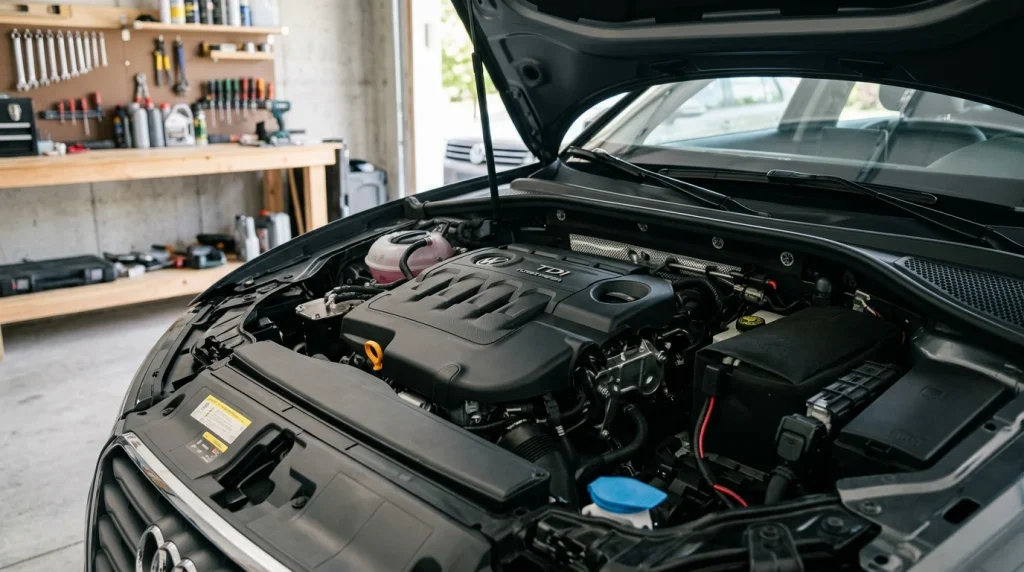
Quick answer:
Selecting the best engine oil for audi a3 diesel cars requires a formula that meets Volkswagen’s VW 507 00 low-SAPS specification. Mobil 1 ESP 0W-30 carries this official manufacturer approval and is widely recommended to protect the diesel particulate filter. Liqui Moly Top Tec 4200 5W-30 offers the exact same approval at a lower price point. Using non-approved oils gradually clogs exhaust filters with ash, leading to costly replacements.
Key takeaways:
- Every particulate filter equipped Audi A3 TDI requires low-ash oil approved to the VW 507 00 standard to prevent particulate filter blockage.
- Mobil 1 ESP 0W-30 offers superior cold-start protection and is widely available, while Liqui Moly Top Tec 4200 is the budget-friendly alternative.
- VW 507 00 oils are fully backward-compatible with older VAG diesel specifications such as VW 505 01 in non-filter models.
- Using non-approved high-ash oils like Total MC3 or Pentosin High Performance gradually clogs the exhaust filters, leading to expensive replacement costs.
What Oil Specification Does Your Audi A3 Diesel Actually Require?
Audi diesel engines, specifically the TDI models equipped with a Diesel Particulate Filter, are highly sensitive to engine oil chemistry. Finding the right oil is not just a matter of picking a popular brand or a specific viscosity grade like 5W-30. It requires selecting a lubricant that carries the official Volkswagen Group VW 507 00 specification. Using the wrong formula leads to chemical buildup that ruins the exhaust aftertreatment systems.
Understanding the VW 507 00 Low-SAPS Standard
The VW 507 00 standard dictates a low-SAPS formulation, meaning it contains reduced levels of Sulfated Ash, Phosphorus, and Sulfur. When an engine runs, tiny amounts of motor oil burn in the combustion chamber. Standard motor oils leave behind non-combustible ash residues that travel to the exhaust system. Because these ash particles cannot be burned off during normal regeneration cycles, they permanently load the filter, reducing its lifespan.
According to the official Volkswagen Group definition published by Skoda Auto oils standards:
“VW 507.00: The Standard encompasses the requirements for a service engine oil with reduced ash content and fuel-saving properties for use in all ŠKODA diesel engines, including engines with particle filters (direct and indirect injection) and having extended oil change intervals. They ensure the required service life of exhaust gas aftertreatment systems, especially for diesel particle filter systems (DPF) without the support of regeneration by fuel additives, and they are compatible with extended oil change intervals.”
Engine Generation and Oil Capacity Specifications
Oil capacity and specification requirements vary slightly depending on the engine code and generation of your Audi A3 TDI:
- Second Generation Audi A3 (8P – 2010 to 2013): Equipped with the 2.0-liter CBEA or CJAA common-rail TDI engines. These US-market models all feature active exhaust filters and require VW 507 00 oil. The oil capacity for these engines is approximately 4.3 liters (4.5 US quarts) during a standard oil and filter change.
- Third Generation Audi A3 (8V – 2015 to 2016): Uses the newer 2.0-liter CRUA TDI engine. Official technical service documentation filed with the NHTSA establishes the required VW 504 00 / 507 00 oil quality standards for Audi vehicles. During standard maintenance, this 2.0-liter engine requires an oil capacity of approximately 5.5 liters (5.8 US quarts).
- European Models: Some older pre-2006 European A3 models without exhaust filters could run VW 505 01 oils, but modern common-rail engines must strictly adhere to VW 507 00.
Checking the exact oil capacity against your engine code in the owner’s manual before service is highly recommended. VAG common-rail engines are sensitive to underfilling and overfilling, both of which can trigger oil pressure sensors or cause foaming.
Stringent Testing Behind the VW 507 00 Approval
To understand why only officially approved oils should enter your Audi engine, consider the certification process. Oil manufacturers must submit their formulations to a series of tests to earn the VW 507 00 mark. This is why products labeled “approved according to VW 507 00” differ significantly from those labeled “recommended for VW 507 00” or “meets requirements.”
An industry statement from Q8Oils explains the testing burden required for official certification:
“To become approved to VW 504.00/507.00 requires stringent and extensive testing, costing millions of Euros… Only when the lubricant has passed all the 16 fired engine tests will Volkswagen test the lubricant under their in-house Baumusterprüfung testing regime… By the time the oil is approved it can have been subject to over 30 engine tests.”
Note: The Baumusterprüfung validation involves running the lubricant in a minimum of 16 actual Volkswagen test engines to check for wear, sludge, and exhaust filter compatibility. Only select synthetic oils pass this process.
7 Best Engine Oils for Audi A3 Diesel (All VW 507 00 Approved)
Every oil listed below holds a genuine VW 504 00 / 507 00 manufacturer approval, checked against official datasheets. These oils protect the particulate filter while maintaining high shear stability at operating temperatures.
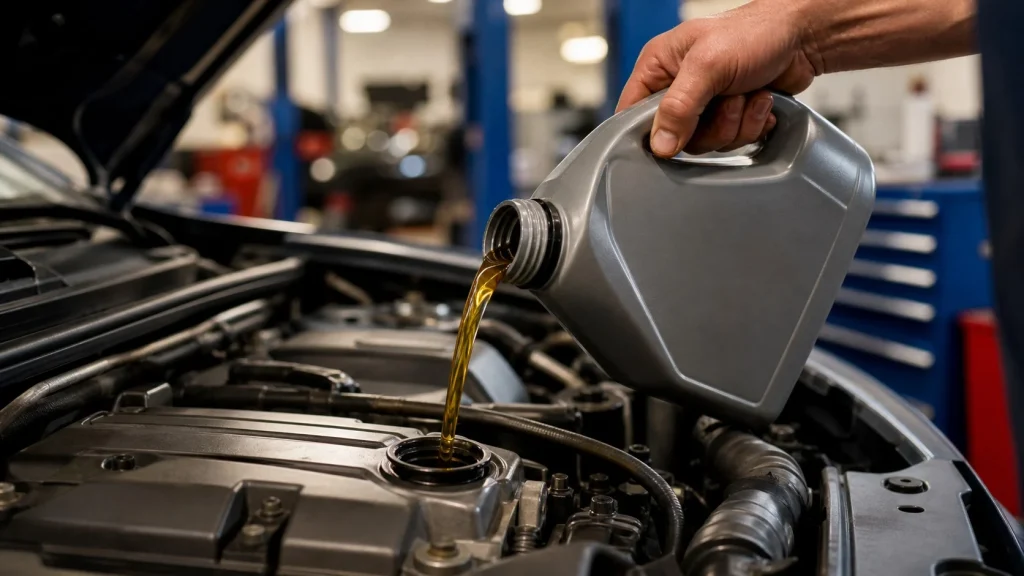
Mobil 1 ESP 0W-30 – Best Overall
Mobil 1 ESP 0W-30 is formulated with a proprietary blend of components to be compatible with particulate filters and gasoline catalytic converters. The 0W cold viscosity rating ensures rapid flow during freezing cold starts, minimizing wear when the engine is most vulnerable. It meets or exceeds VW 504 00 / 507 00, Porsche C30, and Mercedes-Benz MB-Approval 229.31/229.51/229.52.
- Pros: Excellent cold-weather flow, easy retail availability in auto parts stores.
- Cons: Sells at a premium price compared to some German import brands.
Liqui Moly Top Tec 4200 5W-30 – Best Value
For VAG owners, Liqui Moly Top Tec 4200 is a household name. This high-tech low-friction motor oil is designed for year-round use in diesel engines with and without particulate filters. According to the official Liqui Moly Top Tec 4200 datasheet, it holds the required VW 504 00 / 507 00 approvals and ACEA C3 certification.
- Pros: Outstanding engine cleanliness, cost-effective when purchased in 5-liter jugs.
- Cons: Harder to find on local retail shelves; usually requires online ordering.
Castrol EDGE Professional Longlife III 5W-30 – The Dealer Match
Castrol EDGE Professional Longlife III is the exact oil standard VAG dealerships have used at service counters for over a decade. It features Castrol’s Fluid Titanium technology to physically transform its structure under pressure, reducing metal-to-metal friction.
- Pros: Identical to the factory fill and dealership oil change specs.
- Cons: Primarily distributed through dealership parts departments, limiting standard retail purchase.
Ravenol VMP 5W-30 – Enthusiast Pick
Ravenol VMP (Velocity Modified Polymer) 5W-30 is a fully synthetic PAO-based oil that TDI enthusiasts highly favor. According to the Ravenol VMP 5W-30 specification page, it carries the VW 504 00 / 507 00 certification, MB-Approval 229.51, and BMW Longlife-04.
- Pros: Exceptional oil analysis wear results, high thermal stability.
- Cons: Expensive and typically only available via specialized online importers.
Motul Specific 504 00 507 00 5W-30 – Dedicated Formula
Motul Specific is designed specifically for VAG group vehicles requiring VW 504 00 / 507 00 engine oils. As confirmed by the Motul Specific datasheet, this low-SAPS formula holds official VW 504 00 / 507 00 approvals and meets ACEA C3 specifications.
- Pros: High oil film resistance at elevated temperatures, low volatility.
- Cons: Premium price point, limited local availability.
Total Quartz INEO Long Life 5W-30 – Budget OEM Alternative
Total Quartz INEO Long Life 5W-30 is an approved low-ash synthetic oil designed for German diesel engines. It provides excellent wear protection and exhaust filter cleanliness.
- Pros: Often priced lower than Liqui Moly and Mobil 1, excellent sludge resistance.
- Cons: Packaging is very similar to non-approved Total products.
Pentosin Pento Super Performance III 5W-30 – Indie Shop Favorite
Pentosin Pento Super Performance III 5W-30 is a high-performance synthetic oil formulated for VAG engines. It is widely used by independent German specialist garages across North America.
- Pros: Excellent thermal stability, backward-compatible with older VW 502 00/505 00 specs.
- Cons: Restricted retail distribution; usually purchased online or at VAG specialist shops.
Engine Oil Specifications Comparison Table
The table below summarizes the key specifications and primary use cases for each of the 7 approved Audi A3 diesel engine oils.
| Engine Oil | Viscosity | VW Approval | Additional Approvals | Primary Advantage |
|---|---|---|---|---|
| Mobil 1 ESP | 0W-30 | 504 00 / 507 00 | MB 229.52, Porsche C30 | Cold-weather start-up flow |
| Liqui Moly Top Tec 4200 | 5W-30 | 504 00 / 507 00 | ACEA C3, MB 229.51 | Best value in 5L volumes |
| Castrol EDGE Professional | 5W-30 | 504 00 / 507 00 | Porsche C30 | OEM dealership match |
| Ravenol VMP | 5W-30 | 504 00 / 507 00 | BMW LL-04, MB 229.51 | Enthusiast performance metrics |
| Motul Specific 504/507 | 5W-30 | 504 00 / 507 00 | ACEA C3 | VAG dedicated additive package |
| Total Quartz INEO Long Life | 5W-30 | 504 00 / 507 00 | BMW LL-04, MB 229.51 | Low cost per quart |
| Pentosin Super Performance | 5W-30 | 504 00 / 507 00 | BMW LL-04, MB 229.51 | Independent shop availability |
Oils Frequently Recommended That Fail the VW 507 00 Standard
When browsing automotive forums or online marketplaces, you will frequently see oil recommendations that do not meet VAG’s stringent requirements. This often happens because brands sell similar oils under nearly identical names.
The Danger of Total Quartz INEO MC3 and Pentosin Pento High Performance
Two common oils mistaken for VW 507 00 are Total Quartz INEO MC3 5W-30 and Pentosin Pento High Performance 5W-30.
- Total Quartz INEO MC3 5W-30: This oil is designed for VW 505 01 applications (older PD diesel engines without DPFs). It does not hold VW 507 00 approval.
- Pentosin Pento High Performance 5W-30: This formula meets VW 502 00 and 505 01 specifications. It is a high-ash formula unsuitable for cars with active exhaust filters.
Why Using a Non-Approved Oil Damages Your DPF
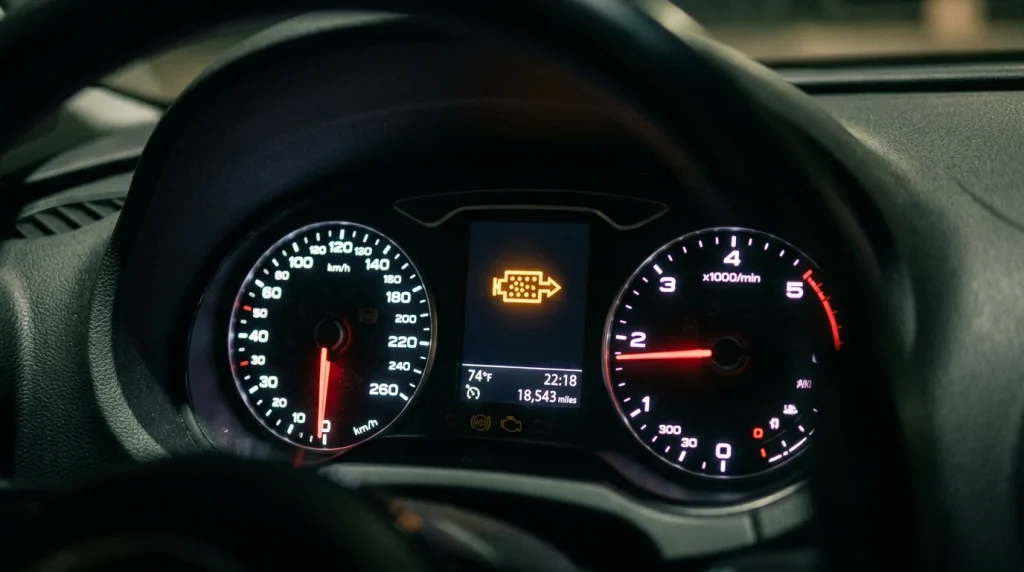
If you use an oil designed for non-filter engines (like VW 505 01), the engine will initially run normally. You will not hear any noise, and no warning lights will illuminate. However, the higher ash content in these oils will gradually collect inside the particulate filter.
During exhaust filter regeneration, the engine heats the exhaust to burn off accumulated soot. However, metallic ash from motor oil additives cannot be burned away. It forms a permanent plug. Over 20,000 to 40,000 miles, this ash accumulation restricts exhaust flow, leading to increased regeneration frequency, poor fuel mileage, and eventually a clogged exhaust system that requires replacement.
Engine Oil Maintenance and DPF Protection Tips
To keep your Audi A3 diesel running efficiently and prevent premature emissions failure, follow these basic maintenance practices:
- Check the Oil Level Regularly: Diesel engines consume a small amount of oil between services. Running low increases operating temperatures and stresses the remaining oil. Make sure you know whether to check oil when the car is hot or cold to get an accurate reading on the dipstick.
- Monitor Engine Temperature: Low-ash oils degrade faster if the engine runs hot. If you notice signs of how to tell if your car is overheating, pull over safely to prevent oil degradation and exhaust system damage.
- Avoid Short Trips: Diesel particulate filters require periodic highway driving to reach the temperatures needed for regeneration. Frequent short trips cause rapid soot loading, forcing the engine to run active regenerations, which dilutes the engine oil with diesel fuel.
- Perform Oil Changes on Time: VAG’s flexible LongLife service interval supports up to 18,600 miles (30,000 km) in ideal European highway driving. However, for US drivers, a fixed 10,000-mile or 12-month interval is safer to prevent fuel dilution and oil breakdown.
Frequently Asked Questions About Audi A3 Diesel Engine Oil
Can I use 5W-40 oil in my Audi A3 diesel?
You should not use a standard 5W-40 oil in a DPF-equipped Audi A3 TDI. Most common 5W-40 oils are high-ash formulas designed for older gasoline or non-filter diesel engines (carrying VW 502 00/505 00 approvals). Using these will quickly clog your particulate filter. Stick to approved 0W-30 or 5W-30 VW 507 00 oils.
How often should I change the oil in an A3 TDI?
For US driving conditions, change the oil every 10,000 miles or once a year, whichever comes first. If you drive short distances in stop-and-go traffic, reduce the interval to 7,500 miles. Variable LongLife intervals up to 18,600 miles are only suitable for continuous highway driving.
What happens if I use non-VW 507 00 oil in my Audi A3?
Using a non-approved oil once for a brief top-up will not cause immediate engine failure. However, a full oil service with high-ash oil will start clogging the particulate filter. If a non-approved oil is used, perform a full oil change with a VW 507 00 approved lubricant as soon as possible.
Is Mobil 1 better than Liqui Moly for a TDI engine?
Both Mobil 1 ESP 0W-30 and Liqui Moly Top Tec 4200 5W-30 hold official VW 507 00 approval, making them equal in terms of engine safety and warranty compliance. Mobil 1 ESP flows slightly faster in extreme cold due to its 0W rating, while Liqui Moly offers better cost-per-liter value in larger containers.
Note: This guide is for educational purposes only. Always consult your vehicle’s owner’s manual and verify specifications before performing engine maintenance. If you are considering vehicle options, you can check our reviews on Audi A5 years to avoid or Audi Q7 years to avoid, or explore our general Audi maintenance guides for other models.

