


How many miles can an Audi last? With diligent preventative maintenance, most modern Audi vehicles last between 150,000 and 200,000 miles. Vehicles driven primarily on highways with timely fluid services can surpass 250,000 to 300,000 miles on original major powertrain components. However, neglected maintenance often leads to costly mechanical issues before 100,000 miles.
Key takeaways:
- Diligent upkeep allows most Audi models to reach 150,000 to 200,000 miles reliably.
- Annual maintenance and repair costs average $987 across the brand, rising after 100,000 miles.
- Shortening synthetic oil change intervals to 5,000 miles protects turbocharger bearings and timing components.
- Direct-injection carbon cleaning and dual-clutch transmission fluid flushes are critical high-mileage services.
- Popular core models like the A4 and Q5 show the most consistent long-term durability.
Longevity benchmarks for Audi models
Audi vehicles are precision engineered German machines designed for performance, comfort, and high-speed stability. When evaluating how long an Audi lasts, the answer depends heavily on maintenance discipline, driving environment, and the specific powertrain under the hood.
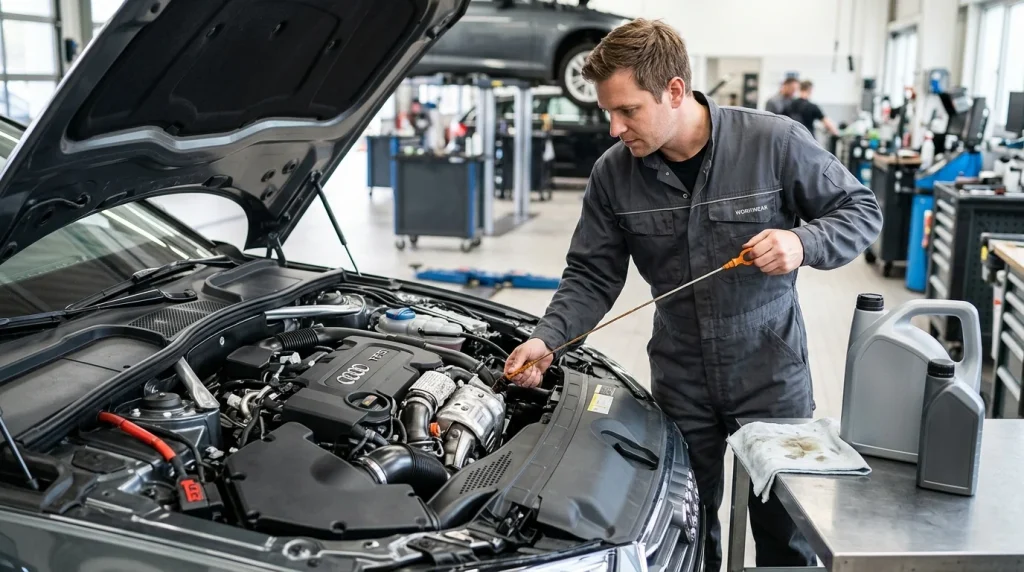
According to long-term automotive reliability data from RepairPal, Audi earns an overall reliability rating of 3.0 out of 5.0, ranking 28th out of 32 car brands. This rating reflects the frequency and cost of maintenance rather than an inability to reach high mileage. When owners follow strict maintenance protocols, an Audi engine and chassis can easily operate well past 150,000 miles.
Engineering standards also play a role in baseline durability. As detailed in our overview of where Audi cars are made across global factories, Audi enforces unified manufacturing tolerances across its European, Asian, and North American facilities to ensure consistent component longevity worldwide.
| Audi Vehicle Category | Typical Mileage Range | High-Care Potential | Primary Maintenance Focus |
|---|---|---|---|
| Compact Sedans (A3, A4) | 150,000 – 200,000 miles | 250,000+ miles | Timing chain tensioner, PCV system |
| Midsize & Large Sedans (A6, A8) | 140,000 – 180,000 miles | 220,000+ miles | Air suspension, electronic modules |
| Crossover SUVs (Q3, Q5) | 150,000 – 200,000 miles | 250,000+ miles | DSG fluid, cooling system seals |
| Full-Size SUVs (Q7, Q8) | 130,000 – 170,000 miles | 200,000+ miles | Brake wear, suspension bushings |
| Performance S and RS Models | 100,000 – 150,000 miles | 180,000+ miles | Turbocharger health, differential fluids |
Key factors that influence mileage
Several practical operating conditions dictate whether an Audi reaches 200,000 miles or encounters early retirement:
- Oil change frequency: Turbocharged engines place extreme thermal stress on motor oil. Adhering to strict oil replacement intervals prevents sludge formation and protects delicate camshaft adjusters.
- Operating temperatures and trip lengths: Frequent short trips prevent the engine oil from reaching full operating temperature, accelerating fuel dilution and moisture accumulation.
- Cooling system integrity: Plastic coolant flanges, water pumps, and thermostat housings become brittle over time. Preventing overheating is essential to preserve cylinder head gaskets.
- Suspension and bushing upkeep: Audi multi-link front suspensions provide sharp handling but contain multiple rubber control arm bushings that wear out around 80,000 to 100,000 miles.
Maintenance cadence and lifetime value
Factory scheduled service is the foundation of vehicle longevity. According to official service interval documentation from Audi USA, Audi recommends minor maintenance every 10,000 miles or 12 months, alternating with standard major services every 20,000 miles.
While the factory guidelines provide a baseline, independent Audi specialists frequently recommend more frequent service for high-mileage vehicles. Replacing engine oil every 5,000 miles and servicing dual-clutch transmissions every 40,000 miles significantly reduces internal component wear.
Model-by-model durability snapshot
Durability varies noticeably across the Audi product catalog:
- Audi A4: The 2.0-liter turbocharged four-cylinder in post-2013 models offers strong mechanical durability when timing chain tensioners are monitored.
- Audi Q5: As highlighted in our dedicated Audi Q5 lifespan and dimensions analysis, the Q5 shares proven platforms with the A4, frequently crossing 200,000 miles with routine maintenance and proper care.
- Audi Q7: The 3.0T supercharged V6 (EA837) and newer turbocharged V6 engines are robust, though the vehicle’s substantial curb weight accelerates wear on tires, brakes, and air suspension compressors.
- Audi R8 and S-models: High-strung performance engines require shorter fluid intervals and attentive warm-up cycles to achieve high mileage without costly teardowns.
Real-world evidence: what owners report
Owner surveys and enthusiast community logs reveal consistent patterns among high-mileage Audi drivers. Vehicles that surpass 200,000 miles almost universally possess comprehensive service documentation from day one.
In the J.D. Power U.S. Vehicle Dependability Study, which tracks problems experienced by original owners after three years of ownership, Audi scored 273 problems per 100 vehicles. While infotainment glitches and complex driver-assistance sensors contribute to higher reported issues, the core mechanical driveline remains durable when fluids are changed on time.
Long-term owners of older models, such as those tracking Audi A5 reliability and trouble years, report that major failures usually stem from deferred minor repairs rather than sudden catastrophic defects. Similarly, community reports on high-mileage crossovers emphasize researching specific Audi Q5 model years to avoid to steer clear of early generation oil consumption concerns and timing tensioner flaws.
Maintenance costs vs. longevity
Owning an Audi past 100,000 miles involves an intentional financial trade-off. Annual repair and maintenance costs for Audi average $987 per year according to RepairPal data, compared to an industry average of $652 across all vehicle makes.
After the odometer crosses 100,000 miles, annual upkeep typically rises to between $1,200 and $1,800. While this is higher than mainstream brands, it remains far less expensive than depreciation and financing costs on a new replacement luxury vehicle. High-mileage Audi ownership requires shifting from reactive repairs to predictive maintenance. After 100,000 miles, budgeting approximately $1,200 to $1,800 annually for suspension refresh and fluid services prevents cascading mechanical breakdowns.
Common pitfalls that shorten lifespan
Failing to understand the specific engineering requirements of European luxury vehicles often cuts an Audi’s operating life short.
- Ignoring minor oil consumption: Direct-injection engines consume small quantities of oil between services. Running an engine low on oil starves the turbocharger and hydraulic timing tensioners.
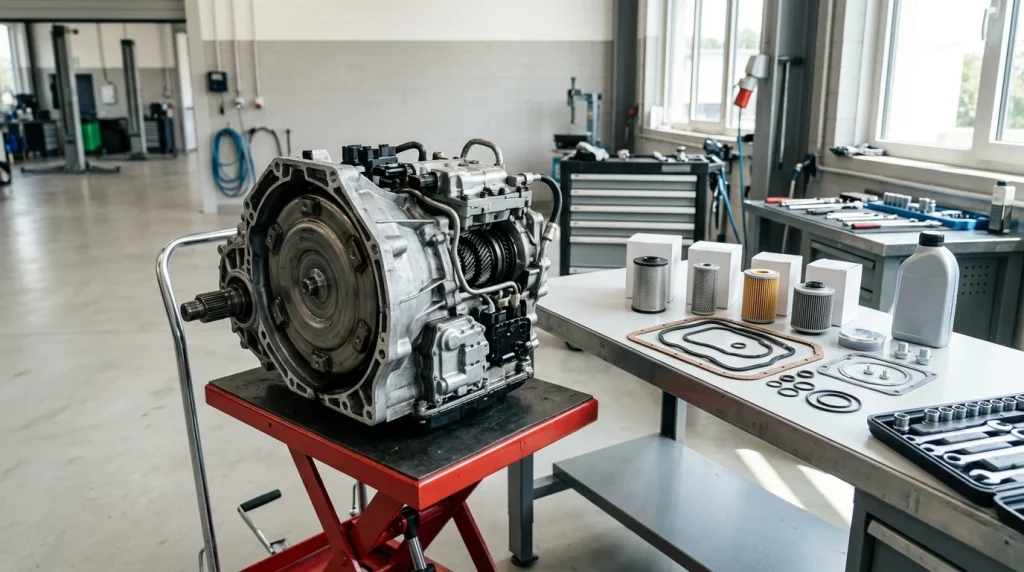
- Postponing transmission fluid services: The S-Tronic dual-clutch transmission relies on clean hydraulic fluid to manage precise clutch engagement. Old fluid causes mechatronic unit failure. If warning lights illuminate, review our guide on driving with an Audi transmission malfunction warning to avoid total gearbox destruction.
- Delaying electronic diagnostic alerts: Complex electronic networks link the engine, transmission, and Quattro differentials. Ignoring dashboard alerts can cause secondary systems to fail. Learn more about fixing an Audi drive system malfunction before minor sensor faults escalate.
Note: Direct-injection engines (TFSI) accumulate carbon on intake valves over 60,000 to 80,000 miles because fuel is sprayed directly into combustion chambers rather than across the valves. Professional carbon cleaning (walnut blasting) is essential to preserve engine output and efficiency.
Expert view
According to technical documentation published by the Automotive Service Association and European vehicle technical bulletins, direct fuel injection systems in modern engines require specific preventative treatments. Without periodic carbon walnut blasting every 75,000 miles, intake restriction can trigger chronic cylinder misfires, rough idle, and unburned fuel entering catalytic converters.
Practical tips to maximize mileage
To keep an Audi running smoothly past the 200,000-mile mark, implement these practical ownership habits:
- Follow the 5,000-mile synthetic oil rule: Use only VW 502.00, 504.00, or 508.00 spec synthetic motor oils matching factory approval standards.
- Warm up the powertrain gently: Drive conservatively for the first five to ten minutes until oil temperature reaches at least 180 degrees Fahrenheit before applying full throttle.
- Inspect the cooling system at 80,000 miles: Replace aging water pumps, thermostat housings, and plastic coolant tees before they fail on the road.
- Flush brake and transmission fluids regularly: Replace brake fluid every two years and gearbox fluids every 40,000 to 60,000 miles regardless of whether the factory manual labels them lifetime fluids. For electrified models, following dedicated Audi hybrid powertrain maintenance protocols protects high-voltage cooling loops and inverter electronics alongside conventional fluid flushes.
- Partner with a qualified European specialist: While dealership service ensures factory tooling, finding a reputable local independent technician can reduce labor costs significantly, as outlined in our guide to servicing an Audi at independent specialist shops.
Frequently asked questions about Audi longevity
Can an Audi last 200,000 miles?
Yes. An Audi can comfortably reach and exceed 200,000 miles when maintained according to strict preventative schedules. Reaching this mileage requires timely oil changes, transmission fluid flushes, cooling system component replacements, and carbon cleaning of intake valves.
Is it worth buying an Audi with 100,000 miles?
Buying a 100,000-mile Audi can be a worthwhile purchase if the vehicle comes with complete, documented service records. Buyers should set aside a reserve fund of $1,500 to $2,500 for immediate preventative maintenance, including suspension bushing replacement, fluid flushes, and timing system inspection.
Which Audi engine is the most reliable?
The 3.0-liter supercharged V6 (EA837) found in older S4, S5, Q7, and A6 models is widely recognized as one of Audi’s most durable modern engines, frequently passing 200,000 miles with minimal internal issues. The third-generation 2.0 TFSI (EA888 Gen 3) four-cylinder in post-2014 vehicles also exhibits excellent long-term reliability compared to earlier versions.
What is the average lifespan of an Audi transmission?
Audi Tiptronic torque-converter automatic transmissions routinely last 180,000 to 250,000 miles when fluid is changed every 60,000 miles. S-Tronic dual-clutch (DSG) transmissions can achieve similar mileage but require strict 40,000-mile fluid and filter services to prevent mechatronic unit failure.

