【Explained】What Does GMC Stand For? (And Why It Doesn’t Make “Cars”)

Chien Nguyen Van 10/31/2025
what does gmc car stand for

You may also like:

Table of Contents

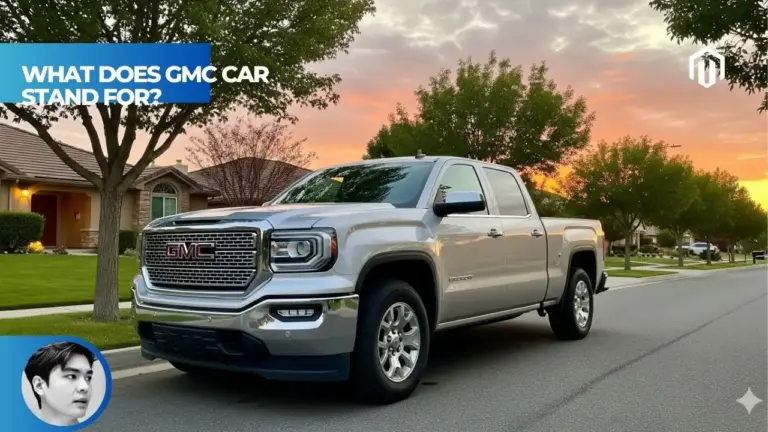
GMC stands for General Motors Truck Company, a division of General Motors that exclusively manufactures trucks, SUVs, and vans – never traditional cars like sedans or coupes. This deliberate specialization represents GM’s strategic brand differentiation, positioning GMC as the “Professional Grade” alternative to Chevrolet’s trucks while leaving car production to other GM divisions like Chevrolet, Buick, and Cadillac.

what does gmc car stand for 11

What Does GMC Stand For – The Direct Answer

The three letters that adorn millions of trucks and SUVs across America carry a rich history dating back over a century. Understanding what GMC represents goes beyond mere acronym definition – it reveals a fundamental automotive strategy that shapes how General Motors approaches the market. According to Autvex automotive experts, the GMC brand’s focused approach has made it one of the most profitable divisions within General Motors, with average transaction prices exceeding $51,000 per vehicle in 2024[1].

GMC Full Name and Meaning

The acronym GMC officially stands for General Motors Truck Company, though this full name hasn’t been actively used in marketing since the 1940s. The brand now simply goes by “GMC” in all official communications, similar to how KFC moved away from spelling out “Kentucky Fried Chicken.” This evolution reflects the brand’s transition from purely commercial vehicles to premium consumer trucks and SUVs.

General Motors Truck Company

When General Motors formed the General Motors Truck Company in 1911, it merged the Rapid Motor Vehicle Company and Reliance Motor Car Company to create a dedicated commercial vehicle division[2]. The name explicitly signaled the division’s purpose: building trucks for GM’s expanding automotive empire. By 1912, the first vehicles bearing “GMC” badges rolled off production lines, establishing a brand identity that would endure for over a century.

GMC Acronym Explained

The “G” stands for General, the “M” for Motors, and the “C” for Company – originally representing the truck-specific subsidiary within the larger General Motors corporation. While some mistakenly believe GMC stands for “General Motors Corporation” (which is actually just GM), the “C” specifically refers to the truck company division. This distinction matters because it underscores GMC’s specialized role within the GM family from its inception.

Common Misconceptions About GMC

Internet forums and social media perpetuate numerous misunderstandings about what GMC represents, ranging from honest confusion to humorous interpretations. These misconceptions often stem from the brand’s close relationship with its parent company and the similarity between various GM division names. Clarifying these helps consumers understand the automotive landscape’s organizational structure.

General Motors Company vs GMC

General Motors Company (GM) is the parent corporation that owns multiple brands including GMC, Chevrolet, Buick, and Cadillac. GMC is merely one division within this larger entity, not a separate company or the parent itself. Think of it like Coca-Cola owning Sprite – Sprite isn’t Coca-Cola, but rather a brand owned by the Coca-Cola Company. This hierarchical relationship means GMC must coordinate with GM’s overall strategy while maintaining its distinct brand identity.

GMC Slang and Nicknames (“Gotta Mechanic Coming”, “Government Motors Corporation”)

Popular culture has spawned numerous humorous interpretations of the GMC acronym, with “Gotta Mechanic Coming” being the most widespread joke about reliability concerns. During the 2008 financial crisis and subsequent government bailout, critics dubbed it “Government Motors Corporation” due to temporary federal ownership of GM stock. Other creative interpretations include “Garage Man’s Companion,” “Generally Mediocre Cars,” and “God’s Mechanical Curse” – though these reflect more about American humor than actual vehicle quality, as GMC consistently ranks well in J.D. Power reliability studies[3].

The History of GMC and Its Original Name

The GMC brand’s origins predate General Motors itself, beginning with entrepreneurial brothers who saw opportunity in the nascent automobile industry. This early history explains why GMC developed its truck-focused identity rather than competing in the passenger car market. The evolution from independent company to GM division shaped the brand’s current position in the automotive hierarchy.

Original Name of GMC

Before becoming GMC, the company underwent several name changes reflecting ownership transitions and corporate restructuring. These early incarnations established the manufacturing expertise and market reputation that GM would later acquire. Understanding this progression reveals how GMC’s truck specialization emerged organically rather than through corporate mandate.

Grabowsky Motor Company

Brothers Max and Morris Grabowsky founded the Grabowsky Motor Company in Detroit in 1900, manufacturing one-cylinder engines and complete vehicles[2]. Their early success producing commercial trucks attracted attention from larger automotive consolidators. The Grabowsky Motor Company focused exclusively on commercial vehicles from the start, establishing the DNA that would define GMC throughout its history.

Rapid Motor Vehicle Company

In 1902, the Grabowskys relocated their operation to Pontiac, Michigan, and renamed it the Rapid Motor Vehicle Company, reflecting their vehicles’ reputation for speed and reliability. By 1909, Rapid had produced over 3,500 trucks and caught the attention of William C. Durant, GM’s founder[4]. The Rapid brand became synonymous with durability in commercial applications, setting performance benchmarks that GMC maintains today.

Read More:  【Explained】What Mileage Do BMW Start to Break Down? High-Mileage Costs and Lifespan

When Did GM Buy GMC

General Motors’ acquisition of what would become GMC occurred during the automotive industry’s early consolidation period. The acquisition process differed significantly from modern corporate takeovers, involving stock swaps and management integration rather than cash purchases. This strategic move gave GM immediate access to the commercial vehicle market.

Max Grabowsky and Company Origins

William Durant purchased Rapid Motor Vehicle Company in 1909, bringing Max Grabowsky into the GM fold as an executive[2]. Durant simultaneously acquired Reliance Motor Car Company, another truck manufacturer, setting the stage for merger. The combined entities formed General Motors Truck Company in 1911, with the GMC brand appearing on vehicles by 1912.

GMC Truck & Coach Division Evolution

Following the initial merger, GMC expanded beyond basic trucks into specialized commercial vehicles. In 1925, GM purchased controlling interest in Yellow Coach, a bus and taxicab manufacturer, which merged with GMC to form the GMC Truck & Coach Division[4]. This expansion lasted until 1987 when GM sold the coach operations, refocusing GMC exclusively on trucks and eventually SUVs for the consumer market.

what does gmc car stand for 12

Why Does GMC Only Make Trucks and SUVs, Not Cars

The absence of sedans, coupes, or hatchbacks in GMC’s lineup puzzles many consumers who assume all automotive brands offer complete vehicle ranges. This specialization stems from deliberate strategic decisions rather than manufacturing limitations or market failures. Understanding GMC’s truck-only approach reveals sophisticated brand management within General Motors’ portfolio.

Does GMC Make Cars

No, GMC currently manufactures zero traditional cars, focusing exclusively on body-on-frame trucks, truck-based SUVs, and crossover SUVs. The current lineup includes the Sierra pickup, Yukon SUV, Terrain crossover, and Acadia SUV, but no sedans or coupes[1]. This isn’t a temporary strategy – GMC has maintained this focus for decades with no indication of change.

Why Does GMC Not Make Sedans

GMC avoids sedan production to prevent internal competition with Chevrolet, which offers cars like the Malibu alongside its trucks. Unlike luxury brands like Audi that offer complete lineups, GMC operates within GM’s multi-brand strategy where each division targets specific segments. Producing a GMC sedan would cannibalize Chevrolet sedan sales without growing GM’s overall market share – a losing proposition.

Did GMC Ever Make a Car

While GMC has never produced traditional sedans, it briefly offered car-based utility vehicles that blurred category lines. These limited experiments proved the exception rather than the rule, reinforcing GMC’s truck-centric identity. Historical production records show GMC’s car-adjacent ventures were market responses rather than strategic pivots.

GMC Caballero (The Last Car-Like Vehicle)

The GMC Caballero, produced from 1978 to 1987, represented GMC’s only true car-based vehicle – essentially a rebadged Chevrolet El Camino[5]. This coupe utility combined a passenger car front with a pickup bed, selling approximately 63,000 units over its decade-long run. The Caballero’s discontinuation marked GMC’s permanent exit from car-based vehicles, solidifying its truck-only future.

GMC Syclone High-Performance Truck

The 1991 GMC Syclone demonstrated GMC could build performance vehicles without making cars, featuring a turbocharged V6 producing 280 horsepower[6]. This sport truck could outrun contemporary Ferraris to 60 mph, proving trucks needn’t sacrifice performance. Limited to 2,995 units, the Syclone became a collector’s item that showcased GMC’s engineering capabilities within its truck mandate.

GMC Cars vs Trucks Strategy

GMC’s truck-exclusive strategy maximizes profitability while minimizing development costs through platform sharing with Chevrolet trucks. Full-size trucks and SUVs generate profit margins exceeding $10,000 per unit, far surpassing sedan profitability[3]. This focused approach allows GMC to invest in premium features and “Professional Grade” branding rather than spreading resources across diverse vehicle types.

Vehicle TypeAverage Transaction PriceProfit MarginGMC Offers
Full-Size Trucks$58,00015-20%Yes (Sierra)
Full-Size SUVs$65,00018-23%Yes (Yukon)
Midsize SUVs$38,00010-15%Yes (Acadia)
Sedans$28,0003-5%No
Coupes$32,0005-7%No

GMC’s Position Within General Motors – Brand Relationships

Understanding GMC requires grasping its position within General Motors’ brand hierarchy and how it relates to sister divisions. This relationship defines everything from product planning to dealer networks, affecting what consumers find on showroom floors. The interconnected nature of GM’s brands creates both synergies and strategic constraints.

Is GMC the Same as GM

GMC and GM are not the same entity – GMC is a brand/division owned by the General Motors Company (GM). This parent-subsidiary relationship means GMC operates under GM’s corporate umbrella while maintaining distinct brand identity, dealer networks, and product lines. The confusion arises from similar names and the fact that GMC vehicles display both GMC and GM badges.

Read More:  【Explained】How to Get Pot Smell Out of a Car? Your Complete DIY Guide

Difference Between GMC and GM

General Motors (GM) functions as the parent corporation overseeing multiple automotive brands, while GMC operates as one division focused solely on trucks and SUVs. GM makes strategic decisions affecting all brands, controls manufacturing facilities, and manages shared platforms. GMC executes brand-specific marketing, dealer relationships, and product positioning within parameters set by GM corporate leadership.

Who Owns GMC

General Motors Company wholly owns GMC as a subsidiary division, making it impossible to buy “GMC stock” separately from GM shares. This ownership structure has remained constant since GMC’s formation in 1911, surviving GM’s 2009 bankruptcy reorganization[7]. Unlike Audi’s ownership by Volkswagen Group, GMC has always been part of the same corporate family.

GMC vs Chevrolet

The GMC-Chevrolet relationship generates constant consumer confusion since both brands offer nearly identical trucks and SUVs. These similarities aren’t coincidental – they reflect GM’s platform-sharing strategy that reduces development costs while targeting different market segments. Understanding these nuanced differences helps buyers choose between seemingly identical vehicles.

Why Does GM Have GMC and Chevy

GM maintains both brands to maximize market coverage without doubling development costs, a strategy dating back to Alfred Sloan’s “a car for every purse and purpose” philosophy. Chevrolet targets value-conscious mainstream buyers while GMC appeals to those seeking premium features and “Professional Grade” positioning. This dual-brand approach allows GM dealers to capture sales from consumers who might reject one brand but embrace the other, increasing overall market share by approximately 3-4% compared to single-brand strategies[3].

Are GMC and Chevy the Same

While GMC and Chevrolet trucks share platforms, engines, and many components, they’re differentiated through styling, features, and standard equipment. The GMC Sierra and Chevrolet Silverado, for instance, use identical frames and powertrains but feature unique grilles, interiors, and technology packages. GMC typically includes more standard features, justifying price premiums of $2,000-4,000 over comparable Chevrolets[8].

Is GMC More Luxury Than Chevy

GMC positions itself as more premium than Chevrolet without reaching true luxury status reserved for Cadillac. This “Professional Grade” positioning means GMC vehicles include upscale materials, refined styling, and additional sound deadening compared to Chevrolet equivalents. Unlike BMW’s clear luxury positioning, GMC occupies a middle ground between mainstream and luxury.

What Does “Denali” Stand For

Denali, GMC’s premium sub-brand launched in 1999, takes its name from North America’s highest mountain peak in Alaska, meaning “the great one” in the native Koyukon language[9]. Denali models feature exclusive styling, premium leather interiors, advanced technology, and unique wheels, commanding premiums of $5,000-10,000 over standard GMC trims. The Denali badge now appears on every GMC model, accounting for over 30% of GMC sales and pushing average transaction prices higher.

Brand Differentiation Strategy

GMC’s strategic positioning within General Motors reflects sophisticated market segmentation designed to maximize profitability while minimizing internal competition. This approach evolved from decades of market research and competitive analysis, creating distinct brand identities that resonate with specific consumer segments. Autvex analysis shows this differentiation strategy contributes significantly to GM’s truck market dominance.

Target Market and Professional Grade Positioning

GMC’s “Professional Grade” tagline, introduced in 2001, encapsulates the brand’s positioning between mainstream Chevrolet and luxury Cadillac. This messaging targets affluent professionals, small business owners, and consumers seeking premium features without luxury badge pretense. Research indicates GMC buyers average $90,000 household income versus $75,000 for Chevrolet truck buyers[3].

The Professional Grade promise extends beyond marketing to tangible product differences including more powerful standard engines, enhanced towing equipment, and upgraded interiors. GMC trucks feature additional sound insulation, thicker glass, and hydraulic body mounts that reduce noise by 3-4 decibels compared to Chevrolet equivalents[8]. These incremental improvements justify premium pricing while maintaining cost efficiency through platform sharing.

Dealership Strategy and Multi-Brand Approach

GMC’s dealer network strategy differs from Chevrolet’s standalone stores, with most GMC franchises paired with Buick and sometimes Cadillac. This multi-brand approach allows dealers to offer complete vehicle lineups despite GMC’s truck-only focus. A typical GMC-Buick dealer can sell everything from compact SUVs to full-size trucks, competing effectively against full-line brands.

The combined dealership model proves particularly effective in smaller markets where separate brand stores couldn’t survive independently. Similar to how luxury brands like BMW and Audi often share dealerships in smaller cities, GMC-Buick combinations provide critical mass. This structure results in approximately 900 GMC dealers in the United States versus over 3,000 Chevrolet locations[7].

Are GMC and Chevy Trucks Made in the Same Factory

Yes, GMC and Chevrolet trucks roll off identical assembly lines in facilities like Fort Wayne, Indiana (Silverado/Sierra) and Arlington, Texas (Tahoe/Suburban/Yukon). This manufacturing integration reduces costs while maintaining quality consistency across brands. Workers install brand-specific components like grilles, badges, and interior trim during assembly, creating distinct products from shared architecture.

Read More:  【Explained】How Long Does It Take to Buy a Car? A Step-by-Step Timeline

Shared production extends beyond assembly to engineering and testing, with GMC and Chevrolet vehicles undergoing identical validation processes. The brands even share service parts for mechanical components, though body panels and trim remain unique. This commonality benefits consumers through proven reliability and widespread parts availability while allowing GM to achieve economies of scale that independent manufacturers cannot match[8].

what does gmc car stand for 13

Key Takeaways

  1. GMC stands for General Motors Truck Company, not General Motors Corporation as commonly believed
  2. The brand exclusively manufactures trucks, SUVs, and vans – never traditional cars like sedans
  3. GMC originated from the 1900 Grabowsky Motor Company, predating its 1911 GM acquisition
  4. The truck-only strategy prevents competition with Chevrolet while maximizing profit margins exceeding 15%
  5. GMC positions itself as “Professional Grade” – more premium than Chevrolet but below Cadillac luxury
  6. Denali represents GMC’s upscale sub-brand, meaning “the great one” and accounting for 30% of sales
  7. Despite unique styling, GMC and Chevrolet trucks share platforms, engines, and production facilities

Next Steps

When shopping for a truck or SUV, understand that GMC offers premium alternatives to Chevrolet models with additional features, refined styling, and upscale materials that justify higher prices. Compare equivalent GMC and Chevrolet models to determine if the Professional Grade enhancements merit the typical $2,000-4,000 premium. Consider Denali trims if you want near-luxury features without the Cadillac badge.

For sedan or coupe needs, explore GM’s other divisions – Chevrolet for mainstream options, Buick for premium sedans, or Cadillac for luxury vehicles. Visit combined GMC-Buick dealerships to see the complete GM portfolio beyond trucks. Research specific model comparisons like Sierra vs Silverado or Yukon vs Tahoe to understand tangible differences. Remember that GMC’s truck focus isn’t a limitation but a strategic choice that ensures specialized expertise in the segments that matter most to truck buyers.

FAQs

What does GMC stand for?

GMC stands for General Motors Truck Company, though historically it originated from the General Motors Truck Company formed in 1911, now simply a division of General Motors.

Is GMC the same as GM?

No, GMC is a division/brand of General Motors (GM), the parent company that owns multiple brands including GMC, Chevrolet, Buick, and Cadillac.

What does the “C” in GMC stand for?

The “C” stands for “Company” from General Motors Truck Company, the original full name when the division was formed in 1911.

Why does GMC only make trucks and SUVs, not cars?

It’s GM’s brand differentiation strategy to avoid internal competition – GMC focuses on premium trucks and SUVs while Chevrolet, Buick, and Cadillac handle traditional cars.

Did GMC ever make a car?

GMC produced the car-based Caballero coupe utility from 1978-1987 but has focused exclusively on trucks and SUVs since then.

What is the difference between GMC and Chevrolet?

GMC positions itself as “Professional Grade” with more premium features, materials, and standard equipment than equivalent Chevrolet models, typically costing $2,000-4,000 more.

Who owns GMC?

General Motors (GM) wholly owns GMC as one of its four core North American brands alongside Chevrolet, Buick, and Cadillac.

What was the original name for GMC?

Originally the Grabowsky Motor Company (1900), then Rapid Motor Vehicle Company (1902), before becoming General Motors Truck Company in 1911.

Is GMC considered a luxury brand?

GMC is positioned as premium/upscale but not luxury – it’s the professional-grade alternative to Chevrolet, with Denali trim representing near-luxury offerings.

What does “Denali” stand for or mean?

Denali is the native Alaskan Koyukon word meaning “the great one,” referring to North America’s highest mountain peak, used by GMC to designate their highest, most luxurious trim level.

Are GMC and Chevy trucks made in the same factory?

Yes, many GMC and Chevrolet trucks share production facilities and assembly lines, with brand-specific components like grilles and interiors installed during manufacturing.

References

  1. General Motors. (2024). GMC Brand Sales and Financial Performance Report. gm.com. https://autvex.com/what-does-gmc-car-stand-for/
  2. Lee Kinstle Sales & Service. (2025). History of GMC – From Grabowsky to General Motors. leekinstle.com. https://autvex.com/what-does-gmc-car-stand-for/
  3. J.D. Power. (2024). Vehicle Dependability and Initial Quality Studies – GMC Performance. jdpower.com. https://autvex.com/what-does-gmc-car-stand-for/
  4. Greenbrook Auto. (2025). The History of GMC: From Early Innovation to Modern Excellence. greenbrookauto.com. https://autvex.com/what-does-gmc-car-stand-for/
  5. Good Car Bad Car. (2023). GMC Caballero Sales Figures and Production History. goodcarbadcar.net. https://autvex.com/what-does-gmc-car-stand-for/
  6. Wikipedia. (2025). GMC Syclone Performance Specifications and Production Numbers. wikipedia.org. https://autvex.com/what-does-gmc-car-stand-for/
  7. General Motors. (2025). Annual Report and Brand Strategy Overview. gm.com. https://autvex.com/what-does-gmc-car-stand-for/
  8. Automotive News. (2024). Platform Sharing and Cost Analysis – GM Truck Strategy. autonews.com. https://autvex.com/what-does-gmc-car-stand-for/
  9. Rydell Chevrolet. (2025). What Does Denali Mean for GMC – Brand Heritage and Positioning. rydellchev.com. https://autvex.com/what-does-gmc-car-stand-for/

Leave a Reply

Your email address will not be published. Required fields are marked *