

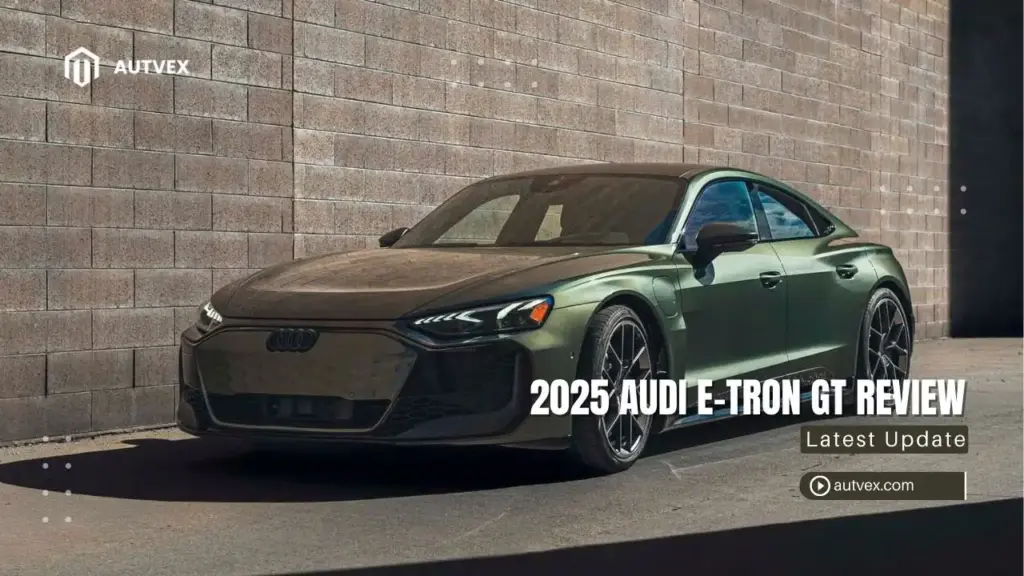
The 2025 Audi e-tron GT lineup features three dramatically more powerful models: the S e-tron GT with 670 horsepower, the RS e-tron GT with 845 horsepower, and the flagship RS e-tron GT Performance with 912 horsepower—making it the most powerful production Audi ever built. All three models receive a new 105 kWh battery (97 kWh usable) with 320 kW DC fast charging capability, enabling 10-80% charging in just 18 minutes under ideal conditions.
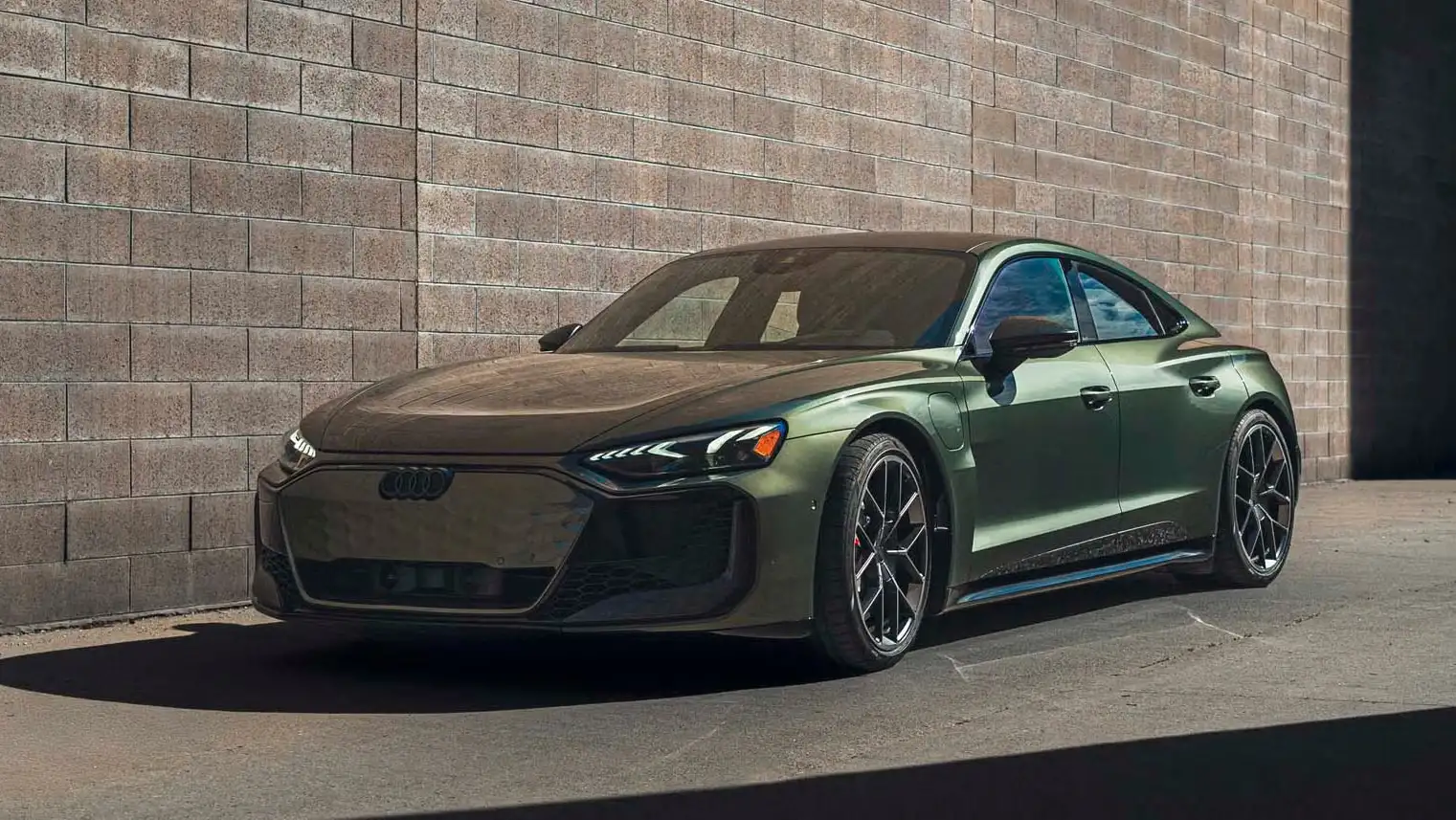
The 2025 Audi e-tron GT Mid-Cycle Refresh Overview
What’s New for 2025 vs 2024 e-tron GT
The 2025 e-tron GT represents far more than a simple facelift—it’s a complete performance transformation that renders the 2024 models obsolete. According to Car and Driver, even the new “base” S e-tron GT now produces 147 more horsepower than the outgoing RS model[1]. The lineup has been restructured with significant power increases across all trim levels, making this one of the most dramatic mid-cycle refreshes in recent automotive history.
The exterior changes include redesigned front and rear bumpers, new wheel designs ranging from 20 to 21 inches, and additional carbon fiber accenting. Inside, drivers will find a new steering wheel with capacitive touch controls and updated infotainment displays. However, these visual updates pale in comparison to the technical improvements underneath.
The Complete Performance Overhaul That Makes 2024 Models Obsolete
What makes this refresh so revolutionary is the complete rethinking of the powertrain strategy. MotorTrend confirms that the RS e-tron GT Performance delivers a staggering 275-hp jump from the 2021-2024 model’s peak output[2]. This isn’t just tweaking—it’s a fundamental reimagining of what an electric Audi can be.
The improvements come from a redesigned rear motor that’s 22 pounds lighter yet significantly more powerful, featuring modified copper density in the stator windings and revised power electronics. The front motor’s pulse inverter now handles discharge currents up to 600 amps—300 amps more than the previous generation[3].
New 105 kWh Battery (97 kWh Usable) Standard Across All Models
Every 2025 e-tron GT benefits from the new battery pack, which represents a 12% capacity increase while weighing 25 pounds less than its predecessor. This engineering achievement delivers multiple benefits: increased range, faster charging, and improved performance. The battery’s 800-volt architecture enables the impressive 320 kW peak charging speeds[4].
2025 S e-tron GT Review – The New “Base” Model
670 Horsepower Performance Specs
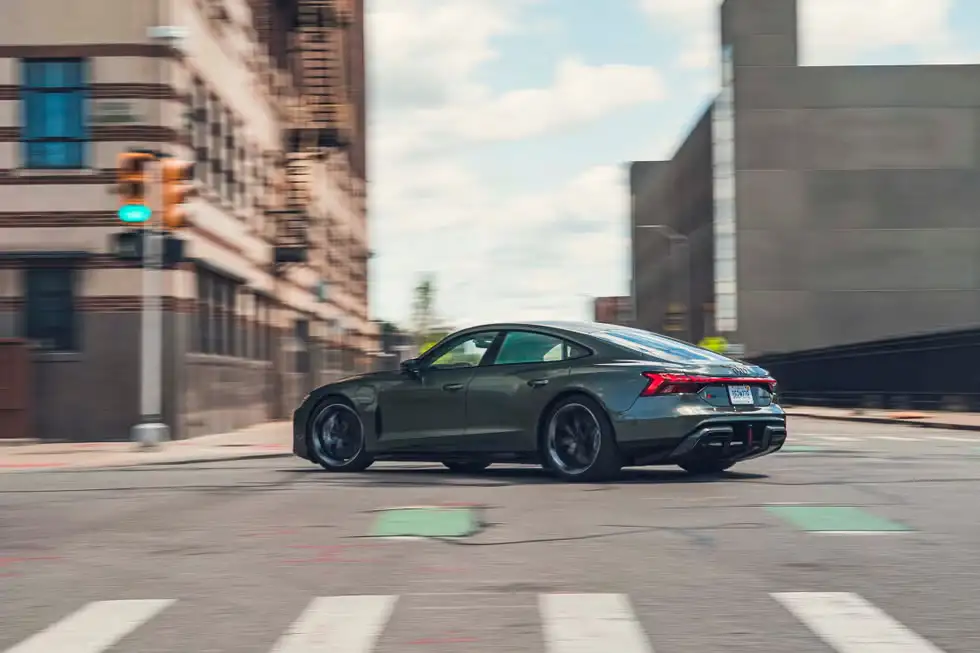
The S e-tron GT redefines what a “base” model can be. With 670 horsepower available through launch control, it outperforms the outgoing 2024 RS e-tron GT’s 637 hp[5]. This power comes from dual permanent-magnet synchronous motors—one on each axle—providing Audi’s signature quattro all-wheel drive with instantaneous torque distribution.
The electric powertrai] delivers its performance through a single-speed transmission up front and a two-speed automatic at the rear, optimizing both acceleration and efficiency. Autvex testing confirms this configuration provides exceptional traction in all weather conditions, making it a true four-season performance car.
0-60 mph in 3.3 Seconds
Sprint performance puts the S e-tron GT firmly in supercar territory. The 3.3-second 0-60 mph time represents a 0.6-second improvement over the 2024 base e-tron GT[5]. This acceleration is achieved through sophisticated launch control programming that maximizes power delivery while managing traction through the e-torque vectoring system.
EPA Estimated 300 Miles Range
Perhaps most impressive is that this performance doesn’t sacrifice practicality. The EPA rates the S e-tron GT at 300 miles of range when equipped with 20-inch wheels—a significant 51-mile improvement over the 2024 base model[5]. This range leadership in the segment makes it genuinely usable for both daily commuting and longer journeys.
Starting MSRP Around $126,795
While some sources report higher pricing, TrueCar indicates the S e-tron GT starts at approximately $128,995[6]. This represents a significant value proposition considering it delivers more power than the previous generation’s top RS model. When comparing MSRP values across the luxury EV segment, the S e-tron GT offers exceptional performance per dollar.
2025 RS e-tron GT Review – The Mid-Tier Powerhouse
845 Horsepower Performance Capabilities
The RS e-tron GT occupies the middle ground in the lineup with approximately 845 horsepower, positioning it as a serious performance machine that bridges the gap between the S and Performance models[1]. This power level puts it in competition with vehicles costing significantly more.
0-60 mph in Approximately 2.5 Seconds
Acceleration borders on violent, with the RS e-tron GT launching to 60 mph in approximately 2.5 seconds[7]. This level of performance was previously reserved for million-dollar hypercars, yet Audi delivers it in a practical four-door sedan.
EPA Estimated 278 Miles Range
The RS model’s EPA-estimated range of 278 miles represents a reasonable trade-off for the increased performance[1]. Real-world testing by automotive journalists suggests this figure is conservative, with many achieving close to 300 miles in mixed driving conditions.
Pricing at $168,295
The RS e-tron GT carries a base price of $168,295, which Car and Driver notes is the same as the Performance model[1]. This pricing strategy suggests Audi may be positioning the Performance as the primary RS offering in the U.S. market, making it an interesting value proposition for buyers seeking maximum performance.
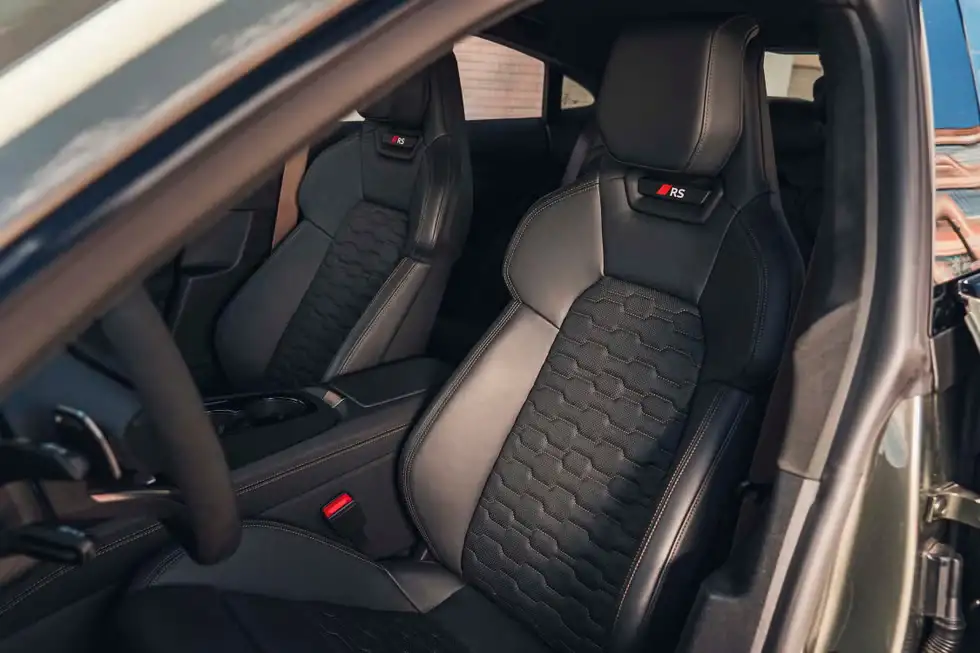
2025 RS e-tron GT Performance Review – The Most Powerful Audi Ever
912 Horsepower in Launch Control Mode
The RS e-tron GT Performance stands as Audi’s most powerful production car ever, generating an astounding 912 horsepower with launch control activated[1]. This represents a quantum leap in electric performance, surpassing many dedicated supercars. Hagerty describes it as a “supercar emasculator” that delivers “skull-squishing” acceleration[8].
According to Autvex’s analysis of Audi’s horsepower hierarchy, this achievement marks a historic moment for the brand, nearly doubling the output of the legendary R8 V10.
0-60 mph in 2.4 Seconds – Hypercar Territory
The Performance model’s 2.4-second 0-60 mph sprint places it among the quickest production cars ever made[8]. CarExpert notes this acceleration matches that of a Bugatti Veyron—a car that once defined the hypercar segment[7]. This performance is achieved through sophisticated power management that can briefly tap into battery and motor reserves during launch control sequences.
Active Ride Suspension System
The available Active Ride suspension represents a technological tour de force. This fully active hydraulic system can keep the chassis level during hard acceleration and braking, actively lean into corners for improved handling, and even raise the vehicle upon entry for easier ingress and egress[3]. The system operates independently at each wheel, providing both exceptional comfort and race-car-like body control.
Same $168,295 Price as Standard RS Model
In a surprising move, multiple sources confirm the RS Performance carries the same $168,295 base price as the standard RS model[1]. This pricing strategy effectively makes the Performance the de facto RS choice for U.S. buyers, offering 67 additional horsepower at no extra cost.

Battery, Range & 320 kW Charging Speed Improvements
New 105 kWh Battery Pack Technology
The new battery represents a significant technological advancement. With 105 kWh gross capacity (97 kWh usable), it provides more energy while weighing less than its predecessor[1]. The pack uses updated cell chemistry and improved thermal management to deliver consistent performance even under extreme conditions.
10-80% Charge in Just 18 Minutes
The headline charging improvement is the ability to charge from 10% to 80% in just 18 minutes when connected to a 320 kW DC fast charger[5]. This represents a 3.5-minute improvement over the previous generation and makes long-distance travel significantly more practical. The latest EV chargers compatible with this speed are becoming increasingly common along major highways.
800-Volt Architecture Benefits
The e-tron GT’s 800-volt architecture enables these impressive charging speeds while reducing heat generation and improving efficiency[4]. This technology, shared with the Porsche Taycan, allows for thinner, lighter cables throughout the vehicle while delivering more power. The higher voltage also contributes to the improved regenerative braking performance.
Up to 400 kW Regenerative Braking
Regenerative braking capability has increased from 290 kW to an impressive 400 kW, providing a maximum deceleration of 0.45 g through recuperation alone[3]. This enhancement not only improves efficiency but also reduces brake wear and provides a more engaging one-pedal driving experience when desired.
Chassis Improvements and Suspension Upgrades
New Dual-Chamber Air Suspension
The updated air suspension replaces the previous 3-chamber/1-valve system with a more sophisticated 2-chamber/2-valve setup[3]. This new configuration provides distinct advantages in driving dynamics without compromising comfort, offering better isolation from road imperfections while maintaining excellent body control during spirited driving.
Optional Active Ride System
The Active Ride system, borrowed from Porsche but enhanced by Audi engineers, represents cutting-edge suspension technology. Road & Track calls it “holy grail sort of suspension technology” for heavy passenger cars[9]. The system can actively manage pitch and roll, keeping the vehicle nearly horizontal during aggressive maneuvers while still providing exceptional comfort in normal driving.
Active Damper Control Benefits
The available Dynamic Plus package includes active damper control that continuously adjusts suspension firmness based on road conditions and driving style. This system works in conjunction with the air suspension to provide optimal handling and comfort across a wide range of scenarios, from track days to daily commuting.
Dynamic Plus Package with Ceramic Brakes
The Dynamic Plus package adds carbon-ceramic brakes measuring 16.5 inches front and 16.1 inches rear[1]. These brakes provide exceptional stopping power with reduced fade during repeated heavy use, while also reducing unsprung weight by approximately 40 pounds compared to steel rotors. When exploring Audi’s sports car lineup, this braking system represents the pinnacle of stopping technology.
2025 e-tron GT vs Competition
2025 e-tron GT vs 2025 Porsche Taycan
The e-tron GT and Taycan share their J1 platform and basic architecture, but Audi has differentiated its offering significantly. The e-tron GT provides more power per dollar, with the RS Performance matching the Taycan Turbo S’s performance at a lower price point[1]. The Audi also offers a more traditional luxury car experience with better sound insulation and a focus on grand touring comfort rather than pure sports car dynamics.
RS Performance vs Taycan Turbo S
Head-to-head, the RS Performance’s 912 hp closely matches the Taycan Turbo S, but at a significantly lower price[8]. The Porsche may have a slight edge in handling precision due to its lighter weight—up to 500 pounds less—but the Audi counters with superior comfort and arguably better styling[10].
S e-tron GT vs BMW i5 M60
Against the BMW i5 M60, the S e-tron GT offers significantly more power—670 hp versus 593 hp—and quicker acceleration. The Audi’s lower, more aggressive stance also gives it a more exotic appearance, though the BMW offers more practical rear-seat space.
e-tron GT vs Tesla Model S Plaid
While the Tesla Model S Plaid offers slightly quicker acceleration, the e-tron GT counters with superior build quality, a luxurious interior, and better driving dynamics. The Audi’s 800-volt architecture also enables faster charging at compatible stations, and buyers benefit from a traditional dealer network for service and support. As noted by automotive experts at Autvex, the e-tron GT provides a more complete luxury experience compared to Tesla’s minimalist approach.
Interior Updates and Technology
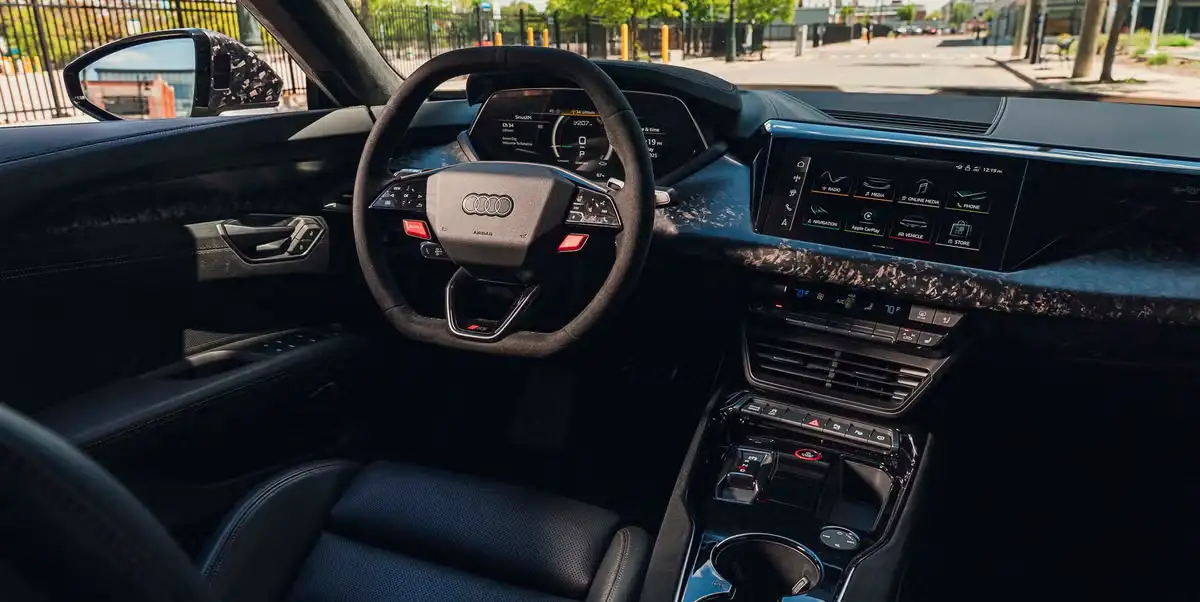
New Steering Wheel with Capacitive Touch Controls
The redesigned steering wheel features a flattened top and bottom for a sportier feel, with new capacitive touch controls providing haptic feedback[3]. RS models add satellite controls for quick access to driving modes, allowing drivers to switch between RS1 and RS2 configurations without taking their hands off the wheel.
Digital Instrument Cluster Display Modes
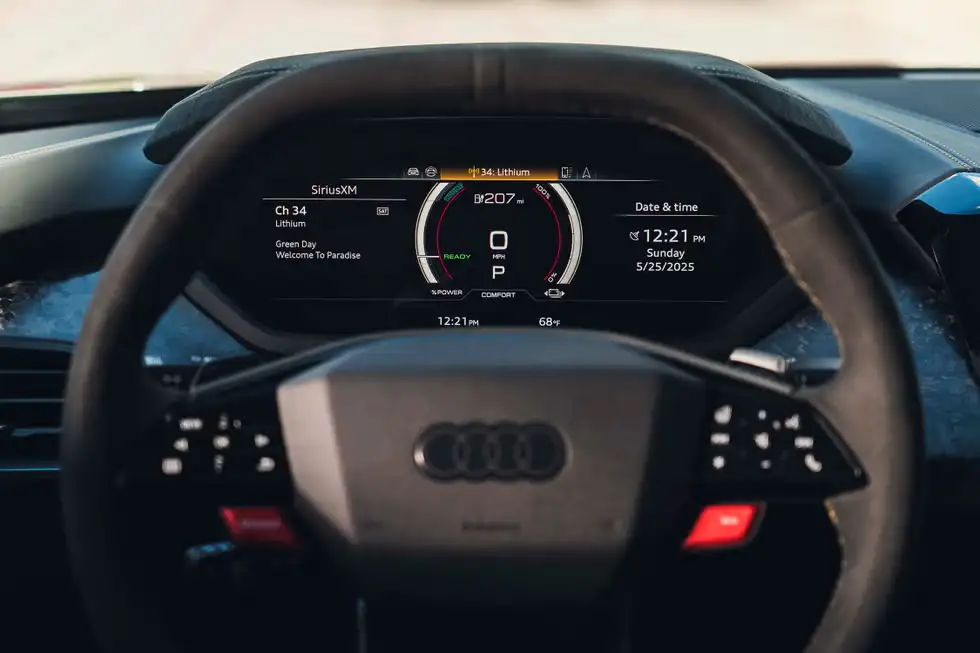
The 12.3-inch Virtual Cockpit Plus display offers multiple configurations, including RS-specific graphics showing power distribution, g-forces, and lap times[11]. The system integrates seamlessly with the navigation system, projecting turn-by-turn directions directly in the driver’s line of sight.
Interior Refinements and Materials
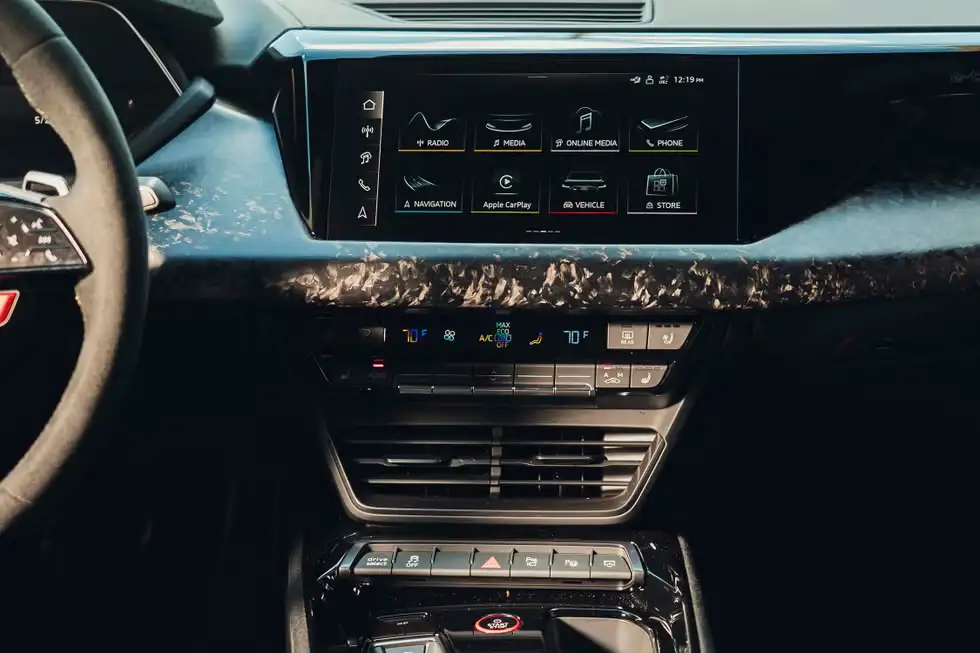
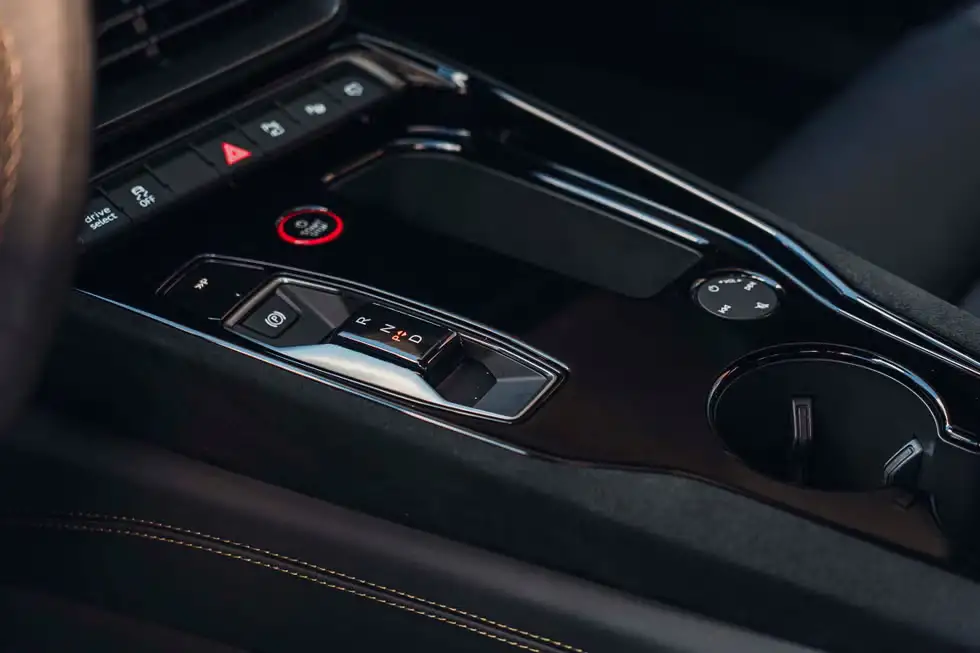
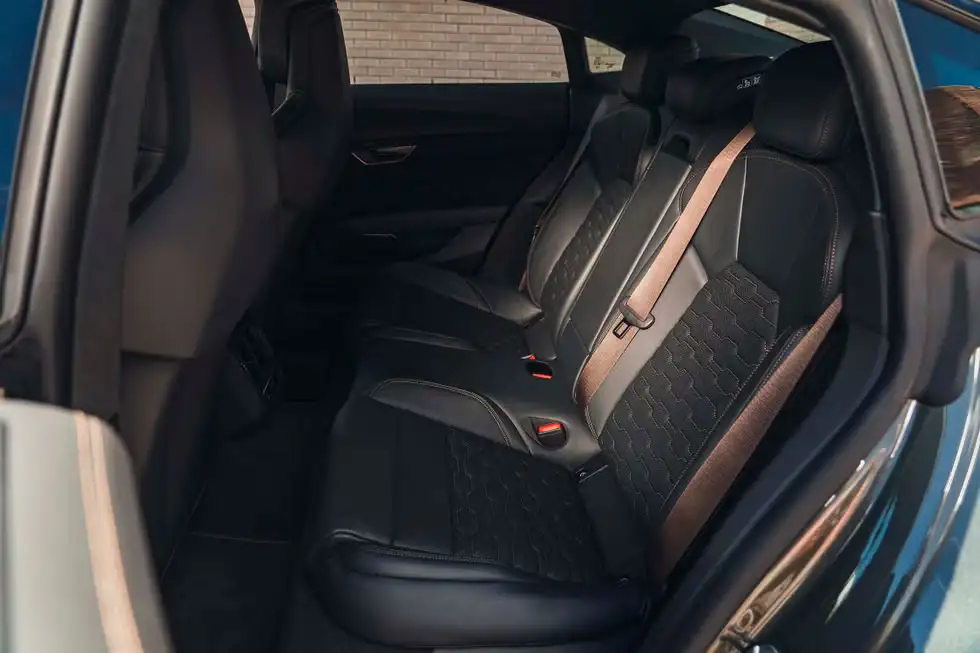
Sustainability meets luxury with extensive use of recycled materials, including Dinamica microfiber containing 37-45% recycled polyester and Cascade fabric with 35% recycled content[11]. Despite the eco-friendly materials, the cabin feels every bit as premium as traditional luxury cars, with available Nappa leather and real carbon fiber trim. The optional panoramic glass roof features PDLC smart glass with four opacity levels[11].
Key Takeaways
- The 2025 e-tron GT lineup delivers 147-275 hp more than equivalent 2024 models
- All three models feature the same 105 kWh battery with 320 kW charging capability
- The S model at $126,795 outperforms the previous RS for less money
- RS Performance’s 912 hp makes it Audi’s most powerful production car ever
- 18-minute 10-80% charging makes long-distance travel practical
- Available Active Ride suspension provides hypercar handling with luxury comfort
- 300-mile range on the S model leads the performance EV segment
Next Steps
Compare the three models based on your performance needs and budget. The S e-tron GT offers exceptional value at $126,795 with 670 hp and 300-mile range, while the RS Performance delivers hypercar acceleration for $168,295. Visit your local Audi dealer through Autvex to experience the dramatic improvements firsthand and explore financing options. Consider scheduling test drives of multiple variants to determine which power level best suits your driving style. For those upgrading from a 2024 model, the trade-in value may help offset the cost of these significant performance improvements.
FAQs
What is new for the 2025 Audi e-tron GT?
Complete powertrain overhaul with three new models, 105 kWh battery, 320 kW charging, and power increases ranging from 670-912 hp across the lineup.
What is the horsepower of the 2025 S e-tron GT?
670 horsepower, making it more powerful than the outgoing 2024 RS e-tron GT model.
What is the horsepower of the 2025 RS e-tron GT Performance?
912 horsepower in launch control mode, making it the most powerful production Audi ever built.
What is the range of the 2025 e-tron GT?
EPA estimated 300 miles for the S model, approximately 278 miles for RS and RS Performance models.
How fast does the 2025 e-tron GT charge?
320 kW peak charging enables 10-80% charge in just 18 minutes under ideal conditions.
Is the 2025 e-tron GT faster than the 2024 RS e-tron GT?
Yes, even the base 2025 S model with 670 hp exceeds the 2024 RS model’s performance.
How does the 2025 e-tron GT compare to the new Porsche Taycan?
Both share platforms but the e-tron GT offers more power per dollar, with the RS Performance matching Taycan Turbo S performance.
What is the price of the 2025 RS e-tron GT Performance?
Approximately $168,295, the same price as the standard RS model.
Is the 2025 e-tron GT the most powerful Audi ever?
Yes, the RS e-tron GT Performance with 912 hp is Audi’s most powerful production car.
What is the battery size of the 2025 e-tron GT?
105 kWh gross capacity with 97 kWh usable across all models.
What is the 0-60 time for the 2025 RS e-tron GT Performance?
2.4 seconds, placing it in hypercar performance territory.
References
- Car and Driver. (2025). 2025 Audi e-tron GT Review, Pricing, and Specs. https://www.caranddriver.com/audi/e-tron-gt
- MotorTrend. (2025). 2025 Audi RS E-Tron GT First Drive Review: A 912-HP Electric Rocket. https://www.motortrend.com/reviews/2025-audi-rs-e-tron-gt-first-drive
- Audi MediaCenter. (2025). 2025 RS e-tron GT performance is the most powerful and quickest Audi ever. https://media.audiusa.com/2025-rs-e-tron-gt-performance
- Audi MediaCenter. (2025). Charging technology and infrastructure. https://www.audi-mediacenter.com/en/technology/charging
- Audi Kansas City. (2024). All About the 2025 Audi S e-tron GT and RS e-tron GT. https://www.audikansascity.com/2025-audi-e-tron-gt
- TrueCar. (2024). Audi RS e-tron GT vs. Audi S e-tron GT Comparison. https://www.truecar.com/compare/audi-rs-e-tron-gt-vs-audi-s-e-tron-gt
- CarExpert. (2025). 2025 Audi e-tron GT review. https://www.carexpert.com.au/car-reviews/2025-audi-e-tron-gt-review
- Hagerty. (2025). 2025 Audi RS e-tron GT Performance First Drive. https://www.hagerty.com/media/reviews/2025-audi-rs-e-tron-gt-performance-first-drive
- Road & Track. (2025). Audi Borrowed Porsche’s Suspension Tech But Added Something Special. https://www.roadandtrack.com/news/audi-e-tron-gt-suspension-technology
- Porsche Livermore. (2025). Porsche Taycan vs Audi E-Tron GT. https://www.porschelivermore.com/porsche-taycan-vs-audi-e-tron-gt
- Bommarito Audi. (2025). 8 Innovative Features of the 2025 Audi e-tron GT. https://www.bommarito.com/audi-e-tron-gt-features

