

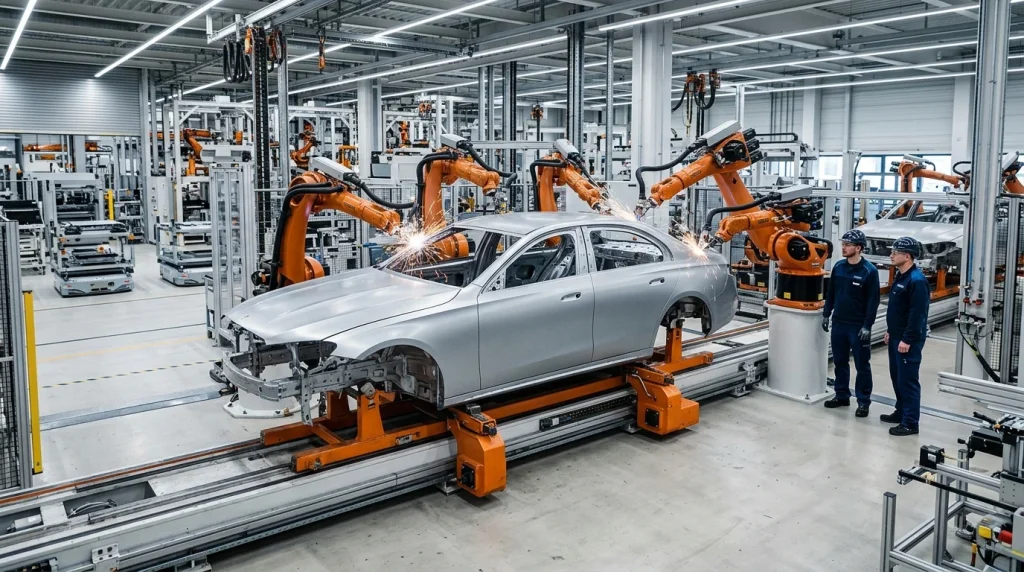
Audi cars are manufactured across a global network of 21 production sites in 12 countries, with primary headquarters and core assembly operations based in Ingolstadt and Neckarsulm, Germany. Key international facilities include plants in Győr (Hungary), San José Chiapa (Mexico), Bratislava (Slovakia), Brussels (Belgium), Martorell (Spain), Changchun (China), and Aurangabad (India).
Key takeaways:
- Ingolstadt and Neckarsulm serve as Audi’s main German manufacturing hubs for luxury sedans, coupes, and electric vehicles.
- Audi Q5 SUVs for North America and global markets are produced in San José Chiapa, Mexico.
- Audi Q7 and Q8 flagship SUVs are assembled at the Volkswagen Group plant in Bratislava, Slovakia.
- Audi is a German luxury automaker fully owned by the Volkswagen Group, which acquired Auto Union between 1964 and 1966.
- Entry-level Audi models start around $36,000, while high-end performance models exceed $100,000.
Where Are Audi Cars Made?
Audi vehicles are produced across a global manufacturing footprint coordinated by AUDI AG. While the brand maintains its technological roots and corporate governance in Germany, vehicle assembly occurs in multiple specialized facilities worldwide to optimize supply chains and regional market demands.
According to official corporate data published by Audi AG, the brand operates across 21 production sites in 12 countries. These locations cover complete vehicle assembly, engine manufacturing, transmission production, and battery module construction under centralized corporate oversight on who makes Audi cars.
| Region | Country | City / Site Location | Primary Models Produced |
|---|---|---|---|
| Europe | Germany | Ingolstadt | Audi A3, A4, A5, Q2, Q6 e-tron |
| Europe | Germany | Neckarsulm | Audi A6, A7, A8, R8, e-tron GT |
| Europe | Hungary | Győr | Audi TT (historic), Q3, Q3 Sportback, Engines |
| Europe | Slovakia | Bratislava | Audi Q7, Audi Q8 |
| Europe | Belgium | Brussels | Audi Q8 e-tron / e-tron SUV |
| Europe | Spain | Martorell | Audi A1 Sportback |
| Americas | Mexico | San José Chiapa | Audi Q5, Q5 Sportback |
| Asia | China | Changchun & Foshan | Audi A4L, A6L, Q3, Q5L, e-tron (China market) |
| Asia | India | Aurangabad | Audi A4, A6, Q3, Q5, Q7 (CKD Assembly) |
Where Are Audi Automobiles Made?
Audi automobiles are made in both domestic German facilities and dedicated overseas plants. Domestic production centers on two main Bavarian and Baden-Württemberg complexes: Ingolstadt and Neckarsulm.
Outside Germany, European production is spread across Hungary, Slovakia, Belgium, and Spain. Overseas assembly centers cover the Americas via Mexico and Asia via joint-venture plants in China and India.
Where Is the Audi Car From?
The Audi car originates from Germany. The company traces its industrial lineage to Saxony and Bavaria, where German engineer August Horch established his automotive endeavors in the early 20th century. Today, corporate decisions, vehicle engineering, platform design, and core powertrain development originate from Audi headquarters in Ingolstadt, Germany. Audi distributes manufacturing globally based on vehicle platform sharing within the Volkswagen Group. High-volume luxury sedans like the A4 and A5 remain anchored in Germany, whereas SUV platforms like the Q5 and Q7 are assigned to specialized global hubs in Mexico and Slovakia.
Note: Manufacturing locations depend on vehicle model and model year. Regional market specifications may determine whether a specific trim is imported from Germany or assembled at a regional site.
Is Audi a German Car?
Yes, Audi is definitively a German car. The company is headquartered in Ingolstadt, Bavaria, Germany, operates under German corporate governance, and performs its central research, engineering, and design functions on German soil.

Is Audi an American Car?
No, Audi is not an American car company. It is a German brand owned by the German automotive conglomerate Volkswagen Group.
However, Audi maintains a substantial commercial presence in the United States, managed by Audi of America, LLC (headquartered in Reston, Virginia). Additionally, many Audi vehicles sold in North America (such as the Audi Q5) are assembled in San José Chiapa, Mexico.
Is Audi a Foreign Car?
For consumers in North America, the United Kingdom, Asia, and Australia, Audi is classified as an imported foreign car. Even when assembled in North American plants like Mexico, Audi vehicles are designed under German engineering frameworks and backed by German corporate ownership.
What Country Is Audi Made?
Audi is primarily made in Germany, Hungary, Mexico, Slovakia, Belgium, Spain, China, and India. Germany remains the primary manufacturing base by engineering volume and prestige model production.
What Country Makes the Audi?
Germany is the origin country that makes Audi. German engineers design the engines, chassis structures, electronic architectures, and interior ergonomics that define Audi vehicles worldwide. When factory assembly is completed, equipping vehicles with the best tires for Audi models maintains original chassis handling and noise dampening standards.
Where Are Audi Cars Built?
The physical construction of Audi cars relies on advanced automation, robotic welding, and flexible platform assembly lines. A detailed investigation into Audi assembly locations highlights how different body styles are assigned to specific manufacturing centers.
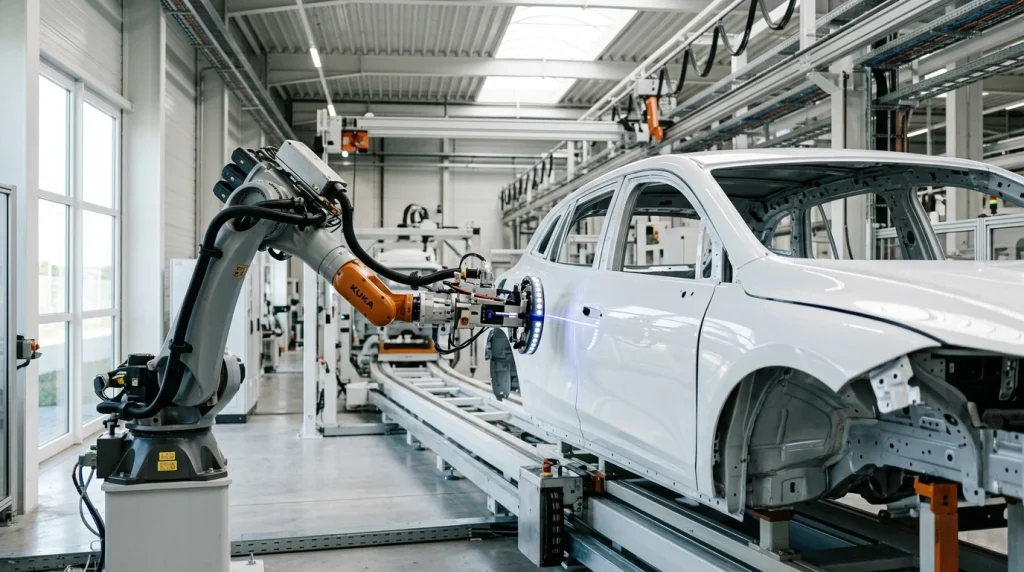
- Ingolstadt (Germany): The main plant produces high-volume passenger vehicles like the A3, A4, A5, and the Q6 e-tron electric crossover.
- Neckarsulm (Germany): Handles flagship sedans and performance sports models including the A6, A7, A8, e-tron GT, and R8.
- San Jose Chiapa (Mexico): Specially built facility dedicated to assembling the Q5 crossover for global buyers.
- Bratislava (Slovakia): Shares Volkswagen Group multi-brand assembly lines for heavy luxury SUVs like the Q7 and Q8, where buyers can also review the towing capacity of the Audi Q7.
- Gyor (Hungary): Operates one of the world’s largest engine manufacturing plants, delivering petrol, diesel, and electric powertrains across the lineup. Maintenance guidelines such as proper engine oil requirements for Audi A4 diesel models stem directly from factory engine specs.
The brand also builds dedicated electric vehicles across European plants, complementing an expanding selection of Audi electric models.
Factory Assignments by Model Line
Each vehicle is built at the specific plant assigned to its chassis code and platform family. When identifying where Audi cars come from, an A4 sedan purchased in North America comes from Ingolstadt, Germany, whereas a Q5 crossover comes from San Jose Chiapa, Mexico.
Decoding Assembly Plant Origin from the VIN
To determine where a specific vehicle was assembled, buyers can consult the Vehicle Identification Number (VIN) stamped on the driver-side dashboard plate or door pillar label:
- VIN starting with WAU or WAV: Manufactured in Germany.
- VIN starting with WA1: Assembled at an SUV facility (such as Slovakia or Mexico).
- 11th Character of VIN: Indicates the exact assembly plant (for example: I = Ingolstadt, N = Neckarsulm, 1 = Gyor, 2 = Changchun, R = Martorell).
VIN decoding provides reliable proof of vehicle origin. Every model carries plant-specific factory codes embedded directly within its 17-digit VIN structure. When evaluating a pre-owned luxury vehicle, understanding the standard vehicle inspection timeframe allows buyers to verify physical build quality alongside factory VIN records.
Note: Component sourcing for electronic chips, interior upholstery, and tires is international, but final vehicle assembly is governed by the 11th digit VIN plant code.
Who Owns the Audi Car Company?
The Audi car company is owned by the Volkswagen Group (Volkswagen AG), one of the world’s largest automotive manufacturers. AUDI AG operates as a core premium brand subsidiary within the group’s Brand Group Progressive portfolio.
When Did Volkswagen Buy Audi?
The historical transition occurred in the mid-1960s. Volkswagen acquired Audi in 1965 by purchasing Auto Union GmbH from Daimler-Benz AG.
Volkswagen initially acquired a controlling majority stake of around 50 percent in December 1964, expanding to full operational control by 1966. In 1969, Auto Union merged with NSU Motorenwerke AG to form Audi NSU Auto Union AG, which was eventually shortened to AUDI AG in 1985. In 2020, Volkswagen AG completed a squeeze-out buyout to own 100 percent of AUDI AG stock.
Who Is Audi Made By?
Audi vehicles are made by AUDI AG, a subsidiary of the Volkswagen Group. Readers interested in ownership history and corporate structure can explore more about corporate operations across global facilities.
What Year Was Audi Founded?
The origins of Audi span several key historical milestones:
- 1909: August Horch founded Audi Automobilwerke GmbH in Zwickau, Germany.
- 1932: Four Saxon automakers merged to form Auto Union AG.
- 1965: Volkswagen acquired Auto Union and revived the Audi brand name for modern passenger cars.
Who Is the Founder of Audi?
The founder of Audi was German engineer and automotive pioneer August Horch (1868-1951). After leaving his previous enterprise (Horch & Cie), he established a new motor company in Zwickau in 1909.
Where Does Audi Come From?
Audi comes from Zwickau and Cologne in historical terms, and from Ingolstadt, Germany, in modern terms. Following World War II, the company re-established its headquarters in Ingolstadt, Bavaria, in 1949, where it has remained ever since.
What Does Audi Stand For?
“Audi” is not an acronym and does not stand for a sequence of words. Instead, it is the Latin translation of the founder’s last name, “Horch”.
In German, “horch” means “listen” or “hark”. When August Horch was legally restricted from using his surname for his new company in 1909, the son of his business partner suggested translating “Horch” into Latin. In Latin, the imperative form of “to listen” is “audi”.
What Do the 4 Audi Rings Mean?
The famous four interlocking rings represent the 1932 merger of four independent German vehicle manufacturers that formed Auto Union AG:
- Audi
- DKW
- Horch
- Wanderer
Each ring symbolizes one of the founding companies linked together in unity.
Is Audi a Luxury Car?
Yes, Audi is recognized globally as a premium luxury automotive brand. It competes directly alongside BMW and Mercedes-Benz as part of the “German Big Three” luxury carmakers.
Is Audi a Luxury Vehicle?
Yes, Audi models are engineered as luxury vehicles. They feature high-grade cabin materials, advanced digital displays (Audi Virtual Cockpit), refined acoustic insulation, and sophisticated chassis electronics. Features like keyless access through the Audi Advanced Key feature define its premium cabin experience. However, drivers often ask whether connected services require extra fees, such as how the Audi navigation subscription model operates on modern trims.
Are Audi’s Luxury Cars?
Audi’s complete product portfolio consists of luxury sedans, luxury crossovers, executive coupes, sports cars, and premium electric vehicles.
What Does an Audi Look Like?
Audi design language is characterized by clean horizontal geometric lines, a prominent Singleframe front grille, sharp LED lighting signatures, sculpted wheel arches, and minimalist interior dashboards dominated by dual touchscreens.
How Much Does an Audi Cost?
Vehicle pricing spans from accessible entry-level luxury sedans up to six-figure high-performance sports cars and electric flagships.
General Price Range and Averages
When buyers evaluate how much Audi cars cost across the lineup, new vehicle prices generally range from $40,000 to over $160,000 depending on body style, powertrain option, and trim package. On average, a mid-tier model (such as an A4 sedan or Q5 crossover) costs between $44,000 and $58,000 before taxes and dealer options.
Pricing Breakdown Across Vehicle Segments
- Entry-Level Sedans (A3, A4): $40,000 to $45,000
- Mid-Size & Executive Sedans (A5, A6, A7): $48,000 to $70,000
- Flagship Executive (A8, S8): $90,000 to $120,000+
- Electric Vehicles (Q4 e-tron, Q6 e-tron, e-tron GT): $50,000 to $145,000+
- Performance S and RS Variants: $55,000 to $130,000+
Most Affordable Models and SUV Pricing
The most affordable new vehicle in the lineup is the A3 sedan. Industry pricing and entry-level luxury market analysis ranks the A3 as the brand’s lowest-priced entry point, with a starting price of approximately $40,100.
For drivers seeking peak performance rather than entry pricing, compare baseline figures against the highest-horsepower Audi variants in our performance roundup.
SUV and crossover pricing spans several categories in the Audi SUV lineup:
- Q3: Starts from ~$37,000
- Q5: Starts from ~$45,000
- Q7: Starts from ~$60,000
- Q8: Starts from ~$74,000
- SQ8 / RS Q8: Starts from ~$96,000 to $125,000+
What Is the Best Audi?
Determining the best Audi depends on buyer priorities regarding utility, fuel efficiency, performance, or luxury:
- Best Overall Daily Sedan: Audi A5 / A4 (balance of comfort, handling, and technology).
- Best Family Crossover: Audi Q5 (spacious seating, refined ride, and high resale demand).
- Best Luxury SUV: Audi Q7 (three-row capability with premium interior appointments).
- Best Performance Car: Audi R8 or RS6 Avant (exceptional power and handling).
Explore detailed buyer rankings in our overview of the best Audi models.
Does Audi Make a Convertible?
Historically, Audi manufactured several convertible (Cabriolet and Roadster) models, including the A3 Cabriolet, A5 Cabriolet, TT Roadster, and R8 Spyder.
However, Audi has phased out convertible body styles in recent model years to concentrate engineering resources on electric SUVs and sportbacks. Enthusiasts looking for open-top driving can still find pre-owned models or explore current Audi sports cars.
Are All Audi’s All Wheel Drive?
No, not all Audi cars come standard with all-wheel drive. While Audi is famous for its proprietary quattro technology, standard entry-level trims on models like the A3, A4, and Q3 come equipped with front-wheel drive (FWD) in various global markets.
Quattro all-wheel drive is available either as an optional upgrade on base trims or as a standard feature on higher-tier models, S/RS performance variants, and larger SUVs. Drivers can learn more about how the system operates in our guide to the quattro all-wheel-drive system.
Is Audi owned by BMW or Mercedes-Benz?
No. Audi is not owned by BMW or Mercedes-Benz. Audi is owned by the Volkswagen Group. BMW and Mercedes-Benz are independent rival German automakers.
Are Audis made in the United States?
Currently, Audi does not operate a full vehicle assembly plant inside the United States. North American models are imported from Germany, Mexico, Slovakia, or Hungary.
What does the word Audi mean in English?
“Audi” is the Latin translation of the German verb “horch”, which translates to “listen” or “hark” in English.

