

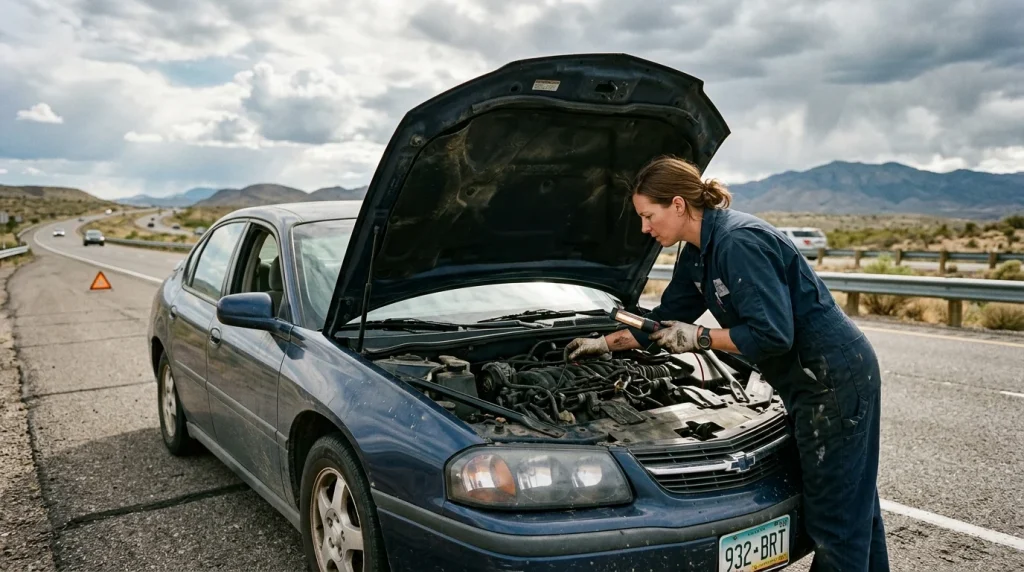
Quick answer:
If you are stranded and need to know how to start a car with a bad fuel pump in an emergency, try cycling the ignition key 3 to 5 times to rebuild fuel system pressure, or gently tap the bottom of the fuel tank with a rubber mallet while cranking the engine. These starting methods are temporary troubleshooting workarounds designed to help you get the engine running so you can drive directly to a professional mechanic for repair.
Key takeaways:
- Temporary starting workarounds only work on weak, overheating, or sticking fuel pumps; a completely dead pump with burned-out motor windings cannot be bypassed.
- Key cycling primes the pump repeatedly, forcing the fuel pump motor to gradually build sufficient pressure in the fuel rail to start the car.
- Tapping the fuel tank transmits mechanical vibrations that can temporarily free a seized pump armature or stuck carbon brushes.
- Avoid spraying excessive starting fluid into the air intake to prevent severe engine damage, pre-detonation, or cracked intake manifolds.
- Professional fuel pump replacement in 2026 costs between $400 and $1,500 on average, depending on your vehicle make and model.
Is It Safe to Drive With a Failing Fuel Pump?
Driving a vehicle with a failing fuel pump is highly discouraged because it presents severe safety hazards and risks expensive engine damage. A consistent, high-pressure flow of fuel is required to maintain the correct air-to-fuel ratio in the cylinders. If the pump struggles to supply enough fuel, the engine may stall unexpectedly, leaving you stranded in the middle of active traffic or highway lanes.
According to experts at Christian Brothers Automotive, running a vehicle with a failing fuel pump can cause the engine to run lean, meaning there is too much air and not enough fuel in the combustion chambers. This imbalance leads to engine misfires, overheating, and potential damage to the catalytic converter.
If your fuel pump exhibits signs of failure, any starting hacks should only be used as a last resort to move the vehicle to a safe location or a nearby repair facility. If you are far from a workshop, towing is always the safest option.
5 Temporary Methods to Start a Car With a Bad Fuel Pump
These emergency starting methods are intended to get your engine running temporarily. If the electric motor inside the pump has completely burned out or suffered an electrical open circuit, these hacks will not work.
Cycle the Ignition Key (Priming the Pump)
If a weakening fuel pump struggles to maintain pressure in the fuel lines, cycling the ignition key can force the pump to build enough pressure to start the engine. When you turn your key to the “ON” position (the step right before cranking the starter), the engine control unit (ECU) activates the fuel pump for two to three seconds to prime the system.
To perform this method:
- Turn the ignition key to the “ON” position. Listen for a faint humming sound coming from the rear seat area.
- Turn the key back to the “OFF” position after three seconds.
- Repeat this process 3 to 5 times.
- Attempt to crank the engine.
By cycling the key, you repeat the priming process multiple times, slowly pushing fuel through the lines and pressurizing the fuel rail even if the pump is operating at low efficiency.
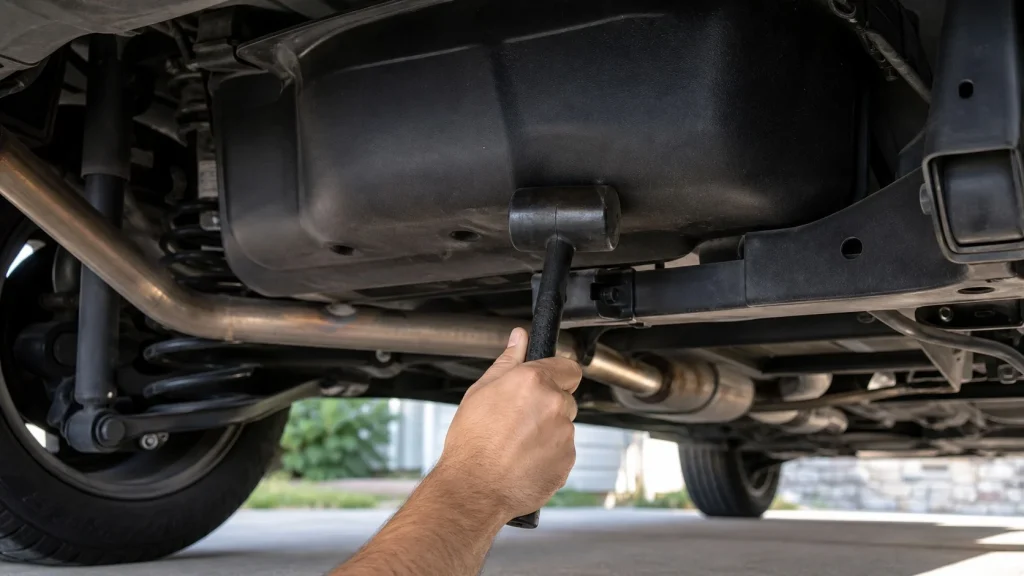
Gently Tap the Fuel Tank
If the fuel pump motor has stopped spinning due to worn electrical brushes or a stuck armature, tapping the fuel tank can jar the internal components back into contact. This is similar to tapping a sticking starter motor to get one final start.
To tap the fuel tank safely:
- Locate the fuel tank underneath the rear of the vehicle.
- Have a helper sit in the driver’s seat, ready to turn the key.
- Use a rubber mallet, a dead-blow hammer, or the heel of a shoe to strike the bottom center of the fuel tank firmly but carefully. Do not use a steel hammer or any metal tool that could dent the tank or create sparks.
- Strike the tank while your helper cranks the engine.
Certified technician Dave from YourMechanic explains that while mechanical vibration from tapping the tank can free up stuck motor brushes, a pump with damaged electrical windings or a completely seized motor will not respond to tapping and must be towed. If the car starts, do not turn the engine off until you reach a repair shop.
Allow the Engine and Pump to Cool Down
Electric fuel pumps are submerged in gasoline inside the fuel tank. The fuel acts as a vital coolant and lubricant for the electric pump motor. When the fuel level is low, or if the pump has suffered internal wear, the motor runs hot and can experience thermal shutdown.
If your car stalls after driving for a while, park the vehicle in a safe, shaded area and allow it to sit for 30 to 45 minutes. Once the pump cools down, the internal electrical resistance decreases, which may allow the pump to run normally for a short period. To prevent overheating, avoid driving regularly with less than a quarter-tank of gasoline.
Analysis: Thermal shutdown is a common sign of mechanical wear within the pump motor. While letting it cool may get you moving again, the pump will overheat more quickly during subsequent drives as the internal friction increases.
Note: Fuel pumps that overheat once are highly likely to fail completely in the near future. Treat this stall as a critical warning sign.
Check the Fuel Pump Fuse and Relay
An engine will not start if a blown fuse or a faulty relay prevents electrical power from reaching the fuel pump. If the pump is silent when you turn the key to the “ON” position, verify the electrical circuits before assuming the pump itself is broken.
To inspect the electrical system:
- Locate the fuse box under the hood or dashboard using your vehicle owner’s manual.
- Find the fuse labeled for the fuel pump (usually a 10-amp, 15-amp, or 20-amp fuse) and inspect the metal filament inside. If the filament is broken or burnt, replace it with a fuse of the exact same amperage.
- Locate the fuel pump relay. If the relay is bad, you can temporarily swap it with an identical, non-critical relay from the fuse box (such as the relay for the horn or the air conditioning system) to see if the engine starts.
If a new fuse immediately blows when you turn the key, there is an electrical short circuit in the wiring harness or inside the fuel pump motor, which requires professional inspection.
Use Starting Fluid (Diagnostic Only)
Spraying starting fluid (ether) or carburetor cleaner directly into the air intake can help confirm if a no-start condition is caused by a lack of fuel.
To use starting fluid:
- Locate the air filter housing under the hood. Before spraying starting fluid, you must locate the air intake. Understanding what a car air filter does can help you safely access the throttle body without damaging your engine components.
- Remove the air filter and spray a short, two-second burst of starting fluid directly into the throttle body intake hose.
- Immediately attempt to start the engine.
If the engine starts, runs for a few seconds, and then dies, it confirms that your spark plugs and compression are functioning, but the engine is starving for fuel. Do not use starting fluid repeatedly to run or drive the vehicle. Modern fuel-injected engines are not designed to run on ether, and excessive use can crack plastic intake manifolds or cause severe pre-detonation.
Professional Diagnostics: How to Confirm Your Fuel Pump Is Bad
Because a starting failure can be caused by problems with the battery, starter, ignition system, or fuel delivery, watch for these common symptoms of a dying fuel pump:
- Loud Whining Noise: A healthy fuel pump produces a quiet hum. If you hear a loud, high-pitched whining, howling, or buzzing sound coming from the rear seat area, the pump motor is struggling or worn.
- Extended Cranking: If the engine cranks for several seconds longer than usual before starting, the fuel system is losing residual pressure while parked.
- Engine Sputtering: Severe sputtering, hesitation, or coughing at highway speeds occurs when the pump cannot deliver the high volume of fuel required.
- Loss of Power Under Load: The engine loses power, bogs down, or shakes when accelerating up steep hills, carrying heavy cargo, or towing a trailer.
If you notice fuel vapor smells around your vehicle alongside these symptoms, investigate immediately. A leak in the fuel rail or fuel lines can drop pressure and mimic pump failure; learn more about why a car smells like gas but is not leaking to differentiate between a pump issue and a leak.
Additionally, if the vehicle has been stored for a long period, rust in the tank or stale fuel may have seized the pump. Check how long a car can sit without being driven to see how storage affects your fuel system components.
If you suspect an electrical failure is preventing the pump relay from clicking, verify your battery and charging system. If you need to jump-start the car to test the alternator first, understand safety precautions such as whether you can jump-start a car in the rain before proceeding.
How Much Does a Fuel Pump Replacement Cost in 2026?
In 2026, the average cost to replace a fuel pump ranges from $400 to $1,500. The total price varies significantly based on your vehicle’s make, model, and the complexity of its fuel system.
According to repair estimates from Kelley Blue Book (KBB):
- Parts Cost: A replacement fuel pump assembly (which often includes the electric pump, the fuel sending unit, the float, and the internal strainer) typically costs between $150 and $1,100.
- Labor Cost: Labor charges generally run between $200 and $700, representing 2 to 6 hours of work.
Replacing a fuel pump is highly labor-intensive because the pump is mounted directly inside the fuel tank. To access the assembly, a mechanic must hoist the vehicle, drain the gasoline safely, unbolt the exhaust system and driveshaft if necessary, and drop the heavy fuel tank. Some vehicles feature an access panel under the rear seat, which allows the technician to replace the pump without dropping the tank, reducing labor times.
For more repair guides and automotive market pricing, visit Autvex News to keep your vehicle maintenance budget on track.
Frequently Asked Questions
Can a bad fuel pump mimic a dead car battery?
No, a bad fuel pump will not prevent the engine from cranking. If you turn the key and the engine cranks normally but fails to start, the battery and starter are functioning, but the engine is not receiving fuel. If the engine clicks or does not crank at all, the issue lies in the electrical starter circuit or battery.
Can you jump-start a car with a bad fuel pump?
No. Jump-starting only provides extra electrical power to turn the starter motor. If the electric fuel pump is mechanically seized or burnt out, providing external electrical power to the starter will not deliver gasoline to the engine, and the car will not start.
Does running out of gas damage the fuel pump?
Yes, running out of gas can cause severe damage to the fuel pump. The pump motor relies on the surrounding gasoline inside the tank to dissipate heat and lubricate its internal bearings. When you run the tank dry, the motor spins without lubrication, causing rapid overheating and premature wear.

