You may also like:
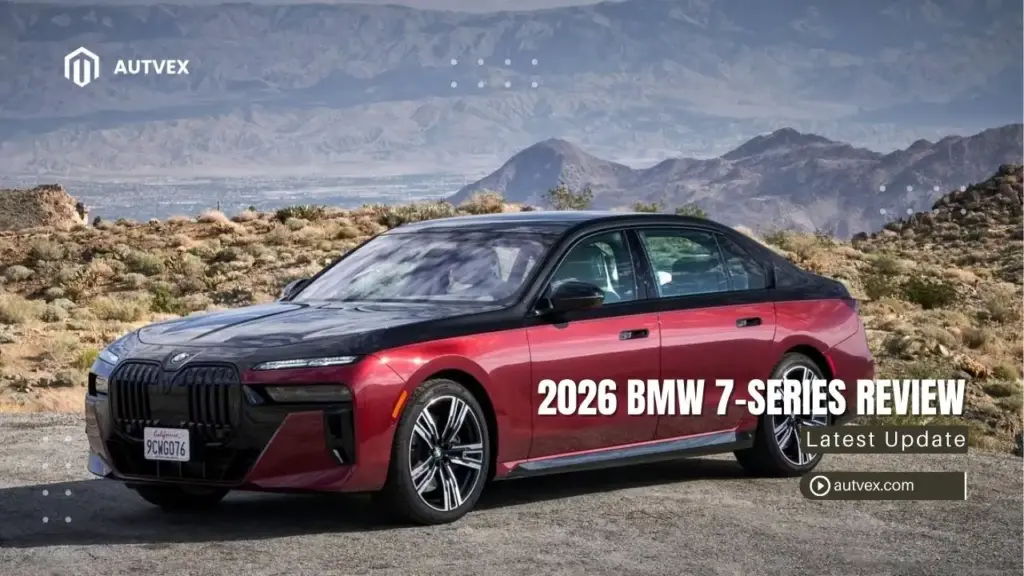
The 2026 BMW 7-Series delivers a futuristic cabin experience and three powertrains that balance smooth power with decent efficiency—but Mercedes and Genesis still edge ahead in ride comfort and value, respectively[1]. Car and Driver ranks it #3 in full-size luxury cars, behind the Mercedes S-Class (#1) and Genesis G90 (#2), praising its “thoroughly insulated cabin” while noting the “lifeless steering” and tech overload[1]. For buyers who embrace touchscreen interfaces and want hands-free highway driving, this is a compelling choice. But if you prefer physical buttons or better ride isolation, consider the Audi A8 or S-Class instead.
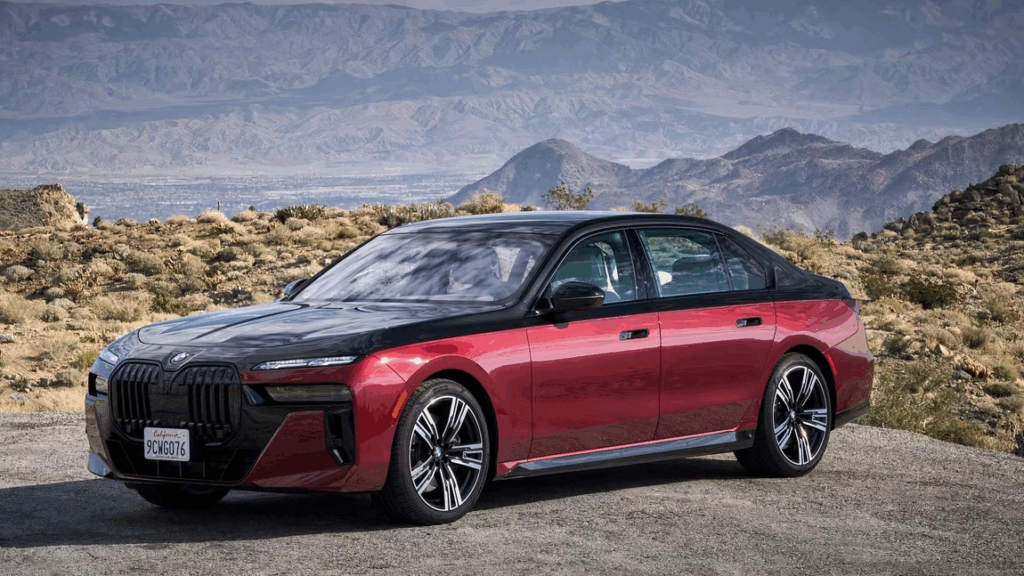
2026 BMW 7-Series Specifications
| Spec | 740i | 740i xDrive | 750e xDrive | 760i xDrive |
|---|---|---|---|---|
| Starting MSRP | $99,300 | $102,300 | $110,000 | $124,700 |
| Engine | 3.0L Turbo I6 + 48V Mild Hybrid | 3.0L Turbo I6 + 48V Mild Hybrid | 3.0L Turbo I6 + PHEV | 4.4L Twin-Turbo V8 + 48V Mild Hybrid |
| Horsepower | 375 hp | 375 hp | 483 hp | 536 hp |
| Torque | 398 lb-ft | 398 lb-ft | N/A | 553 lb-ft |
| 0-60 mph | 4.9 sec (est.) | 4.9 sec (est.) | N/A | 3.5 sec (tested) |
| EPA Combined MPG | 28 mpg | 27 mpg | N/A | 20 mpg |
| EV Range | — | — | ~34 miles | — |
| Trunk Space | 19 cu ft | 19 cu ft | 19 cu ft | 19 cu ft |
Data from Edmunds[2] and Car and Driver[1]
Pricing jumped $2,000 across the board for 2026 compared to last year[3]. The only meaningful changes? A digital key function now comes standard on all trims, and BMW discontinued its hands-free gesture control system—the feature that let you wave your hands to control certain functions[2]. Honestly, nobody will miss the gesture controls. They were more gimmick than utility.
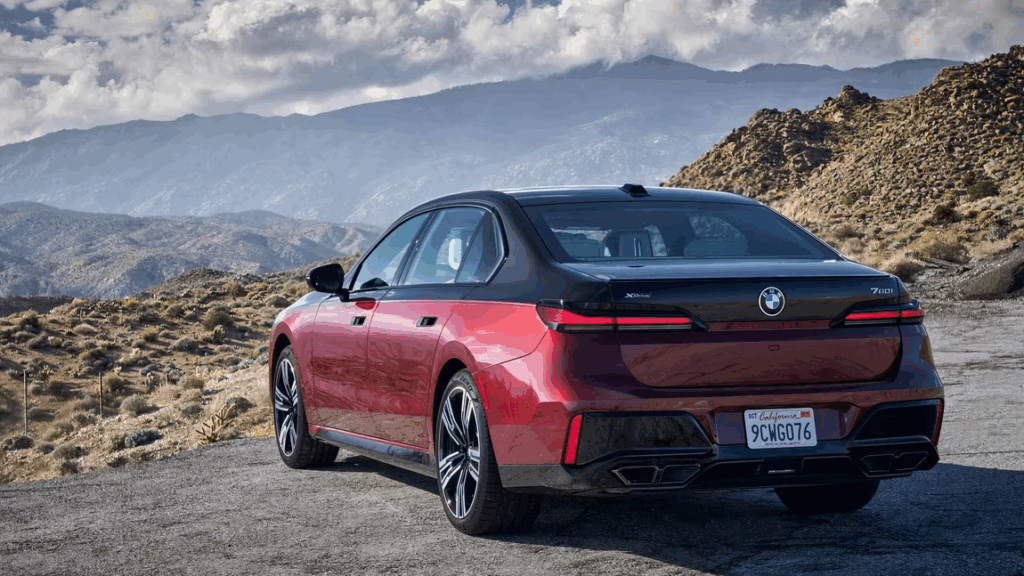
Design and Practicality
Four years into this generation, the split headlight design still sparks heated debates at every car meet. You either appreciate BMW’s bold direction or wish they’d stuck with tradition—there’s no lukewarm response.
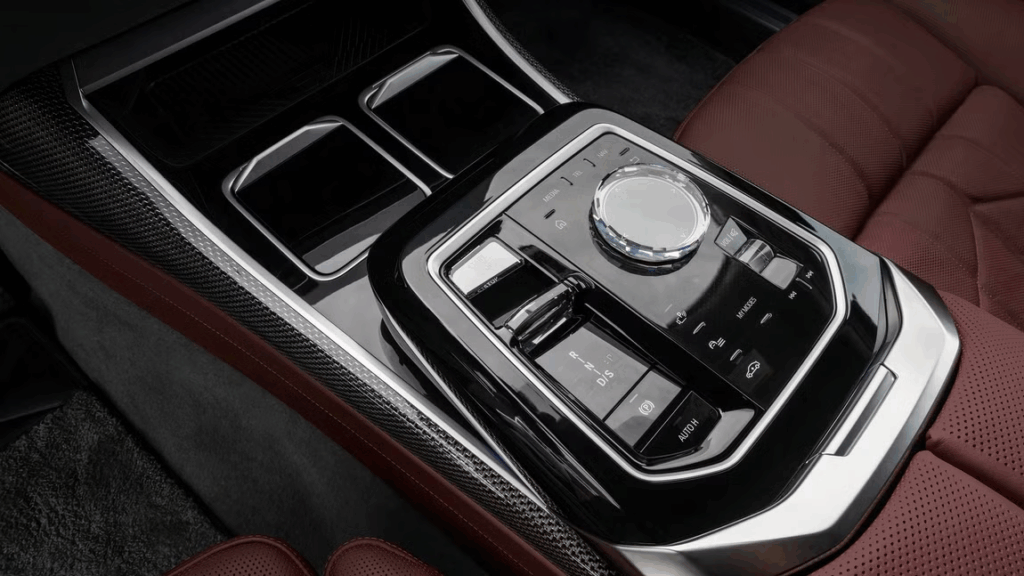
Inside is where opinions converge toward positive territory. Rich-smelling leathers, stainless steel accents, and optional fancy glass controls create a cabin that Car and Driver calls “posh” enough to challenge the Mercedes S-Class[1]. BMW Individual lets buyers choose from a nearly unlimited color palette—a personalization option few competitors match at this price[2]. You can even spec cashmere upholstery if leather feels too pedestrian for your taste.
The panoramic Sky Lounge LED roof deserves special mention. That massive glass panel surrounded by color-changing LEDs is “purely gratuitous,” as Edmunds puts it—but that’s exactly the point of a six-figure sedan[2]. It’s unnecessary in the best possible way.
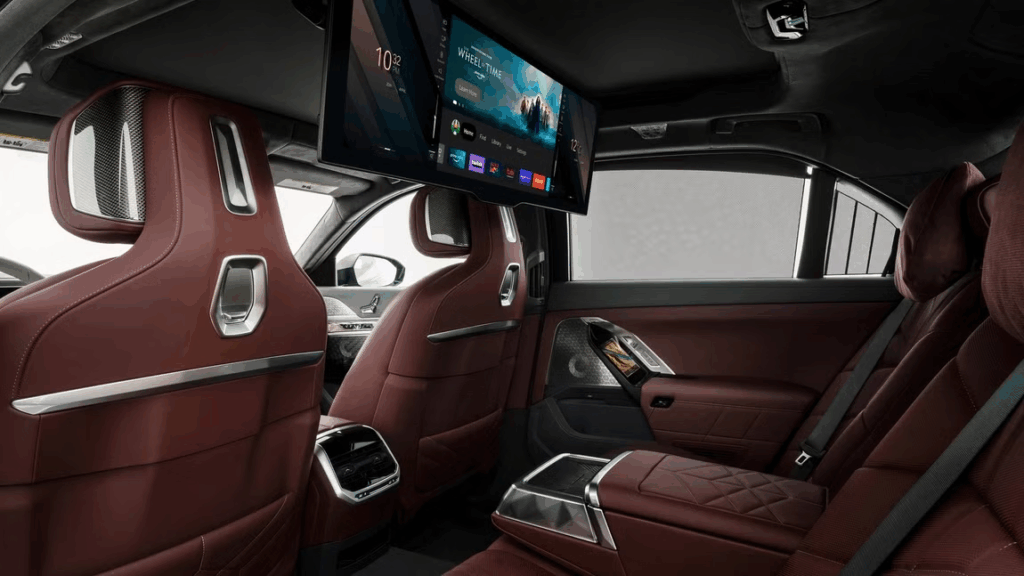
Here’s the thing about rear-seat space: you’ll never need more room than this. What transforms the 7-Series into genuine first-class territory is the Executive Lounge package ($7,250), which adds power-adjustable reclining seats with massage, footrests, and that wild 31.3-inch Theater Screen that drops from the ceiling[1]. During extended time in the backseat, streaming content on that 8K screen while reclined made traffic jams almost pleasant. The BMW i7 electric variant serves the chauffeur-driven experience even better, with its silent powertrain adding another layer of isolation.
Trunk space measures 19 cubic feet—enough for 6 carry-on suitcases in Car and Driver’s testing[1]. Competitive with the segment.
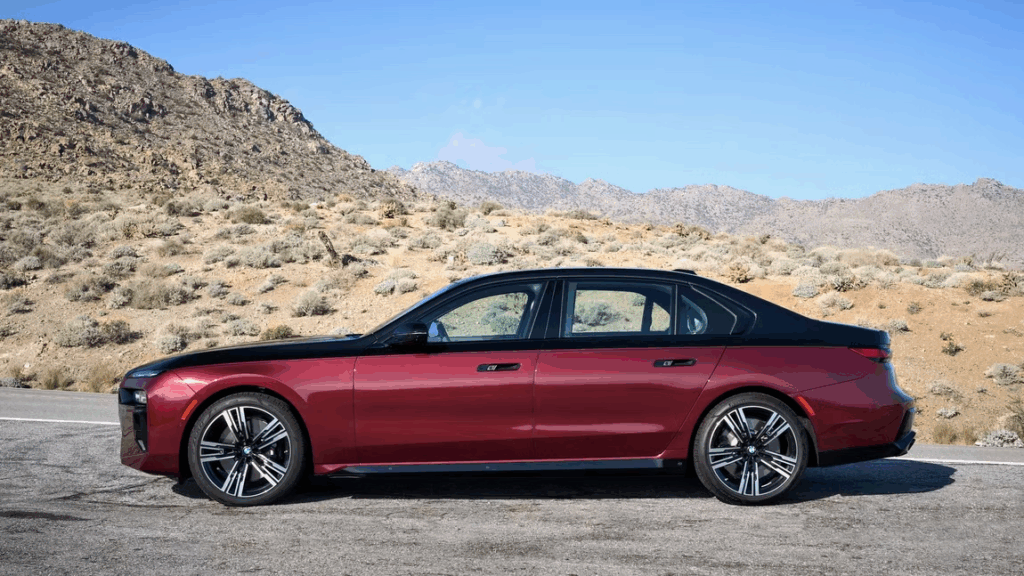
Performance and Driving Experience
Three powertrains. Different priorities. All smooth.
The 740i runs BMW’s turbocharged 3.0-liter inline-six making 375 hp and 398 lb-ft, assisted by a 48-volt mild hybrid system[1]. BMW estimates 4.9 seconds to 60 mph—quick enough that you’ll rarely feel underpowered. Edmunds calls this the best value in the lineup, and the fuel economy backs that up: 25 mpg city, 31 highway (28 combined) for rear-wheel drive models[2][3]. AWD barely impacts those numbers.
The 750e xDrive plug-in hybrid pairs the inline-six with an electric motor for 483 combined horsepower and an EPA-estimated 34 miles of all-electric range[1]. That’s solid for around-town errands, though it’s worth noting: the Mercedes S580e achieved 24 more miles of electric range in Car and Driver’s testing[1]. If maximum EV capability matters, the plug-in Mercedes has the edge.
Then there’s the 760i xDrive. The twin-turbocharged 4.4-liter V8 makes 536 hp and 553 lb-ft of torque. Car and Driver hit 60 mph in 3.5 seconds—faster than BMW’s own 4.2-second claim and 0.4 seconds quicker than the Mercedes S580[1]. On their 75-mph highway test, it returned 30 mpg, beating the EPA’s 26 mpg estimate[1]. What surprised me: despite the absurd power, the V8 doesn’t feel like a muscle car. It’s refined thrust delivered without drama—exactly what a flagship sedan should do.
Standard air suspension with adaptive dampers and rear-wheel steering makes this 5,300-pound sedan more agile than physics suggests[1]. The catch? Under hard acceleration, the suspension tilts back too far and sways until things rebalance[2]. Edmunds notes the 7 Series feels “just a step behind the smooth, isolating ride of the Mercedes S-Class or even the electric BMW i7”[2]. That’s not a devastating criticism, but if maximum comfort matters most, the competition holds slight advantages.
Steering? Car and Driver calls it “lifeless”[1]. Fair assessment. This is a car for being driven, not for driving enthusiasts. Accept that reality and you’ll be happy.
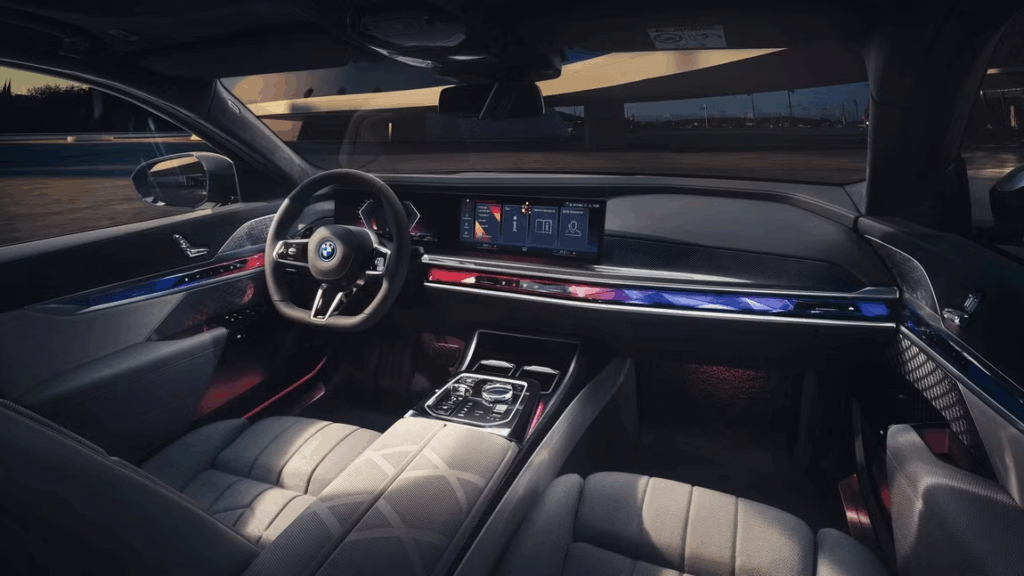
Technology and Features
This is where BMW went all-in. For better and worse.
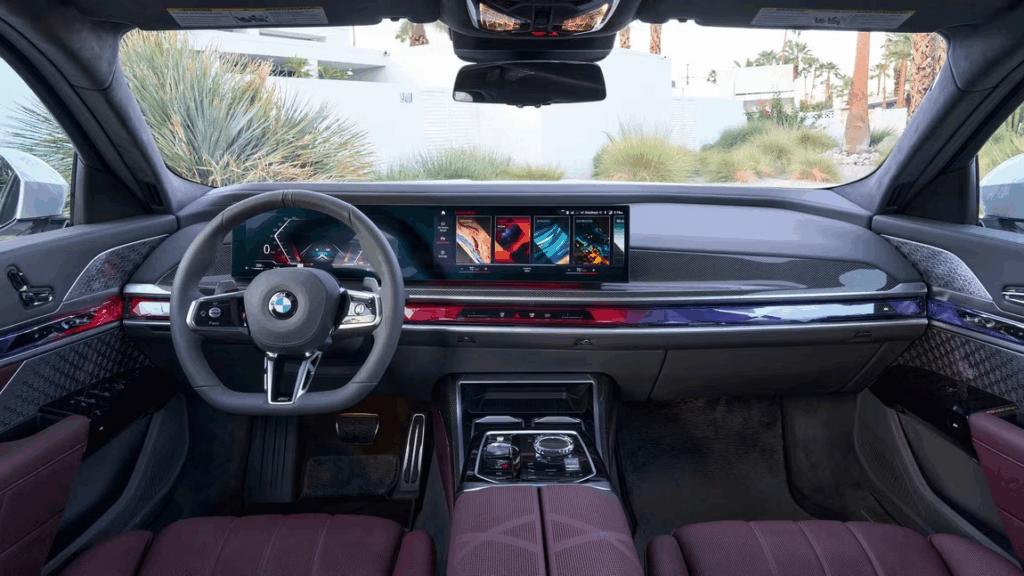
The 14.9-inch infotainment touchscreen runs iDrive 8.5 with crisp resolution and snappy responses[1]. Over-the-air updates mean the system improves without dealer visits. Wireless Apple CarPlay and Android Auto come standard—no subscription required.
But here’s the frustration many owners report: BMW eliminated most physical buttons[2]. Climate control, drive modes, and countless other functions live exclusively in the touchscreen. Some owners embrace the clean aesthetic. Others—like one reviewer who wrote “the technology was written by a techie who had no idea how to make a car for a driver”—find it maddening[2]. Owner reviews on Edmunds average 3.9 out of 5 stars, with tech interface complaints appearing frequently[2].
The optional Theater Screen ($7,250 bundled with Executive Lounge Seating) delivers 31.3 inches of 8K content via Amazon Fire TV and 5G connectivity[1]. Each rear door has its own small touchscreen controlling seat adjustments, heating, cooling, and massage functions[2]. There’s even an HDMI port for a game console. Fair warning though: when deployed, that massive screen obstructs rearward visibility[2]. The camera systems compensate, but some drivers find this unsettling.
Highway Assistant allows hands-free driving up to 85 mph on mapped highways[2]. Edmunds found it keeps the car well-centered while accelerating and braking smoothly. For long interstate slogs, this is genuinely useful technology—not a gimmick. The high-resolution surround-view camera system helps navigate tight spaces safely with this 212-inch behemoth[2].
Standard safety equipment includes automated emergency braking with pedestrian detection and lane-departure warning with lane-keeping assist[1]. Want the hands-free Highway Assistant? That requires the Driving Assistance Pro package ($2,100)[1]. Few advanced driver-assistance features come standard—a common Edmunds criticism[2].
Ownership Costs and Value
BMW includes three years or 36,000 miles of complimentary scheduled maintenance—a perk that Mercedes-Benz and Audi don’t match[1]. Given BMW’s typical maintenance costs, that’s meaningful savings. The Genesis G90 matches BMW’s free maintenance but adds longer warranty terms[1].
Warranty coverage runs four years or 50,000 miles for basic and powertrain—standard for German flagships, but Genesis and Lexus beat this easily.
Edmunds buying tips for January 2026 suggest the market price falls 3-4% below MSRP, saving $3,326-$4,275 depending on trim[2]. Military members and recent college grads qualify for an additional $1,000 discount. Special financing runs as low as 2.99% APR for 36-60 month terms[2].
The 750e xDrive plug-in hybrid typically sits longer on dealer lots (92+ days median), suggesting more negotiation room on that variant[2]. If you’re considering the PHEV, use that leverage.
Leasing the 740i runs approximately $1,359 monthly with $6,359 due at signing[2]. Used 7-Series pricing starts around $84,566 with limited nationwide inventory[2]. The BMW 5-Series delivers similar tech in a more affordable package if you don’t need flagship dimensions.
Pros and Cons
Strengths
- Engines deliver smooth, powerful acceleration across all three powertrains—the inline-six is genuinely quick while the V8 reaches 60 mph in a tested 3.5 seconds[1]
- Interior blends futuristic tech with high-quality materials, and the optional Theater Screen creates a first-class rear-seat experience unlike any competitor[1]
- Three-year complimentary maintenance saves real money versus Mercedes and Audi, which charge for scheduled service from day one[1]
- Hands-free Highway Assistant up to 85 mph makes long interstate drives genuinely less fatiguing when equipped with Driving Assistance Pro[2]
- BMW Individual paint program and cashmere upholstery options allow personalization that competitors simply can’t match at this price point[2]
Weaknesses
- Touchscreen-heavy interface eliminates most physical buttons, frustrating owners who prefer tactile controls for climate and common functions—a frequent complaint in reviews[2]
- Suspension tilts back noticeably under acceleration, creating a swaying motion that feels less composed than the Mercedes S-Class or even BMW’s own electric i7[2]
- Few advanced driver-assistance features come standard—you need the $2,100 Driving Assistance Pro package for Highway Assistant with hands-free capability[2]
- Car and Driver calls the steering “lifeless”—acceptable for chauffeur-driven duty but disappointing for drivers who expect BMW engagement[1]
- Pricing jumped $2,000 across the board for 2026, pushing the base 740i to $99,300 before options pile on[3]
Final Verdict
The 2026 BMW 7-Series makes the most sense when viewed as a tech showcase with wheels attached. That sounds like faint praise, but it’s not—few cars integrate this much technology this seamlessly into a genuinely luxurious package. The Theater Screen, the Sky Lounge roof, the hands-free highway driving: these aren’t gimmicks. They’re features that transform long drives into something almost enjoyable.
But this car demands you meet it on its terms. If touchscreens frustrate you, if “lifeless steering” sounds like a dealbreaker, or if ride quality matters more than gadgetry—alternatives exist. The Mercedes S-Class rides smoother. The Genesis G90 costs less and includes longer warranty coverage. The Audi A8 splits the difference with a more conservative design.
- Choose the 2026 BMW 7-Series if: You embrace touchscreen interfaces, want advanced hands-free highway driving, and appreciate bold design that announces your arrival from two blocks away.
- Consider the Mercedes-Benz S-Class if: Ride quality and sound isolation matter most, you prefer physical controls, or your chauffeur does the driving.
- Look at the Genesis G90 if: You want similar luxury at roughly $5,000-$6,000 less with longer warranty coverage and more conservative styling that won’t divide opinion.
FAQs
Is the 2026 BMW 7-Series reliable?
Owner reviews on Edmunds average 3.9 out of 5 stars, with most complaints centering on the steep tech learning curve rather than mechanical issues[2]. BMW’s three-year complimentary maintenance offsets service costs during warranty. The four-year/50,000-mile warranty matches segment standards but falls short of Genesis and Lexus offerings.
Which 2026 BMW 7-Series trim should I buy?
Edmunds recommends the 740i because it’s adequately powered, least expensive, and lets you customize extensively through BMW’s stand-alone options[2]. The turbocharged inline-six delivers 375 hp with 28 mpg combined—better efficiency than the V8’s 20 mpg while still reaching 60 mph in an estimated 4.9 seconds. Put your savings toward the Driving Assistance Pro package and Executive package.
How much does a fully-loaded 2026 BMW 760i xDrive cost?
A loaded 760i xDrive easily exceeds $150,000[1]. Key options include Rear Executive Lounge Seating with Theater Screen ($7,250), BMW Individual Composition ($5,450), Bowers & Wilkins sound system ($4,800), Executive package with automatic doors and crystal headlights ($3,700), Autobahn package ($3,600), and Luxury Rear Seating package ($3,000).
What’s new for the 2026 BMW 7-Series?
Changes are minimal. A digital key function now comes standard across all trims, allowing smartphone use as the vehicle key[2]. BMW discontinued the hands-free gesture control system—waving your hands to control certain features is no longer offered. BMW Blog reports a major 2027 refresh is coming, so the 2026 model carries over largely unchanged ahead of that update[3].
References
- Car and Driver. (2025). 2026 BMW 7-series Review, Pricing, and Specs. https://www.caranddriver.com/bmw/7-series
- Edmunds. (2026). 2026 BMW 7 Series Prices, Reviews, and Pictures. https://www.edmunds.com/bmw/7-series/2026/
- BMW Blog. (2025). 2026 BMW 7 Series Carries Over Before Major 2027 Refresh. https://www.bmwblog.com/2025/10/24/2026-bmw-7-series-review-specs-pricing/
- Kelley Blue Book. (2026). 2026 BMW 7 Series Price, Reviews, Pictures & More. https://www.kbb.com/bmw/7-series/

I am a senior automotive analyst at Autvex. Expert vehicle evaluations, in-depth reviews, and objective analysis helping readers make informed automotive decisions with years of industry experience.