You may also like:
The ChargePoint Home Flex remains the best overall EV charger for most owners due to its versatile amperage settings, excellent app, and proven reliability[1]. For budget-conscious buyers, the Emporia Smart Level 2 delivers comparable performance at roughly half the price[1]. Tesla owners benefit most from the Tesla Wall Connector, while those needing maximum durability should choose the Grizzl-E Classic[2].
EV Charger Comparison Overview
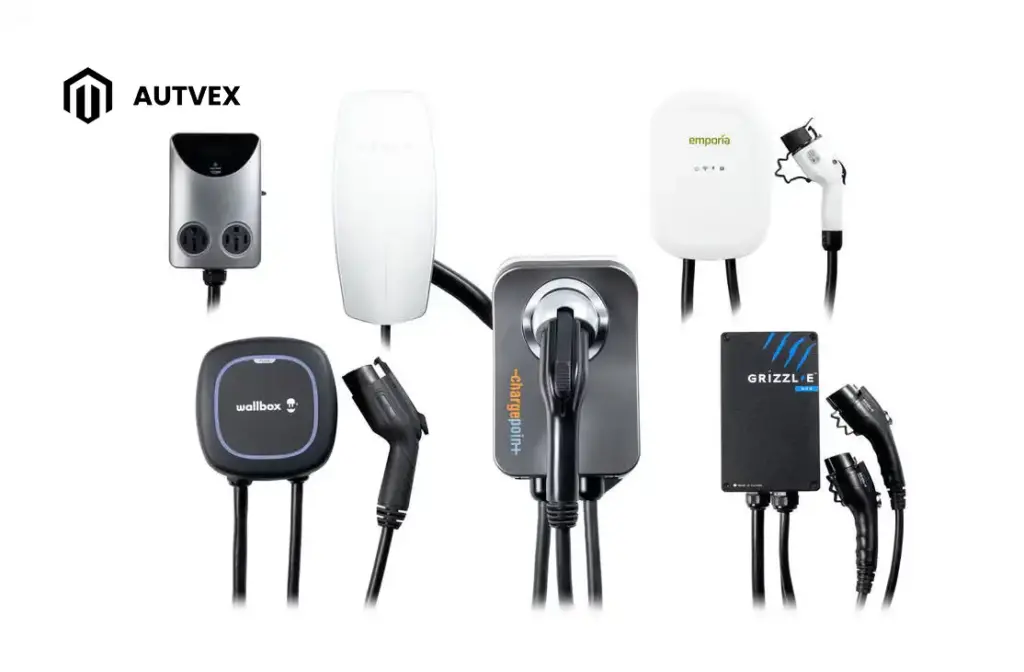
Home EV charging costs approximately one-third of public DC fast-charging rates, making a quality Level 2 charger essential for any EV owner[1]. The chargers below range from $300 to $700, with installation typically adding $200-$1,500 depending on electrical panel capacity[3].
| Charger | Max Output | Price Range | Best For | ChargerRater Score |
|---|---|---|---|---|
| ChargePoint Home Flex | 50A/12kW[1] | $549-$649 | Overall best | 86/100[4] |
| Emporia Pro | 48A/11.5kW | $399-$449 | Budget smart | 84/100[4] |
| Tesla Wall Connector | 48A/11.5kW[1] | $475-$595 | Tesla owners | Excellent |
| Grizzl-E Classic | 40A/9.6kW[2] | $399-$449 | Durability | Very Good |
| EVIQO Evipower Gen2 | 48A/11.5kW | $449-$549 | Best app | 88/100[5] |
| Autel MaxiCharger Lite | 50A/12kW[4] | $449-$549 | Smart features | 83/100[4] |
| JuiceBox 40 | 40A/9.6kW[1] | $549-$649 | Feature-rich | Good |
| Grizzl-E Ultimate 80 | 80A/19.2kW[6] | $599-$699 | Maximum speed | Excellent |
| Leviton EV48W | 48A/11.5kW | $499-$599 | Smart homes | Good |
| Lectron Portable | 32A/7.7kW | $299-$349 | Portability | Good |
For Audi EV owners, see our guide on Audi Electrify America free charging benefits that complement home charging.
Best Overall: ChargePoint Home Flex
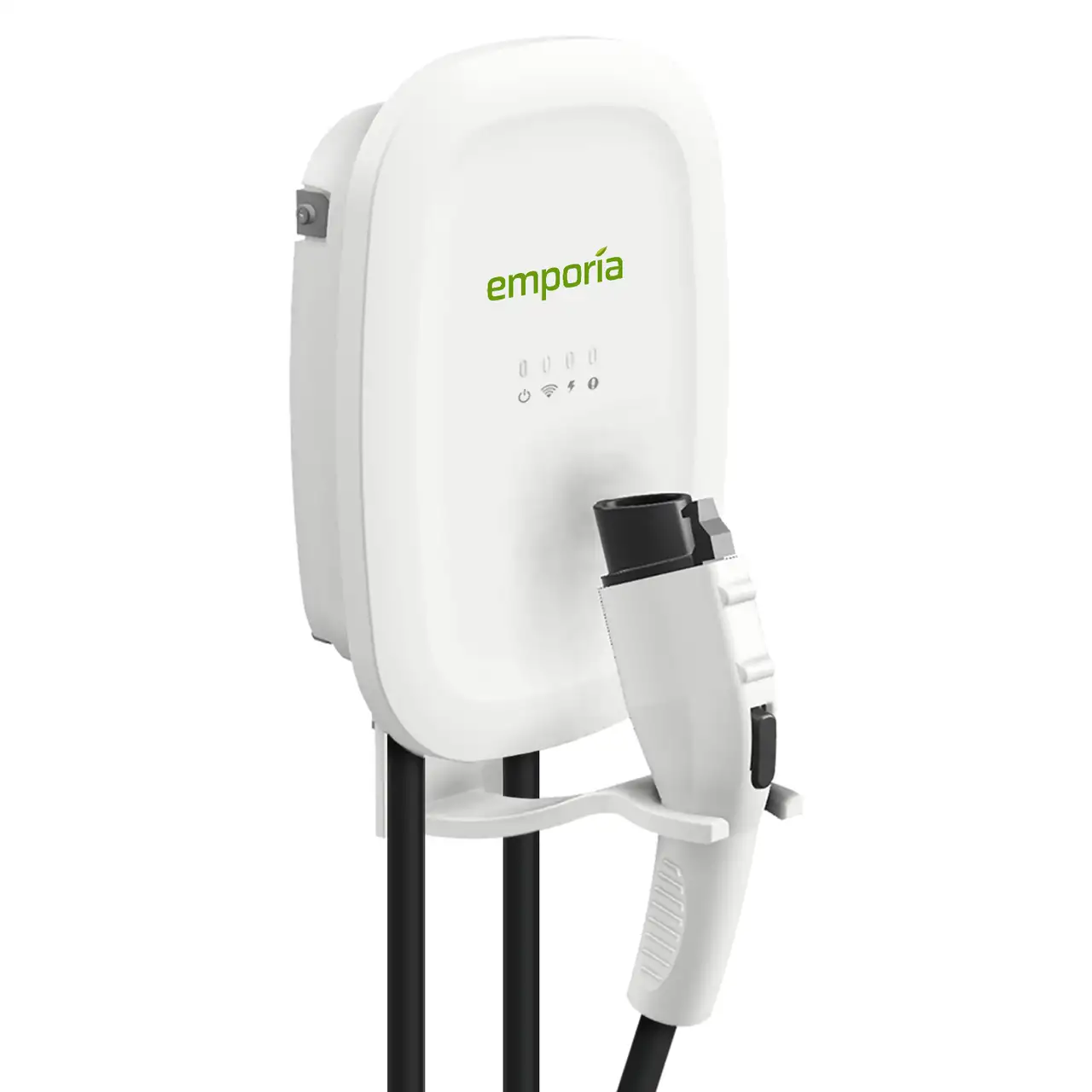
The ChargePoint Home Flex earned an 86/100 ChargerRater score through extensive testing and remains one of the top-selling home EV chargers since 2019[4]. Its adjustable output (16 to 50 amps) accommodates various electrical panel configurations while delivering up to 12kW of charging power[1].
Key specifications:
- Output: 50/48/40/32/24/16 amps (12.0/11.5/9.6/7.7/5.8/3.8 kW)
- Cord length: 23 feet
- Outdoor rating: NEMA 3R
- Price: $549-$649
The ChargePoint app provides the most user-friendly interface among tested chargers, with detailed cost tracking that calculates electricity costs to the penny using actual utility rate plans[1]. Built-in cord management eliminates the need for separate accessories.
Pros:
- Excellent app with detailed cost tracking
- Adjustable amperage for various electrical setups
- Built-in cord wrap
- Integrates with ChargePoint public network
Cons:
- Higher price than budget alternatives
- App features can feel overwhelming
Best Budget: Emporia Smart Level 2
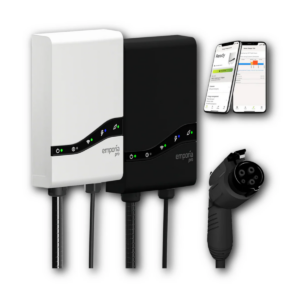
The Emporia charger scored 84/100 on the ChargerRater scale, tying it among the highest scores ever recorded despite costing hundreds of dollars less than premium alternatives[4]. The 11.5kW output capability matches or exceeds more expensive units.
Key specifications:
- Output: 48-6 amps (11.5-1.4 kW)
- Cord length: 24 feet
- Outdoor rating: NEMA 4
- Price: $399-$449
Emporia offers smart features including Wi-Fi connectivity, detailed electricity pricing using actual utility plans, and scheduling capabilities[1]. The comprehensive Emporia ecosystem tracks whole-home electricity usage, though some users find navigating these additional features unnecessarily complicated[1].
Pros:
- Excellent value for features offered
- High output capability (11.5kW)
- Detailed energy tracking
- NEMA 4 outdoor rating
Cons:
- App navigation can be confusing
- Emporia ecosystem may feel bloated for EV-only users
Best for Tesla: Tesla Wall Connector
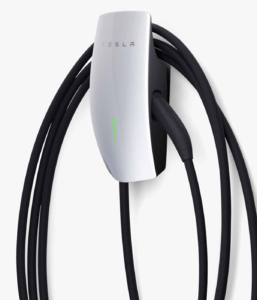
Tesla’s Wall Connector provides seamless integration with Tesla vehicles while also supporting non-Tesla EVs through the J1772 connector option[1]. The Universal Wall Connector includes a built-in adapter to switch between NACS (Tesla) and J1772 plug types.
Key specifications:
- Output: 48/40/32/24/16/12 amps (11.5/9.6/7.7/5.8/3.8/2.9 kW)
- Cord length: 24 feet
- Outdoor rating: NEMA 3R
- Price: $475-$595
The Wall Connector features the most visually appealing design with a sleek shape and glass-like finish[1]. Setup is straightforward—scan the QR code to connect to Wi-Fi and control output through a web interface. Tesla owners can monitor charging through the Tesla app.
Pros:
- Sleek, attractive design
- Seamless Tesla integration
- Simple setup process
- Flexible, easy-to-manage cables
Cons:
- Limited monitoring for non-Tesla EVs
- Thin cables raise durability questions[1]
For buyers considering Tesla compatibility with other networks, see whether non-Tesla EVs can use Superchargers and BMW Tesla Supercharger compatibility.
Best for Durability: Grizzl-E Classic
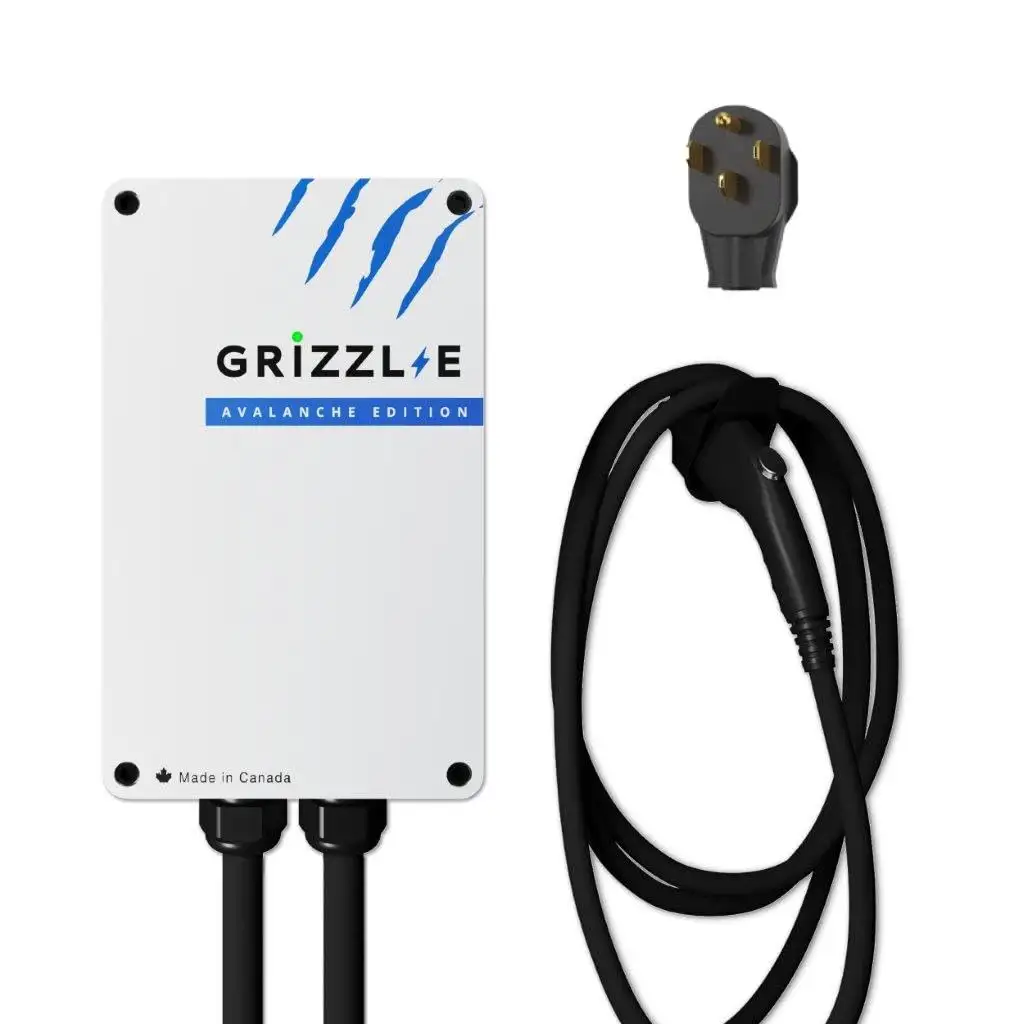
The Grizzl-E Classic earned its reputation as a rugged, no-frills charger built to withstand extreme conditions[2]. If reliability without smart features is your priority, this Canadian-designed unit delivers exceptional value.
Key specifications:
- Output: 40 amps (9.6kW)
- Cord length: 24 feet
- Outdoor rating: NEMA 4X/IP67
- Price: $399-$449
Forum owners consistently recommend the Grizzl-E for outdoor installations, noting that units installed for over two years continue performing flawlessly[2]. The NEMA 4X rating exceeds most competitors for weather resistance.
Pros:
- Exceptional build quality
- Excellent weather resistance
- Reliable with no smart dependencies
- Competitive pricing
Cons:
- No smart features or app
- 40A maximum limits charging speed slightly
Best App Experience: EVIQO Evipower Gen2
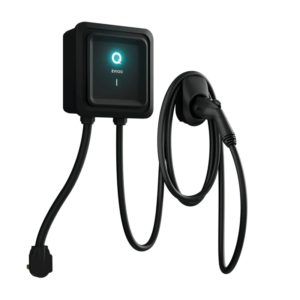
The EVIQO Evipower Gen2 scored the highest ChargerRater rating at 88/100, with particular praise for its excellent charging cable and outstanding cold-weather performance[5].
Key specifications:
- Output: 48 amps (11.5kW)
- Cord length: 25 feet
- Outdoor rating: NEMA 4
- Price: $449-$549
The charging connector features a solid, heavy build with a metal locking tab and rubberized grip[5]. Cable management through the included holster is notably well-designed.
Pros:
- Highest ChargerRater score (88/100)
- Excellent cable and connector quality
- Strong cold-weather performance
- Premium feel throughout
Cons:
- App could use additional features
- No dynamic load management[5]
Maximum Speed: Grizzl-E Ultimate 80
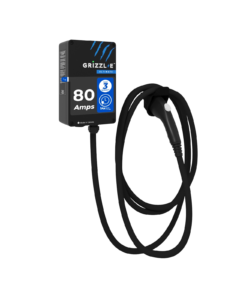
For owners with large battery EVs or high daily driving needs, the Grizzl-E Ultimate 80 delivers the fastest residential charging available at 80 amps/19.2kW[6]. This adds 60-75 miles of range per hour—nearly double standard 40-amp chargers[6].
Key specifications:
- Output: 80 amps (19.2kW)
- Cord length: 24 feet
- Outdoor rating: NEMA 4X
- Price: $599-$699
Installation requires a 100-amp dedicated circuit, which may necessitate electrical panel upgrades costing $1,500-$3,000 additional[6]. However, for high-mileage drivers with compatible EVs, the investment provides future-proofing as battery sizes increase.
Pros:
- Fastest residential charging speed
- Future-proof for larger battery EVs
- Same Grizzl-E durability
- Ideal for 80+ kWh batteries
Cons:
- Requires 100A circuit installation
- Higher electrical upgrade costs
- Overkill for typical daily driving
Smart Home Integration: Autel MaxiCharger Lite
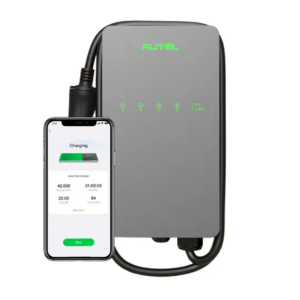
The Autel MaxiCharger Lite 50-amp earned an 83/100 ChargerRater score with its combination of smart features, safety certification, and Energy Star rating[4].
Key specifications:
- Output: 50 amps (12kW)
- Cord length: 25 feet
- Outdoor rating: NEMA 4
- Price: $449-$549
Wi-Fi-connected smart features include scheduling, energy monitoring, and load management. The 3-year warranty provides additional peace of mind[4].
Pros:
- Energy Star rated
- Comprehensive smart features
- 3-year warranty
- NEMA 4 enclosure
Cons:
- App learning curve
- Premium pricing for features
Feature-Rich Option: JuiceBox 40
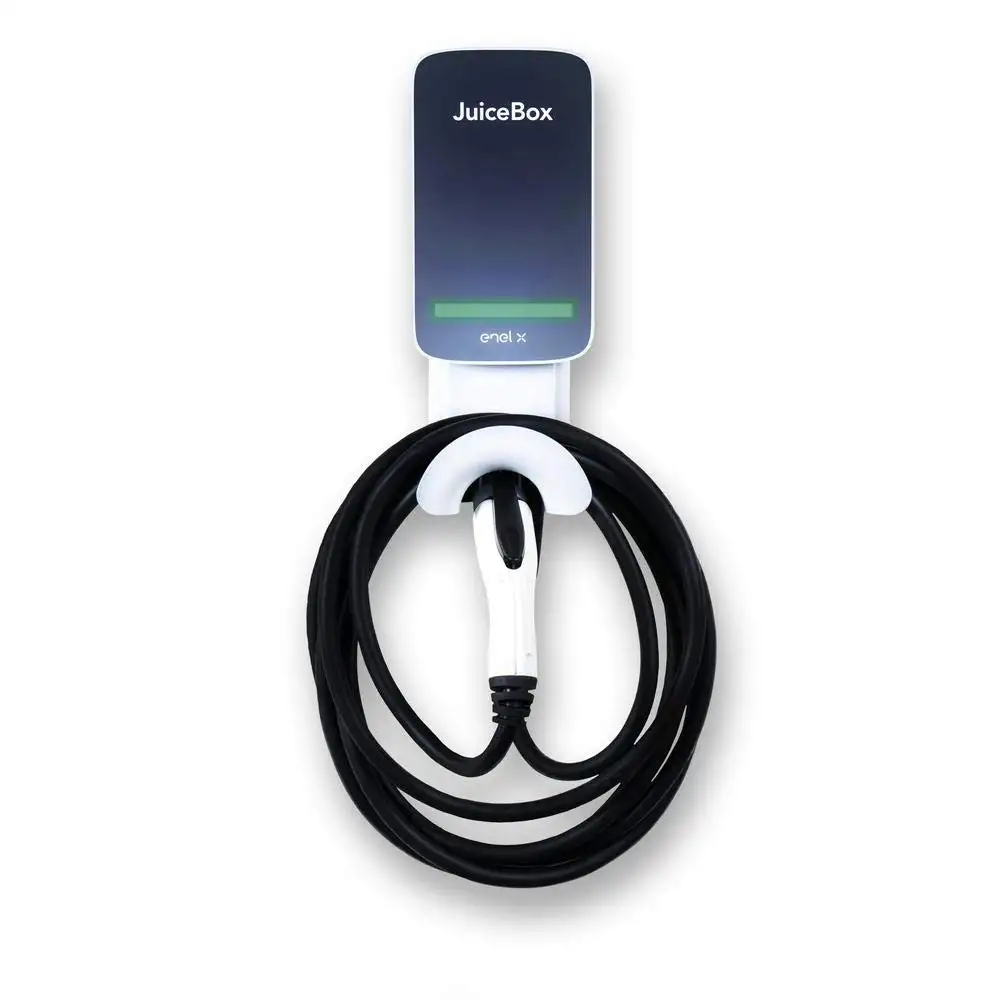
The JuiceBox offers one of the most feature-rich Wi-Fi-enabled Level 2 chargers available, with detailed energy tracking and customizable notifications[1].
Key specifications:
- Output: 40/32/24/16/12/6 amps (9.6/7.7/5.8/3.8/2.9/1.4 kW)
- Cord length: 25 feet
- Outdoor rating: NEMA 4X/IP66
- Price: $549-$649
Available in 32-amp, 40-amp, and 48-amp versions, the JuiceBox scales to different needs and budgets[1]. The app redesign, however, has made navigation less intuitive than previous versions[1].
Pros:
- Comprehensive app features
- Multiple output options available
- Excellent NEMA 4X/IP66 rating
- Customizable notifications
Cons:
- App redesign reduced intuitiveness
- 48-amp version premium-priced
Smart Home Integration: Leviton EV48W
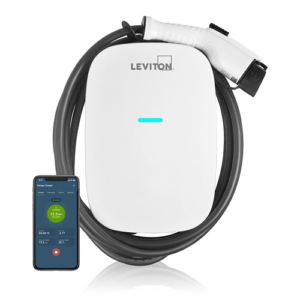
The Leviton EV48W integrates seamlessly with smart home ecosystems including Amazon Alexa, Google Home, and Apple HomeKit[3]. This makes it an excellent choice for homeowners already invested in connected home technology.
Key specifications:
- Output: 48 amps (11.5kW)
- Cord length: 18 feet
- Outdoor rating: NEMA 3R
- Price: $499-$599
Leviton’s My Leviton app provides scheduling, energy monitoring, and usage history. The company’s long history in electrical equipment manufacturing (over 100 years) provides additional confidence in build quality and support[3].
Pros:
- Excellent smart home integration (Alexa, Google, HomeKit)
- Established electrical equipment manufacturer
- Clean, professional design
- Reliable app performance
Cons:
- Shorter 18-foot cord than competitors
- NEMA 3R rating less robust than NEMA 4 alternatives
- Premium pricing for brand name
Best Portable: Lectron V-Box Pro
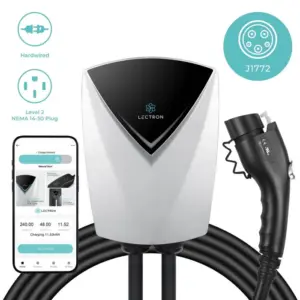
For EV owners who rent, travel frequently, or need charging flexibility across multiple locations, the Lectron V-Box Pro delivers Level 2 charging in a portable package[4].
Key specifications:
- Output: 32 amps (7.7kW)
- Cord length: 21 feet
- Outdoor rating: IP65
- Price: $299-$349
The portable design plugs into standard NEMA 14-50 outlets commonly found at RV parks, making it ideal for road trips. Adjustable amperage (16/24/32A) allows use with various outlet types when paired with appropriate adapters[4].
Pros:
- Portable for renters and travelers
- Works with RV park outlets (NEMA 14-50)
- Adjustable amperage settings
- Budget-friendly price point
Cons:
- Lower maximum output than wall-mounted units
- No smart features or app connectivity
- Requires carrying and storing when traveling
Installation Considerations
Electrical Requirements
Most Level 2 chargers require a 240-volt circuit with 40-50 amp capacity[3]. Before purchasing:
- Check your electrical panel’s main breaker amperage (150A or 200A service typically has capacity)
- Consult an electrician to verify available capacity
- Budget $200-$500 for simple installations with existing capacity
- Budget $1,500-$3,000 if panel upgrades are needed[6]
Hardwired vs. Plug-In
Hardwired installations provide a permanent, clean connection and are required for some higher-amperage units. Plug-in installations (NEMA 14-50 outlets) offer flexibility to disconnect and relocate the charger.
Outdoor Ratings Explained
- NEMA 3R: Protected against rain and ice
- NEMA 4: Protected against hose-directed water
- NEMA 4X: NEMA 4 plus corrosion resistance
- IP66/IP67: Dust-tight, protected against water jets/immersion
For outdoor installations, prioritize NEMA 4 or higher ratings[2].
Key Takeaways
- The ChargePoint Home Flex offers the best overall balance of features, reliability, and app experience[1]
- The Emporia Smart Level 2 provides excellent value at roughly half the price of premium options[4]
- Grizzl-E chargers excel for durability and outdoor installations with industry-leading weather ratings[2]
- Most owners need only a 40-48 amp charger; 80-amp units are for high-mileage drivers with large battery EVs[6]
- Always consult an electrician before purchasing to verify your home’s electrical capacity
Frequently Asked Questions
What amperage EV charger do I need?
A 40-amp charger provides 30-35 miles of range per hour, while a 48-amp charger delivers 35-42 miles per hour[7]. For most drivers, a 40-amp unit fully charges overnight. The practical difference between 40A and 48A is approximately 6 miles of range per hour—typically only one hour difference for a 0-100% charge[7].
Can I install an EV charger myself?
While some DIY-capable homeowners can install plug-in chargers using existing 240V outlets, most installations require a licensed electrician to ensure code compliance and safety. Hardwired installations always require professional installation. Many areas require permits for new electrical circuits.
How much does EV charger installation cost?
Installation costs range from $200-$500 for simple setups with existing electrical capacity to $1,500-$3,000 when panel upgrades are needed[6]. Many utility companies and states offer rebates that offset installation costs. Check the Database of State Incentives for Renewables and Efficiency (DSIRE) for local programs.
Which EV charger is best for outdoor use?
The Grizzl-E Classic and Grizzl-E Ultimate offer NEMA 4X/IP67 ratings, providing the best weather protection for outdoor installations[2]. The Emporia and JuiceBox also carry strong outdoor ratings (NEMA 4/IP66) suitable for most climates.
References
- Car and Driver. (2025). Tested: Best Home EV Chargers for 2025. https://www.caranddriver.com/shopping-advice/a39917614/best-home-ev-chargers-tested/
- Reddit r/electricvehicles. (2022). Any compelling reasons to choose a ChargePoint home charger over a Grizzl-E?
Any compelling reasons to choose a ChargePoint home charger over a Grizzl-E?
by inelectricvehicles - Consumer Reports. (2025). How to Find the Best Home EV Charger. https://www.consumerreports.org/cars/hybrids-evs/how-to-choose-the-best-home-wall-charger-for-your-electric-vehicle-a6908889697/
- EV Charging Stations. (2024). The Best EV Chargers Of 2024. https://evchargingstations.com/best-ev-chargers-of-2024/
- EV Charging Stations. (2025). These Are The Best Home EV Charging Stations Of 2025. https://evchargingstations.com/chargingnews/best-home-ev-charging-stations-of-2025/
- Motorwatt. (2025). Fastest EV Home Charger 2025: Charge 14x Faster at Home. https://motorwatt.com/ev-blog/howtos/choose-the-fastest-ev-home-charger
- Reddit r/evcharging. (2024). Outdoor Charger Recs (ChargePoint Flex vs. Grizzl-E Smart vs. Autel).
Outdoor Charger Recs (ChargePoint Flex vs. Grizzl-E Smart vs. Autel)
byu/nimrod044 inevcharging

I am a senior automotive analyst at Autvex. Expert vehicle evaluations, in-depth reviews, and objective analysis helping readers make informed automotive decisions with years of industry experience.