You may also like:
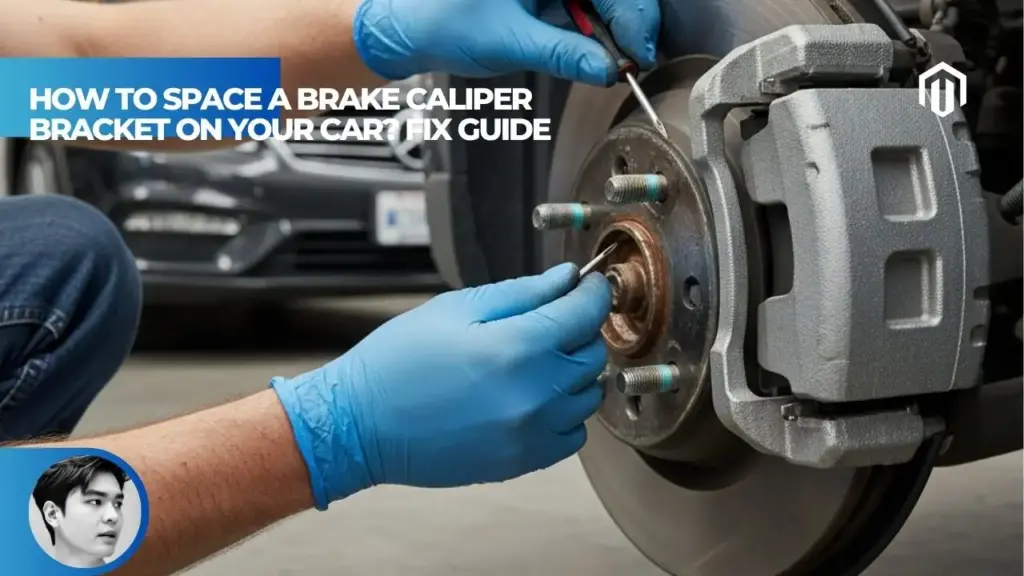
Spacing a brake caliper bracket positions your caliper at the correct distance from the rotor, ensuring proper pad-to-rotor contact[1]. You’ll need this when upgrading to larger rotors, installing a big brake kit, or compensating for a mismatch between your caliper and rotor size[2]. The process involves selecting the correct spacer or adapter bracket, test-fitting for rotor centering, and torquing the mounting bolts to manufacturer specifications—typically 85–100 ft-lbs for most vehicles[3].
Why Caliper Bracket Spacing Matters
The caliper bracket does more than just hold your brake caliper in place. It positions the entire assembly at a precise distance from the hub, determining where the brake pads contact the rotor surface[4].
When you upgrade to larger rotors—say, jumping from 286mm to 316mm discs—the caliper needs to sit farther from the hub to accommodate the increased rotor radius[2]. Without proper spacing, the pads would contact the rotor too close to the center, reducing braking leverage and potentially missing the rotor’s swept area entirely.
Here’s the physics: a larger rotor gives your brake pads more leverage, which is why the same caliper can generate significantly more stopping power when paired with a bigger disc[5]. But that only works if the caliper sits at the correct radial position. Get it wrong, and you’ll have uneven pad wear, reduced braking performance, or pads that barely touch the rotor at all.
Spacing also affects rotor centering within the caliper. The rotor should sit dead-center between the inner and outer brake pads, with equal clearance on both sides[3]. Improper spacing causes the rotor to sit off-center, leading to noise, pulsation, and accelerated wear on one pad while the other barely engages.
When You Need Caliper Bracket Spacers
Not every brake job requires spacers. Here’s when they become necessary[1]:
| Scenario | Why Spacing Is Needed |
|---|---|
| Larger rotor upgrade | Caliper must move outward to match new rotor diameter |
| Big brake kit installation | Aftermarket brackets position larger calipers correctly |
| Caliper swap from another vehicle | Different mounting dimensions require adaptation |
| Correcting rotor centering issues | Fine-tuning pad-to-rotor clearance |
The most common DIY scenario involves upgrading rotors while keeping your existing calipers[5]. For example, BMW owners sometimes install M-Sport or M-Performance rotors on standard brake setups—this requires a bracket that places the caliper farther from the hub to match the larger rotor radius[5].
Big brake kits typically include custom brackets sized specifically for the included rotors and calipers[2]. Some kits, like those from BNE Shop for Volvo 240s, even offer multiple bracket options (286mm, 302mm, 316mm) so owners can swap rotor sizes seasonally without touching the calipers[2].
Tools and Parts You’ll Need
Before starting, gather these items[3][4]:
Tools:
- Floor jack and jack stands (or lift)
- Lug wrench or impact gun
- Socket set (metric and SAE)
- Torque wrench (capable of 100+ ft-lbs)
- Breaker bar (for stuck bolts)
- Wire brush for cleaning threads
- Caliper hanger or bungee cord
- Feeler gauge or ruler for measuring clearances
Parts:
- Caliper bracket spacers or adapter brackets (vehicle-specific)
- New mounting bolts (often included with spacer kits)
- Thread locker (medium-strength, like Loctite 242)
- Brake cleaner
- High-temperature brake grease
A quick note on bolts: caliper bracket mounting bolts are torque-to-yield on many vehicles, meaning they stretch during installation and shouldn’t be reused[4]. Check your vehicle’s service manual or kit instructions. If new bolts aren’t included, order OEM replacements.
Step-by-Step Installation Process
This process assumes you’ve already removed the wheel and have access to the brake assembly[3][4].
Step 1: Remove the Caliper and Bracket
Start by removing the caliper from the bracket. On most vehicles, this involves unbolting the two guide pin bolts (also called slider bolts) that secure the caliper body to the bracket[4]. Use a caliper hanger or bungee cord to suspend the caliper from the strut spring—never let it hang by the brake hose.
Next, remove the bracket itself. The bracket mounts directly to the steering knuckle or spindle with two large bolts, typically 15mm–19mm[4]. These bolts are torqued heavily and may require a breaker bar. If they’re seized, penetrating oil and patience work better than brute force.
Step 2: Clean and Inspect
With the bracket removed, clean the knuckle mounting surface with a wire brush[4]. Corrosion or debris here prevents the bracket from seating flush, which throws off your spacing.
Inspect the bracket itself. Look for cracks, corrosion in the slide pin bores, and worn mounting holes[4]. If you’re reusing the original bracket with spacers (rather than installing a new bracket), it needs to be in good condition. A corroded bracket with damaged slide pin bores should be replaced entirely—not spaced.
Step 3: Install Spacers or Adapter Bracket
This is where the actual spacing happens. The method depends on your setup[1]:
- Using spacer shims: Shims sit between the knuckle and the original bracket, pushing the bracket (and caliper) outward[1]. Stack them as needed—common increments are 5mm, 10mm, or 20mm. The spacer’s bolt holes must align perfectly with both the knuckle and bracket.
- Using an adapter bracket: Adapter brackets replace your original bracket entirely[2]. They’re machined to position the caliper at the correct distance for a specific rotor size. This is the cleaner solution and what most big brake kits use.
- Using a reversible bracket: Some aftermarket brackets work with multiple rotor sizes depending on orientation[2]. Flip them one way for 302mm rotors, flip them the other way for 316mm rotors.
Install the spacer or new bracket onto the knuckle first, then hand-thread the mounting bolts. Don’t fully tighten yet—you’ll need to verify rotor centering before final torque.
Step 4: Install the Rotor and Check Centering
Mount your new rotor on the hub. The rotor should sit centered within the caliper’s pad opening[3].
Here’s how to check: reinstall the caliper bracket (with spacer) and temporarily mount the caliper. Look at the gap between the rotor and each brake pad (or the pad mounting surfaces if pads are removed). The gaps should be equal on both sides—typically 1–3mm per side depending on the caliper design[3].
If the rotor sits off-center, you need different spacing. More spacer thickness pushes the caliper outward; less brings it inward. Some setups allow fine-tuning in 0.5mm or 1mm increments[3].
And here’s a tip I learned the hard way: measure twice. Eyeballing rotor centering isn’t reliable. Use a feeler gauge or ruler to measure the actual gap on each side. A difference of just 1mm is visible if you look closely, and that small offset compounds into uneven pad wear over thousands of miles.
Step 5: Final Torque and Assembly
Once centering is confirmed, remove the caliper and finish the bracket installation[4].
Apply medium-strength thread locker to the bracket mounting bolts. Torque them to manufacturer specification—this varies by vehicle, but 85–100 ft-lbs is common for caliper bracket bolts[3]. Use a star pattern if there are more than two bolts.
Reinstall the brake pads into the bracket, ensuring any anti-rattle clips are properly seated[3]. Then slide the caliper back over the pads and torque the guide pin bolts to spec (typically 25–35 ft-lbs).
Spin the rotor by hand. It should rotate freely with minimal drag. If you hear scraping or feel resistance, something’s misaligned—stop and recheck your work before driving.
Common Mistakes to Avoid
Even experienced DIYers make these errors[4][5]:
- Wrong spacer thickness. Just because a spacer physically fits doesn’t mean it’s the correct size. Using too much spacing moves the caliper too far outward, causing the pads to contact the rotor’s outer edge. Too little spacing does the opposite. Always verify with the rotor size you’re actually installing.
- Reusing stretched bolts. Caliper bracket bolts are high-torque fasteners. On many vehicles, they’re designed to stretch during installation and lose clamping force if reused[4]. Cheap insurance: just replace them.
- Skipping thread locker. These bolts hold your brakes to the car. Vibration can loosen them over time. Medium-strength thread locker prevents this without making future removal impossible[4].
- Ignoring wheel clearance. Larger rotors and relocated calipers may not clear your existing wheels[2]. Always test-fit the wheel before driving. Some setups require wheel spacers or larger-diameter wheels to clear the new brake components.
- Forgetting to bleed. If you disconnected the brake line during this process, you’ve introduced air into the system. Bleed the brakes before driving. Even if you didn’t disconnect the line, it’s worth checking pedal feel—a soft pedal means air got in somewhere. If you need to troubleshoot a related issue, our guide on why a car makes noise when turning covers brake-related sounds.
Spacer Sizing Reference
Spacer thickness depends on the rotor size difference. Here’s a general reference for common upgrades[1][2]:
| Rotor Size Increase | Typical Spacer Needed |
|---|---|
| +10mm diameter | ~5mm spacer |
| +20mm diameter | ~10mm spacer |
| +30mm diameter | ~15mm spacer |
| +40mm diameter | ~20mm spacer |
These are approximations. Actual spacing requirements depend on your vehicle’s specific geometry, caliper design, and the rotor’s mounting offset. Always refer to the spacer or bracket manufacturer’s specifications for your exact application[2].
Big brake kit manufacturers calculate this for you. If you’re buying a kit from a reputable company, they’ve already matched the brackets to the included rotors and calipers. DIY spacer setups using mix-and-match parts require more careful measurement.
Key Takeaways
- Caliper bracket spacers position your caliper at the correct distance from the hub, which is essential when upgrading to larger rotors or installing big brake kits—without proper spacing, brake pads contact the wrong part of the rotor[1][2].
- Always verify rotor centering by measuring the gap between the rotor and each brake pad surface; unequal gaps indicate incorrect spacing that causes uneven wear and reduced braking performance[3].
- Caliper bracket mounting bolts typically require 85–100 ft-lbs of torque with medium-strength thread locker—these are safety-critical fasteners that should be replaced if they’re torque-to-yield design[3][4].
- Spacer thickness correlates roughly to half the rotor diameter increase (e.g., 20mm larger rotor needs approximately 10mm spacer), but always verify with manufacturer specifications for your specific application[1][2].
- Test wheel clearance after installation—larger rotors and repositioned calipers may not fit behind your existing wheels, requiring wheel spacers or larger-diameter wheels to clear[2].
FAQs
Can I upgrade rotors without changing the caliper bracket?
It depends on how much larger the new rotors are[5]. Minor increases (5–10mm diameter) sometimes work with existing brackets if there’s enough adjustment range in the caliper mounting. Larger upgrades almost always require new brackets or spacers. Installing bigger rotors without proper spacing results in the pads contacting the wrong part of the rotor—or missing it entirely—which destroys braking performance and causes dangerous uneven wear.
How do I know if my caliper is centered on the rotor?
Measure the gap between the rotor and each brake pad mounting surface using a feeler gauge or ruler[3]. The gaps should be equal on the inboard and outboard sides—typically 1–3mm each depending on caliper design. Visual inspection works for gross misalignment, but precise centering requires actual measurement. If your vehicle has been making unusual noises during turns, off-center rotors could be contributing.
Do caliper bracket spacers affect braking performance?
When installed correctly, spacers improve performance by enabling larger rotor use[2]. A larger rotor gives brake pads more leverage, increasing stopping power without changing the caliper. That said, poorly installed spacers—wrong thickness, improper torque, or inadequate thread engagement—compromise safety. Always ensure mounting bolts have at least 9–13mm of thread engagement when using spacers with post-mount calipers[1].
How much do caliper bracket spacers cost?
Prices range from $20–$50 for simple shim kits to $100–$250 for vehicle-specific adapter brackets[4]. Big brake kits that include custom brackets typically cost $500–$2,000+ depending on caliper quality and rotor size. For budget upgrades using spacers with existing calipers, expect to spend $50–$150 for quality spacers, hardware, and larger rotors.
References
- SRAM. (2024). Disc Brake Caliper Mounting Specifications. https://www.sram.com/globalassets/document-hierarchy/frame-fit-specifications/aftermarket/disc-brake-caliper-mounting-specifications
- BNE Shop. (2021). 240 Medium Brake Upgrade Brembo Caliper Brackets. 240 Medium Brake Upgrade Brembo Caliper Brackets
- Brake Parts Inc. (2018). Typical Caliper Installation Instructions. https://www.brakepartsinc.com/dam/image-catalog/INSCaliperTypical.pdf
- CarParts.com. (2024). Caliper Bracket FAQs: Straight Answers. https://www.carparts.com/blog/caliper-bracket-faqs-straight-answers/
- BimmerPost. (2011). Bigger Rotors with Stock Calipers Discussion. https://f30.bimmerpost.com/forums/showthread.php?t=1417811

I am a senior automotive analyst at Autvex. Expert vehicle evaluations, in-depth reviews, and objective analysis helping readers make informed automotive decisions with years of industry experience.