
You may also like:
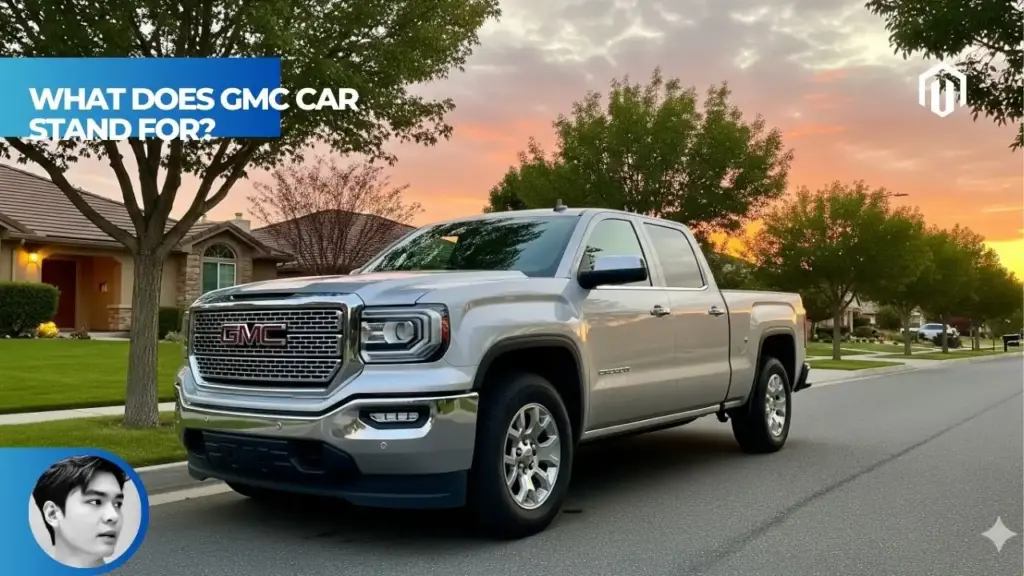
GMC stands for General Motors Truck Company. It’s a division of General Motors (GM) that exclusively manufactures trucks, SUVs, and vans—never traditional cars like sedans or coupes[1]. The “G” represents General, the “M” represents Motors, and the “C” represents Company, specifically referring to the truck-focused subsidiary within the larger GM corporation[2]. Today, GMC positions itself as the “Professional Grade” premium alternative to Chevrolet trucks.
The History Behind the GMC Name
GMC’s roots trace back to 1900 when brothers Max and Morris Grabowsky founded the Grabowsky Motor Company in Detroit[3]. The company relocated to Pontiac, Michigan in 1902 and was renamed Rapid Motor Vehicle Company.
In 1909, William C. Durant acquired Rapid Motor Vehicle Company and made it a subsidiary of his growing General Motors Company[3]. That same year, GM also purchased Reliance Motor Truck Company. Durant merged these two truck makers in 1911, creating the General Motors Truck Company—the foundation of what we now call GMC[4].
The brand evolved through several name changes over the decades[3]:
| Years | Official Name |
|---|---|
| 1911-1943 | General Motors Truck Company |
| 1943-1998 | GMC Truck & Coach Division |
| 1998-present | GMC |
By 1925, GMC-branded trucks were appearing across America. The company expanded from basic work trucks to buses, military vehicles, and eventually the premium SUVs and pickups it’s known for today[4].
GMC vs Chevrolet: What’s the Difference?
Both brands belong to General Motors and share the same platforms, engines, and factories. But they serve different markets[5].
| Feature | GMC | Chevrolet |
|---|---|---|
| Brand Position | Premium, professional-grade | Mainstream, family-friendly |
| Vehicle Focus | Trucks and SUVs only | Full lineup (cars, trucks, SUVs) |
| Interior Quality | Upscale, more refined | Practical, durable |
| Pricing | Higher | Lower |
| Example Models | Sierra, Yukon, Terrain, Acadia | Silverado, Tahoe, Equinox, Traverse |
The 2025 GMC Sierra 1500 and Chevrolet Silverado 1500 share identical powertrains—a 2.7L turbo inline-4, 5.3L V8, 6.2L V8, and 3.0L Duramax diesel[6]. Both tow just over 13,000 lbs when properly equipped. So what justifies the price difference?
GMC vehicles get more premium interior materials, exclusive features like available Super Cruise hands-free driving with trailering support on more trims, and design details that signal higher status[6]. The 2025 Sierra sits roughly $4,000 higher than a comparably equipped Silverado[6].
Think of it like this: Chevrolet is for people who want a reliable, capable truck at a fair price. GMC is for buyers willing to pay more for a refined experience in the same capable package.
Similar brand positioning strategies exist across automakers—like what “i” stands for in BMW models, where it signifies their electric vehicle lineup.
What Vehicles Does GMC Make?
GMC manufactures trucks, SUVs, and commercial vans—no sedans, coupes, or hatchbacks. The closest GMC ever came to selling a “car” in the U.S. was the Sprint and Caballero, GMC versions of the Chevrolet El Camino coupe utility vehicle[1].
2025-2026 GMC Truck Lineup
| Model | Engine Options | Towing Capacity | Starting MSRP |
|---|---|---|---|
| Canyon | 2.7L TurboMax I4 (310 HP) | 7,700 lbs | $40,095[7] |
| Sierra 1500 | 2.7L Turbo, 5.3L V8, 6.2L V8, 3.0L Diesel | 13,000+ lbs | ~$40,000 |
| Sierra 2500 HD | 6.6L V8, 6.6L Duramax Diesel (470 HP) | 22,390 lbs | $48,295[7] |
| Sierra 3500 HD | 6.6L V8, 6.6L Duramax Diesel | 36,000 lbs | $49,495[7] |
| HUMMER EV Pickup | Electric (1,000 HP available) | 7,500 lbs | ~$110,000 |
2025-2026 GMC SUV Lineup
| Model | Seating | Towing Capacity | Starting MSRP |
|---|---|---|---|
| Terrain | 5 | 1,500 lbs | $31,395[7] |
| Acadia | 7 | 5,000 lbs | $44,495[7] |
| Yukon | 8-9 | 8,400 lbs | $75,395[7] |
| Yukon XL | 8-9 | 8,100 lbs | $78,395 |
| HUMMER EV SUV | 5 | 7,500 lbs | ~$98,845 |
The HUMMER EV marks GMC’s push into electric vehicles, delivering up to 1,000 horsepower with features like CrabWalk (diagonal driving) and up to 478 miles of EPA-estimated range on some configurations[8].
Who Owns GMC?
General Motors owns GMC as one of its four core divisions alongside Chevrolet, Buick, and Cadillac[5]. GM manufactures GMC vehicles at plants across the United States and Canada.
The brand hierarchy within GM works like this[5]:
- Chevrolet: High-volume, value-focused
- GMC: Professional-grade trucks and SUVs
- Buick: Premium sedans and crossovers
- Cadillac: Luxury flagship
GMC dealers typically partner with Buick dealerships, following a merger strategy GM implemented in 1996 to give combined dealerships broader appeal[3].
Key Takeaways
- GMC stands for General Motors Truck Company, the original name when the division formed in 1911 from the merger of Rapid Motor Vehicle Company and Reliance Motor Truck Company[3]
- GMC builds only trucks, SUVs, and vans—never sedans, coupes, or hatchbacks—distinguishing it from sister brand Chevrolet which sells a full vehicle lineup[1]
- GMC and Chevrolet trucks share platforms and engines but GMC positions itself as the premium option with higher-quality interiors and exclusive features at higher prices[5]
- General Motors owns GMC along with Chevrolet, Buick, and Cadillac as its four core divisions serving different market segments[5]
- The HUMMER EV represents GMC’s electric future, offering up to 1,000 HP and advanced off-road technology[8]
FAQs
Does GMC stand for General Motors Corporation?
No. While “General Motors Corporation” was technically the parent company’s legal name until 2009 (now General Motors Company), GMC specifically stands for General Motors Truck Company[2]. The distinction matters because GMC was always the truck-focused division within GM, not the entire corporation. The “C” in GMC refers to the truck company, not the corporate parent.
Is GMC better than Chevrolet?
“Better” depends on your priorities. GMC offers more premium materials, exclusive features, and upscale styling compared to equivalent Chevrolet models[5]. But Chevrolet vehicles use the same engines, platforms, and achieve similar capability at lower prices. If you value refinement and status, GMC wins. If value matters most, Chevrolet delivers the same mechanical substance for less money.
Why doesn’t GMC make cars?
GMC has always been a truck-focused brand since its founding in 1911[3]. GM already has Chevrolet, Buick, and Cadillac for car buyers. Keeping GMC truck-only maintains clear brand identity and prevents internal competition. This specialization lets GMC concentrate on what it does best: building trucks and SUVs marketed as “Professional Grade” alternatives to mainstream options.
What was GMC originally called?
GMC traces its origins to the Grabowsky Motor Company (1900), which became the Rapid Motor Vehicle Company (1902), then General Motors Truck Company after William Durant merged it with Reliance Motor Truck Company in 1911[4]. The name later changed to GMC Truck & Coach Division (1943-1998) before becoming simply “GMC” today[3].
Is GMC an American company?
Yes. GMC is headquartered in Detroit, Michigan as a division of General Motors, one of America’s largest automakers[5]. While some GMC vehicles are manufactured in Canada or Mexico, the brand is American-owned and the majority of production occurs in U.S. plants. GM was founded in 1908 by William C. Durant and remains one of the “Big Three” American automakers alongside Ford and Stellantis.
References
- Cars.com. (2020). What Does GMC Stand For? https://www.cars.com/articles/what-does-gmc-stand-for-418623/
-
Autvex. (2025). What Does GMC Stand For? (And Why It Doesn’t Make “Cars”).
What Does GMC Stand For? Meaning, History & Models
- Wikipedia. (2025). GMC (automobile). https://en.wikipedia.org/wiki/GMC_(automobile)
- Phil Wright Autoplex. (2025). History of GMC. https://www.philwrightautoplex.com/history-of-gmc.htm
- Phillips Buick GMC. (2025). What Does “GMC” Stand for & How is it Different From Chevrolet? https://www.phillipsbuickgmctruck.com/blogs/3625/what-does-gmc-stand-for-how-is-it-different-from-chevrolet
- YouTube – Auto Buyers Guide. (2025). 2025 Chevrolet Silverado vs 2025 GMC Sierra.
- Victory GMC. (2025). The Newest GMC Models for 2025. https://www.victorygmc.com/blogs/6918/the-newest-gmc-models-for-2025
- Ritchey Buick GMC. (2026). 2026 GMC Model Lineup. https://www.ritcheybuickgmc.com/2026-gmc-model-lineup.html

I am a senior automotive analyst at Autvex. Expert vehicle evaluations, in-depth reviews, and objective analysis helping readers make informed automotive decisions with years of industry experience.