
You may also like:
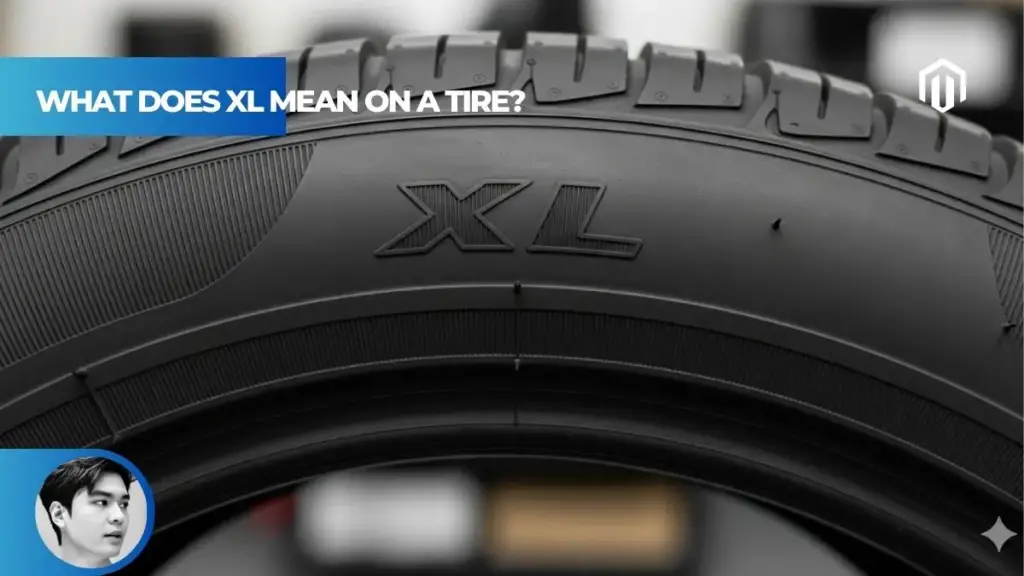
XL stands for “Extra Load” and indicates a tire designed to carry heavier loads than standard tires of the same size[1]. XL tires feature reinforced sidewalls and can handle inflation pressures up to 41 PSI, compared to 35 PSI for Standard Load (SL) tires[2]. You’ll find “XL,” “Extra Load,” or “Reinforced” marked on the tire’s sidewall when a tire carries this designation[3].
How XL Tires Differ From Standard Load Tires
The difference between XL and SL tires comes down to internal construction, not physical size. XL tires use reinforced materials—particularly around the sidewall and shoulder areas—that allow them to withstand higher air pressure and support greater weight[1].
At the same inflation pressure (say, 30 PSI), an XL tire and an SL tire of identical dimensions carry the same load. The advantage appears when you inflate XL tires beyond 35 PSI—something SL tires cannot safely handle[4]. This extra pressure capacity translates directly into increased load-carrying ability.
| Feature | Standard Load (SL) | Extra Load (XL) |
|---|---|---|
| Maximum PSI | 35 PSI | 41 PSI |
| Load Index Range | 75-100 | 101-110 |
| Construction | Standard | Reinforced sidewalls |
| Sidewall Marking | “SL” or unmarked | “XL,” “Extra Load,” or “Reinforced” |
| Best For | Sedans, light commuting | SUVs, trucks, heavy cargo |
Source: Tire Rack and Performance Plus Tire[2][3]
When You Need XL Tires
Not every vehicle requires XL tires. But certain situations make them essential—or at least highly beneficial.
Your Vehicle Manual Specifies XL
If your owner’s manual calls for XL tires, that’s a safety requirement, not a suggestion[3]. Many SUVs, performance cars, and trucks come factory-equipped with XL tires because of their weight or performance characteristics. Electric vehicles increasingly require XL tires too—an electric Ford F-150 Lightning weighs roughly 1,600 pounds more than its gas-powered sibling[3].
You Regularly Haul Heavy Cargo or Tow
Pickup trucks, delivery vans, and vehicles that tow trailers benefit significantly from XL tires[1]. The reinforced construction handles the additional stress without compromising safety. If you’re frequently loading up your vehicle with cargo, XL tires provide extra margin.
You Drive a Heavy SUV or Crossover
Modern SUVs and crossovers sit heavier than traditional sedans. XL tires distribute that weight more effectively, improving handling and stability—especially when the vehicle carries passengers and luggage[1].
You Prioritize Durability Over Comfort
XL tires resist damage from potholes, curbs, and road debris better than standard tires[3]. Drivers who encounter rough road conditions or want maximum longevity often choose XL even when their vehicle doesn’t strictly require it.
XL Tire Advantages
The reinforced construction delivers several practical benefits beyond raw load capacity:
- Enhanced durability: Thicker sidewalls resist punctures and impact damage more effectively[1]
- Better stability: Stiffer construction improves handling, cornering, and braking—particularly under load[5]
- Longer tread life: Reinforced materials often extend tire lifespan, even under heavy use[3]
- Improved high-speed performance: The stiffer build handles high-speed driving demands better[3]
Performance enthusiasts shopping for the best tires for their vehicle often gravitate toward XL options for the handling benefits alone.
XL Tire Drawbacks
Nothing comes without trade-offs. XL tires sacrifice some qualities that SL tires handle well.
The ride feels firmer. Those reinforced sidewalls that provide stability also transmit more road imperfections into the cabin[3]. City drivers notice this difference most on broken pavement and speed bumps.
Fuel economy takes a small hit. The heavier construction increases rolling resistance slightly[5]. The difference typically amounts to a fraction of an MPG—noticeable over thousands of miles, but rarely a dealbreaker.
Road noise can increase. Some XL tires produce more tire roar on certain surfaces, though this varies significantly by brand and tread pattern[3].
XL tires cost more. The reinforced construction requires additional materials and manufacturing complexity, pushing prices above comparable SL options[5].
Do XL Tires Require Higher Air Pressure?
Here’s where confusion often creeps in. XL tires can handle higher pressure (up to 41 PSI), but that doesn’t mean you must inflate them to maximum[4].
Your correct tire pressure depends on your vehicle—check the placard on the driver’s door jamb or your owner’s manual. If your vehicle specifies 32 PSI, run 32 PSI regardless of whether you install SL or XL tires. The XL designation simply means the tire can handle more pressure if needed for heavier loads[4].
What’s critical: XL tires need adequate pressure to deliver their load-carrying advantage. Running an XL tire at low pressure negates its benefits. The load capacity decreases with decreasing air pressure, just like any tire[6]. Regular pressure checks matter even more with XL tires because of this relationship.
Can You Replace SL Tires With XL Tires?
Yes—upgrading from SL to XL is safe and sometimes beneficial[3]. The reinforced construction adds load capacity without changing tire dimensions. Expect some differences in ride quality and handling characteristics after the switch.
The reverse isn’t always true. Never downgrade from XL to SL if your vehicle specifies XL tires[3]. Doing so creates serious safety risks, including potential blowouts under load or at highway speeds. Your vehicle manufacturer chose XL for a reason—respect that specification.
If you’re selecting winter tires or all-season options, verify whether your vehicle requires XL variants before purchasing.
How to Identify XL Tires
Look at the tire sidewall. XL tires display one of these markings[1][7]:
- “XL” – most common abbreviation
- “Extra Load” – full designation
- “Reinforced” or “RF” – alternative terminology (same meaning)
SL tires either show “SL” or carry no load designation at all. The absence of a marking typically indicates Standard Load construction[3].
Beyond the load designation, check the load index number—a two or three-digit code that indicates maximum weight capacity in kilograms. XL tires of a given size will show a higher load index than equivalent SL tires[7]. For example, a 215/55R17 SL tire might carry a load index of 94 (670 kg per tire), while the XL version shows 98 (750 kg per tire).
Key Takeaways
- XL means “Extra Load”—a reinforced tire built to handle heavier loads via higher inflation pressure (up to 41 PSI vs 35 PSI for SL)
- XL tires offer better durability, stability, and load capacity but deliver a firmer ride and slightly reduced fuel economy
- Check your vehicle manual first—if it specifies XL, that’s a safety requirement you cannot ignore
- You can safely upgrade from SL to XL, but never downgrade from XL to SL when your vehicle requires extra load capacity
- XL tires don’t automatically require maximum pressure—inflate to your vehicle’s recommended PSI, which provides adequate margin for normal use
FAQs
Does XL mean the tire is physically larger?
No. XL refers to “Extra Load” capacity, not extra size[1]. An XL tire and an SL tire with identical size markings (like 225/45R18) share the same physical dimensions. The difference lies entirely in internal construction and load-carrying capability.
Are XL tires worth the extra cost?
That depends on your needs. If your vehicle requires XL tires, you have no choice—safety mandates the proper specification. For vehicles where XL is optional, consider whether you regularly carry heavy loads, tow, or prioritize durability over ride comfort. Daily commuters in light sedans rarely need XL capabilities[3].
Do XL tires last longer than standard tires?
Generally yes. The reinforced construction and thicker tread contribute to improved durability and resistance to wear[5]. XL tires also better resist damage from road hazards. That said, driving style and maintenance practices affect tire life more than the SL/XL designation alone.
Can I mix XL and SL tires on my vehicle?
Mixing load ratings is not recommended. All four tires should match in type and load designation for predictable handling and safety[3]. If you must replace a single tire temporarily, match the specification of the other tires on that axle.
Why do electric vehicles often require XL tires?
Electric vehicles typically weigh significantly more than comparable gasoline models due to battery weight[3]. XL tires handle this additional mass safely while maintaining proper handling characteristics. Always verify your EV’s tire specifications before purchasing replacements.
References
- Tires-Easy. (2025). XL Tires Guide: Benefits & When You Need Extra Load Capacity. https://www.tires-easy.com/blog/xl-tires-why-you-may-need-them/
- Tire Rack. (2025). What Is Maximum Load For A Tire? https://www.tirerack.com/upgrade-garage/what-is-maximum-load-for-a-tire
- Performance Plus Tire. (2025). SL vs XL Tires: Which Should You Really Choose? https://www.performanceplustire.com/Blog/sl-vs-xl-tires-which-should-you-really-choose
-
Reddit r/tires. (2022). Are load index and XL related?
Are load index and XL related? Does a high enough load index imply an XL designation?
byu/joseville1001 intires - Tyre Hexa. (2024). Standard Load(SL) vs Extra Load Tires(XL): Which is best? https://tyrehexa.com/standard-load-sl-vs-extra-load-tires-xl/
- Capital Auto Parts. (2021). What Does XL Tires Mean? https://capitalautoparts.ca/blogs/default-blog/what-does-xl-tires-mean
- Michelin UK. (2025). When to use reinforced tyres. https://www.michelin.co.uk/auto/advice/tyre-basics/reinforced-tyres

I am a senior automotive analyst at Autvex. Expert vehicle evaluations, in-depth reviews, and objective analysis helping readers make informed automotive decisions with years of industry experience.