You may also like:
The 2023 Audi e-tron GT offers exceptional performance with 522-637 horsepower and dramatic depreciation that makes used models available for $75,000-$90,000, down from the $106,500+ original MSRP. However, buyers must weigh this incredible value against the 2025 model’s revolutionary upgrades—including 670-912 hp powertrains, 300-mile range, and 320 kW charging—which make even the 2023 RS model feel outdated.
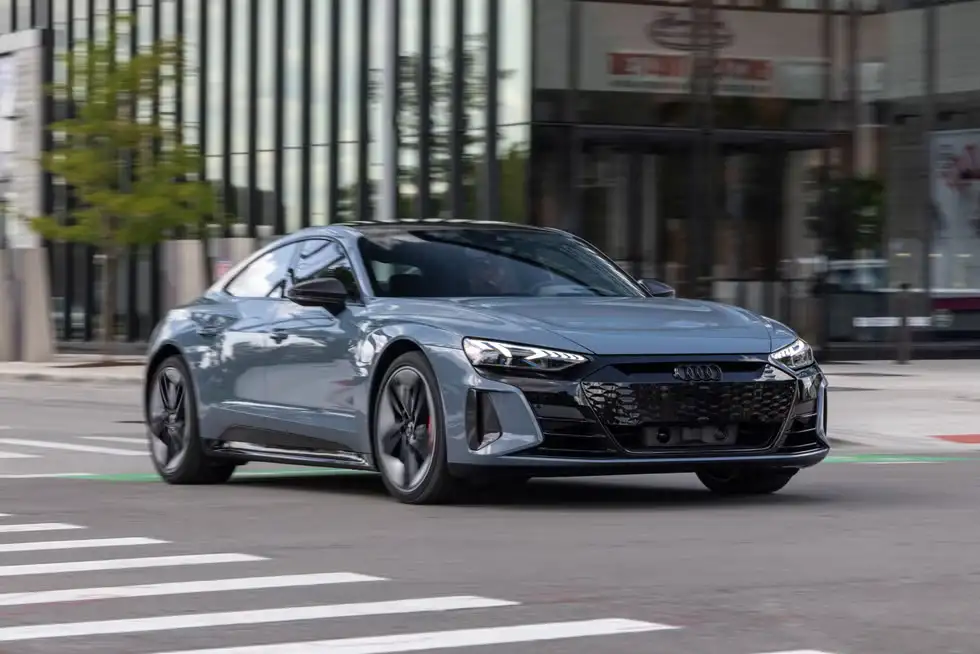
Is the 2023 Audi e-tron GT Worth Buying in 2025? – The Verdict
Why the 2023 e-tron GT is a Massive Performance Bargain
The numbers tell a compelling story: a 2023 e-tron GT that originally stickered for $106,500 can now be purchased for $75,000-$90,000, representing a depreciation of approximately 60% in just two years[1]. This dramatic value drop creates an unprecedented opportunity for luxury EV shoppers seeking Porsche-level performance at mainstream prices.
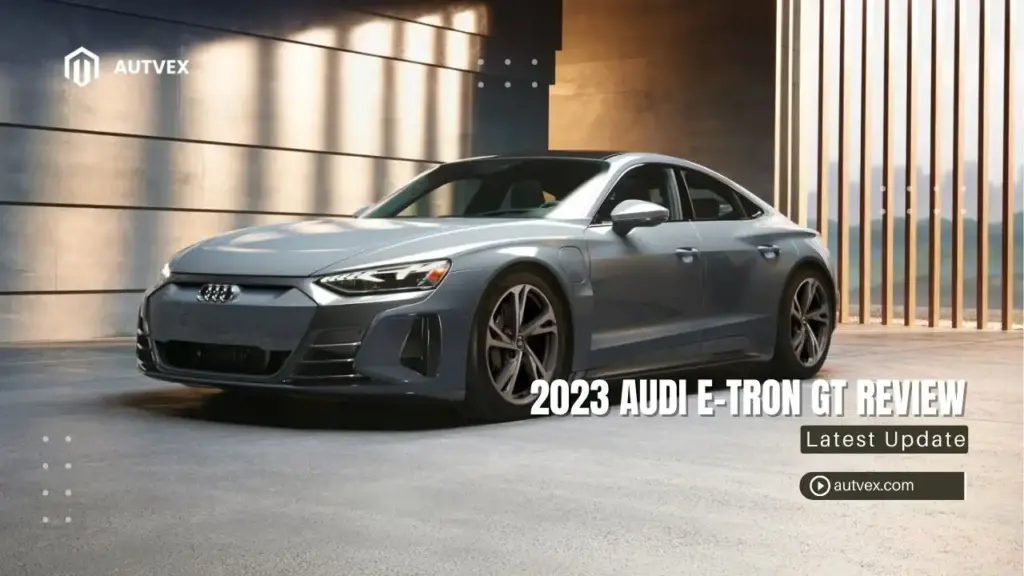
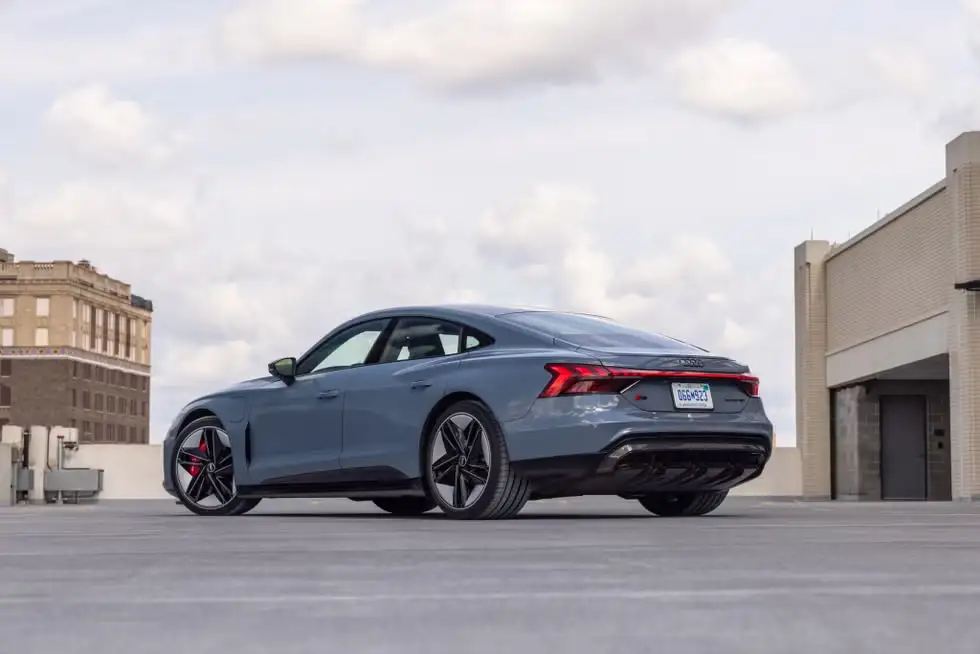
According to Autvex market analysis, the 2023 e-tron GT delivers 95% of the luxury experience of newer models while costing less than half the price. The car remains stunning with its low-slung profile, Matrix LED headlights, and carbon fiber accents—visual elements that haven’t aged despite the newer model’s arrival.
The Depreciation Factor Making 2023 Models Affordable
CarEdge data reveals the e-tron GT experiences one of the steepest depreciation curves in the luxury EV segment, losing $43,252 in the first year alone[1]. By year two, total depreciation reaches $53,123, making these barely-used vehicles exceptional values. This depreciation accelerated when Audi announced the 2025 model’s dramatic power increases.
TopSpeed reports the Audi e-tron GT suffers from a staggering $105,048 depreciation loss over five years[2]. For context, that’s more than many luxury cars cost new. This creates a unique buying opportunity for savvy shoppers who understand that depreciation is only a concern if you’re the first owner.
Who Should Buy Used 2023 vs New 2025
Buy the used 2023 if you:
- Prioritize immediate savings over latest technology
- Drive less than 200 miles daily
- Can find a CPO model with warranty protection
- Want Porsche Taycan performance at half the price
- Plan to keep the car 3-5 years maximum
Buy the new 2025 if you:
- Need maximum range for regular road trips
- Want the bragging rights of 912 hp
- Plan long-term ownership beyond warranty
- Value having the absolute latest technology
- Can afford the $126,795+ price tag
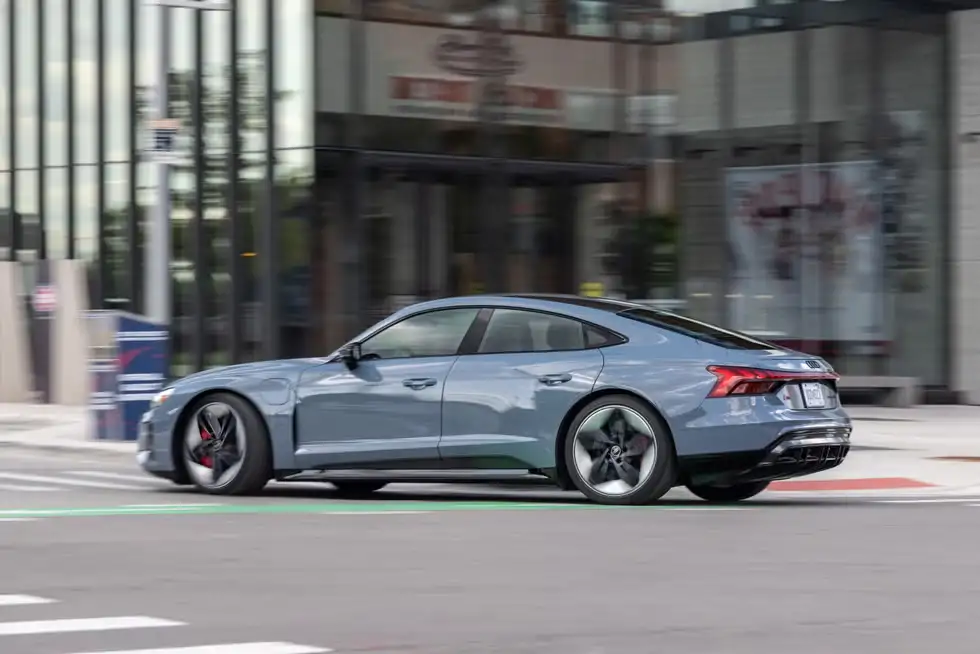
Used 2023 Audi e-tron GT – The Good
Original $106K+ MSRP Now at $75,000-$90,000
Edmunds currently lists certified pre-owned 2023 e-tron GT models starting at $52,496 for higher-mileage examples, with pristine low-mileage vehicles ranging $75,000-$90,000[3]. Premium Plus models with desirable options like the Bang & Olufsen sound system and panoramic roof typically command the upper end of this range.
When exploring MSRP versus real-world pricing, the 2023 e-tron GT represents one of the most dramatic value propositions in the luxury EV market. These vehicles include standard features that were optional on competitors: adaptive air suspension, Matrix LED headlights, and premium leather-free interiors.
522 HP (GT) or 637 HP (RS) Still Impressive
The base 2023 e-tron GT’s 522 horsepower (in boost mode) delivers acceleration that embarrasses many sports cars[4]. The RS model’s 637 horsepower places it among the quickest production sedans ever made, regardless of powertrain. These figures remain competitive even in 2025’s performance landscape.
Both variants utilize dual permanent-magnet synchronous motors providing instant torque to all four wheels through Audi’s legendary quattro system. The sophisticated torque vectoring ensures exceptional traction in all weather conditions.
Proven Technology with Known Issues Fixed
Three years into production, the 2023 model benefits from resolved early production issues. Software updates have addressed initial infotainment glitches, charging compatibility has improved, and dealers now understand the platform’s service requirements. YouTube reviewers note that 2023 models show better long-term reliability than initial 2022 units[5].
The J1 platform shared with Porsche has proven robust, with the 800-volt architecture demonstrating excellent durability in real-world use. Most early adopter concerns about battery degradation have proven unfounded.
High-Quality Interior and Luxury Features
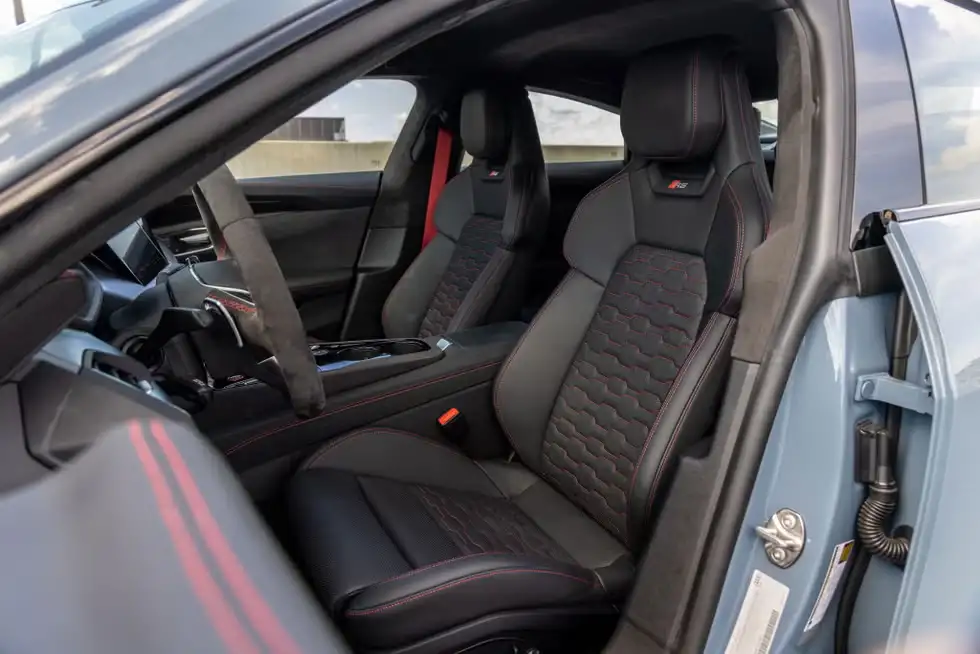
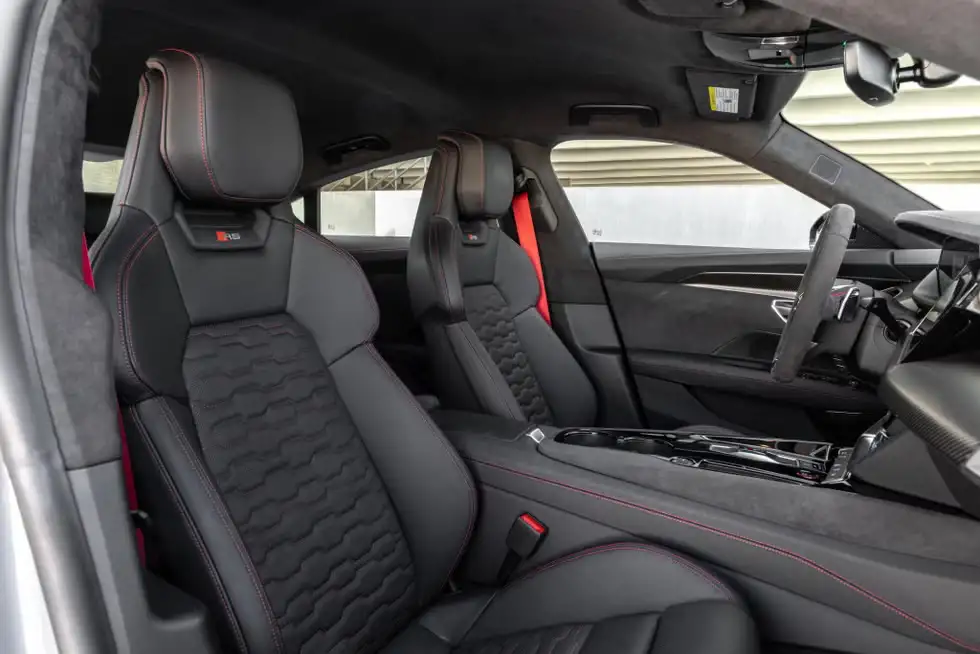
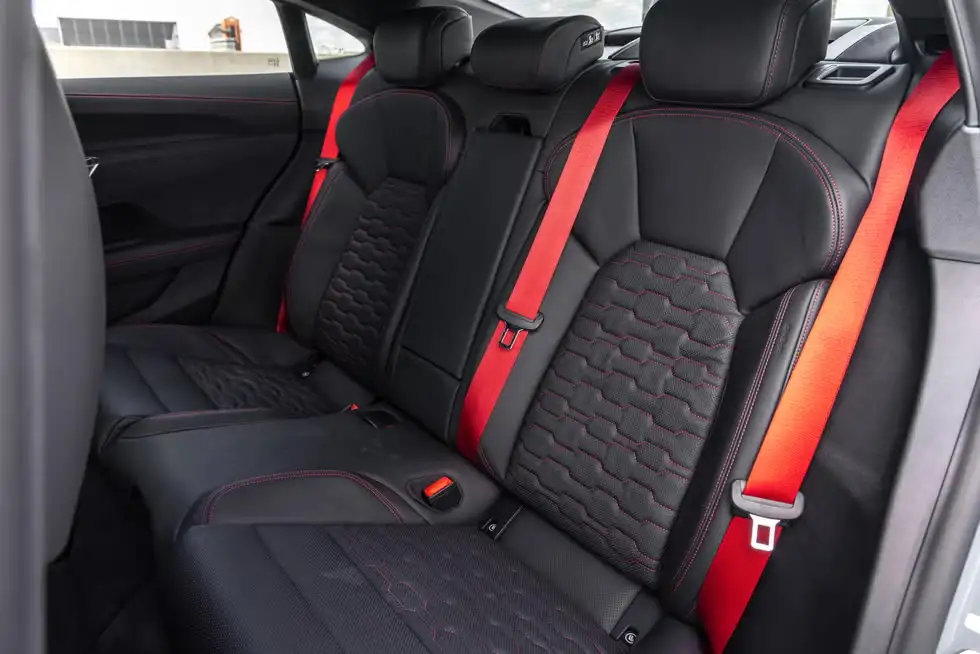
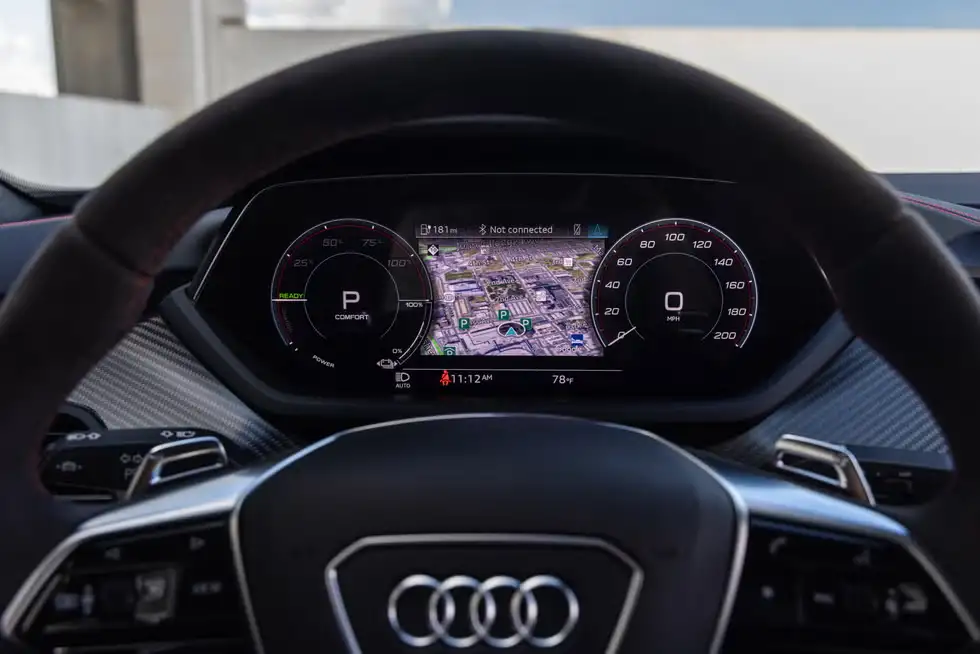
The cabin remains a masterpiece of sustainable luxury. The standard Dinamica microfiber headliner contains recycled materials yet feels more premium than traditional Alcantara. The 10.1-inch MMI touchscreen runs smoothly after software updates, while the Virtual Cockpit Plus display provides customizable driver information.
Standard equipment includes:
- Wireless Apple CarPlay (Android Auto requires cable)
- Bang & Olufsen 3D sound system
- Four-zone automatic climate control
- Heated and ventilated front seats
- Adaptive cruise control with lane keeping
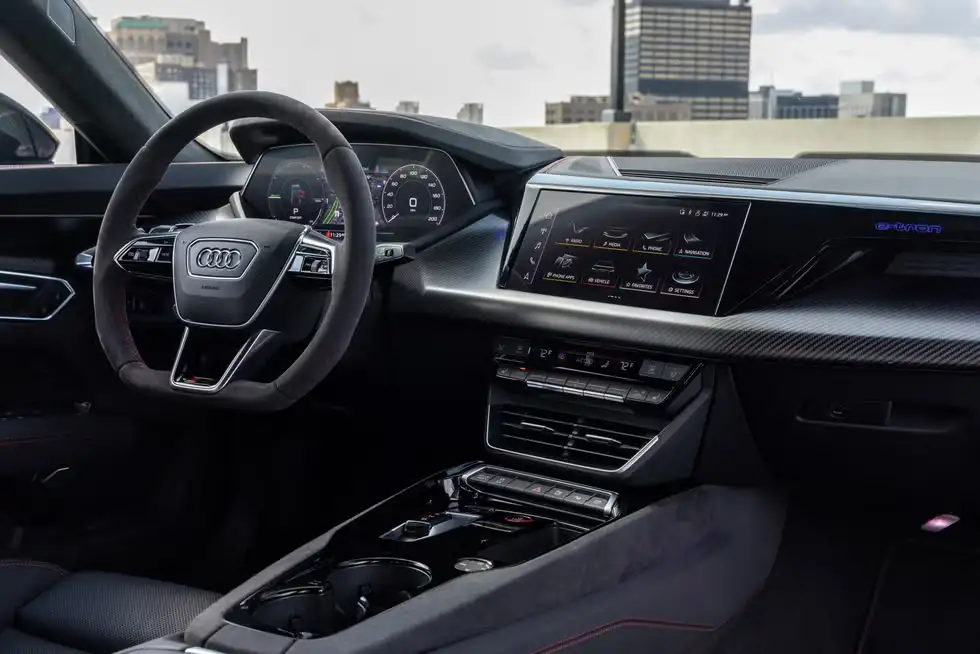
Used 2023 Audi e-tron GT – The Bad
EPA Range of Only 236-249 Miles
The EPA’s conservative rating of 236-249 miles represents the 2023’s most significant limitation[4]. This figure falls well below competitors like the Tesla Model S Long Range’s 405-mile rating and even the base 2025 e-tron GT’s 300-mile range.
For daily commuting under 100 miles round-trip, this range proves adequate. However, frequent long-distance travelers will find themselves planning routes around charging stations more often than with newer EVs.
Real-World Range Closer to 260-280 Miles
Fortunately, real-world testing reveals the EPA rating as overly pessimistic. Car and Driver achieved 240 miles in highway testing, while Canadian outlet Driving.ca managed 378 kilometers (235 miles) at highway speeds[6]. Mixed driving typically yields 260-280 miles, making the car more practical than EPA numbers suggest.
Expert testing by Bjorn Nyland recorded 305 miles in optimal conditions, demonstrating the platform’s efficiency when driven conservatively[7]. However, aggressive driving or cold weather can reduce range to barely 200 miles.
Outdated Performance vs 2025 Models
While the 2023 RS’s 637 hp remains impressive, the 2025 base S model’s 670 hp makes it obsolete in Audi’s hierarchy[8]. The 2025 RS Performance’s 912 hp makes the 2023 seem almost pedestrian by comparison. This power inflation affects resale values and owner satisfaction.
Potential Recalls (Battery and Brakes)
Audi has issued multiple recalls affecting 2023 e-tron GT models. The most serious involves certain battery modules from LG Energy Solution that may short circuit, potentially causing fires[9]. Affected vehicles require charging limitations to 80% until repairs are completed.
A separate brake hose recall affects vehicles built before specific dates. While Audi provides free repairs, some owners report ongoing concerns about long-term reliability. Always verify recall completion through authorized Audi service centers before purchase.
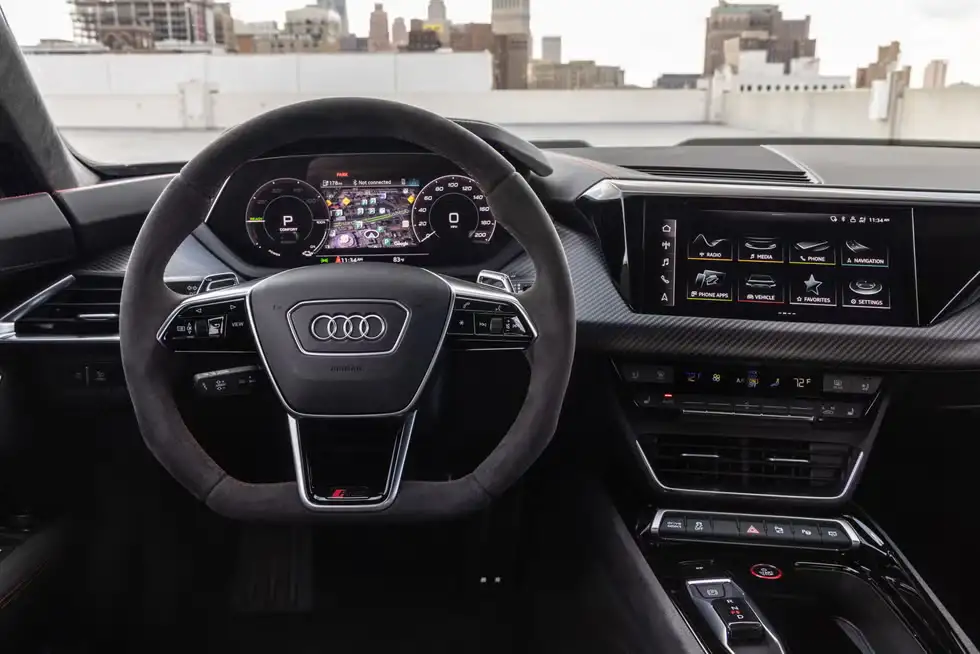
2023 vs 2025 e-tron GT – The Critical Comparison
2023 Battery (93 kWh) vs 2025 Battery (105 kWh)
The battery capacity difference fundamentally changes the ownership experience:
| Specification | 2023 e-tron GT | 2025 e-tron GT |
|---|---|---|
| Gross Capacity | 93.4 kWh | 105 kWh |
| Usable Capacity | 85 kWh | 97 kWh |
| Weight | 1,389 lbs | 1,364 lbs |
| Energy Density | Standard | 13% Higher |
The 2025’s larger yet lighter battery demonstrates significant technological advancement in just two years[8].
2023 RS e-tron GT (637 hp) vs 2025 S e-tron GT (670 hp)
This comparison reveals how dramatically Audi shifted the performance landscape. The 2025’s “entry-level” S model outpowers the 2023’s range-topping RS by 33 horsepower. The psychological impact of owning the “slower” RS affects both owner satisfaction and resale values.
Charging Speed: 270 kW vs 320 kW
While the 2023’s 270 kW peak charging remains impressive, the 2025’s 320 kW capability reduces 10-80% charging from 22.5 minutes to 18 minutes[8]. More importantly, the larger battery means adding more miles per minute of charging—crucial for road trip practicality.
Range Difference: ~249 Miles vs ~300 Miles
The 51-mile EPA range advantage translates to reduced range anxiety and fewer charging stops. For a 500-mile journey, a 2023 owner needs two charging stops versus one for the 2025—adding 30-45 minutes to trip time.
2023 e-tron GT Common Problems and Reliability
Battery Degradation Concerns
Early data suggests minimal degradation, typically 2-3% annually based on owner reports[10]. The conservative battery management system, which reserves approximately 8.4 kWh as buffer, helps preserve long-term battery health. The thermal management system maintains optimal temperatures even during repeated fast charging sessions.
Battery Module and Brake Recalls
The battery recall affects specific production batches with potentially defective LG Energy Solution modules. Audi’s fix involves diagnostic software to identify affected modules, followed by replacement if necessary. The interim solution limits charging to 80% capacity, reducing already-limited range[9].
According to Autvex’s analysis of Audi long-term reliability, these recalls represent teething problems rather than fundamental design flaws.
Charging Port Issues
Some owners report intermittent charging failures at public stations, particularly older Electrify America units. The issues typically involve handshake protocols between the car and charger rather than hardware failures. Software updates have resolved most problems.
800-Volt System Reliability
The high-voltage architecture has proven remarkably reliable, with few reported failures beyond the recalled battery modules. The system’s redundancy and over-engineering provide confidence for long-term ownership. Porsche’s parallel experience with the Taycan validates the platform’s durability.
Battery Warranty Coverage
Audi provides an 8-year/100,000-mile battery warranty covering degradation below 70% capacity[11]. This coverage transfers to subsequent owners, providing peace of mind for used buyers. The warranty also covers battery defects and failures, though not damage from accidents or modifications.
2023 Audi e-tron GT Specifications
2023 Audi e-tron GT Quattro – 522 Horsepower
The base model produces 469 hp standard with 522 hp available in boost mode for 2.5 seconds[4]. Torque peaks at 464 lb-ft, delivered instantly to all four wheels. The two-speed rear transmission optimizes both acceleration and efficiency.
2023 Audi RS e-tron GT – 637 Horsepower
The RS variant generates 590 hp continuously with 637 hp in boost mode[4]. Torque increases to 612 lb-ft, enabling violent acceleration that pins occupants to their seats. The RS-specific tuning prioritizes performance over efficiency.
0-60 Times: 3.9 Seconds vs 3.1 Seconds
Real-world testing confirms manufacturer claims. The base model’s 3.9-second sprint remains quick by any standard, while the RS’s 3.1-second time enters supercar territory[4]. Launch control ensures consistent performance regardless of driver skill.
270 kW Fast Charging Capability
When connected to compatible DC fast chargers, the 2023 can accept up to 270 kW, enabling 5-80% charging in approximately 22.5 minutes[6]. Finding 270+ kW chargers remains challenging, with most Electrify America stations limited to 150 kW.
How Much Does a Used 2023 e-tron GT Cost in 2025?
Current Market Values: $75,000-$90,000+
| Condition | Base e-tron GT | RS e-tron GT |
|---|---|---|
| Trade-In | $75,000-$82,000 | $85,000-$95,000 |
| Private Party | $80,000-$88,000 | $90,000-$105,000 |
| CPO Dealer | $85,000-$95,000 | $95,000-$115,000 |
These values assume 15,000-20,000 miles and excellent condition[1].
Why the e-tron GT Depreciated So Much
Multiple factors drove the dramatic depreciation:
- Luxury EV market saturation with numerous new competitors
- 2025 model’s massive improvements making 2023s obsolete
- Limited charging infrastructure compared to Tesla Superchargers
- Range anxiety from sub-250-mile EPA ratings
- Early adopter risk premium typical of new technology
CPO 2023 Audi e-tron GT Availability
Certified Pre-Owned inventory varies by region, with major markets offering 10-20 vehicles[3]. CPO models include extended warranty coverage and undergo 300-point inspections. Prices typically run $5,000-$10,000 above non-certified equivalents but provide valuable protection.
When shopping for CPO models, check Autvex’s guide to Audi’s electric lineup for comparison shopping tips.
Price Drop Analysis
Edmunds data shows 2023 models losing $12,825 in the first year and additional $5,494 in year two[12]. This front-loaded depreciation means years 3-5 show more modest declines, making 2-year-old models the sweet spot for value-conscious buyers.
Used 2023 e-tron GT vs Competitors
2023 e-tron GT vs 2023 Porsche Taycan
| Feature | 2023 e-tron GT | 2023 Taycan |
|---|---|---|
| Starting MSRP | $106,500 | $92,550 |
| Base Power | 522 hp | 402 hp |
| 0-60 mph | 3.9 sec | 4.8 sec |
| EPA Range | 249 miles | 230 miles |
| Ride Comfort | Superior | Sportier |
The e-tron GT offers more standard power and slightly better range, while the Taycan provides sharper handling and more configuration options[13].
2023 RS e-tron GT vs 2023 Taycan Turbo
At the performance level, the RS e-tron GT’s 637 hp nearly matches the Taycan Turbo’s specs while costing approximately $10,000 less when new[13]. The Audi prioritizes comfort while the Porsche emphasizes track capability. Both share the excellent 800-volt charging architecture.
2023 e-tron GT vs 2023 Tesla Model S
The Model S Long Range offers 405 miles of range versus the e-tron GT’s 249, plus access to Tesla’s Supercharger network. However, the Audi counters with superior build quality, a luxurious interior with actual buttons, and traditional dealer support. The e-tron GT feels more substantial and refined.
2023 e-tron GT vs 2023 Mercedes EQE
The Mercedes EQE provides more rear-seat space and advanced tech features like rear-wheel steering. However, its blob-like styling lacks the e-tron GT’s visual drama. The Audi also offers more engaging driving dynamics, though the Mercedes excels at isolation and comfort.
Should You Buy the 2023 or Wait for the 2025?
Buy the Used 2023 If…
You should purchase a 2023 e-tron GT if:
- Your daily driving rarely exceeds 200 miles
- You can secure a CPO model under $85,000
- You prioritize immediate ownership over latest technology
- Your local area has adequate DC fast charging
- You plan to sell before the warranty expires
Buy the New 2025 If…
The 2025 makes more sense if:
- You regularly drive 300+ miles between charges
- You want the psychological satisfaction of 670+ hp
- You plan to keep the car beyond 5 years
- You can afford the $40,000-$50,000 premium
- You value having the absolute latest technology
Is the 2025 Refresh Worth the Premium?
For most buyers, the 2025’s improvements don’t justify paying nearly double. The 2023 delivers 80% of the performance and 95% of the luxury at half the price. Unless you absolutely need the extra range or power, the 2023 represents better value.
However, Autvex analysis suggests the 2025 will hold value better long-term, potentially offsetting some of the price premium through reduced depreciation.
Key Takeaways
- 2023 models at $75,000-$90,000 offer incredible value versus $106,500+ MSRP
- Real-world range of 260-280 miles exceeds pessimistic EPA ratings
- Battery and brake recalls must be verified before purchase
- CPO warranty protection essential given complex electronics
- 637 hp RS performance remains impressive despite 2025’s power advantage
- 60% depreciation creates buying opportunity for value seekers
- 2025’s improvements justify premium only for range-critical buyers
Next Steps
Verify all recalls are completed on any 2023 model, prioritize CPO vehicles for warranty protection, and test drive both 2023 and 2025 models to determine if the performance and range improvements justify the $40,000-$50,000 price difference for your specific needs. Schedule a pre-purchase inspection at an Autvex-certified dealer focusing on battery health diagnostics and recall completion. Consider your typical driving patterns—if 90% of your trips are under 100 miles, the 2023’s range limitations become irrelevant. Finally, negotiate aggressively as dealers need to move 2023 inventory to make room for 2025 models.
FAQs
Is the 2023 Audi e-tron GT worth buying in 2025?
Yes, if you find a CPO model for $75,000-$90,000 and are satisfied with 270-mile real-world range. It offers exceptional luxury and performance at half the new 2025 price.
What are the common problems with a 2023 Audi e-tron GT?
Battery module recalls, brake system issues, charging port problems, and potential 800-volt system glitches. Most issues are addressed through recalls and software updates.
Is the 2023 Audi e-tron GT reliable?
Reliability is average with most early issues resolved through recalls. The 800-volt architecture has proven robust, though complex electronics may require dealer service.
What is the battery degradation like on a 2023 e-tron GT?
Minimal degradation reported so far, typically 2-3% annually. The 8-year/100,000-mile battery warranty covers degradation below 70% capacity.
Why did the 2023 e-tron GT depreciate so much?
Heavy depreciation typical for luxury EVs, accelerated by the 2025 model’s dramatic improvements including 670+ hp powertrains and larger battery.
What is the difference between the 2023 and the new 2025 e-tron GT?
The 2025 has 105 kWh battery (vs 93), 670-912 hp options (vs 522-637), 320 kW charging (vs 270), and approximately 50 miles more range.
How much horsepower does the 2023 e-tron GT have?
522 horsepower in boost mode for the base Quattro model.
How much horsepower does the 2023 RS e-tron GT have?
637 horsepower, though the 2025 base S model now exceeds this with 670 hp.
What is the real-world range of the 2023 e-tron GT?
While EPA rated at 236-249 miles, real-world testing consistently shows 260-280 miles in mixed driving conditions.
How much does a used 2023 e-tron GT cost in 2025?
Typically $75,000-$90,000+ depending on trim and mileage, down from $106,000+ original MSRP.
Is the 2023 e-tron GT a good used car?
Yes, for buyers prioritizing value over latest technology. It offers proven luxury and performance at significant savings versus new models.
Is the 2023 e-tron GT basically a cheaper Porsche Taycan?
Yes, they share the J1 platform and 800-volt architecture, though the Audi emphasizes comfort while Porsche prioritizes sportiness.
Does the 2023 e-tron GT have the new 2025 (912 hp) engine?
No, the 2023 maxes out at 637 hp in the RS model. The 912 hp Performance model is exclusive to 2025.
References
- CarEdge. (2024). Audi e-tron GT Depreciation Analysis. https://www.caredge.com/audi/e-tron-gt/depreciation
- TopSpeed. (2025). 10 Luxury EVs That Have Depreciated Into Affordable Bargains. https://www.topspeed.com/luxury-ev-depreciation
- Edmunds. (2025). Used Certified Pre-Owned Audi e-tron GT for Sale. https://www.edmunds.com/audi/e-tron-gt/certified-used
- Car and Driver. (2023). 2023 Audi e-tron GT Review, Pricing, and Specs. https://www.caranddriver.com/audi/e-tron-gt/2023
- YouTube. (2025). Used Audi E-Tron GT Buyers Guide Common Faults. https://www.youtube.com/watch
- Driving.ca. (2025). Long-term test: 2023 Audi RS E-tron GT. https://driving.ca/reviews/long-term/2023-audi-rs-e-tron-gt
- Reddit. (2023). E-tron GT gets 305 mile real-world range according to Bjorn Nyland. https://www.reddit.com/r/electricvehicles
- Audi Blog. (2025). 2025 Audi e-tron GT: Price & Features. https://blog.lauzonaudi.com/2025-audi-e-tron-gt
- Class Law Group. (2025). Audi e-tron Battery Recall Lawsuit. https://classlawgroup.com/audi-e-tron-battery-recall
- Facebook. (2025). Audi e-tron GT Owners Group – Battery Degradation Discussion. https://www.facebook.com/groups/audietrongt
- Audi USA. (2025). Audi Certified Pre-Owned Limited Warranty. https://www.audiusa.com/us/web/en/certified-pre-owned
- Edmunds. (2025). 2023 Audi e-tron GT Depreciation Value. https://www.edmunds.com/audi/e-tron-gt/2023/value
- Vanarama. (2024). Audi e-tron GT vs. Porsche Taycan: What’s The Difference. https://www.vanarama.com/audi-vs-porsche-comparison

I am a senior automotive analyst at Autvex. Expert vehicle evaluations, in-depth reviews, and objective analysis helping readers make informed automotive decisions with years of industry experience.