You may also like:
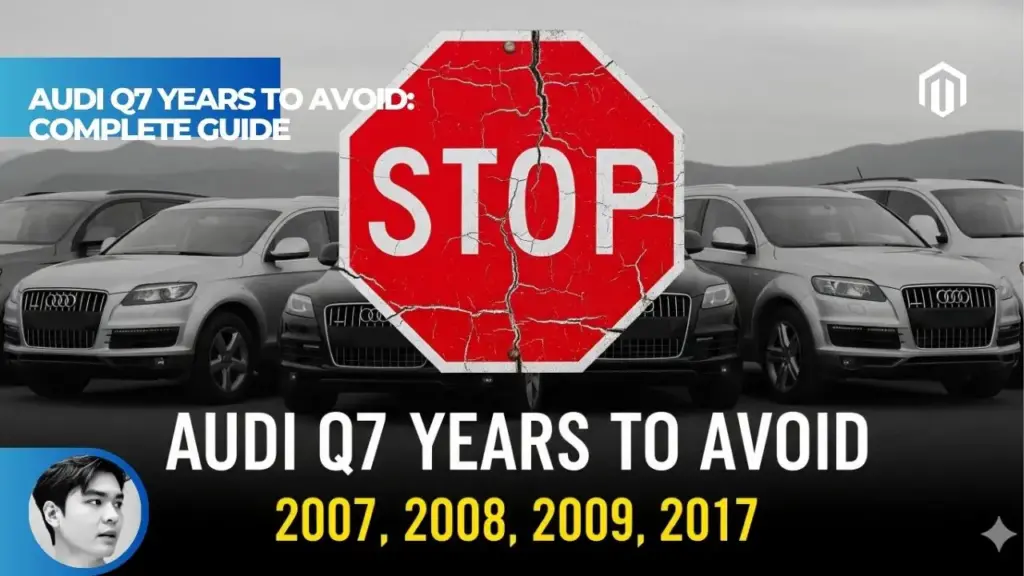
Avoid the 2007, 2015, 2017, 2018, 2019, and 2021 Audi Q7 model years due to documented reliability issues including excessive oil consumption, engine failures, electrical system malfunctions, and multiple NHTSA recalls[1]. The 2017 Q7 is the most problematic year, with owners reporting oil consumption of up to one quart per 500 miles and sudden engine breakdowns[2]. For the most reliable used Q7, target the 2016, 2020, 2022, and 2023 model years[3].
Audi Q7 Generations Overview
The Audi Q7 has been produced in two generations since its 2007 US introduction. Understanding each platform helps identify patterns in reliability issues.
First Generation (4L): 2007-2015
The original Q7 was built on Volkswagen’s MLB platform, shared with the Porsche Cayenne and VW Touareg. This generation featured V6 and V8 engine options with available third-row seating[4]. Early models suffered from significant transmission, electrical, and engine problems that affected ownership costs considerably.
Second Generation (4M): 2017-Present
The complete redesign brought a lighter platform, improved efficiency, and updated technology including Audi’s Virtual Cockpit digital instrumentation. However, the first few model years of this generation experienced their own set of issues, particularly with software, infotainment, and fuel system components[1].
Audi Q7 Years to Avoid
2007: First-Year Production Problems
The inaugural Q7 introduced buyers to full-size Audi luxury SUV ownership, but also first-year production issues[5]:
| Problem | Impact | Repair Cost |
|---|---|---|
| Engine won’t start | Stranded vehicle | $500-$2,000+ |
| ESP malfunctions | Safety concern | $300-$1,200 |
| Transmission issues | Drivability problems | $3,000-$7,000 |
| Electrical failures | Multiple system faults | $500-$3,000 |
The 2007 model accumulated 50+ NHTSA complaints, with particular concerns about electronic stability program (ESP) malfunctions that affected braking and handling[5]. Starting problems plagued this year, often leaving owners stranded.
2015: Late First-Generation Issues
The 2015 Q7 represented the final year of the first generation, but did not avoid problems[1]:
- Auto-locking malfunction: Keys automatically locked in the vehicle, requiring locksmith assistance[5]
- Engine stalling: Loss of power while driving
- Electrical system failures: Multiple sensor and module malfunctions
During a pre-purchase inspection of a 2015 Q7 for a client, the onboard diagnostics revealed multiple fault codes related to the air suspension system—a common issue that can cost $2,000-$4,000 per corner to repair.
2017: The Worst Q7 Year
The 2017 Q7 earned distinction as the most problematic model year, despite being the first year of the redesigned second generation[1][2]:
| Issue | Description | Repair Cost |
|---|---|---|
| Excessive oil consumption | Up to 1 qt per 500 miles[2] | $5,000-$10,000+ |
| Engine failure | Complete breakdown while driving[1] | $8,000-$15,000 |
| Broken valves | Caused secondary engine damage[2] | $3,000-$7,000 |
| Rear suspension failures | Springs snap and detach[2] | $1,000-$2,500 |
| Side marker light failures | Electrical system issue[2] | $200-$600 |
| Squealing brakes | Premature brake wear[5] | $500-$1,500 |
The oil consumption issue was particularly severe, with some owners reporting the need to add oil every 500 miles of driving[2]. When oil levels drop critically low, engine components suffer irreversible damage, leading to complete engine failure that costs $8,000-$15,000 or more to repair.
2018-2019: Continued Second-Generation Problems
The 2018 and 2019 Q7 models improved marginally but still experienced significant issues[1][6]:
2018 Audi Q7:
- Software glitches affecting multiple systems
- Mechanical problems requiring unexpected repairs
- Gearbox oil leaks (manufacturing date September-December 2019)[6]
2019 Audi Q7:
According to Kelley Blue Book, the 2019 Q7 has a medium risk of requiring major repairs[3]. RepairPal rates it 2.5 out of 5.0 for reliability.
| Issue | Description | Repair Cost |
|---|---|---|
| Engine leaks | Oil and coolant leakage[3] | $500-$2,500 |
| Catalytic converter | Premature failure[3] | $1,500-$3,500 |
| Exhaust manifold | Cracking and leaks[3] | $732-$918 |
| Steering/suspension | Component failures[3] | $734-$755 |
| Water pump replacement | Premature failure[3] | $1,524-$1,659 |
| Cylinder head | Catastrophic failure possible[3] | $8,774-$9,394 |
Average annual repair costs for the 2019 Q7 reach approximately $1,185, with high frequency of unscheduled repairs[3].
2021: Recall-Heavy Model Year
The 2021 Q7 accumulated seven NHTSA recalls—the highest of any Q7 model year—significantly affecting its reliability profile[3]:
2021 Q7 NHTSA Recalls:
- Blank rearview camera display reducing rear visibility (crash risk)[3]
- Fuel pump failure causing engine stalling[3]
- Rear axle misalignment causing premature tire wear[3]
- Broken lock nut misaligning the rear axle[3]
J.D. Power rated the 2021 Q7’s quality and reliability at just 67/100, reflecting widespread owner-reported issues[3].
Common 2021 Q7 Repair Costs:
| Repair | Cost Range |
|---|---|
| Brake bleed | $77-$97 |
| Oil pressure sensor | $186-$216 |
| Battery replacement | $441-$468 |
| Tie rod replacement | $475-$487 |
| HVAC actuator | $497-$537 |
| Axle shaft seal | $412-$492 |
| Sunroof motor | $1,482-$1,464 |
| Supercharger assembly | $4,825-$4,925[3] |
Common Problems Across All Q7 Years
Certain issues affect multiple Q7 generations regardless of model year[7][8]:
Infotainment System Problems
The MMI (Multi Media Interface) system has been problematic across generations[8]:
- Screen freezing or going blank[7]
- System taking 2-5 minutes to initialize after startup[8]
- Phone connectivity dropping unexpectedly[8]
- CarPlay and GPS failures[3]
- Saved locations disappearing
Because all climate, audio, and vehicle settings are controlled through touchscreens, a frozen display leaves owners unable to adjust basic functions[8].
Transmission Issues
Transmission malfunctions appear across both generations[7]:
- Gear shifting delays, especially at low speeds
- Transmission warning lights and dashboard alerts
- Unusual sounds from the transmission area
- Gearbox oil leaks from faulty joints[6]
Electrical System Failures
Electrical malfunctions are prevalent throughout the Q7 lineup[7]:
- Headlight and taillight malfunctions
- Battery drainage and intermittent power loss
- Warning light activation for unrelated systems
- AdBlue system faults on diesel models[6]
For related electrical troubleshooting on Audi vehicles, see our guide on Audi A5 years to avoid.
Engine Issues
Engine problems span multiple model years[9]:
- Misfires and check engine lights
- Knock sensor failures
- Cold start issues, especially on diesel models[6]
- Oil consumption exceeding normal parameters
Best Audi Q7 Years to Buy
Based on reliability data and owner feedback, these model years offer the best balance of value and dependability[1][10]:
| Year | Generation | Why Recommended |
|---|---|---|
| 2016 | First (4L) | Refined platform, most issues resolved[10] |
| 2020 | Second (4M) | Post-launch bugs addressed[1] |
| 2022 | Second (4M) | Mature platform, reduced recalls |
| 2023-2024 | Second (4M) | Latest updates, best reliability[1] |
- 2016 Q7: This final first-generation year before the redesign benefits from years of refinement. Most major issues had been addressed through running changes and service bulletins[10].
- 2020 Q7: By this model year, Audi had resolved many second-generation launch issues. The infotainment system was more stable, and fewer NHTSA complaints were filed.
- 2022-2024 Q7: These years represent the most refined versions of the current platform with updated software and fewer technical service bulletins.
What to Inspect Before Buying
When shopping for a used Q7, these checks help identify potential problems[4]:
- Oil Level and Condition: Check the dipstick before and after a test drive. Any significant drop indicates consumption issues. Dark, gritty oil suggests neglected maintenance. For proper technique, see our guide on checking oil hot or cold.
- Transmission Operation: Test all drive modes and pay attention to shifting behavior at low speeds where dual-clutch transmissions often exhibit hesitation or roughness.
- Infotainment System: Verify the MMI system boots within 30 seconds and responds without lag. Test phone pairing, navigation, and all screen inputs.
- Suspension Check: Listen for clunks over bumps and check for uneven ride height indicating air suspension failure. Press down on each corner to test damper response.
- Recall Verification: Use the VIN to confirm all recalls have been completed, particularly fuel pump and rear axle recalls on 2021 models[3].
- Service Records: Request complete maintenance history. Q7s require diligent maintenance—gaps in records suggest potential issues.
Key Takeaways
- Avoid the 2007, 2015, 2017, 2018, 2019, and 2021 Audi Q7 model years due to documented reliability issues and multiple recalls[1]
- The 2017 Q7 is the most problematic year with excessive oil consumption (up to 1 qt per 500 miles) and engine failures[2]
- The 2021 Q7 has seven NHTSA recalls affecting safety and reliability[3]
- Target the 2016, 2020, 2022, or 2023+ model years for better reliability[1][10]
- Always verify recall completion and obtain complete service records before purchasing any used Q7
Frequently Asked Questions
Is the Audi Q7 reliable?
The Q7’s reliability is below average for the luxury SUV segment[9]. RepairPal gives it a low rating because full-size luxury SUVs generally have higher ownership costs and more frequent mechanic visits than smaller vehicles. Model year selection significantly impacts reliability—avoiding problematic years (2007, 2015, 2017-2019, 2021) improves the ownership experience considerably[1].
What is the most common Audi Q7 problem?
Are Audi Q7s expensive to maintain?
Should I buy an Audi Q7 with high mileage?
High-mileage Q7 purchases carry significant risk regardless of model year[4]. If considering a Q7 over 80,000 miles, choose a 2016, 2020, or newer model year, verify complete service records, budget for air suspension and timing chain service, and have a pre-purchase inspection performed by an Audi specialist.
Which Q7 generation is more reliable?
Neither generation is definitively more reliable. The first generation (2007-2015) had early transmission and electrical issues that improved by 2016. The second generation (2017-present) had problematic launch years (2017-2019, 2021) but improved significantly by 2020 and 2022[1].
References
- CoPilot. (2024). The Audi Q7 Years To Avoid. https://www.copilotsearch.com/posts/audi-q7-years-to-avoid/
- CarBuzz. (2025). Audi Q7 Maintenance Costs And Common Issues. https://carbuzz.com/audi-q7-maintenance-costs-and-common-issues/
- Simple Mechanic Advice. (2025). Audi Q7 Years To Avoid: Which Years Of Audi Q7s Are Least Reliable [Video]. YouTube.
- CarGurus. (2021). Audi Q7 Buying Guide. https://www.cargurus.com/Cars/articles/audi-q7-buying-guide
- Audi Complaints. (2020). What’s Wrong with the Audi Q7? https://www.audicomplaints.com/models/q7/
- What Car?. (2025). Used Audi Q7 (2015–Present): Reliability & Common Problems. https://www.whatcar.com/audi/q7/4×4/used-review/n813/reliability
- The Lemon Lawyers. (2020). Common Problems for Audi Q7 (2021–2025). https://www.lemonfirm.com/vehicles/audi-q7
- AutoPal. (2024). 7 Problems With The 2024 Audi Q7 You Must Know! [Video]. YouTube.
- CarParts.com. (2024). Audi Q7 Reliability and Common Problems. https://www.carparts.com/blog/audi-q7-reliability-and-common-problems/
-
Cars Destiny. (2025). Audi Q7 Years to Avoid.
Audi q7 years to avoid – Don’t take risks!

I am a senior automotive analyst at Autvex. Expert vehicle evaluations, in-depth reviews, and objective analysis helping readers make informed automotive decisions with years of industry experience.