You may also like:
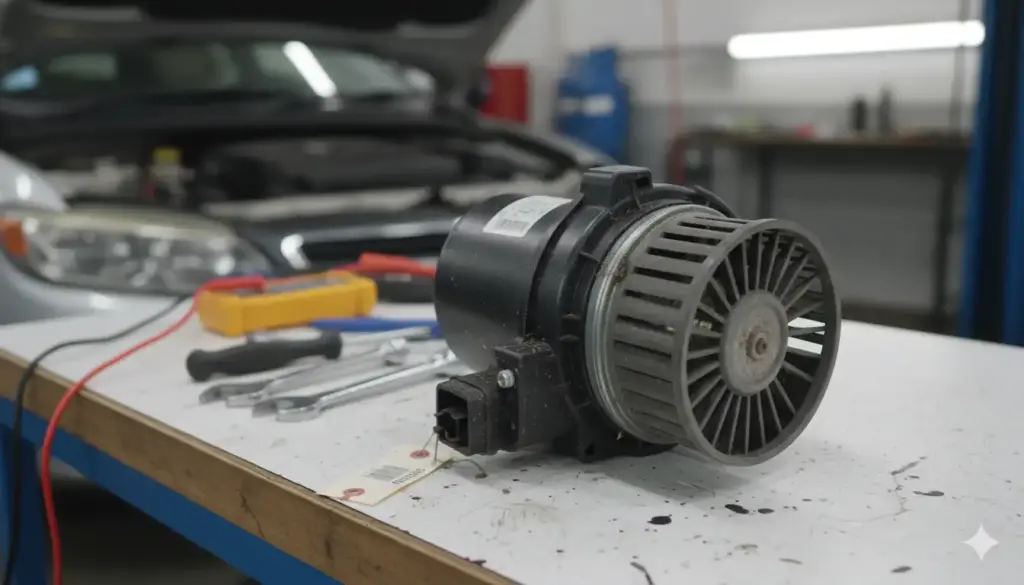
A blower motor is the electric fan component inside your vehicle’s HVAC system that pushes heated or cooled air through the dashboard vents and into the cabin1. Located behind the dashboard on most vehicles, this motor spins a fan wheel (often called a squirrel cage) to circulate air across the heater core when you need warmth or the AC evaporator when you want cooling2. Without a functioning blower motor, your defrost won’t clear the windshield, and your climate control becomes useless—making this one of those parts you don’t appreciate until it fails.
What Is a Blower Motor in a Car?
The blower motor is the heart of your vehicle’s heating, ventilation, and air conditioning (HVAC) system. Think of it as the delivery mechanism—while the heater core generates heat and the AC evaporator creates cold air, the blower motor is what actually pushes that conditioned air into your cabin3.
This component differs fundamentally from your AC compressor. The compressor pressurizes refrigerant to create cooling, but it doesn’t move any air you feel. The blower motor handles that job exclusively. Every vehicle—even those without air conditioning—has a blower motor because it’s essential for heating and defrosting4.
The motor draws power from your car’s electrical system and can operate at multiple speeds. When you adjust your fan speed dial or buttons, you’re controlling how fast the blower motor spins and how much air it pushes through your vents.
How the Blower Motor Works
When you turn on your climate control, the blower motor receives an electrical signal to start spinning. The motor rotates a plastic fan wheel that draws cabin air (or outside air, depending on your recirculation setting) into the HVAC housing2.
This air then passes through either the heater core or AC evaporator—whichever your temperature settings dictate. The now-conditioned air exits through your dashboard, floor, or defrost vents based on your mode selection1.
Speed control happens in two ways. Older vehicles use a blower motor resistor—a component with physical resistors that reduce voltage to slow the motor at lower settings5. Newer vehicles often use an electronic speed control module that varies voltage more precisely, enabling smoother speed transitions.
Blower Motor Components
The blower motor assembly consists of five main parts working together:
- Electric Motor: The DC motor that converts electrical energy into rotational motion
- Fan Wheel/Squirrel Cage: A cylindrical plastic fan with curved blades that moves air when spinning
- Housing: The plastic or metal enclosure that directs airflow and protects the motor
- Electrical Connector: The plug that connects the motor to your vehicle’s wiring harness
- Mounting Hardware: Screws or bolts that secure the assembly to the HVAC housing3
The fan wheel is particularly important. These plastic wheels can become brittle over time, and if pieces break off, the wheel becomes unbalanced—causing vibrations you’ll feel through the dashboard6.
Where Is the Blower Motor Located?
On most vehicles, the blower motor sits behind the dashboard on the passenger side, typically underneath or behind the glove compartment7. This location puts it close to the HVAC housing where the heater core and evaporator live.
Access varies considerably by vehicle. Some cars allow you to reach the motor simply by removing the glove box or a lower dash panel held by a few screws. Others require more disassembly—removing multiple trim pieces or even parts of the center console6.
Certain trucks and older vehicles mount the blower motor under the hood, on the firewall near the HVAC system. This external mounting actually makes replacement easier in some cases. Check your owner’s manual or a repair guide specific to your vehicle to identify the exact location before starting any work.
Signs of a Failing Blower Motor
Recognizing the warning signs early can save you from getting stuck without heat or AC that only blows hot air on a summer day. The symptoms typically progress gradually, giving you time to plan the repair.
Common Symptoms
- No air from vents: Complete blower motor failure means zero airflow regardless of fan speed setting. The climate control functions normally otherwise—you might even hear the AC compressor engage—but nothing comes through the vents8.
- Weak airflow: As motors age, they lose power. You’ll notice the fan doesn’t blow as strongly as it once did, even on the highest setting. This gradual decline happens over months or years of normal wear9.
- Works only on certain speeds: The fan might work on high but not lower settings, or it might only function on one or two specific speeds. This often indicates a resistor or speed control module issue rather than the motor itself10.
- Unusual noises: Grinding, squealing, rattling, or clicking sounds when the fan runs suggest worn bearings, a damaged fan wheel, or debris inside the housing. These noises typically worsen over time.
- Intermittent operation: The blower works sometimes but not others, potentially cutting out while driving. Loose electrical connections, a failing motor, or a bad relay can cause this symptom.
- Burning smell: An overheating motor produces a distinctive electrical burning odor. Shut off the fan immediately if you notice this—continuing to run it risks electrical damage or fire11.
Blower Motor vs Blower Motor Resistor
Before replacing the motor, verify you’re diagnosing the right component. When your fan only works on the highest setting, the resistor or speed control module is almost always the culprit—not the motor5.
The resistor controls lower speeds by reducing voltage. When it fails, the motor only receives full voltage (high speed) or nothing. Resistors cost $15-$50 and take about 30 minutes to replace—far cheaper than a new motor10. Test the resistor with a multimeter: infinite resistance or no continuity means it’s bad.
How Much Does a Blower Motor Cost?
Replacing a car blower motor typically costs between $250 and $450 total at most repair shops, though prices can reach $600 on vehicles with difficult access12. Breaking this down helps you understand where your money goes and whether DIY makes sense.
Part Costs
Blower motor prices range from $50 for economy aftermarket units to $250+ for OEM (original equipment manufacturer) parts12. Most quality aftermarket motors from brands like Murray, TYC, or Four Seasons fall in the $75-$150 range and work reliably.
OEM parts typically cost 40-60% more but guarantee exact fit and specifications. The premium matters most on European luxury vehicles where aftermarket quality can be inconsistent. For mainstream Japanese and American vehicles, quality aftermarket motors perform comparably to OEM at lower cost.
Labor Costs
Shop labor rates for automotive HVAC work typically run $90-$160 per hour depending on your region and shop type13. Dealerships charge on the higher end; independent shops usually cost less.
Most blower motor replacements take 1-2 hours, putting labor costs in the $90-$320 range13. Vehicles requiring significant dash disassembly (some BMWs, Mercedes, and certain minivans) can push labor time to 3+ hours.
Total Replacement Cost
| Vehicle Type | Parts | Labor | Total |
|---|---|---|---|
| Economy/Compact | $50-$100 | $90-$150 | $140-$250 |
| Midsize Sedan | $75-$150 | $100-$200 | $175-$350 |
| SUV/Truck | $100-$200 | $150-$250 | $250-$450 |
| Luxury/European | $150-$300 | $200-$400 | $350-$700 |
DIY replacement cuts costs to just the part price. The job requires basic tools and typically takes a home mechanic 30-90 minutes depending on vehicle accessibility.
How to Replace a Blower Motor
Replacing a blower motor ranks as an intermediate DIY job that most mechanically inclined owners can handle. The actual motor swap is straightforward—accessing it takes the most effort on many vehicles.
Tools and Materials Needed
Gather these items before starting:
- Phillips and flathead screwdrivers
- 7mm, 8mm, and 10mm sockets with ratchet
- T20 or T25 Torx bits (some vehicles)
- Trim removal tools (plastic pry bars)
- Flashlight or work light
- New blower motor
- Safety glasses6
Step-by-Step Replacement Process
- 1. Disconnect the battery: Always disconnect the negative terminal first. This prevents electrical shorts and accidental airbag deployment while working near the dashboard6.
- 2. Access the motor: Remove the passenger floor mat for working room. The glove box typically needs to come out—squeeze the sides to release the stops, then pull it free. Some vehicles have a lower dash panel held by screws or clips; remove this to expose the HVAC housing14.
- 3. Locate the blower motor: Look for a cylindrical component attached to the bottom of the HVAC housing. You’ll see an electrical connector and typically 3-4 mounting screws15.
- 4. Disconnect the electrical connector: Press the release tab and pull the connector straight out. Some vehicles have a secondary clip or locking mechanism6.
- 5. Remove mounting screws: Back out the 3-4 screws holding the motor to the housing. The rear screw can be awkward to reach on some vehicles—a stubby screwdriver or flexible socket extension helps15.
- 6. Remove the old motor: The motor should drop out once screws are removed. Rotate it if needed to clear the fan wheel from the housing opening.
- 7. Transfer the fan wheel (if needed): Many replacement motors include a new fan wheel. If yours doesn’t, remove the spring clip from the old motor shaft, slide off the wheel, and install it on the new motor. Don’t lose that spring clip—dealers often charge $20+ for this small part6.
- 8. Install the new motor: Position the fan wheel inside the housing, align the mounting holes, and secure with screws. Reconnect the electrical connector.
- 9. Test and reassemble: Reconnect the battery, start the vehicle, and test all fan speeds. Listen for unusual noises and verify airflow. Once confirmed working, reinstall all trim panels and the glove box.
Pro Tips for DIY Replacement
Take photos before disassembly—they’ll guide reassembly later. Inspect the fan wheel carefully for cracks, broken blades, or debris6. A damaged wheel causes vibration that worsens over time.
Test your old motor before buying a replacement by applying 12V directly to confirm it’s truly dead. Sometimes corrosion on the connector causes symptoms that mimic motor failure. Clean connections with electrical contact cleaner and test again.
After installation, run the motor through all speeds while listening for grinding or squealing. A noise that appears only at certain speeds suggests installation issues or a defective replacement motor.
When to Replace vs Repair
Not every blower motor symptom requires replacement. Simple fixes can sometimes restore function at minimal cost.
Consider repair when:
- Electrical connections appear corroded (clean with contact cleaner)
- Debris like leaves or rodent nesting material blocks the fan wheel
- A blown fuse causes the no-operation condition
- The resistor or relay has failed rather than the motor8
Replace the motor when:
- Bearings make grinding or squealing noises
- The motor runs weakly despite proper voltage supply
- You smell burning when the fan operates
- The motor is over 10 years old and showing any symptoms
A car AC blower motor typically lasts 10-15 years or 150,000-200,000 miles under normal conditions16. Factors like frequent use, hot climates, and skipped cabin air filter changes can shorten this lifespan. If your vehicle is approaching 15 years and showing symptoms, replacement makes more sense than extensive diagnosis.
Key Takeaways
- The blower motor pushes heated or cooled air through your vehicle’s vents—without it, your HVAC system can’t deliver conditioned air to the cabin regardless of heater or AC function
- Most blower motors are located behind the passenger-side dashboard and accessible by removing the glove box and lower trim panels
- Fan that only works on high speed usually indicates a bad resistor ($15-$50 fix), not a failed motor—test before replacing the wrong part
- Total replacement cost ranges from $250-$450 for most vehicles, with parts running $50-$200 and labor adding $90-$320 depending on accessibility
- DIY replacement is feasible for intermediate-level home mechanics using basic hand tools, typically taking 30-90 minutes
- Blower motors last 10-15 years on average; grinding noises, burning smell, or weak airflow on a high-mileage vehicle usually justify replacement over repair
FAQs
Can I drive with a bad blower motor?
Yes, a failed blower motor doesn’t affect your vehicle’s ability to drive safely—the engine, transmission, and brakes function independently. The real problem is comfort and safety in extreme temperatures. Without the blower, your defrost can’t clear a fogged or icy windshield, creating a genuine visibility hazard in cold or humid weather4. Summer driving without AC airflow can lead to heat-related fatigue on long trips. Drive to a shop for repair, but don’t ignore the issue indefinitely.
How long does a blower motor last?
Most car AC blower motors last between 10 and 15 years or approximately 150,000-200,000 miles16. This lifespan varies based on usage patterns, climate, and maintenance. Vehicles driven frequently in hot climates where AC runs constantly may see shorter motor life. Keeping your cabin air filter clean reduces strain on the motor—a clogged filter makes the blower work harder to push air through, accelerating wear16.
Why does my blower motor only work on high?
A blower that only operates on the highest setting almost always points to a failed blower motor resistor or speed control module—not the motor itself5. The resistor controls lower fan speeds by limiting voltage. When resistors burn out (they’re designed to handle heat and eventually fail), only the unresisted high-speed circuit still works. Resistors cost $15-$50 and mount near the blower motor, making this an inexpensive repair compared to motor replacement.
Can a clogged cabin air filter damage the blower motor?
A severely clogged cabin air filter forces the blower motor to work harder to pull air through the restriction, increasing heat and electrical draw16. Over time, this extra strain accelerates bearing wear and motor degradation. The effect isn’t immediate—one missed filter change won’t kill your blower motor. But years of neglected filters combined with dusty or polluted driving conditions can shorten motor life significantly. Replace your cabin filter every 15,000-30,000 miles or annually.
Is blower motor replacement covered under warranty?
Factory powertrain warranties typically don’t cover the blower motor—it’s considered a wear item and part of the electrical/HVAC system rather than the drivetrain. However, comprehensive bumper-to-bumper warranties (usually 3 years/36,000 miles on most vehicles) do cover blower motor failure during that period17. Extended warranties and certified pre-owned coverage vary by provider and terms. Check your specific warranty documentation or contact your dealer to verify coverage before paying out of pocket.
What’s the difference between a blower motor and AC compressor?
The blower motor and AC compressor serve completely different functions in your climate system. The compressor (located in the engine bay, driven by the serpentine belt) pressurizes refrigerant to enable cooling—it’s the heart of the AC system2. The blower motor (located behind the dashboard) moves air through the HVAC system and into the cabin. Your compressor can work perfectly while the blower fails, or vice versa. A working compressor with a failed blower means the AC creates cold air but can’t deliver it to you.
References
- CarParts.com. (2025). What Is a Car Blower Motor? Purpose, Symptoms, and More. https://www.carparts.com/blog/what-is-a-car-blower-motor-purpose-symptoms-and-more/
- MOSTPLUS. (2024). What is a blower motor in a car? https://mostplusauto.com/blogs/articles/what-is-a-blower-motor-in-a-car
-
Sontian Motor. (2021). Blower Motor Definition and Function.
Blower Motor Definition and Function
- Valeo Group. (2012). The blower, a key component of the A/C loop.
- Ventron. (2025). Top Signs Your Blower Motor Resistor is Failing. https://www.ventronchip.com/news/top-signs-your-blower-motor-resistor-is-failing.html
- O’Reilly Auto Parts. (2018). How to Replace Blower Motor in Your Vehicle. https://www.oreillyauto.com/how-to-hub/how-to-replace-blower-motor
- Green’s Garage. (2023). What is a Blower Motor and why does it fail. https://www.greensgaragemiami.com/faq/what-is-a-blower-motor-and-why-does-it-fail
- dubizzle. (2025). Signs and Symptoms of a Bad Car Blower Motor. https://www.dubizzle.com/blog/cars/bad-blower-motor-signs/
-
Auto Air and Heating Repair. (2019). Signs That Your Car’s Blower Motor Is Going Bad.
Signs That Your Car’s Blower Motor Is Going Bad
-
Sontian Motor. (2021). How to Test a Blower Motor.
Bad Blower Motor Symptoms Testing
- Moncrief Air. (2025). What Can Cause A Blower Motor To Stop Working. https://www.moncriefair.com/blog/what-can-cause-a-blower-motor-to-stop-working-and-how-to-fix-it
- Motors and Pump. (2025). How Much Does It Cost To Replace A Car AC Blower Motor? https://motorsandpump.com/how-much-does-it-cost-car-ac-blower-motor/
- Surplus City Liquidators. (2025). How Much Does It Cost To Replace A Blower On A Furnace? https://surpluscityliquidators.com/blogs/news/how-much-does-it-cost-to-replace-a-blower-on-a-furnace
- Always Summer Garage. (2025). Surprisingly Easy DIY! BMW Blower Motor Replacement.
- O’Reilly Auto Parts. (2018). How To: Replace Your Blower Motor.
- Motors and Pump. (2025). How Long Should A Car AC Blower Motor Last? https://motorsandpump.com/how-long-should-a-car-ac-blower-motor-last/
-
Reddit r/MechanicAdvice. (2022). How long are blower motors supposed to last?
How long are blower motors supposed to last?
byu/Mexiahnee inMechanicAdvice

I am a senior automotive analyst at Autvex. Expert vehicle evaluations, in-depth reviews, and objective analysis helping readers make informed automotive decisions with years of industry experience.