

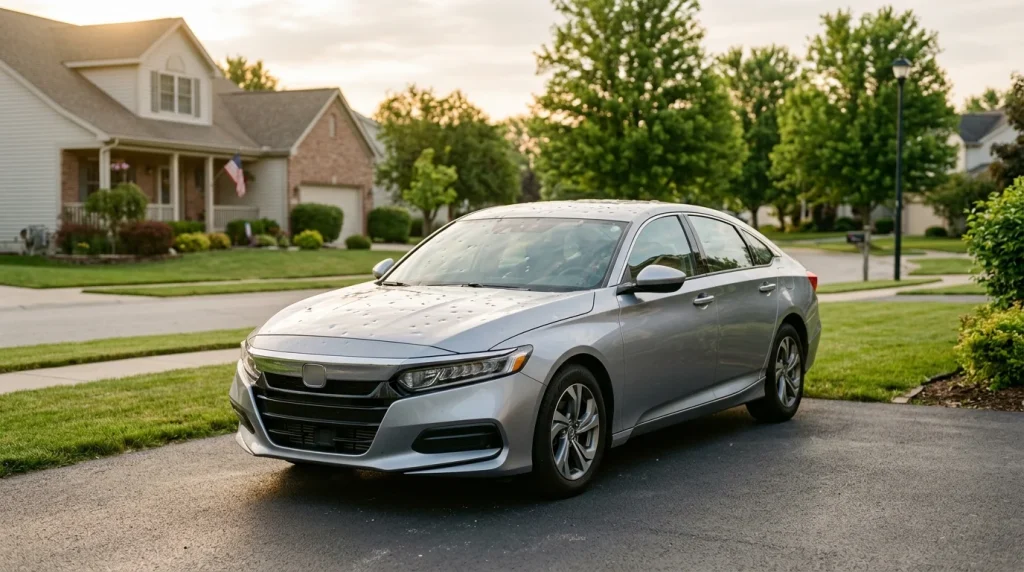
If you are wondering what happens when your car is totaled but still drivable, your insurance company has determined that repairing the vehicle is financially impractical based on state statutory thresholds or the Total Loss Formula. You have two primary options: surrender the vehicle to the insurer for a full Actual Cash Value (ACV) payout minus your deductible, or keep the vehicle through an owner-retained salvage settlement where the insurer deducts both your deductible and the estimated salvage auction value. Once a total loss is declared, the vehicle receives a salvage title and cannot be driven legally on public roads until you complete all required repairs, pass state safety inspections, and obtain a branded rebuilt title.
Key takeaways:
- A total loss is a mathematical calculation comparing repair costs to market value, not a reflection of whether the engine starts or the vehicle rolls.
- Surrendering the car provides a clean cash settlement equal to the vehicle’s pre-accident Actual Cash Value minus your deductible.
- Retaining the vehicle reduces your insurance check by the projected salvage value, which typically ranges between $500 and $3,000.
- Driving a car with an active salvage title is illegal on public roads; you must secure a rebuilt title through state inspections before re-registering.
- Insuring a vehicle with a rebuilt title is challenging, often restricted to liability-only coverage with premium surcharges between 20% and 40%.
What does “totaled” mean and how is it decided?
An insurance company declares a vehicle a total loss when the estimated cost of repairs exceeds a specific financial threshold defined by state law or insurance policy terms. The term “totaled” represents an accounting determination rather than a mechanical diagnosis. A vehicle can sustain cosmetic damage across exterior sheet metal while its engine, transmission, steering assembly, and frame remain fully functional.
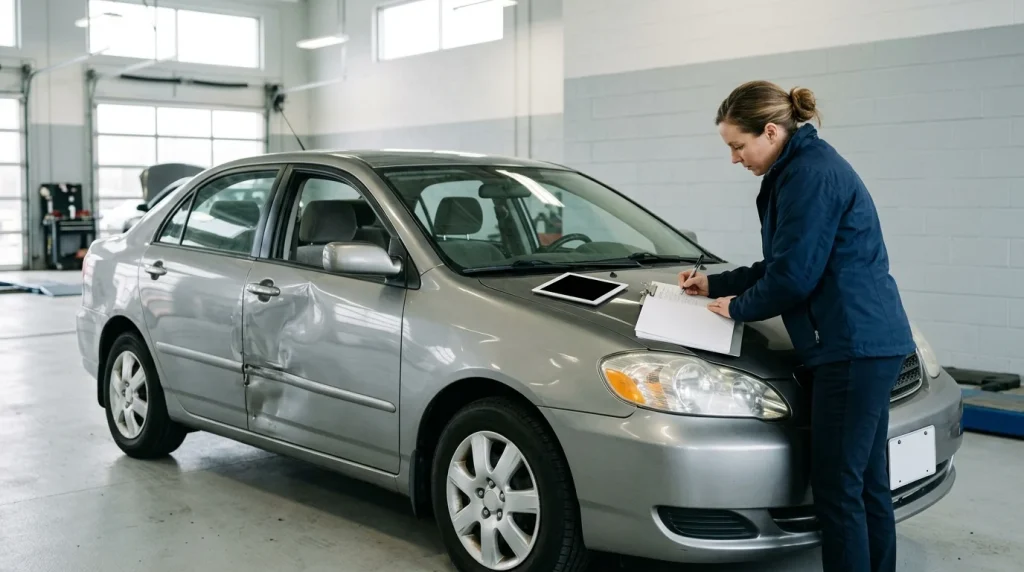
When an insurance adjuster evaluates a damaged car, they calculate its pre-accident Actual Cash Value (ACV). ACV reflects the vehicle’s fair market value immediately prior to the collision, accounting for mileage, age, regional market demand, and overall wear. If the cost of parts, paint, and labor required to restore the car to its pre-loss condition crosses the state’s legal threshold, the insurer writes the vehicle off as a total financial loss.
In many accidents, calculating repair estimates for outer components, such as evaluating how much is it to fix a car bumper, shows how quickly modern sensor calibrations and factory paint blending can escalate an initial estimate. When cosmetic damage spreads across several panels, comparing whether it is cheaper to wrap or paint a car highlights alternative refinishing costs, yet insurance adjusters must price repairs using original equipment manufacturer (OEM) replacement parts and standardized bodyshop labor rates.
According to regulatory guidelines published by the National Association of Insurance Commissioners (NAIC), states regulate total loss evaluations through two primary methodologies:
- Fixed Percentage Thresholds (Total Loss Threshold – TLT): Under this framework, a car is declared a total loss if repair costs reach a specific percentage of its pre-crash ACV. Oklahoma maintains the lowest threshold at 60%, while states like New York, Virginia, and North Carolina use a 75% threshold. Florida, Mississippi, and Oregon total vehicles at 80%, whereas Texas and Colorado require repair costs to reach 100% of ACV.
- The Total Loss Formula (TLF): States such as California, Pennsylvania, Ohio, and Washington utilize a mathematical formula rather than a fixed percentage. Under the TLF, a vehicle is totaled if:
Cost of Repairs + Projected Salvage Value >= Actual Cash Value (ACV)
If the estimated repair bill combined with the cash the insurer can recover by selling the damaged vehicle at a commercial salvage auction equals or exceeds the vehicle’s cash value, the claim is processed as a total loss.
Example calculation and scenario
Consider a five-year-old midsize sedan with an established pre-accident Actual Cash Value of $12,000. Following a rear-end collision, the vehicle runs smoothly and drives in a straight line, but the trunk lid, rear quarter panels, tail lamps, and bumper support require extensive rebuilding.
The body shop prepares a comprehensive estimate totaling $9,200 for parts, structural alignment, paint, and labor:
| Financial Element | Value | Calculation Context |
|---|---|---|
| Pre-Accident Actual Cash Value (ACV) | $12,000 | Market value determined by local comparable sales |
| Estimated Repair Costs | $9,200 | Parts, frame labor, and factory paint blending |
| Repair-to-Value Ratio | 76.67% | $9,200 divided by $12,000 |
| State Threshold Benchmark (75% State) | $9,000 | 75% of $12,000 ACV |
| Claim Outcome | Total Loss | Repair cost ($9,200) exceeds 75% statutory limit ($9,000) |
In this scenario, even though the vehicle remains mechanically sound and drivable, the insurer cannot authorize the $9,200 repair because it surpasses the state’s 75% statutory ceiling.
Key terms and concepts
- Actual Cash Value (ACV): The replacement cost of the vehicle minus physical depreciation, age, and pre-existing wear.
- Salvage Value: The remaining monetary worth of a damaged vehicle, calculated by what salvage yards or parts recyclers will pay for the car at commercial auction.
- Owner-Retained Salvage: A legal agreement where the policyholder keeps the damaged vehicle in exchange for a reduced insurance settlement check.
- Title Branding: A permanent marker placed on a vehicle’s official title history by the Department of Motor Vehicles (DMV) indicating severe damage history.
Drivable but totaled: what changes for you?
Receiving a total loss designation on a car that still runs creates immediate legal and operational restrictions. Once your insurance carrier finalizes the total loss paperwork, they notify the state DMV. The state agency updates its central database, voiding the existing clean title and issuing a salvage certificate.
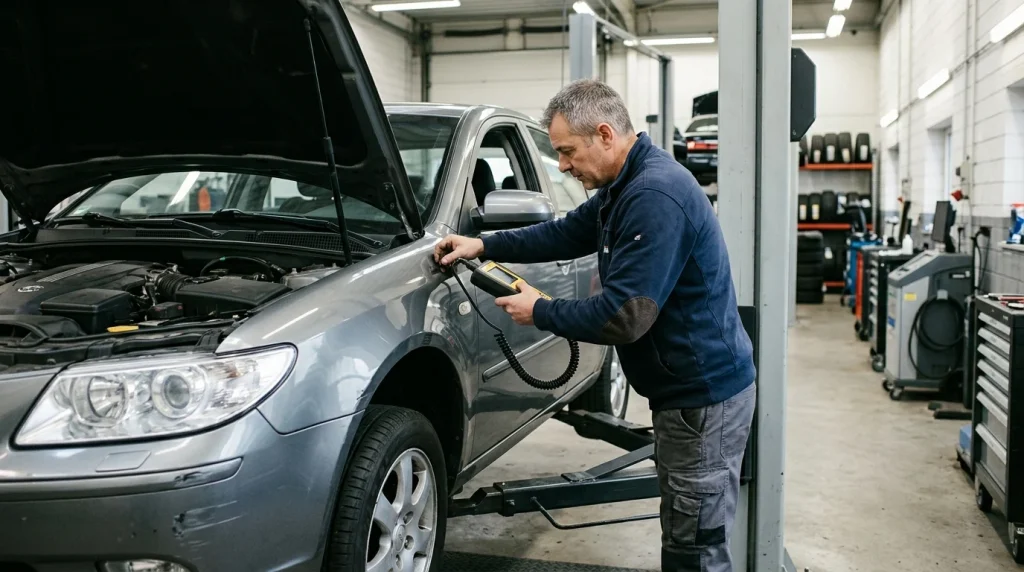
The moment a vehicle receives a salvage title, its existing registration is suspended or cancelled. Operating a vehicle with a salvage title on public streets or highways is illegal in all fifty states. Even if your headlights work, your airbags did not deploy, and the vehicle tracks straight, driving it exposes you to traffic citations, vehicle impoundment, and personal liability in the event of another collision.
While handling the administrative process, owners must arrange secure off-street storage. Understanding how long can a car sit without being driven helps prevent battery drain, tire flat-spotting, and brake rotor corrosion while the vehicle sits idle.
After completing bodywork, following the best ways to clean a car after a body repair protects freshly applied paint finishes before submitting the car for formal state inspections.
Title status and legality
The transition from a clean title to a road-legal status involves two distinct legal stages:
| Feature | Salvage Title | Rebuilt Title |
|---|---|---|
| Public Road Legality | Strictly illegal to operate on public roads | 100% legal to register and operate |
| DMV Registration Status | Suspended, revoked, or non-repairable | Active, fully registered with standard license plates |
| Commercial Resale Impact | Cannot be sold to retail drivers; parts only | Permanent 20% to 40% reduction in market resale value |
| Insurance Eligibility | Comprehensive storage or transit coverage only | Standard liability coverage; limited full physical damage |
| Required Inspections | Pending major repairs and verification | Passed state-certified safety and anti-theft inspections |
According to the California Department of Motor Vehicles (DMV), drivers restoring a total loss vehicle must comply with strict physical and digital verification protocols. California has replaced legacy paper brake and lamp adjustment certificates with the electronic Vehicle Safety Systems Inspection (VSSI) program. The VSSI standard requires a licensed station to test steering geometry, electronic braking systems, suspension components, passenger restraint modules, and forward illumination, transmitting passing results directly to the DMV database.
Title transfer steps
- Retain the Salvage Vehicle: Execute the owner-retention paperwork with your claims adjuster, surrendering the clean title in exchange for the salvage certificate.
- Execute Certified Repairs: Complete all structural, safety, and mechanical repairs. Maintain every receipt for replacement parts, noting serial numbers and donor vehicle Vehicle Identification Numbers (VINs) for major assemblies.
- Pass Component and Anti-Theft Verification: Submit the car to state police or certified DMV inspection stations (such as California Highway Patrol Form CHP 97C or standard VIN verification) to confirm that no stolen parts were used. Inspectors thoroughly examine vehicle wiring and aftermarket modules; our guide on how to find a tracking device on your car helps drivers locate and document non-factory electronic units before the official inspection.
- Complete Safety Certification: Pass state-mandated safety inspections, such as the digital VSSI inspection or regional state safety checks.
- Apply for a Rebuilt Title: File the completed inspection certificates, salvage title, repair bills, and registration fees at your local DMV office to obtain a branded rebuilt title and new license plates.
How payouts are calculated and paid out
Understanding insurance mathematics helps you decide whether keeping your car makes financial sense. When an insurance company settles a total loss claim, the baseline payout always starts with the vehicle’s pre-accident Actual Cash Value.
If you surrender the car, the calculation is straightforward:
Net Payout = Actual Cash Value (ACV) – Policy Deductible
If you choose owner-retention to keep your drivable car, the insurer deducts the projected salvage auction value:
Net Payout = Actual Cash Value (ACV) – Policy Deductible – Salvage Value
According to consumer guidance from the Texas Department of Insurance, salvage values are determined by pulling real-time auction bids from commercial salvage pools such as Copart or IAA. Salvage bids typically range between 10% and 30% of the vehicle’s pre-loss ACV, equating to $500 to $3,000 depending on vehicle age, powertrain demand, and catalytic converter scrap values.
Settlement timelines often influence this decision. Researching how long does it take to settle a car accident provides realistic timelines for appraisal reviews and check disbursements. Furthermore, if body repairs require extensive refinishing, calculating how long does it take to paint a car helps you budget garage downtime and rental expenses while the vehicle is out of service.
Lienholder involvement and outs (if financed)
Financing introduces significant complications to a total loss settlement because you do not hold the physical title. The lender listed as the primary lienholder holds the legal title as collateral for the outstanding auto loan.
When an insurance company settles a total loss on a financed car, the payment check is issued directly to the lender or made co-payable to both you and the financial institution:
- Scenario A (Positive Equity): Your car’s ACV is $16,000, your deductible is $500, and your remaining loan balance is $11,000. The insurer pays $11,000 to the lender to satisfy the lien in full, and the remaining $4,500 is sent directly to you.
- Scenario B (Negative Equity / Underwater Loan): Your car’s ACV is $13,000, your deductible is $500, and your loan balance is $16,500. The insurer pays the net settlement of $12,500 to the lender. You remain personally liable for the remaining $4,000 deficiency balance.
If you purchased Guaranteed Asset Protection (GAP) insurance, the GAP policy covers the $4,000 difference, clearing your remaining loan obligation. Without GAP coverage, the lender has the legal right to demand the full remaining balance immediately because the underlying collateral has been destroyed.
Buy-back and salvage options
Lenders rarely permit owner-retained salvage on financed vehicles. Because the title will be branded as salvage, the lender’s collateral value drops precipitously. To keep a totaled car under an active loan, you must obtain written authorization from the lender, which almost always requires paying off the entire remaining loan balance out of pocket before they will release the title. Retaining a totaled vehicle is only financially advantageous when the owner owns the car free and clear, the damage is purely cosmetic (such as hail dents or paint scratches), and the owner has access to affordable repair labor. If the car has structural frame distortion or an outstanding auto loan, surrendering the vehicle provides superior financial security.
Insurance, rates, and your future insurability
Managing a rebuilt vehicle requires realistic expectations regarding future insurance coverage. Insurance underwriters categorize rebuilt vehicles as elevated risks due to potential hidden structural fatigue or non-standard repair quality.
According to underwriting data compiled by the Insurance Information Institute (III), most national carriers will write liability insurance for rebuilt title vehicles, ensuring you meet state financial responsibility mandates. However, securing comprehensive and collision coverage is exceptionally difficult. If an insurer agrees to write full physical damage coverage, they typically charge premiums that are 20% to 40% higher than identical clean-title policies.
Policyholders should also evaluate claims history impacts, reviewing how long does a car accident stay on your record to forecast overall premium adjustments over the subsequent three to five years. If you decide to surrender the car and purchase a replacement pre-owned vehicle, reviewing consumer protection standards such as what is the lemon law in Texas for used cars provides essential legal guidance during dealership negotiations.
Tax, accounting, and consumer considerations
- Sales Tax Reimbursement: In many states, insurance companies are legally required to include state and local sales tax and title transfer fees in your total loss cash settlement, ensuring you have adequate funds to replace the car.
- Subsequent Total Loss Valuation: If a rebuilt title vehicle is involved in a subsequent accident and totaled a second time, insurance adjusters automatically apply a 20% to 40% reduction to its standard market ACV to reflect the existing branded title history.
- Property Tax Adjustments: Branded title vehicles carry lower assessed market values, which can reduce annual personal property taxes in states that assess vehicle property levies.
Common myths and facts
-
Myth: If a car is totaled, it is mechanically unsafe to drive ever again.
Fact: A total loss declaration is an economic determination. A car with hail damage or scratched body panels can be mechanically flawless while exceeding repair cost thresholds.
-
Myth: Dashboard warning lights automatically mean a car is totaled.
Fact: Warning lights indicate sensor triggers. Reviewing what does the exclamation point mean in a car shows that many illuminated symbols represent routine tire pressure or fluid notifications rather than catastrophic write-offs.
-
Myth: A broken climate control system or auxiliary motor can cause a total loss write-off on its own.
Fact: Auxiliary electrical issues are standard repairs. Diagnosing how to check if your car AC compressor is working helps distinguish isolated component replacements from major structural damage.
-
Myth: You can drive a totaled car as long as you keep your old registration card in the glovebox.
Fact: Insurers notify the DMV immediately upon total loss payout. Driving a salvage-branded car before passing state inspections constitutes driving an unregistered vehicle, risking impoundment and heavy fines.
Next steps and checklists
If your insurance carrier has declared your drivable car a total loss, follow this step-by-step action plan to protect your legal and financial interests:
-
Obtain the Written Total Loss Valuation Report: Request the detailed ACV breakdown from your adjuster. Review vehicle options, trim packages, mileage deductions, and local comparable listings to ensure the valuation is accurate.
-
Obtain an Independent Repair Estimate: Take the vehicle to a trusted independent body shop to determine exact labor and parts costs for returning the car to safe operating condition.
-
Check Mechanical Auxiliary Systems: Ensure all functional safety systems operate properly, confirming that the heater core and interior defroster fans function reliably for state road-worthiness tests.
-
Inspect Steering and Powertrain Fluids: Confirm power steering lines are intact and review how much power steering fluid does a car need to prevent mechanical test failures.
-
Verify Exhaust and Emissions Integrity: Look for exhaust leaks or catalytic converter issues; resolving why does my car smell like a rotten egg ensures your vehicle passes required municipal emissions checks.
-
Compare Net Payouts: Calculate whether keeping the net payout (ACV minus deductible minus salvage value) leaves enough funds to complete repairs and pay DMV inspection fees.
-
Contact Your Lender (If Financed): If the vehicle carries an active loan, verify whether GAP insurance applies and whether the lender allows owner retention.
-
Finalize DMV Retitling: Complete state-certified safety inspections, retain all parts receipts, and file for a rebuilt title before driving on public roads.
Note: Never accept an insurance company’s initial total loss settlement without reviewing their comparable vehicle valuation sheet. Adjusters frequently overlook recent mechanical upgrades, new tires, or premium factory options that can increase your final ACV payout by hundreds or thousands of dollars.
Frequently asked questions about totaled drivable cars
What does total loss mean?
A total loss means the cost to repair a damaged vehicle exceeds a statutory percentage of its pre-accident market value or meets the state’s Total Loss Formula. It is a financial determination by the insurance company indicating that repairing the vehicle is uneconomical.
Can a totaled car still be driven?
A totaled car cannot be driven legally on public roads once it receives a salvage title. You must complete all necessary repairs, pass state anti-theft and safety inspections, and obtain a branded rebuilt title from the DMV before operating it legally.
How is ACV calculated?
Actual Cash Value (ACV) is calculated by taking the vehicle’s pre-accident retail market value and adjusting for mileage, physical condition, pre-existing wear, optional equipment, and recent comparable sales in your local geographic area.
Will my insurance rate go up after a total-loss claim?
Insurance premiums often increase following a total-loss claim if you were found at fault for the accident. However, if the total loss resulted from a non-fault collision or a comprehensive event like hail, rate increases depend on state regulations and your policy’s claims history terms.
What is salvage title and can it be rebuilt?
A salvage title is an official DMV brand indicating that a vehicle has been declared a total loss due to damage. A salvage title can be converted into a rebuilt title after the vehicle undergoes complete mechanical and safety repairs and passes certified state inspections.

