You may also like:
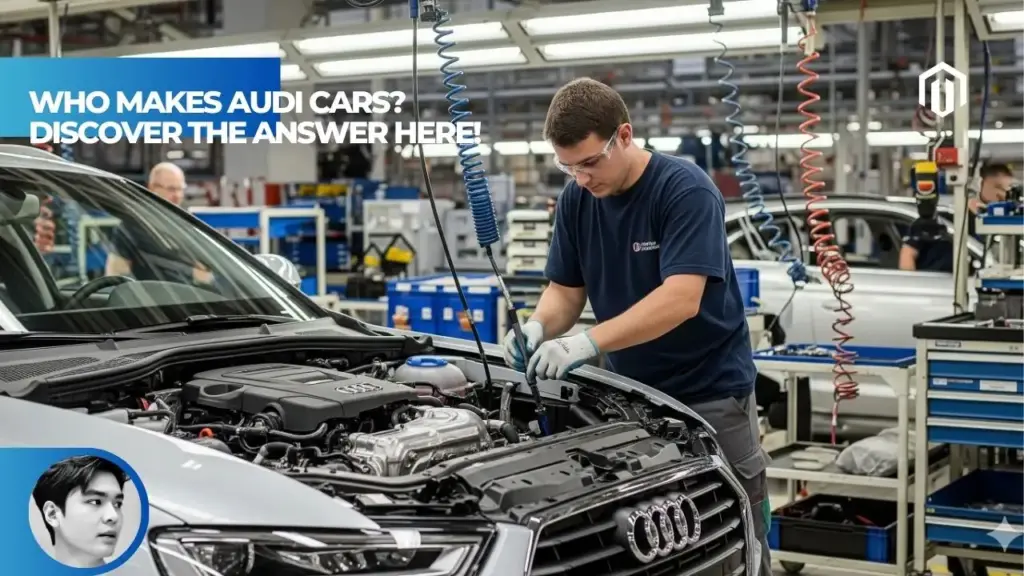
Audi cars are made by Audi AG, a German automaker headquartered in Ingolstadt, Germany—but Audi AG is a wholly-owned subsidiary of Volkswagen Group[1]. Volkswagen AG acquired 100% ownership of Audi through a squeeze-out completed in March 2020, delisting Audi shares from public trading[2]. This means every Audi you see on the road comes from a company ultimately controlled by the same German conglomerate that owns Porsche, Lamborghini, Bentley, and SEAT.
Volkswagen Group’s Ownership of Audi
Volkswagen AG serves as Audi’s parent company with complete ownership control[2]. The relationship isn’t a loose partnership—it’s full subsidiary integration. VW Group makes all strategic decisions for Audi while allowing the brand operational autonomy for design, marketing, and model development.
Here’s what the ownership structure looks like today:
| Aspect | Detail |
|---|---|
| Owner | Volkswagen AG (100%) |
| Previous structure | 99.64% VW-owned, 0.36% public float |
| Squeeze-out completed | March 2020 |
| Public trading | Delisted |
| Corporate status | Wholly-owned subsidiary |
The integration runs deep[2]. Audi shares technology platforms, research and development resources, and purchasing agreements with other VW Group brands. When you’re looking at Audi’s electric vehicle lineup, you’re seeing technology that benefits from billions in shared R&D spending across the entire group.
But here’s what many people don’t realize: Audi maintains distinct brand positioning despite the integration. The four-ring badge carries its own engineering philosophy, design language, and target customer—even though the accounting rolls up to Wolfsburg.
All Brands Under Volkswagen Group
Volkswagen Group operates ten automotive brands, making it one of the world’s largest automakers[3]. The portfolio spans from mass-market vehicles to ultra-luxury supercars.
| Brand | Segment | Notable Models |
|---|---|---|
| Volkswagen | Mass market | Golf, Tiguan, ID.4 |
| Audi | Premium | A4, Q5, e-tron GT |
| Porsche | Sports/Luxury | 911, Cayenne, Taycan |
| Lamborghini | Supercar | Huracán, Urus, Revuelto |
| Bentley | Ultra-luxury | Continental GT, Bentayga |
| SEAT | European value | Leon, Ateca, Ibiza |
| Cupra | Performance | Formentor, Born, Tavascan |
| Škoda | Value-oriented | Octavia, Kodiaq, Superb |
| Scout | American EV | Scout Terra, Scout Traveler (upcoming) |
| Volkswagen Commercial | Light commercial | Transporter, Crafter |
The group also controls TRATON, its commercial truck division, which includes brands like Scania and MAN[4]. VW Group has over 100 subsidiaries worldwide spanning manufacturing, financial services, and mobility solutions[4].
What’s interesting about this structure? VW Group lets brands compete against each other. An Audi Q5 competes not just with the BMW X3 but also with the Porsche Macan—a corporate sibling. That internal competition pushes each brand to differentiate rather than coast.
How Volkswagen Acquired Audi
The story of how Audi ended up under Volkswagen’s umbrella involves multiple ownership changes, corporate strategy, and a bit of automotive history that stretches back over 60 years[5].
From Daimler-Benz to Volkswagen
Audi’s predecessor, Auto Union GmbH, had been under Daimler-Benz ownership since 1958[5]. By 1959, Auto Union became a wholly-owned Daimler subsidiary. The Ingolstadt factory even produced VW Beetles alongside Auto Union vehicles during this period—a quirk of post-war German industrial arrangements.
Volkswagen began negotiating to acquire Auto Union in 1964[1]. The acquisition wasn’t originally about building a multi-brand empire. VW wanted the Ingolstadt factory’s capacity (100,000 vehicles annually), its skilled workforce, and its dealer network of over 1,200 locations. Buying Auto Union also eliminated a direct competitor[1].
By 1966, Volkswagen had secured full control[6]. The deal included rights to a medium-pressure four-stroke engine that Daimler-Benz had nearly perfected—technology VW saw as giving them a competitive edge.
The Audi Name Returns
The Audi brand name was revived under VW ownership. In 1969, Auto Union merged with NSU Motorenwerke to form Audi NSU Auto Union AG[5]. This merger brought additional engineering talent and the rotary engine technology NSU had developed.
Through decades of progressive consolidation, VW increased its stake in Audi[6]. By 2012, Volkswagen owned 99.64% of Audi shares. The final squeeze-out in 2020 brought that to 100%, removing Audi from public stock exchanges entirely[2].
What VW Ownership Means for Audi Buyers
For anyone shopping for an Audi, VW Group ownership has practical implications—both positive and a few worth considering.
Shared Platform Benefits
Audi vehicles share platforms with other VW Group products, which drives down development costs and improves component quality through higher production volumes[2]. The MLB platform underpins everything from the Audi Q5 to the Porsche Cayenne. The MEB electric platform powers the Audi Q4 e-tron alongside the VW ID.4.
What does this mean in practice? Parts availability tends to be better. Engineering benefits from billions in shared R&D. And reliability improvements in one model often cascade across the group.
Brand Differentiation
Despite platform sharing, Audi maintains distinct positioning[2]. The brand focuses on technology leadership (MMI infotainment, virtual cockpit, quattro all-wheel drive) and refined interior quality. You’re not buying a rebadged Volkswagen when you purchase an Audi—the tuning, materials, and feature content justify the premium pricing.
Service and Warranty
Audi operates its own dealer network in the US, separate from VW dealerships. Warranty coverage and service standards are Audi-specific, though VW Group’s global service infrastructure supports parts supply[2]. If you’re curious about how long Audis last, the VW Group engineering heritage suggests these vehicles can go the distance with proper maintenance.
Where Audi Vehicles Are Manufactured
Audi operates manufacturing facilities across multiple continents, though headquarters remain in Ingolstadt, Germany[1].
| Location | Country | Key Models Produced |
|---|---|---|
| Ingolstadt | Germany | A3, A4, A5, Q2 |
| Neckarsulm | Germany | A6, A7, A8, e-tron GT |
| Győr | Hungary | A3, TT, Q3, engines |
| Brussels | Belgium | Q8 e-tron (EV production) |
| San José Chiapa | Mexico | Q5 (North American market) |
| Changchun | China | A4L, A6L, Q5L (Chinese market) |
The Q5 sold in the United States comes from Audi’s Mexican facility—a modern plant opened in 2016 specifically to serve North American demand[1]. European models primarily ship from German and Hungarian facilities.
Audi also sources components from across the VW Group supply chain[4]. Engines, transmissions, and electronic systems often come from shared group facilities, with Audi-specific tuning and calibration applied.
Audi vs Other VW Group Brands
Understanding where Audi sits within the VW Group hierarchy helps explain its pricing, positioning, and features.
| Brand | Position | Price Range (US) | Closest Audi Competitor |
|---|---|---|---|
| Volkswagen | Mass market | $22,000-$55,000 | — |
| Škoda | Value premium | Not sold in US | — |
| SEAT/Cupra | Euro sport | Not sold in US | — |
| Audi | Premium | $36,000-$190,000 | — |
| Porsche | Sports luxury | $65,000-$250,000 | Audi RS models |
| Bentley | Ultra-luxury | $190,000-$350,000 | Audi A8 |
| Lamborghini | Supercar | $230,000-$600,000 | Audi R8 |
Audi occupies the “accessible premium” space—competing directly with BMW and Mercedes-Benz[7]. The best Audi models deliver technology and refinement that punch above their weight against these German rivals.
The RS performance line bridges toward Porsche territory, while the A8 flagship sedan offers near-Bentley luxury at roughly half the price. This tiered structure lets VW Group capture customers at multiple price points without cannibalizing sales.
Key Takeaways
- Volkswagen AG owns 100% of Audi AG following a 2020 squeeze-out that removed Audi from public stock exchanges—making it a wholly-owned subsidiary with full VW Group integration[2].
- VW Group operates ten automotive brands including Porsche, Lamborghini, Bentley, and Škoda, with Audi positioned in the premium segment competing against BMW and Mercedes-Benz[3].
- The acquisition history traces back to 1964-1966 when Volkswagen purchased Auto Union from Daimler-Benz for factory capacity and workforce—not originally as a luxury brand strategy[1].
- Audi vehicles share platforms and components with other VW Group brands, which reduces development costs and improves parts availability while maintaining distinct brand positioning through unique tuning and features[2].
- Audi manufactures vehicles in Germany, Hungary, Belgium, Mexico, and China—with the US-market Q5 produced at the San José Chiapa facility in Mexico[1].
- For buyers, VW Group ownership translates to engineering resources from a $300+ billion automotive conglomerate behind every Audi, balanced with brand-specific design philosophy and technology focus.
FAQs
Is Audi a German company?
Yes, Audi AG is headquartered in Ingolstadt, Germany, and was founded there in 1909 when August Horch established the company after leaving his previous venture[5]. While owned by Volkswagen Group (also German), Audi maintains its own corporate identity, engineering centers, and manufacturing facilities primarily in Germany. The brand’s tagline “Vorsprung durch Technik” (progress through technology) reflects its German engineering heritage.
Does Audi share parts with Volkswagen?
Audi shares platforms, powertrains, and certain components with Volkswagen and other VW Group brands[2]. The MLB platform underpins vehicles ranging from the Audi Q5 to the Porsche Cayenne, while the MEB electric platform serves both the Audi Q4 e-tron and VW ID.4. Shared components reduce costs and improve parts availability, but Audi applies brand-specific tuning, materials, and features that differentiate its vehicles from VW counterparts.
Are Audi cars reliable compared to other luxury brands?
Audi reliability has improved significantly with VW Group’s consolidated quality standards[2]. Modern Audis benefit from shared engineering resources and extensive platform testing across multiple brands. However, complexity—especially in turbocharged engines and advanced electronics—means maintenance costs remain higher than non-luxury vehicles. Proper service following manufacturer intervals helps ensure Audis achieve high mileage without major issues.
Why did Volkswagen buy Audi?
Volkswagen initially acquired Auto Union (Audi’s predecessor) in 1964-1966 primarily for manufacturing capacity and to eliminate a competitor[1]. The Ingolstadt factory’s 100,000-vehicle annual capacity, skilled workforce, and dealer network were strategic assets VW needed as production at Wolfsburg reached its limits. Building a multi-brand luxury portfolio came later as VW recognized the value of brand differentiation in the premium market.
Referencecs
- Volkswagen Group. (2022). The History of Audi. https://www.volkswagen-group.com/en/the-history-of-the-brands-17668/the-history-of-audi-17672
- Autvex. (2025). Who Makes Audi Cars? Inside the Volkswagen Group. https://autvex.com/who-makes-audi-cars/
- Volkswagen Group. (2026). Brands & Brand Groups. https://www.volkswagen-group.com/en/brands-and-brand-groups-15811
- GreyB. (2025). Volkswagen Subsidiaries. https://insights.greyb.com/volkswagen-subsidiaries/
- Audi AG. (2024). The History of AUDI AG. https://www.audi.com/en/company/profile/audi-tradition/company-history/
- Porter’s Five Forces. (2025). Who Owns AUDI Company? https://portersfiveforce.com/blogs/owners/audi
- Consumer Reports. (2025). Who Owns Which Car Brands? https://www.consumerreports.org/cars/who-owns-which-car-brands-a5925868661/

I am a senior automotive analyst at Autvex. Expert vehicle evaluations, in-depth reviews, and objective analysis helping readers make informed automotive decisions with years of industry experience.