You may also like:
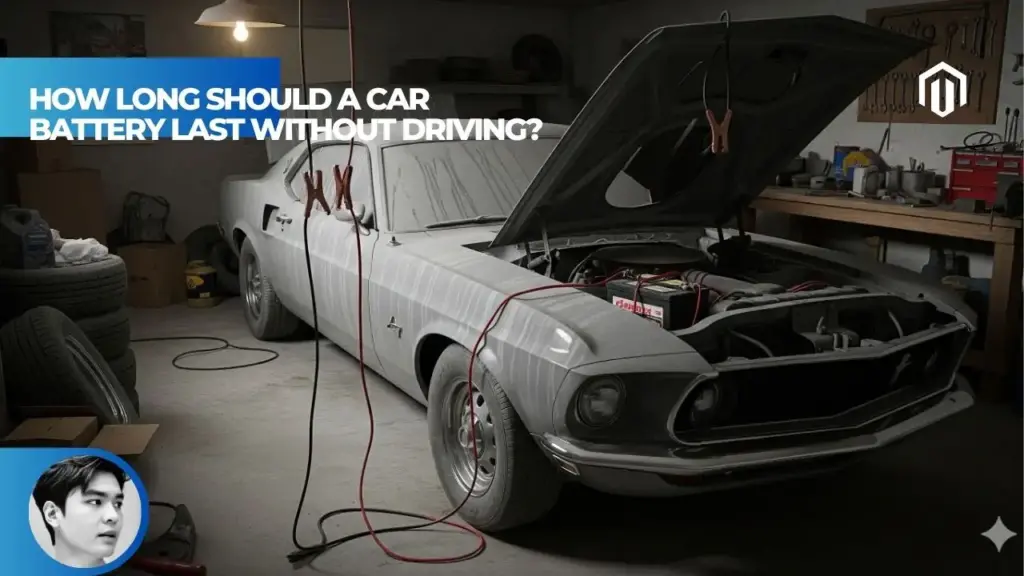
A car battery typically lasts 2 to 4 weeks without driving before it dies, though a newer battery in good condition can stretch to about 2 months[1]. The exact timeframe depends on your battery’s age, your vehicle’s parasitic drain, and the outside temperature[2].
Why Car Batteries Drain When Parked
Your car is never truly off. Even with the engine shut down and the keys in your pocket, dozens of electrical systems continue drawing power around the clock[1].
The onboard computers need electricity to store engine data. Your key fob receiver stays active, waiting for a signal. The security system monitors for threats. The clock keeps time. Infotainment systems retain your radio presets and Bluetooth pairings. This constant low-level power consumption is called parasitic drain or key-off drain, and it’s completely normal—every modern vehicle has it[1].
Here’s the thing: when you drive regularly, the alternator recharges the battery faster than the parasitic systems can drain it. But when the car sits idle, nothing replenishes what’s being consumed[2]. The battery slowly depletes until it can no longer produce enough voltage to start the engine.
A healthy parasitic draw measures around 25-50 milliamps[3]. Anything above 50 mA indicates a problem somewhere in the electrical system that will drain your battery much faster than normal.
How Long Before a Parked Battery Dies?
The timeline varies significantly based on several factors, but here’s what to expect in typical conditions:
| Scenario | Expected Battery Life |
|---|---|
| New battery, modern vehicle | 4-8 weeks[2] |
| Battery 1-3 years old | 2-4 weeks[1] |
| Battery 3+ years old | 1-3 weeks |
| Vehicle with lots of electronics | 2-3 weeks[1] |
| Extreme cold or heat | 1-2 weeks |
| Already-weak battery | Days to 1 week |
A brand new battery in a basic vehicle might survive 2 months of sitting, but that’s pushing it[4]. Tech-heavy cars with keyless entry, remote start systems, and advanced telematics drain batteries faster because more systems stay active when parked[1].
Factors That Speed Up Battery Drain
Parasitic Draw From Electronics
Modern vehicles pack more electrical accessories than ever. Each one pulls a small amount of current when the car is off—dashcams, aftermarket stereos, alarm systems, and GPS trackers all contribute[1]. Aftermarket installations are particularly problematic if wired incorrectly, potentially drawing power constantly rather than only when the ignition is on[5].
I’ve seen cars where a poorly installed remote starter drained a new battery in under a week. Factory systems are designed to minimize parasitic draw, but anything added afterward can disrupt that balance. If your battery dies faster than expected, aftermarket electronics should be the first suspect.
Extreme Temperatures
Temperature extremes accelerate battery drain. Cold weather thickens the engine oil, making the engine harder to crank while simultaneously reducing the battery’s chemical efficiency[1]. A fully charged battery at 80°F might only deliver 65% of its power at 32°F.
Heat causes equally serious damage, just differently. High temperatures speed up the chemical reactions inside the battery, leading to faster self-discharge and permanent capacity loss[1]. Summer heat in Phoenix or Houston can shorten a battery’s overall lifespan significantly.
Battery Age and Condition
Batteries naturally degrade over time. The average car battery lasts 3-5 years under normal driving conditions[1], but that lifespan assumes regular use and charging. An older battery holds less total charge and loses what charge it has faster when sitting.
When any battery drops below 12.4 volts and stays there, sulfation begins forming on the internal plates[6]. This chemical buildup permanently reduces capacity and shortens overall lifespan. A battery that repeatedly sits until it’s dead will fail sooner than one that stays properly charged. If you’re concerned about battery replacement timing, getting a professional test can reveal whether yours is still healthy.
How to Keep Your Battery Charged
Drive at Least 30 Minutes Weekly
The simplest solution requires no extra equipment. Driving your car for at least 30 minutes at highway speeds once a week gives the alternator enough time to fully recharge the battery[2].
Short trips don’t cut it. Starting the engine draws a massive burst of power from the battery, and the alternator needs sustained engine RPMs to put that power back[1]. A quick drive to the grocery store might actually net-drain the battery rather than charge it. You need highway speeds—or at least sustained driving above 1,000 RPM—for 20-30 minutes to make a meaningful difference.
Use a Battery Maintainer
If driving weekly isn’t practical, a battery maintainer (sometimes called a trickle charger or float charger) keeps your battery topped off indefinitely[6]. These devices plug into a standard wall outlet and connect to your battery terminals, automatically sensing the charge level and adding power only when needed.
Quality maintainers like the OPTIMA Digital 400 or Battery Tender Junior cost $30-$60 and can be connected indefinitely without overcharging[6]. The investment pays for itself if it prevents even one emergency battery replacement or tow truck call.
Disconnect the Battery for Long-Term Storage
Storing a car for months? Disconnecting the negative battery terminal stops all parasitic drain entirely[4]. The battery will still slowly self-discharge (about 5% per month even when disconnected), but it’ll last far longer than if it were connected to the vehicle’s electrical system[1].
For truly long-term storage—three months or more—remove the battery completely and store it in a cool, dry location between 40-60°F[4]. Connect it to a maintainer every few months to prevent sulfation. When properly stored this way, a battery can survive 6 months or longer without issue.
Disable Non-Essential Systems
Turn off your security system if the car is parked in a secure garage[2]. The alarm draws constant power waiting for a trigger, and that power adds up over days and weeks. Same goes for dashcams that continue recording while parked, interior lights that stay on, or any other system you don’t truly need running.
Signs Your Battery Is Getting Low
Catching a weak battery early can save you from getting stranded. Watch for these warning signals:
- Slow engine crank. If the starter motor sounds sluggish when you turn the key, the battery is struggling to deliver full power. This is your earliest warning sign—the battery still has enough juice to start the car, but not much margin left[2].
- Dim lights. Headlights and interior lights that seem dimmer than usual indicate reduced voltage reaching the electrical system. The battery can’t maintain proper voltage under load.
- Dashboard warning light. Most vehicles have a battery-shaped warning light that illuminates when voltage drops below normal operating levels. Don’t ignore it.
- Electrical glitches. Infotainment systems resetting, radio presets disappearing, or power windows operating slowly can all indicate borderline battery voltage.
If you notice these symptoms after the car has been sitting, drive for at least 30 minutes before parking again. The alternator may be able to rescue a borderline battery if it hasn’t been depleted too far. Understanding why a car won’t start even with a good battery can help you distinguish battery issues from other problems.
When to Replace Instead of Recharge
Not every dead battery can be saved. After sitting too long or discharging too deeply, permanent damage may make replacement the only real option[6].
| Symptom | What It Means |
|---|---|
| Won’t hold a charge after jumping | Internal damage, likely sulfation |
| Bulging or swelling case | Overheating damage, replace immediately |
| Age 4+ years | Near end of useful life |
| Multiple deep discharges | Cumulative plate damage |
| Corrosion on terminals | May indicate age or charging issues |
A battery that’s been completely dead for weeks or months probably isn’t worth saving. The sulfation damage compounds over time, and even if you can recharge it, the capacity will be permanently reduced[6]. At that point, a new battery is the more reliable choice.
If your car needs a jump after sitting, but the battery dies again shortly after, test both the battery and alternator. The problem might not be the battery alone.
Key Takeaways
- Car batteries typically last 2-4 weeks without driving before dying, with newer batteries in good condition potentially stretching to 2 months under ideal circumstances[1].
- Modern vehicles constantly draw power from the battery even when parked—onboard computers, key fob receivers, security systems, and clocks all contribute to parasitic drain that accumulates over days and weeks[1].
- Driving for at least 30 minutes at highway speeds once a week keeps the battery properly charged, while short trips may actually cause net power loss[2].
- A battery maintainer ($30-$60) can be connected indefinitely to keep a parked car’s battery fully charged without risk of overcharging[6].
- Batteries that sit below 12.4 volts develop sulfation damage on internal plates, permanently reducing capacity—avoiding deep discharge extends battery life significantly[6].
- Extreme temperatures, battery age, and aftermarket electronics all accelerate drain rates—a 3+ year old battery in a tech-heavy car might die in as little as 1-2 weeks of sitting[1].
FAQs
Can I start my car every few days instead of driving it?
Starting the engine without driving actually does more harm than good[1]. Cranking the engine uses a significant burst of battery power, and idling doesn’t produce enough alternator output to replace what was lost. You need sustained driving at highway speeds for the alternator to truly recharge the battery. If you can’t drive for 20-30 minutes, don’t start it at all—you’ll just drain the battery faster.
How long can an electric vehicle sit without driving?
Electric vehicles handle extended parking differently than gas cars. The 12V auxiliary battery (which powers accessories and systems separate from the main traction battery) can drain in 2-4 weeks similar to a conventional car[1]. The main high-voltage battery holds its charge longer—most EVs can sit for months with minimal loss, though Tesla recommends keeping the charge between 20-80% for long-term storage.
Will a trickle charger damage my battery?
Modern battery maintainers with “smart” or “float” charging technology won’t damage your battery even if connected for months[6]. These devices monitor voltage and only provide current when needed. Old-style constant-output chargers can overcharge and damage batteries if left connected too long, so look for models specifically labeled as maintainers or float chargers.
Is it bad to let a car battery die completely?
Yes. Every time a battery fully discharges, sulfation crystals form on the lead plates inside[6]. This permanently reduces the battery’s capacity and shortens its overall lifespan. One complete discharge won’t destroy a new battery, but repeated deep cycles will. Keeping the battery above 12.4 volts prevents sulfation and extends battery life.
References
- Interstate Batteries. (2023). How Long Do Car Batteries Usually Last? https://www.interstatebatteries.com/blog/how-long-do-car-batteries-usually-last
- Interstate Batteries. (2020). Can a Car Battery Die from Sitting Too Long? https://www.interstatebatteries.com/blog/how-to-maintain-your-sitting-car-battery
- UltraBright Lightz. (2025). What Can Drain a Car Battery When the Car Is Off? https://ultrabrightlightz.com/blogs/ubl-insider/what-can-drain-a-car-battery-when-the-car-is-off
- J.D. Power. (2023). How Long Does A Car Battery Last Without Driving It? https://www.jdpower.com/cars/shopping-guides/how-long-does-a-car-battery-last-without-driving-it
- Continental Battery. (2025). The Impact of Parasitic Draw on Your Car Battery’s Lifespan. https://www.continentalbattery.com/blog/the-impact-of-parasitic-draw-on-your-car-battery-s-lifespan
- OPTIMA Batteries. (2021). Why Does a Car Battery Drain Even When Not in Use? https://www.optimabatteries.com/experience/blog/why-does-a-car-battery-drain-even-when-not-in-use

I am a senior automotive analyst at Autvex. Expert vehicle evaluations, in-depth reviews, and objective analysis helping readers make informed automotive decisions with years of industry experience.