You may also like:
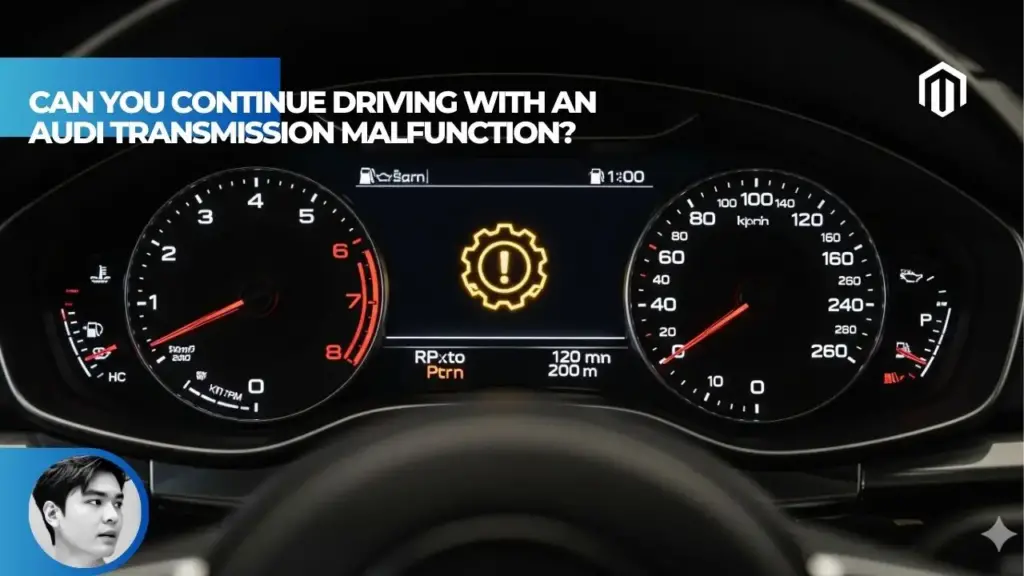
Yes, you can continue driving with an Audi transmission malfunction—but only if the warning light is amber/yellow and the message explicitly states “You can continue driving”[1]. This amber warning indicates limp mode activation, which limits your speed and locks the transmission into a protective gear to prevent catastrophic damage[2]. Red warnings or symptoms like grinding noises, burning smells, or complete gear loss require immediate stopping and towing to a service facility[1].
What Does “Transmission Malfunction: You Can Continue Driving” Mean?
When your Audi displays this specific message, the transmission control module has detected a fault but determined it’s not immediately critical[1]. The system enters a protective state called limp mode (or “limp home mode”), which restricts power output and locks the transmission into second or third gear[2].
Limp mode serves one purpose: getting you to a service facility without destroying the transmission. The catch? It’s not meant for normal driving. Your Audi may feel sluggish, refuse to shift normally, and limit your top speed to around 40 mph[1]. The car might also automatically switch into Sport or Manual mode while the system attempts to isolate the problem[3].
This warning commonly appears when accelerating from a stop, merging onto highways, driving uphill, or changing gears at low speeds[4]. Hot weather and stop-and-go traffic can expose developing issues that remain hidden during normal driving conditions[2]. If you’ve experienced similar drive system malfunction warnings, the root causes often overlap.
When to Stop Driving Immediately
Certain symptoms override any “continue driving” message. Stop and arrange towing when you experience:
- Red transmission warning light on the dashboard
- Complete loss of forward or reverse gears
- Transmission slipping out of gear while driving
- Metal grinding or scraping sounds from underneath
- Smoke visible from the transmission area
- Strong burning odor inside the cabin
- Transmission fluid pooling under the vehicle[1]
These symptoms indicate imminent transmission failure. Continuing to drive risks complete drivetrain damage and could leave you stranded in dangerous locations[2]. Similar warning scenarios apply to other German vehicles—BMW drivetrain malfunction warnings follow comparable logic.
Common Causes of Audi Transmission Malfunction Warnings
Most transmission malfunction warnings fall into a few categories: control system issues, temperature/pressure problems, adaptation limits, or internal component wear[2].
Sensor or Wiring Faults
A bad signal from speed sensors, temperature sensors, or harness connections can trigger warnings even when shifting feels normal[2]. These electrical gremlins often cause intermittent warnings that appear and disappear without any noticeable driving change. Don’t ignore intermittent faults—they’re often early indicators of developing problems.
Low Transmission Fluid
Low fluid reduces lubrication and causes overheating, leading to slipping gears and accelerated internal wear[5]. If you’re low on fluid, you either missed a service interval or have a leak somewhere in the system. Checking Audi fluid levels requires specific temperature procedures on most models.
Mechatronic Unit Failure
The mechatronic unit controls hydraulic functions in Audi’s S-tronic (DSG) transmissions. Symptoms include harsh shifts, failure to engage certain gears, or complete loss of drive[6]. Common fault codes include P17D8 (torque limitation due to clutch temperature), P17D6/P17D7 (clutch pressure issues), and P173C/P173F (valve electrical faults)[7].
Worn Clutch Components
In dual-clutch systems, worn clutch packs disrupt power transfer and cause harsh or aggressive shifting[1]. Clutch replacement typically costs $900–$1,600 depending on the model and shop[1]. The Q8 and other quattro models with S-tronic transmissions are particularly susceptible to clutch wear under aggressive driving.
Torque Converter Issues
The torque converter transfers engine power to the transmission. Failure causes slipping gears, shuddering, and overheating[5]. You’ll notice the car runs silent in neutral but produces grinding metal sounds when in gear. Damaged needle bearings are the usual culprit[8].
Solenoid Malfunction
The solenoid regulates transmission fluid flow. When it malfunctions, you’ll experience symptoms identical to low fluid—slipping gears and poor shift quality—even with adequate fluid levels[8]. A jammed clutch inside the torque converter can cause solenoid problems by creating hydraulic backpressure.
What to Do When the Transmission Light Comes On
Follow this immediate action protocol when you see the warning:
- Note the exact warning message and light color (amber vs. red)
- Reduce speed gradually to under 40 mph
- Avoid sudden acceleration or hard braking
- Turn on hazard lights if driving significantly slower than traffic
- Exit highways at the nearest safe opportunity
- Document all symptoms using your phone for the technician[1]
If safe to continue, drive directly to the nearest Audi service center or qualified transmission specialist. Call ahead and explain you’re driving with active transmission warnings—most dealers will prioritize diagnostic appointments for customers with warning lights active[1].
Your mileage may vary on finding quick appointments, so knowing whether Audi can be serviced anywhere gives you more options. Independent European specialists often have shorter wait times than dealer service departments.
Diagnostic Symptoms and Severity Assessment
Understanding specific symptoms helps determine how urgently you need service.
| Symptom | Severity | Can You Drive? | Estimated Repair Cost |
|---|---|---|---|
| Amber warning, shifts normally | Low | Yes, to service | $150–$500 (diagnostic) |
| Harsh/jerky shifting | Medium | Limited distance | $900–$1,600 (clutch) |
| Delayed engagement | Medium | Short distances | $500–$2,000 (solenoid/fluid) |
| Shuddering at low speed | Medium-High | Minimize driving | $800–$3,000 (torque converter) |
| Grinding noises | High | No, tow required | $2,000–$6,000+ (rebuild) |
| Complete gear loss | Critical | No, tow required | $4,000–$8,000+ (replacement) |
Costs vary by model, location, and dealer vs. independent shop[1][6]
Harsh shifting alone may allow limited driving, but it progressively worsens without intervention[1]. The longer you drive with symptoms, the more expensive the eventual repair becomes. Understanding how long an Audi can last often comes down to how quickly owners address warning signs like these.
Audi S-Tronic and DSG-Specific Issues
Audi’s 7-speed S-tronic (DL501/0B5) transmission powers many models including the S4, S5, A6, A7, and RS5. This dual-clutch system has documented issues that Audi has acknowledged to NHTSA[7].
Common DL501 problems include:
- Clutch pack wear causing shuddering and harsh engagement
- Dual mass flywheel (DMF) failure causing rattling at idle and vibration through the drivetrain[6]
- Circuit board faults in the mechatronic unit leading to erratic behavior
- G676 sensor failure deep in the rear transmission section
- 5th gear synchro wear on higher-mileage units[6]
Technical Service Bulletins (TSBs) exist for model years 2010–2016 addressing drivability concerns, mechatronic failures, and transmission pan cracks[7]. If your Audi falls within these years, ask your dealer specifically about relevant TSBs during diagnosis.
Key Takeaways
- Amber transmission warnings with “You can continue driving” messages allow cautious, low-speed travel directly to a service facility—red warnings require immediate stopping and towing[1].
- Limp mode restricts power and locks gears to protect the transmission, but continuing normal driving accelerates damage and increases repair costs[2].
- Common causes include mechatronic failure, low fluid, sensor faults, clutch wear, and solenoid malfunction—most require professional diagnosis and repair[5][6].
- Document the exact warning message, light color, and all symptoms before arriving at the service center—this information significantly speeds diagnosis.
- Audi’s DL501 S-tronic transmission (2010–2016 models) has documented TSBs for mechatronic and drivability issues—ask your dealer about applicable bulletins[7].
FAQs
Is it safe to drive my Audi in limp mode?
Yes, for short distances at low speeds directly to a service facility. Limp mode prevents further damage but isn’t designed for normal driving. Avoid highways and keep speeds under 40 mph[1].
How can I check my Audi transmission fluid level?
Most Audis require lifting the vehicle and following specific temperature procedures. Improper checking can damage the transmission. Check your owner’s manual or have a dealer verify the level[1].
Will the transmission malfunction warning go away on its own?
Sometimes intermittent warnings clear after restarting the engine, but the underlying fault code remains stored. Don’t ignore warnings that “go away”—they often indicate early-stage problems that worsen over time[2].
How much does Audi transmission repair typically cost?
Should I tow or drive to the dealer with a transmission warning?
If the warning is amber and explicitly says “You can continue driving,” cautious low-speed driving to the nearest service facility is acceptable. Red warnings, grinding sounds, burning smells, or gear slipping require towing regardless of what the message says[1].
References
- Autvex. (2025). Can You Continue Driving with an Audi Transmission Malfunction? https://autvex.com/can-you-continue-driving-with-an-audi-transmission-malfunction/
- Motronix. (2025). Audi Transmission Malfunction Warning Explained. https://motronix.net/blog/audi-transmission-malfunction-warning-guide/
- Audizine Forums. (2023). Transmission Malfunction Message Discussion. https://www.audizine.com/forum/showthread.php/742421-Transmission-Malfunction-message
- CarArac. (2024). Audi Transmission Malfunction: You Can Continue Driving – Your Actions. https://cararac.com/blog/audi-transmission-malfunction-you-can-continue-driving.html
-
Steve’s Imports. (2025). Common Audi Transmission Issues and How to Address Them.
Common Audi Transmission Issues and How to Address Them
- Eco Torque. (2025). Audi 0B5 DL501 DSG / S-Tronic Gearbox Common Problems & Fixes. https://eco-torque.co.uk/blogs/news/audi-0b5-dl501-dsg-s-tronic-gearbox-common-problems-fixes
- Finding Seconds. (2023). 5 Issues with Audi S-Tronic 7 Speed DSG Transmission [Video]. YouTube.
-
Europe Services Auto. (2023). What are the 5 Most Common Audi Transmission Problems?
What are the 5 Most Common Audi Transmission Problems?

I am a senior automotive analyst at Autvex. Expert vehicle evaluations, in-depth reviews, and objective analysis helping readers make informed automotive decisions with years of industry experience.