You may also like:
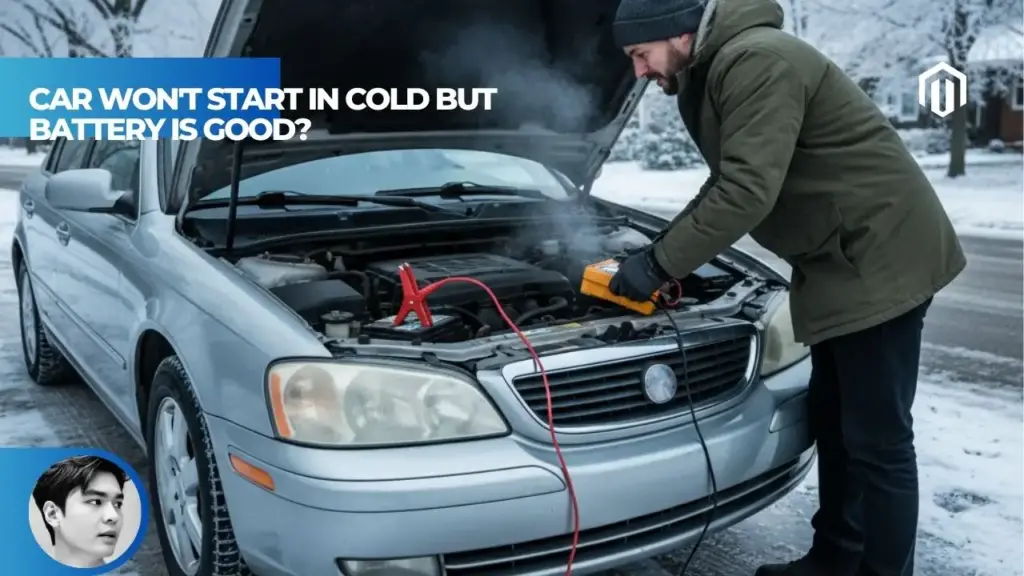
When your car won’t start in cold weather despite a seemingly good battery, the most common culprits are insufficient cold-cranking amps (CCA), thickened engine oil, a weak starter motor, or fuel delivery issues[1]. Here’s the frustrating truth: a battery can show normal voltage but still lack the power needed to turn over a cold engine. At 32°F, batteries lose approximately 35% of their strength, and at 0°F, they lose up to 60%[2]. So “good battery” based on a simple voltage check doesn’t tell the whole story—only a load test reveals true cold-weather capability.
Why a “Good” Battery Can Still Fail in Cold Weather
Your battery might show 12.6 volts on a multimeter and still fail to start your car when temperatures plunge. That’s because voltage and power aren’t the same thing[1].
Voltage vs. Cold-Cranking Amps
Cold-cranking amps (CCA) measure how much current your battery can deliver at 0°F for 30 seconds while maintaining at least 7.2 volts[3]. A battery that shows perfect voltage at rest may fail dramatically under load—especially when cold temperatures have thickened your engine oil and increased electrical resistance throughout the system.
Think of it this way: voltage is like water pressure in a pipe, while CCA is the actual flow rate. You need both to start an engine.
Temperature’s Impact on Battery Performance
| Temperature | Battery Capacity Loss | Engine Cranking Demand |
|---|---|---|
| 80°F (27°C) | 0% (baseline) | 100% (baseline) |
| 32°F (0°C) | ~35% | ~155% |
| 0°F (-18°C) | ~60% | ~200-250% |
Sources: Multiple automotive sources[1][2]
As temperature drops, your battery loses capacity while simultaneously needing to work harder because cold oil is thicker and the engine takes more effort to turn. It’s a double hit.
The Only True Test: Load Testing
Visual checks and voltage readings are unreliable in winter[4]. The only way to know if your battery can handle cold starts is a load test performed with commercial-grade equipment at an auto parts store or repair shop. Most places offer this free. If your CCA has dropped below 75% of its original rating, replacement is wise before winter fully arrives.
If you’re dealing with related battery issues, knowing how long a car battery should last without driving helps you understand normal versus abnormal drain.
Other Causes When the Battery Really Is Fine
If load testing confirms your battery is healthy, several other systems can cause cold-start failures[1][5]:
| Symptom | Likely Cause |
|---|---|
| Slow cranking | Weak starter motor, thickened oil |
| Rapid clicking | Insufficient power delivery, bad connections |
| Normal crank, no start | Fuel system, sensors, ignition |
| One click, then nothing | Starter solenoid failure |
| No sound at all | Electrical connection issue |
Thickened Engine Oil
Cold weather turns engine oil into molasses. The thicker the oil, the harder the starter motor must work to spin the crankshaft[1].
Using the wrong oil viscosity compounds this problem. If you’re running 10W-30 in Minnesota winters when your owner’s manual allows 5W-30 or 0W-20, that extra thickness at startup creates significant resistance. Your battery and starter handle a much heavier load than necessary.
The fix: Switch to manufacturer-recommended winter-weight oil. Many modern vehicles specify 0W-20 precisely because it flows better in cold conditions.
Weak or Failing Starter Motor
Your starter motor is already working overtime in winter. Cold temperatures combined with a weakened battery and thicker oil push marginal starters past their limits[6].
Signs of starter trouble include:
- Clicking sounds when turning the key (insufficient power reaching the starter)
- Grinding or whirring noises during cranking (worn gears or brushes)
- Intermittent starting issues that worsen over time
- Slow crank speed that improves as the engine warms
A starter that works fine in summer may fail completely when winter arrives. The cold exposes weaknesses that warm weather hides.
The fix: Have the starting system tested. Replacement starters typically run $150-400 for parts, plus labor.
Fuel System Issues
If your engine cranks at normal speed but won’t fire, the problem likely isn’t electrical—it’s fuel delivery[5][7].
- Fuel line freezing: Condensation in fuel lines can freeze, blocking fuel flow entirely. This is more common when tanks sit half-empty, allowing more moisture accumulation.
- Gelled diesel: In diesel engines, fuel can actually gel in extreme cold, clogging filters and injector tips. Winter-blend diesel and fuel additives help prevent this.
- Fuel pump weakness: A weak fuel pump may not maintain enough pressure for the richer mixture cold engines need. Fuel pressure can drop overnight as fuel drains back to the tank.
- The fix: Keep your tank at least half full during winter. Use fuel system treatment products in extremely cold climates.
Faulty Coolant Temperature Sensor
This sensor tells your engine computer how cold the engine is, allowing it to adjust the fuel mixture accordingly[5].
If the sensor sends incorrect readings—telling the ECU the engine is warmer than it actually is—the computer won’t enrich the fuel mixture enough for a cold start. The engine cranks fine but won’t catch.
The fix: A diagnostic scan can reveal temperature sensor codes. Replacement is typically straightforward and inexpensive ($50-150 for parts and labor).
Corroded or Loose Battery Connections
Even with a healthy battery, power can’t flow through dirty or loose terminals[1]. Corrosion creates resistance, reducing the current that reaches your starter.
White or greenish buildup on battery terminals is easy to spot. Less obvious is corrosion inside cable ends or at ground connections.
The fix: Clean terminals with a wire brush and baking soda solution. Check ground connections at both the battery and engine block. Ensure terminals are tight.
If your car won’t jump start but the lights come on, the issue often lies in these connections or the starter itself.
Diagnosing by Sound and Behavior
The sounds (or silence) when you turn the key reveal a lot about what’s failing[1][6]:
Slow, Labored Cranking
The starter is turning the engine, but slowly and reluctantly.
Most likely causes:
- Battery low on CCA (even if voltage looks okay)
- Oil too thick for temperature
- Worn starter motor brushes
What to try: Jump start. If it starts immediately with jumper cables, your battery lacks the CCA for cold starts despite showing voltage.
Rapid Clicking
Multiple fast clicks when you turn the key, but no cranking.
Most likely causes:
- Battery voltage or CCA too low
- Poor electrical connections
- Starter solenoid engaging but immediately dropping out
What to try: Check battery connections first. Clean and tighten. If clicking continues, the battery likely can’t deliver enough current.
Single Click, Then Nothing
One solid click, then silence.
Most likely causes:
- Starter solenoid stuck or failed
- Severe battery drain (complete failure to engage)
- Internal starter motor failure
What to try: With the car in park and the emergency brake on, have someone tap the starter with a hammer while another person tries to start the car. If it starts, the starter needs replacement.
Normal Cranking, No Start
The engine turns over at normal speed but won’t fire.
Most likely causes:
- Fuel delivery problem (pump, lines, injectors)
- Faulty coolant temperature sensor
- Ignition system issue (spark plugs, coils)
- Security system malfunction
What to try: Hold the key in start position for 10-15 seconds while pumping the accelerator gently. If it eventually catches, suspect fuel system issues.
No Sound at All
Turn the key and hear nothing.
Most likely causes:
- Dead battery (completely)
- Major electrical connection failure
- Failed ignition switch
- Security system lockout
What to try: Check if dashboard lights come on. If yes, the issue is likely the starter circuit. If no, the battery or main connections have completely failed.
How to Get Your Car Started Right Now
Stuck in the cold? Try these techniques in order[8]:
Turn Everything Off First
Before cranking, switch off headlights, radio, heater, and all accessories. You want every amp going to the starter motor, not competing systems.
Cycle the Key
Turn the key to “on” (not start) for 10 seconds. This activates the fuel pump and allows fuel pressure to build. Turn off, wait 5 seconds, then try starting. Repeat 3-4 times before giving up.
Try a Jump Start
If the engine cranks slowly, a jump from another vehicle or a portable jump starter may provide the extra CCA your cold battery lacks. Give the cables a few minutes connected before attempting to start.
For jump starting guidance in bad weather, knowing whether you can jump start a car in the rain keeps you safe.
Warm the Battery (If Possible)
A cold battery recovers some capacity when warmed. If you can safely bring the battery indoors for 30-60 minutes, its performance will improve significantly. Block heaters serve this purpose for overnight parking.
Push Starting (Manual Transmission Only)
For manual vehicles, a push start bypasses the starter entirely. With the key on, clutch in, and second gear selected, have helpers push the car to 5-10 mph. Release the clutch quickly—the engine should catch.
Preventing Cold-Start Problems
Choose the Right Battery
For cold climates, select a battery with higher CCA than minimum requirements[3]. If your vehicle specifies 600 CCA minimum, consider 700-800 CCA for a safety margin.
Use Winter-Weight Oil
Follow your owner’s manual recommendations for cold-weather oil viscosity. Synthetic oils flow better than conventional at low temperatures.
Keep the Tank Above Half
More fuel means less air space for condensation to form. Moisture in fuel systems causes freezing and flow problems.
Maintain Battery Connections
Clean terminals annually. Apply dielectric grease to prevent corrosion.
Consider a Block Heater
Block heaters keep the engine warm overnight, dramatically reducing cold-start strain on the battery and starter. They’re nearly essential in extreme northern climates.
Park Strategically
A garage, even unheated, stays 10-20°F warmer than outdoors. That difference can be enough to ensure reliable starts.
If you notice your car overheating during normal driving, address cooling system issues before winter—coolant problems compound cold-start difficulties.
Key Takeaways
- A battery showing normal voltage can still fail cold-start tests—only a load test reveals true cold-cranking amp capacity, which drops 35-60% in freezing temperatures[1][2]
- Thickened engine oil compounds battery strain by making the starter work harder; using manufacturer-recommended winter-weight oil reduces resistance significantly[1]
- Listen to diagnose the problem: slow cranking suggests battery/starter issues, normal cranking without starting points to fuel or sensors, and clicking indicates insufficient electrical power[6]
- Fuel system issues become apparent in cold weather—keep tanks above half full to reduce condensation, and consider fuel additives in extreme climates[5]
- Clean battery connections can solve cold-start problems when corrosion creates resistance that reduces current flow to the starter[1]
- Proactive maintenance prevents most cold-start failures—have batteries load tested before winter, switch to appropriate oil viscosity, and consider block heaters in extreme climates[3]
FAQs
Why does my car struggle to start in cold weather even with a new battery?
Even new batteries lose significant capacity in cold weather—up to 60% at 0°F[2]. If your new battery has marginal CCA for your engine size, extreme cold can push it below the threshold needed. Other factors compound this: thick oil creates more resistance, fuel doesn’t vaporize as easily, and the starter motor works harder. A battery sized perfectly for summer driving may be undersized for winter starts.
How do I know if my battery has enough cold-cranking amps?
A load test is the only reliable method[4]. Most auto parts stores perform this free. The test applies a load simulating engine cranking while measuring how well voltage holds up. If CCA has dropped below 75% of the original rating on the label, replacement is wise before winter. Simple voltage checks don’t reveal CCA—a battery can show 12.6 volts and still fail under load.
Can I damage my car by trying to start it repeatedly in cold weather?
Yes. Extended cranking overheats the starter motor and can drain the battery completely[6]. Limit attempts to 10-15 seconds with 30-60 second breaks between tries. If the engine doesn’t start after 4-5 attempts, continued cranking likely won’t help and may cause additional damage. You could also flood the engine with fuel, making the problem worse.
Does using a remote starter help in cold weather?
Remote starters can help warm the engine before you drive, but they don’t solve fundamental cold-start problems[1]. If your battery lacks CCA or your starter is weak, the remote start simply attempts to start the car without you present. Block heaters are more effective because they keep the engine warm passively, reducing the load on the battery and starter during that initial crank.
At what temperature do car batteries start having trouble?
Battery capacity begins declining around freezing (32°F/0°C), losing about 35% of its strength[2]. At 0°F (-18°C), batteries lose up to 60% capacity while simultaneously the engine requires 2-2.5 times more power to turn over due to thickened oil. This combination makes temperatures below 20°F particularly challenging for marginal batteries. Problems become severe below 0°F.
References
- Lancer Service. (2025). Car Won’t Start In Cold But Battery Is Good: Causes & What to Do. https://www.lancerservice.com/car-wont-start-in-cold-but-battery-good
- Motorpoint. (2023). My Car Won’t Start in Cold Weather. https://www.motorpoint.co.uk/guides/my-car-wont-start-in-cold-weather
- Kerman Battery. (2025). CCA (Cold Cranking Amps) and Its Role in Cold Weather Starting. https://kermanbattery.ir/en/cca-cold-cranking-amps-and-its-role-in-cold-weather-starting/
- Batteries Store Canada. (2025). Engine Cranks but Won’t Start in Cold Weather – Most Common Causes. https://batteriesstore.ca/blog/battery-5/engine-cranks-but-wont-start-in-cold-weather-most-common-causes-112
- TEC 2000. (2024). Overcoming Cold Engine Start Problems: Causes and Solutions. https://tec2000.com/blogs/news/overcoming-cold-engine-start-problems-causes-and-solutions
- Atlas Automotive. (2024). Cold Weather Starter Problems You Can Avoid This Winter. https://www.atlasautomotivenv.com/blog-details?objId=1742
- Car Talk Community. (2017). Cranking But Not Starting in Coldish Weather. https://community.cartalk.com/t/cranking-but-not-starting-in-coldish-weather/109178
-
Holts Auto. (2025). What to Do When Your Car Won’t Start on a Cold Morning.
What to Do When Your Car Won’t Start on a Cold Morning

I am a senior automotive analyst at Autvex. Expert vehicle evaluations, in-depth reviews, and objective analysis helping readers make informed automotive decisions with years of industry experience.