You may also like:
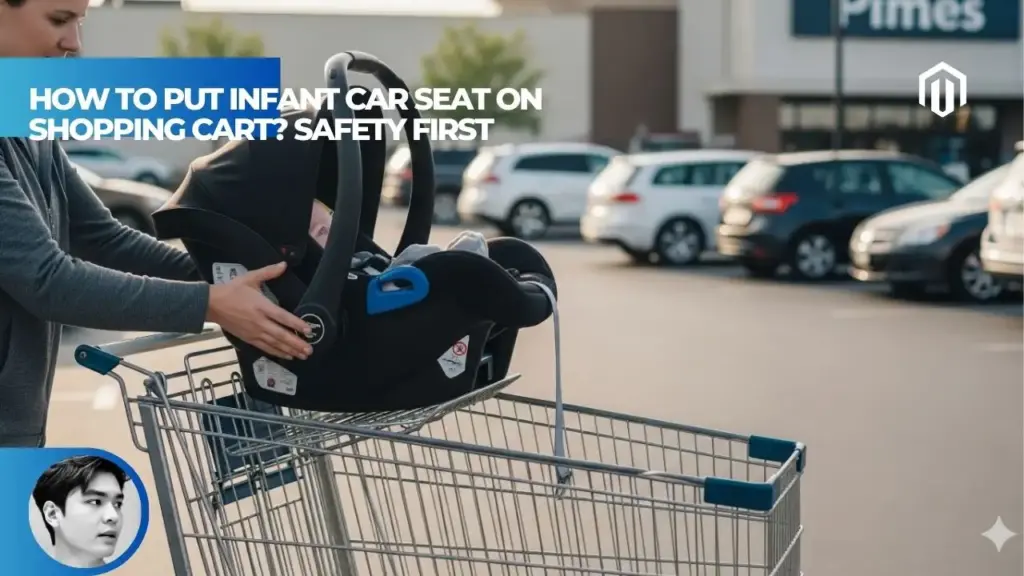
Most infant car seat manufacturers and the American Academy of Pediatrics (AAP) advise against placing a car seat on top of a shopping cart due to tipping and fall risks[1][2]. If you must bring your infant carrier into the store, the only acceptable placement is flat inside the main basket—never on the child seat area or handle[3]. Head and neck injuries from cart tip-overs have increased by 213% in recent years, with 92% affecting children under one year old[4].
Why Experts Warn Against Car Seats on Shopping Carts
Here’s what you won’t see on Pinterest parenting boards: every major infant car seat manufacturer explicitly prohibits placing carriers on shopping carts[5]. And since 2012, most grocery carts display warning labels stating the same thing[5].
The issue comes down to physics. Shopping carts have a narrow wheelbase relative to their height, creating an unstable center of gravity[6]. Add a 10-pound car seat with a baby on top, and the cart becomes dangerously top-heavy. One speed bump in the parking lot. One quick turn. One moment looking away. That’s all it takes for a cart to flip forward—or for the seat to tumble off.
The CPSC documented three incidents where car seats with children inside fell from shopping carts; one resulted in a fatality when a cart hit a speed bump in the parking lot[7]. The deceased was a 3-month-old boy whose seat was placed on the cart’s built-in child seat area—precisely where many parents assume it’s safe[7].
The “Click” Myth Debunked
Many parents believe their infant seat safely “clicks” onto the shopping cart because it physically latches into the cart’s child seat area. This is false[7].
That clicking sensation doesn’t mean a secure connection exists. The car seat’s locking mechanism is designed exclusively for its base—not for cart handles or toddler seats. Repeatedly latching it onto unintended surfaces can actually damage the connector, potentially causing it to fail during a crash when you need it most[8].
And even if the seat feels secure, it doesn’t solve the top-heavy problem. A cart with a car seat perched on top can still tip over entirely, taking your baby with it[8].
If You Must Use a Cart: The Basket-Only Method
Sometimes there’s no alternative. You’re alone with the baby, the store doesn’t have infant-friendly carts, and you need groceries. If you absolutely must place the car seat in a shopping cart, follow these rules[3][9]:
| Step | Action | Why It Matters |
|---|---|---|
| 1 | Place seat inside the main basket only | Only stable location; never on handles or child seat |
| 2 | Keep your baby fully buckled | Prevents slumping; reduces positional asphyxia risk |
| 3 | Position seat facing you | Allows constant visual monitoring |
| 4 | Lock handle flat against basket floor | Stabilizes seat; prevents rocking |
| 5 | Keep baby visible at all times | Don’t stack groceries around the seat |
The basket method leaves minimal room for groceries, but that’s the trade-off for safety[3]. Use the small area around the edges for lightweight items only, and consider a second trip or curbside pickup for larger shopping runs.
One more thing: never leave the cart unattended[9]. Not for a second. Cart theft happens, and so do runaway carts in parking lots.
Positional Asphyxia: A Hidden Danger
Beyond fall risks, there’s another concern most parents don’t consider. Infant car seats outside vehicles may not maintain the correct recline angle, which can restrict your baby’s airway[5].
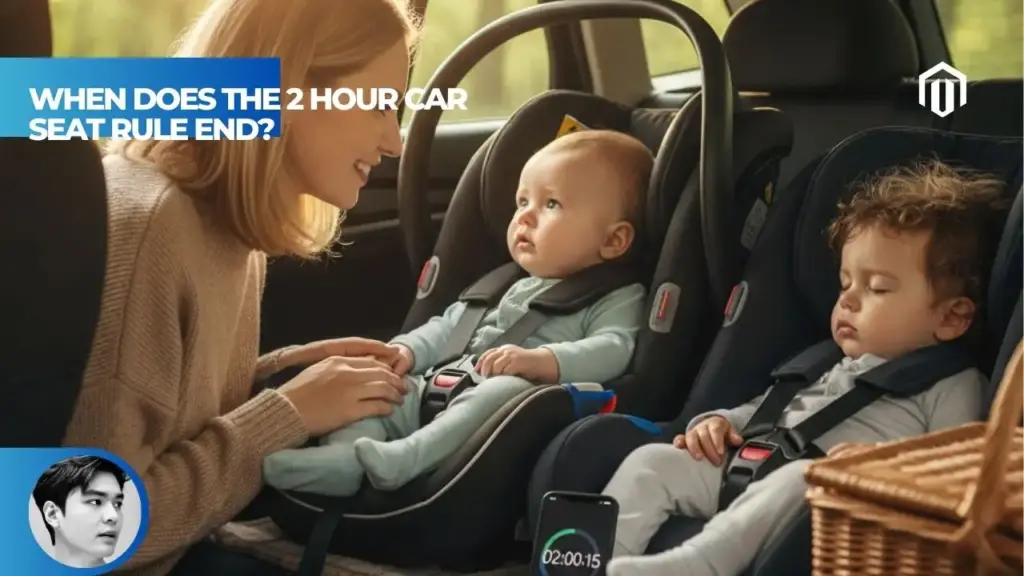
Babies under six months lack the neck strength to reposition themselves if their chin drops toward their chest. In an improperly angled seat—whether rocking in a cart basket or tilted on a stroller attachment—breathing becomes compromised[3]. This is why you should lock the handle flat against the basket floor: it helps maintain safer positioning. Understanding when the 2-hour car seat rule ends can help you plan shorter shopping trips with young infants.
Excessive time in car seats outside the vehicle also contributes to brachycephaly (flat head syndrome), which may require corrective helmets later[7].
Safer Alternatives Worth Considering
The AAP recommends several options over placing a car seat on any shopping cart[2]:
- Babywearing offers the most practical solution. A front carrier or soft wrap keeps your infant secure against your body while leaving both hands free. Most infants under 6 months tolerate carriers well, and you’ll have full cart space for groceries.
- Shopping with a partner lets one person mind the baby while the other shops. If solo trips are unavoidable, consider alternating grocery runs with your partner or family member.
- Curbside pickup and delivery eliminate the problem entirely. Most major retailers—Walmart, Target, Kroger—offer free pickup with online ordering[9]. For parents of newborns, this is often the most stress-free solution.
- Store-provided infant carts exist at some locations. Target, for instance, offers carts with plastic car-shaped attachments that sit closer to the ground, reducing tip risk[10]. Ask an employee upon entry.
If you’re traveling with your infant, understanding where the expiration date is on a car seat ensures your seat meets current safety standards.
Store-Specific Policies
Different retailers handle this issue differently[9]:
| Store | Policy |
|---|---|
| Walmart | Recommends built-in child seat or stroller; basket placement acceptable |
| Target | Encourages stroller use; some locations have sanitizing stations for cart handles |
| Kroger | Staff may assist; hand-carried baskets available as alternative |
| Costco | Advises against basket placement due to oversized cart tipping risk |
Costco’s advice is worth noting. Their warehouse-style carts are larger and even more prone to tipping when loaded with bulk items[9]. If you’re a Costco regular with an infant, babywearing or bringing a second adult is the safer play.
What About Newborn Inserts?
If your infant still uses a newborn insert in their car seat, you might wonder whether that affects cart safety. It doesn’t change the fundamental risks. The insert provides positioning support but doesn’t stabilize the seat in a shopping cart. Check our guide on when to take the newborn insert out of your car seat for proper transition timing.
Key Takeaways
- Infant car seat manufacturers and the AAP unanimously recommend against placing car seats on shopping carts due to tipping and fall hazards[1][2].
- The “click” onto a cart handle doesn’t indicate a safe connection—it can damage the locking mechanism and still allows top-heavy tipping[7].
- If no alternatives exist, place the seat flat inside the basket with the handle locked down, baby buckled, and facing you at all times[3].
- Babywearing, curbside pickup, and store-provided infant carts are significantly safer alternatives worth considering[2].
- Never leave your cart unattended, even briefly, and avoid stacking groceries around your baby’s line of sight[3].
FAQs
Can I put my Graco car seat in a shopping cart with my baby inside?
Graco—like all major manufacturers—explicitly warns against this in their manual[5]. If you must bring the carrier inside, place it flat in the basket with your baby fully buckled and visible. Never place it on the built-in child seat or cart handles, regardless of brand.
What makes shopping carts so dangerous for babies?
Shopping carts have a narrow base compared to their height, making them unstable when top-loaded[6]. Adding an infant car seat raises the center of gravity significantly. A sudden stop, uneven surface, or minor collision can cause the entire cart to tip forward—or the seat to fall from height. Head and neck injuries are the most common outcome[4].
Is it safer to carry the baby or use a cart?
Babywearing is generally the safest option for grocery shopping with an infant[2]. Front carriers distribute weight evenly, keep the baby close for monitoring, and free up the entire cart for groceries. If carrying isn’t possible, curbside pickup or shopping with a partner eliminates cart risks entirely.
How long can a baby stay in a car seat outside the car?
Most pediatric guidelines recommend limiting car seat time to two hours at a stretch due to positional asphyxia and flat head concerns[7]. This applies whether the seat is in a vehicle, stroller, or shopping cart. For quick grocery runs under 30 minutes, the risk is lower—but frequent extended use outside the car is discouraged.
References
-
Safe Ride 4 Kids. (2025). Car seat and shopping cart: Match made in heaven or dangerous combo?
Car seat and shopping cart: Match made in heaven or dangerous combo?
-
Safe Ride News. (2025). Grocery Carts Pose Hidden Risks to Children.
Grocery Carts Pose Hidden Risks to Children
- Safe in the Seat. (2025). How To Put A Car Seat In A Shopping Cart. https://www.safeintheseat.com/post/how-to-put-a-car-seat-in-a-shopping-cart
- Walking In Hope. (2018). Infant Car Seats: Everyday Dangers. https://www.walkinginhope.com/post/2018/06/12/infant-car-seats-everyday-dangers
- Intermountain Healthcare. (2025). Car Seats and Shopping Carts: What You Need to Know. https://intermountainhealthcare.org/blogs/car-seats-and-shopping-what-you-need-to-know
-
Oh My Parenting. (2024). 6 Top Reasons “Car Seat On The Shopping Cart” Is A BAD Idea.
6 Top Reasons “Car Seat On The Shopping Cart” Is A BAD Idea. #2 Is Heartbreaking
- Car Seat Blog. (2025). Mythbusting: Infant Car Seats Are Meant to “Click” Into Shopping Carts. https://carseatblog.com/38666/mythbusters-infant-car-seats-click-into-shopping-carts/
- Autoweb. (2023). 5 Safe Alternatives to Putting a Car Seat on Top of the Shopping Cart. https://www.autoweb.com/5-safe-alternatives-to-putting-a-car-seat-on-top-of-the-shopping-cart
- CarInterior. (2025). How to Safely Place a Car Seat in a Shopping Cart. https://carinterior.alibaba.com/question/how-to-place-car-seat-in-shopping-cart
- What to Expect. (2025). How to Put a Car Seat in a Shopping Cart – Grocery Cart Safety Tips. https://www.whattoexpect.com/first-year/shopping-cart-safety.aspx

I am a senior automotive analyst at Autvex. Expert vehicle evaluations, in-depth reviews, and objective analysis helping readers make informed automotive decisions with years of industry experience.