You may also like:
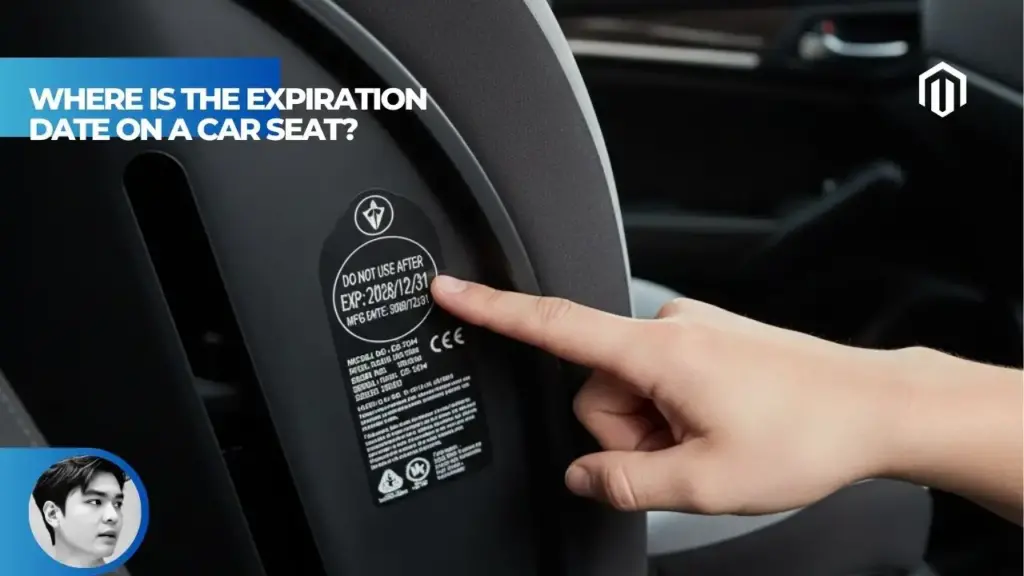
The expiration date on a car seat is typically found on a white rectangular label on the back or bottom of the seat’s plastic shell[1]. Some manufacturers print or emboss the expiration date directly into the plastic, while others list only the date of manufacture (DOM), requiring you to calculate the expiration using the seat’s manual[2].
Where to Find the Car Seat Expiration Label
Most car seats display critical safety information on what’s called a tracking label or serial label[3]. This label includes the manufacturer’s name, model number, serial number, date of manufacture, and often the expiration date itself. The location varies by seat type and brand, but there are common spots to check first.
For infant car seats, flip the carrier over and look at the underside of the plastic shell[4]. The label is usually near the harness adjustment slots or along the back of the seat. Convertible and all-in-one seats typically have the label on the back of the seat shell—sometimes hidden under the fabric cover near the recline adjuster or tether hook area[5].
Here’s the thing: not every seat makes it easy. Some brands emboss the expiration date directly into the plastic, which can be tough to spot unless you know exactly where to look[2]. Run your fingers along the back and sides of the shell if you can’t find a sticker.
Expiration Label Locations by Brand
Different manufacturers place their labels in different spots. Knowing where to look for your specific brand saves time and frustration. The table below covers the most popular car seat brands in the US market[5][6][1].
| Brand | Label Location | Expiration Listed? |
|---|---|---|
| Graco | Bottom or back of seat shell | Yes, on label |
| Britax | Serial label (location varies by model) | Yes (models after 2018) |
| Chicco | Seat shell and base | Yes, on label |
| Evenflo | Underside of seat or base | DOM only (most models) |
| Baby Trend | Underside of seat or bottom of base | DOM only |
Britax seats made after 2018 include the expiration date directly on the serial label[5]. For older models, you’ll need to find the date of manufacture and reference the user guide to calculate when the seat expires. Graco infant seats display the label on the back of the hard plastic portion, making it relatively straightforward to locate[1].
What If Your Seat Only Shows the Date of Manufacture?
Many car seats display only the date of manufacture rather than an explicit expiration date. This is common with Evenflo, Baby Trend, and older Britax models[6]. In this case, you’ll need to do a simple calculation.
The formula is straightforward: Date of Manufacture + Useful Life = Expiration Date[1]. For example, if your seat was manufactured on March 15, 2020, and has a 10-year lifespan, it expires on March 15, 2030. The useful life period varies by seat type:
- Infant car seats: 6-7 years from manufacture[5]
- Convertible car seats: 7-10 years from manufacture[5]
- Booster seats: 6-10 years from manufacture[1]
- All-in-one seats: 9-10 years from manufacture[5]
If you can’t find your printed manual, download it from the manufacturer’s website or call their customer service line[2]. The safety information section will state something like “discontinue use of this child restraint if it is older than X years.”
Why Car Seats Have Expiration Dates
Parents often wonder why a seemingly sturdy piece of equipment needs an expiration date at all. The seat isn’t going to spoil like milk. But materials do degrade over time, especially under the conditions inside a vehicle[6].
Temperature extremes play a significant role. Cars experience freezing winters and scorching summers, with interior temperatures sometimes exceeding 150°F on hot days[5]. This repeated heating and cooling cycle weakens plastic polymers, harness webbing, and other critical components. You might not see the damage, but the seat’s ability to protect your child in a crash can be compromised.
Safety standards and technology also evolve. The National Highway Traffic Safety Administration (NHTSA) periodically updates federal regulations, and manufacturers incorporate new safety features into newer models[5]. An expired seat may not meet current crash protection standards. Plus, replacement parts and customer support for older seats eventually become unavailable.
The Manufacturers Alliance for CPS cites several additional factors: exposure to food, drinks, dirt, and cleaning chemicals; potential loss or damage to parts; and instructions that may no longer be legible or applicable[7]. When you’re dealing with child safety, these aren’t risks worth taking.
What to Do When Your Car Seat Expires
Once your seat reaches its expiration date, stop using it immediately. But don’t just toss it in the trash intact—someone might pull it out and use it, unknowingly putting a child at risk.
Before disposal, render the seat unusable[7]. Cut the harness straps with scissors, remove padding and fabric, and mark the plastic shell with permanent marker indicating “EXPIRED – DO NOT USE.” Some recycling centers accept car seat plastic components, so check with your local Department of Public Works[7].
Major retailers like Target and Walmart periodically run trade-in programs where you can bring in your old seat—expired or not—and receive a discount on new baby gear[8]. These events typically happen twice a year and provide an eco-friendly disposal option while saving you money on a replacement.
If your seat still has life left but your child has outgrown it, consider donating to local women’s shelters, childcare centers, or organizations that train Child Passenger Safety Technicians[7]. Just verify the seat hasn’t been in a crash and isn’t close to expiration. Understanding when the 2-hour car seat rule ends is also essential knowledge for new parents navigating infant travel safety.
Seats Involved in Crashes
An unexpired seat that’s been in a moderate or severe crash should be replaced immediately—no exceptions[7]. The NHTSA is clear on this point: crash forces can cause invisible structural damage that compromises protection in a subsequent collision.
That said, minor fender-benders don’t automatically require replacement. According to NHTSA guidelines, you can continue using the seat after a minor crash if all of the following conditions are met[7]:
- The vehicle could be driven away from the scene
- The door nearest the car seat wasn’t damaged
- No passengers sustained any injuries
- Airbags didn’t deploy
- There’s no visible damage to the seat
When in doubt, contact the manufacturer. Most have customer service teams who can help you assess whether replacement is necessary. And if you’re unsure about safely installing a new seat, consider getting it inspected by a certified Child Passenger Safety Technician at a local fire station or hospital. For parents with newborns, knowing when to remove the newborn insert is another safety consideration worth understanding.
Key Takeaways
- The expiration label is typically located on the back or underside of the car seat’s plastic shell, often on a white rectangular sticker containing the serial number and date of manufacture[2].
- If only the date of manufacture appears, add the useful life period (found in your manual) to calculate expiration—most seats last 6-10 years depending on type[1].
- Brand-specific label locations vary: Graco places labels on the bottom/back, Britax uses the serial label under harness slots or ClickTight compartments, and Chicco prints directly on the seat and base[5][6].
- Car seats expire because plastic and fabric degrade under extreme vehicle temperatures, safety standards evolve, and parts/support become unavailable over time[5].
- When disposing of an expired seat, cut the straps, remove padding, and mark it as expired to prevent reuse—or use retailer trade-in programs for discounts on new gear[7].
- Never use a seat that’s been in a moderate or severe crash, even if it hasn’t expired—internal damage may not be visible[7].
FAQs
Do all car seats have expiration dates?
Yes. Every car seat sold in the United States has a finite useful life, typically between 6 and 10 years from the date of manufacture[6]. The specific timeframe depends on the manufacturer and seat type. While federal law doesn’t mandate a specific expiration period, all major manufacturers establish expiration guidelines for their products based on material durability testing and evolving safety standards.
Can I use a car seat past its expiration date?
Using an expired car seat is strongly discouraged by both manufacturers and safety organizations[5]. The materials may have degraded beyond what’s visually detectable, potentially reducing the seat’s ability to protect your child in a crash. While there’s no law specifically prohibiting expired seat use, the risk isn’t worth it. If cost is a concern, trade-in programs and secondhand options (within date) can help.
Is the date of manufacture the same as the expiration date?
No. The date of manufacture (DOM) indicates when the seat was produced, not when it expires[5]. To find the expiration date, you must add the seat’s useful life (found in the user manual) to the DOM. Some newer seats conveniently display both dates on the same label, but many still require this calculation.
Where can I find my car seat’s manual if I lost it?
Most manufacturers provide downloadable PDF manuals on their websites[2]. You’ll need the model name and sometimes the serial number to locate the correct version. Alternatively, call the manufacturer’s customer service line—they can often email you a copy or walk you through finding your seat’s expiration information.
References
- Graco Baby. (2025). Car Seat Expiration – When Do Car Seats Expire? https://www.gracobaby.com/carseatexpirationpage.html
- Safe in the Seat. (2025). Why Do Car Seats Expire. https://www.safeintheseat.com/post/why-do-car-seats-expire
- GoodBuy Gear. (2024). Deciphering Car Seat Labels: How to Find Important Info. https://goodbuygear.com/blogs/gear-guidance/important-car-seat-labels
- Babylist. (2025). Yes, Car Seats Do Expire. https://www.babylist.com/hello-baby/how-long-are-car-seats-good-for
- Britax. (2025). Car Seat Expiration and Date of Manufacture: A Britax Guide. https://us.britax.com/knowledge-center/safety-testing-and-tips/car-seat-expiration-and-date-of-manufacture-a-britax-guide
- Healthline. (2019). Why Car Seat Expiration Dates Exist and How to Find Them. https://www.healthline.com/health/baby/car-seat-expiration
- Orbit Baby. (2025). When Do Car Seats Expire. https://orbitbaby.com/blogs/news/when-do-car-seats-expire
-
Reddit – YouShouldKnow. (2022). Child car seats have an expiration date.
YSK: child car seats have an expiration date, which is typically 6-10 years after the date of manufacture
byu/Lagavulin16_neat inYouShouldKnow

I am a senior automotive analyst at Autvex. Expert vehicle evaluations, in-depth reviews, and objective analysis helping readers make informed automotive decisions with years of industry experience.