You may also like:
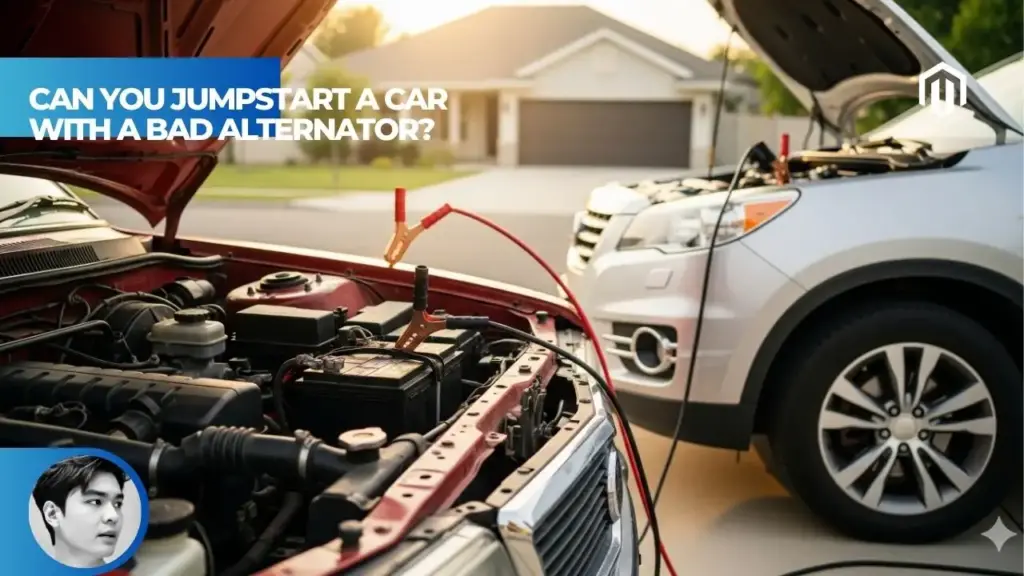
Yes, you can jumpstart a car with a bad alternator—but it’s only a temporary fix[1]. The jump will get your engine running, but without a functioning alternator to recharge the battery, your car will stall again within minutes to 30 minutes depending on battery condition and electrical load[2]. Plan to drive directly to a mechanic or get towed; don’t assume you’ll make it across town[3].
Why Jumpstarting Works (Temporarily)
Here’s the thing most drivers misunderstand: the jumpstart itself doesn’t care about your alternator[1].
When you connect jumper cables, you’re transferring electrical energy from a working battery to your dead one. That charge gives your starter motor enough power to crank the engine. The alternator isn’t involved in that initial process at all—it only matters for what happens next[4].
Once the engine starts, a healthy alternator takes over. It converts mechanical energy from the spinning engine into electrical power, recharging the battery and running everything from headlights to climate control[2]. But with a failed alternator? Your battery becomes the sole power source. And batteries aren’t designed for that job[4].
Think of it like this: jumpstarting fills your gas tank halfway, but with a bad alternator, there’s no fuel pump to keep it topped off. You’re running on whatever charge the jump provided—nothing more[1].
How Long Will the Car Actually Run?
Nobody can give you an exact number. It depends on too many variables[2].
| Factor | Impact on Run Time |
|---|---|
| Battery age and health | Older batteries drain faster |
| Initial charge level | A freshly jumped battery has less capacity than a fully charged one |
| Electrical load (AC, lights, radio) | More systems running = faster drain |
| Alternator failure severity | Partial failure vs. complete failure affects output |
In the best-case scenario—healthy battery, minimal electrical use, daytime driving without headlights—you might get 20 to 30 minutes[2]. That’s enough to limp to a nearby shop or pull into a safe location.
In the worst case? Your car could die within a few miles or at the next traffic light[2]. Modern vehicles with their touchscreens, sensors, and electric power steering demand more from the electrical system than older models. They drain batteries faster when the alternator isn’t contributing[3].
And here’s what nobody mentions: if your battery was already weak before the alternator failed, you’re working with even less margin. A five-year-old battery that barely held a charge won’t suddenly perform better just because you jumped it. If your car struggles to start despite a good battery, the alternator was likely already failing.
How to Jumpstart a Car With a Faulty Alternator
The process is identical to any standard jumpstart[1]. What changes is your game plan afterward.
- Step 1: Connect the cables correctly. Red cable to the positive terminal on the dead battery, then to the positive terminal on the working battery. Black cable to the negative terminal on the working battery, then to an unpainted metal surface (ground) on the dead car—not the negative battery terminal[5].
- Step 2: Start the working vehicle. Let it run for 2–3 minutes to transfer charge[5].
- Step 3: Start the dead car. If it cranks, success—for now[1].
- Step 4: Minimize electrical load immediately. Turn off the AC, radio, heated seats, and anything else drawing power. Keep only essential systems running. If it’s nighttime, you’ll need headlights—but know they’re draining your limited reserves faster[3].
- Step 5: Drive directly to your destination. Don’t run errands. Don’t stop for coffee. Get to a mechanic or home before the battery dies again[1]. If you’re uncertain whether you’ll make it, consider calling a tow truck instead of risking a stall in traffic[2].
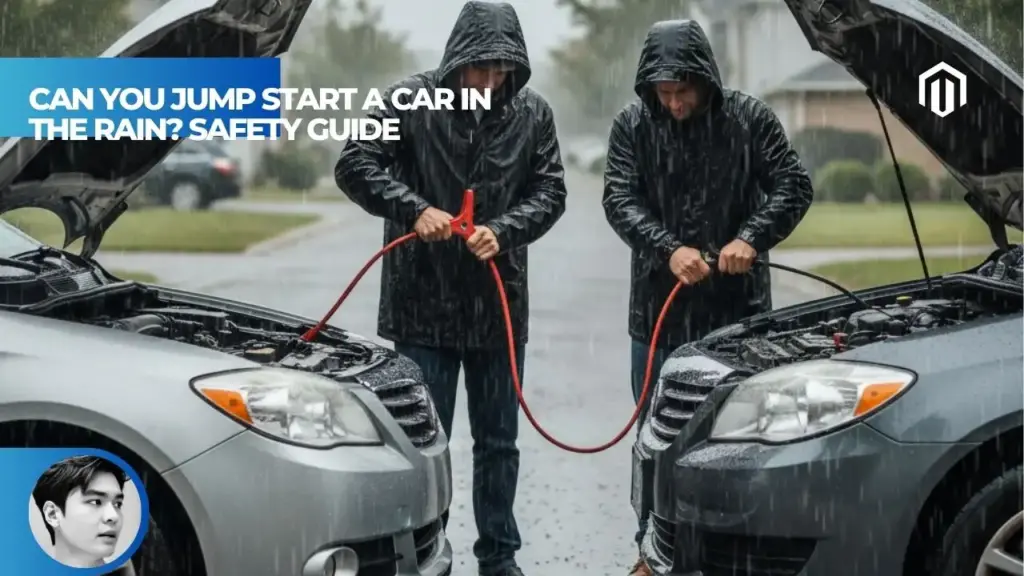
One important note: if you’re wondering whether jumpstarting in wet conditions is safe, the answer is generally yes with proper precautions.
What Happens If You Keep Driving?
Ignoring a bad alternator and repeatedly jumpstarting creates a cascade of problems[2].
The most obvious risk is stalling in a dangerous location. When your battery dies, everything goes—including power steering on vehicles with electric-assist systems[2]. Suddenly you’re wrestling with a wheel that feels like it weighs 50 pounds while trying to pull off a highway. Not ideal.
Dashboard malfunctions happen too. Without stable voltage, warning lights may flicker erratically, gauges can give false readings, and the infotainment system might freeze or restart repeatedly[2]. Some drivers report erratic transmission behavior in vehicles where the transmission controller loses power intermittently[2].
And then there’s the battery itself. Deep-cycling a car battery—draining it completely and recharging—damages it over time[3]. Batteries designed for starting aren’t built to handle repeated full discharges. Do this enough times, and you’ll need both a new alternator AND a new battery. Learning how long it takes to properly charge a car battery helps prevent additional damage.
Signs It’s the Alternator, Not the Battery
These two failures look frustratingly similar at first[6]. Both can leave you with a car that won’t start. But the clues are there if you know where to look.
| Symptom | More Likely Battery | More Likely Alternator |
|---|---|---|
| Car won’t crank at all | ✓ | |
| Clicking sound when turning key | ✓ | |
| Starts fine, then dies shortly after | ✓ | |
| Dash warning light (ALT or battery symbol) while driving | ✓ | |
| Dim lights that brighten with engine RPM | ✓ | |
| Burning rubber/electrical smell | ✓ | |
| Whining or grinding noise from engine bay | ✓ |
The dead giveaway? A successful jump that leads to another dead battery within minutes[6]. If your car starts after a jump but dies again shortly after, the alternator is almost certainly the culprit[5]. A bad battery might not hold a charge well, but it won’t drain THIS fast with a working alternator keeping it topped off.
You can test this yourself with a multimeter[3]. With the engine running, connect the probes to your battery terminals. A healthy charging system should read around 13.5–14.5 volts. If you’re seeing 12.6 volts or less, the alternator isn’t generating power—you’re just reading the battery’s static voltage[3].
If your car won’t jump start but the lights come on, you might be dealing with a different issue entirely.
What to Do After the Jump
You’ve got the car running. Now what?
- Option 1: Drive to a mechanic immediately. If the shop is within 10–15 minutes and you can avoid highways, this is your best bet[1]. Keep electrical use minimal and stay alert for signs the car is about to stall—dimming dash lights, sluggish power accessories, or warning indicators.
- Option 2: Call a tow truck. If the shop is far, traffic is heavy, or you’re not confident the battery will last, towing is the safer choice[2]. Yes, it costs more. But it’s cheaper than getting stranded on a freeway or causing an accident when your car suddenly loses power steering.
- Option 3: Replace the alternator yourself. For DIY-inclined drivers, alternator replacement involves disconnecting the battery, removing the serpentine belt, unbolting the old alternator, and installing the new one[1]. It’s a moderate difficulty job that takes 1–3 hours depending on the vehicle. Understanding how long battery replacement takes gives you a sense of the simpler electrical work involved.
Replacement alternators typically cost $150–$400 for the part, plus $100–$200 in labor if you have a shop do it[1]. Not cheap, but far less than the damage from driving on a failed charging system until something catastrophic happens.
Preventing Alternator Failure
Most alternators last 80,000–150,000 miles, but that range varies wildly based on driving conditions and maintenance[2].
- Watch for early warning signs. Flickering lights, slow power windows, or a battery that needs frequent jumping are all red flags[6]. Catching these symptoms early lets you schedule a replacement on your terms rather than dealing with a roadside emergency.
- Keep the serpentine belt in good condition. This belt drives the alternator. If it’s cracked, glazed, or loose, the alternator can’t spin efficiently and may fail prematurely[1]. Most shops check the belt during routine maintenance.
- Test your charging system periodically. Many auto parts stores offer free battery and alternator testing. It takes five minutes and can catch a failing alternator before it leaves you stranded[2]. Knowing how long your battery should last without driving helps you recognize when charging system issues develop.
Don’t ignore dashboard warnings. That battery light or “ALT” indicator exists for a reason. When it illuminates while driving, get the system checked within days—not weeks[6].
Key Takeaways
- Jumpstarting a car with a bad alternator works, but it’s strictly a temporary fix—the car will run only until the battery depletes again, typically 5–30 minutes depending on conditions[1][2].
- The alternator’s job is recharging the battery while driving; without it, your battery becomes the sole power source for everything electrical[4].
- After a successful jump, minimize electrical load (AC, radio, heated seats) to extend your driving range before the battery dies again[3].
- The clearest sign of alternator failure versus battery failure: the car starts after a jump but stalls within minutes, often with a dashboard warning light illuminated[6].
- Repeatedly jumpstarting and driving on a bad alternator damages your battery and risks stalling in dangerous locations—get it fixed or towed promptly[2].
FAQs
Will my car start at all if the alternator is completely dead?
Yes, but only if the battery has sufficient charge remaining[4]. The starter motor draws power from the battery, not the alternator. A fully charged battery can start the engine even with a completely failed alternator. The problem is keeping it running—without the alternator recharging, the battery depletes quickly, and subsequent starts become impossible[1].
Can a bad alternator drain a battery overnight?
A failed alternator doesn’t typically drain a battery while the car is off—that’s usually a parasitic draw from another component[6]. What happens is the alternator fails to recharge the battery during driving, leaving it progressively weaker after each trip. Eventually, the battery doesn’t have enough charge to start the engine, which appears similar to an overnight drain but occurs more gradually[3].
How much does it cost to replace an alternator?
Expect to pay $250–$600 total for parts and labor at most shops[1]. The alternator itself typically costs $150–$400 depending on the vehicle, with labor adding another $100–$200. Luxury vehicles and those with difficult-to-access alternators (some transverse-mounted engines) can push costs higher. DIY replacement saves the labor cost but requires basic mechanical skills and tools.
Is it safe to drive with a failing alternator?
It’s risky[2]. While you might make it a short distance, the car can stall without warning—potentially in dangerous locations like intersections or highways. Power steering may fail in electric-assist systems, making the vehicle difficult to control. If you must drive, minimize the distance, avoid high-speed roads, and have a backup plan for getting towed if the car dies[3].
References
- AutoZone. (2024). Can You Jumpstart a Car With a Bad Alternator? https://www.autozone.com/diy/alternator/can-you-jumpstart-a-car-with-a-bad-alternator
-
Old Ox Tire & Auto. (2025). How Long Can You Drive with a Bad Alternator?
How Long Can You Drive with a Bad Alternator?
- Tires Plus. (2024). Will a Car Jump-Start with a Bad Alternator? https://www.tiresplus.com/blog/maintenance/jumpstart-with-bad-alternator/
- The General Insurance. (2025). Can You Jumpstart a Car with a Bad Alternator? https://www.thegeneral.com/going-places/blog/car-and-driving-basics/can-you-jumpstart-car-with-bad-alternator/
-
RKH Service and Repair. (2024). Jumpstarting A Car With A Bad Alternator: Is It Possible?
Can You Jumpstart A Car With A Bad Alternator?
- Start Rescue UK. (2025). How to distinguish a dead battery from an alternator issue. https://www.startrescue.co.uk/breakdown-cover/motoring-advice/car-servicing-and-repairs/how-to-distinguish-a-dead-battery-from-an-alternator-issue

I am a senior automotive analyst at Autvex. Expert vehicle evaluations, in-depth reviews, and objective analysis helping readers make informed automotive decisions with years of industry experience.