You may also like:
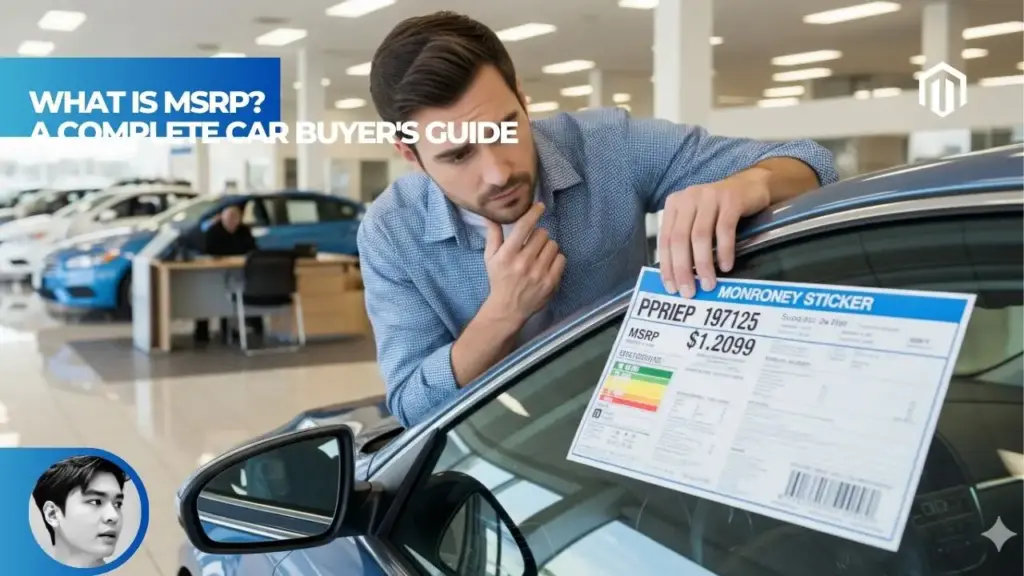
MSRP stands for Manufacturer’s Suggested Retail Price—the price an automaker recommends dealers charge for a new vehicle[1]. Federal law requires dealers to display the MSRP on the window sticker (also called the “Monroney sticker”), but dealers can sell vehicles for more or less than this amount[2]. The key word is “suggested”—it’s not a mandated price, and most buyers negotiate around it. MSRP serves as a starting point and consumer protection, helping you compare prices across dealerships[3].
What MSRP Includes
The MSRP represents the manufacturer’s recommended selling price for a specific vehicle configuration. Here’s what’s included—and what isn’t.
Included in MSRP
| Component | Description |
|---|---|
| Base vehicle price | The cost of the car in its standard configuration |
| Factory-installed options | Packages and features added at the factory |
| Model year and trim level | Specified on the window sticker |
| EPA fuel economy ratings | Required by federal regulation |
Based on Kelley Blue Book definitions[2]
Not Included in MSRP
Several costs sit on top of the MSRP[3]:
- Destination fee – Transport costs from factory to dealer (typically $1,000–$1,700)
- Sales tax – Varies by state and locality
- Registration and title fees – State DMV charges
- Dealer-installed accessories – Floor mats, wheel locks, protection packages
- Market adjustments – Dealer markups on high-demand vehicles
When dealers quote you the “sticker price,” they mean the total window sticker amount—MSRP plus destination fee and any additional charges like gas-guzzler tax[2]. The “out-the-door price” adds taxes, registration, and dealer fees on top of that.
MSRP vs. Invoice Price
Understanding both numbers gives you negotiating power.
| Price Type | Definition | Who Sets It | Your Advantage |
|---|---|---|---|
| MSRP | Suggested retail price | Manufacturer | Starting reference point |
| Invoice Price | What dealer pays manufacturer | Manufacturer | Reveals dealer’s profit margin |
The difference between MSRP and invoice price represents the dealer’s potential profit[4]
The invoice price is typically 5–15% below MSRP, though it can reach up to 20% on some vehicles[5]. If a car has an MSRP of $35,000, the dealer might have paid $30,000—that’s $5,000 of potential profit margin[5].
The catch? Invoice price doesn’t include dealer holdbacks (money manufacturers pay dealers after a sale) or factory-to-dealer incentives. So the dealer’s true cost can be even lower than the invoice price.
Is MSRP the Final Price?
No. MSRP is just one piece of the puzzle[3].
The final price you pay—commonly called the “out-the-door price”—includes the vehicle price (which may be above, at, or below MSRP), destination fee, taxes, registration, documentation fees, and any interest charges if you’re financing[3].
When shopping for a new BMW or Audi, always ask for the out-the-door price rather than focusing solely on MSRP. Some dealers hide profit in fees that don’t appear until you’re signing paperwork.
Can Dealers Charge More Than MSRP?
Yes—and it happens regularly on popular models[3].
When Dealers Mark Up
Dealers add “market adjustments” (their term for markup) when demand exceeds supply[3]. You’ll see this on:
- Newly redesigned models
- Limited-production vehicles
- High-performance variants
- Models with long wait lists
During the 2021–2023 chip shortage, markups of $5,000–$20,000+ above MSRP became common even on mainstream vehicles. While the market has normalized somewhat, hot models still command premiums.
How to Avoid Markups
Cast a wide net. Every dealership operates independently with its own business needs[3]. A dealer in the next county might sell at MSRP while local dealers add $3,000 markups. Check multiple dealerships, including those out of state. Some buyers fly to lower-markup markets and drive the car home.
Pre-ordering a vehicle before it hits the lot can also help you lock in MSRP pricing[3]. Get the selling price in writing and understand the deposit refund policy before committing.
Can You Negotiate Below MSRP?
Absolutely—and you often should[6].
When to Negotiate Below MSRP
Discounts are common on:
- Slow-selling models
- End-of-model-year inventory
- Vehicles sitting on lots for 60+ days
- Models with manufacturer rebates or incentives
Begin negotiations at 10–15% below MSRP and work toward a compromise[7]. High-demand vehicles like Hondas and Toyotas may not budge much—MSRP might be the best you can do[7]. But slower-selling brands often have room to move.
Pro Negotiation Tip
Use the dealer’s asking price as your starting point, not the MSRP[3]. The dealership may have already discounted the vehicle. Research the market value on sites like Edmunds or Kelley Blue Book, then aim for that number or lower. If you can beat market value, great. If you’re at market value, you’re at least paying what others have paid.
When Paying MSRP Makes Sense
Sometimes MSRP is a reasonable deal[3]:
- The dealership has a no-haggle policy
- The model is in limited supply
- Other dealers are charging markups
- It’s a brand-new or redesigned vehicle
If every dealer within 200 miles has a $3,000 markup and one offers the car at MSRP, that’s actually a good deal in context. Market conditions matter more than arbitrary rules about never paying sticker price.
Do All Cars Have MSRP?
Most new cars do—but not all[3].
Exceptions
Brands that sell directly to consumers (not through franchised dealers) don’t have MSRP in the traditional sense:
- Tesla – The advertised price is the price; no negotiation
- Rivian – Direct sales model
- Lucid – Fixed pricing
With direct-sales brands, the price you see is the price you pay (plus destination and taxes). There’s no MSRP to negotiate around—which simplifies the buying process but removes your ability to get a deal.
Key Car Pricing Terms
Understanding these terms helps when shopping for any vehicle, from a compact BMW X1 to a full-size Audi Q8.
| Term | Meaning | Your Action |
|---|---|---|
| MSRP | Manufacturer’s suggested price | Use as reference, not target |
| Sticker Price | MSRP + destination + additional fees | What appears on window |
| Invoice Price | What dealer pays manufacturer | Research this before negotiating |
| Market Value | What others are actually paying | Your realistic price target |
| Out-the-Door Price | Total cost including all taxes/fees | The number that matters most |
| Market Adjustment | Dealer markup above MSRP | Negotiate down or walk away |
Definitions based on Edmunds and KBB[2][3]
Key Takeaways
- MSRP (Manufacturer’s Suggested Retail Price) is the price automakers recommend dealers charge—it’s required by law on the window sticker, but dealers can sell above or below this amount[1][2].
- The invoice price (what dealers pay manufacturers) is typically 5–15% below MSRP, giving you insight into the dealer’s profit margin and negotiating room[5].
- MSRP doesn’t include destination fees ($1,000–$1,700), taxes, registration, or dealer-added accessories—always negotiate based on the out-the-door price, not just MSRP[3].
- Dealers can legally charge more than MSRP on high-demand vehicles through “market adjustments”—shop multiple dealerships and consider pre-ordering to avoid markups[3].
- Start negotiations at 10–15% below MSRP on slower-selling models, but expect popular vehicles to sell at or near sticker price[7].
FAQs
What does MSRP stand for?
MSRP stands for Manufacturer’s Suggested Retail Price[1]. It’s the price that the automaker recommends dealers charge for the vehicle, including any factory-installed options. The “suggested” part is key—dealers can charge more or less.
Is MSRP the price I should pay?
Why do some dealers charge above MSRP?
Dealers charge above MSRP when demand exceeds supply[3]. This “market adjustment” is legal—MSRP is suggested, not mandated. New models, limited editions, and vehicles in short supply often carry markups. Shop around; not all dealers add them.
What’s the difference between MSRP and sticker price?
MSRP is the base suggested price from the manufacturer. Sticker price includes MSRP plus the destination fee and any additional charges shown on the window sticker[2]. The sticker price is typically $1,000–$2,000 higher than the base MSRP due to the destination fee alone.
How much below MSRP should I negotiate?
References
- Mazda USA. (2024). What Is MSRP? MSRP Meaning Explained. https://www.mazdausa.com/resource-center/what-is-msrp
- Kelley Blue Book. (2024). What Is MSRP? https://www.kbb.com/what-is/msrp/
- Edmunds. (2025). What Is MSRP? Manufacturer’s Suggested Retail Price for Cars. https://www.edmunds.com/car-buying/what-does-msrp-mean.html
- Auto VIN Lookup. (2024). Difference Between MSRP and Invoice Price: A Car Buyer’s Guide. https://www.autovinlookup.com/blogs/difference-between-msrp-and-invoice-price
- PiceApp. (2025). Invoice Price Vs MSRP: Differences & Which Is The Better Deal? https://piceapp.com/blogs/invoice-price-vs-msrp/
- Car and Driver. (2026). 16 Tips for Negotiating the Best Deal on a Car. https://www.caranddriver.com/auto-loans/a42007108/how-to-get-best-deal-on-car/
- Reddit r/carbuying. (2025). Realistically, How Close to MSRP Can You Negotiate a Car Down To? https://www.reddit.com/r/carbuying/comments/1ln457t/realistically_how_close_to_msrp_can_you_negiotate/

I am a senior automotive analyst at Autvex. Expert vehicle evaluations, in-depth reviews, and objective analysis helping readers make informed automotive decisions with years of industry experience.