You may also like:
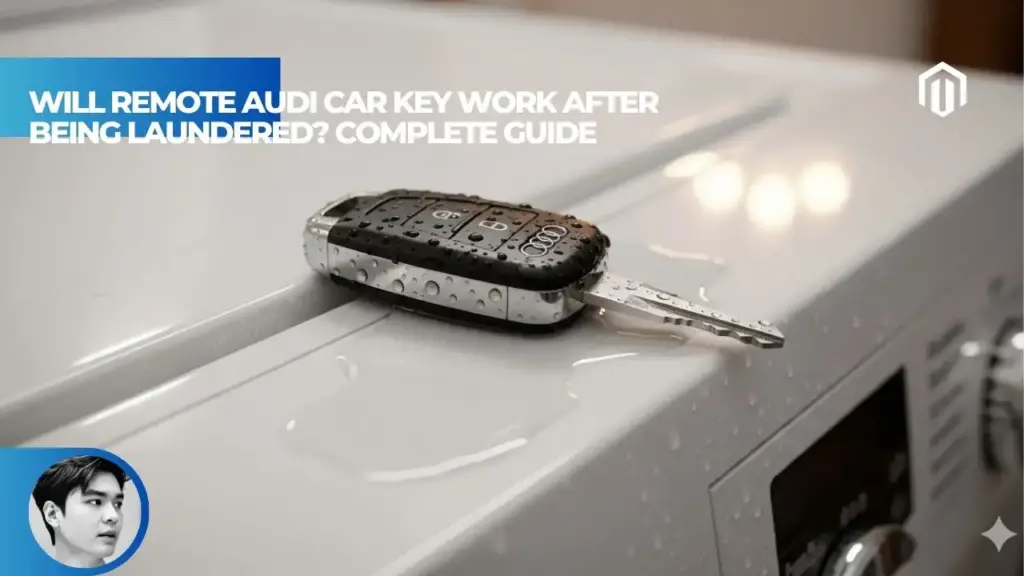
Yes, your Audi car key can survive being laundered—but only if you act fast and dry it correctly. Many owners have recovered fully functional key fobs after a complete wash cycle by immediately removing the battery and allowing the fob to dry for 24-48 hours[1]. The catch? Speed matters. Water causes corrosion on the circuit board, and the longer moisture sits inside, the higher the chance of permanent damage[2]. Your Audi key’s survival depends entirely on what you do in the next few hours.
Why Laundered Keys Sometimes Survive
Modern Audi key fobs are built better than you might expect. The circuit boards inside are relatively simple, and the transponder chip—the critical component that allows your car to start—is often sealed in a water-resistant capsule[3].
Several Audi owners report their keys surviving full wash cycles. One Reddit user noted their Audi fob went through “2 full wash cycles” and worked perfectly after drying[3]. Another owner’s Nissan key worked after being washed for 30 minutes and left in rice for 24 hours[1].
That said, survival isn’t guaranteed. Water—especially combined with laundry detergent—can leave residue that causes short circuits when you reinsert the battery[2]. The dryer cycle adds heat stress that may warp plastic components or damage sensitive electronics.
What to Do Immediately After Finding Your Washed Key
Time is critical. Follow these steps in order[2][4]:
Step 1: Remove the Battery Immediately
Open your Audi key fob and remove the CR2032 battery before doing anything else. This prevents short circuits while moisture is still present inside[2].
Most Audi keys open by:
- Pressing the release button to slide out the emergency metal key blade
- Using the blade to pry apart the fob housing at the seam
- Carefully separating the two halves to expose the battery and circuit board
Do NOT press any buttons while the key is wet—this can push water deeper into the circuit board and accelerate damage[2].
Step 2: Rinse With Isopropyl Alcohol
This step sounds counterintuitive, but it works. Rinse the circuit board with 90%+ isopropyl alcohol to displace water and dissolve detergent residue[1].
Alcohol evaporates faster than water and doesn’t cause corrosion. Submerge the circuit board in a small glass of alcohol and gently agitate it for 30 seconds. This flushes out soap residue that could cause problems later.
If you’re troubleshooting a key fob that blinks but won’t unlock the doors, detergent residue on contacts is often the culprit.
Step 3: Dry the Key Fob Thoroughly
Proper drying takes patience—don’t rush this[2][4]:
| Method | Effectiveness | Time Required |
|---|---|---|
| Silica gel packets | Best | 24-48 hours |
| Uncooked rice | Good | 24-48 hours |
| Air dry (warm spot) | Moderate | 48-72 hours |
| Compressed air + air dry | Good | 24-48 hours |
Place the disassembled key (housing, circuit board, and rubber buttons separated) in a breathable bag with silica gel packets or rice[5]. Leave it for at least 24 hours—48 hours is better for full wash cycle exposure.
What NOT to do:
- Don’t use a hair dryer on high heat
- Don’t put it in the microwave (yes, people try this)
- Don’t use an oven
- Don’t place in direct sunlight
Excessive heat warps the plastic housing and can permanently damage the electronics[2].
Step 4: Clean Contact Points
Before reassembly, inspect the battery contacts and circuit board for any visible corrosion or residue[6]. White or green buildup indicates corrosion that needs cleaning.
Use a cotton swab dipped in isopropyl alcohol to gently clean:
- Battery terminal contacts
- All visible metal traces on the circuit board
- The rubber button contacts
Also bend the battery contact fingers slightly to ensure firm pressure against the new battery[6].
Step 5: Install a Fresh Battery and Test
Even if your old battery tests good, replace it[7]. Water exposure often compromises batteries in ways that don’t show on voltage testers immediately. The battery may test fine but fail under load.
Use a fresh CR2032 lithium battery, reassemble the fob, and test all functions:
- Lock button
- Unlock button
- Trunk release
- Panic button
If the remote functions work, test proximity unlocking and push-button start. The transponder chip (for starting the car) is separate from the remote functions and may survive even if remote buttons fail.
Signs Your Key Fob Is Damaged Beyond Repair
Not all keys recover. Watch for these warning signs[2]:
| Symptom | What It Means | Prognosis |
|---|---|---|
| No response at all | Circuit board likely shorted | Replacement needed |
| Works intermittently | Ongoing corrosion | Will fail completely soon |
| Reduced range | Partial damage to transmitter | May continue degrading |
| Buttons stick or feel different | Physical damage to rubber membrane | Usable but compromised |
Intermittent operation is the most deceptive symptom. The key may work for a few days or weeks, then fail completely as corrosion spreads across the circuit board[2]. If your key only works sometimes after being washed, plan for replacement—it’s not a matter of if, but when.
Your Audi Can Still Start Even With a Dead Remote
Here’s good news: even if the remote functions are completely dead, you can likely still start your Audi. The transponder chip that communicates with your car’s immobilizer is usually sealed separately from the remote electronics[3].
To start your Audi with a non-functional remote:
- Use the emergency metal key blade to manually unlock the driver’s door
- Hold the key fob directly against the steering column (where the ignition would be)
- Press the start button while the fob is touching the column
- The car should recognize the transponder and start
This works because proximity detection requires battery power, but transponder reading doesn’t—the car sends a signal that powers the transponder chip directly.
If using the emergency key triggers your alarm, don’t panic—insert it in the ignition and start the car to silence the alarm.
Replacement Options and Costs
If your key doesn’t recover, here are your options[2]:
| Option | Cost | Pros | Cons |
|---|---|---|---|
| Audi Dealership | $300-600 | Guaranteed compatible, warranty | Most expensive |
| Automotive Locksmith | $150-400 | Often same-day service | Quality varies |
| Online OEM Fob + Programming | $80-200 + $50-100 programming | Cheapest option | Requires separate programming |
The dealership is the most expensive but most reliable option. They’ll program the key correctly and guarantee it works with your specific vehicle. If you need key fob replacement in California or other states, local locksmiths can often do the job for significantly less.
Online purchases require separate programming, which you can do at the dealership (typically $50-100) or with an automotive locksmith who has Audi-compatible diagnostic equipment.
Preventing Future Accidents
Once you’ve dealt with one laundered key, you’ll want to avoid repeating the experience:
- Designate a key spot: Hook by the door, bowl on the counter, or specific pocket
- Check pockets before laundry: Make it part of your routine
- Use a keychain that’s harder to miss: Larger, brightly colored, or attached to something you won’t wash
- Consider a key bowl in the laundry area: Catch anything you find before it goes in the machine
Some owners keep their backup key in a safe location and use only one key daily. That way, if the worst happens, they have immediate backup without the cost of emergency replacement.
If you track your Audi’s location through Audi Connect, that service remains functional even if your physical key is damaged.
Key Takeaways
- Act immediately when you discover the washed key—remove the battery first to prevent short circuits, then rinse with 90%+ isopropyl alcohol to displace water and dissolve detergent residue[2]
- Allow 24-48 hours of drying time with silica gel or rice before testing; testing too early with moisture inside causes permanent damage[4]
- Your Audi can still start even if the remote is dead—the transponder chip is usually sealed separately and survives when the remote electronics don’t[3]
- Intermittent operation after washing is a warning sign—the key may work temporarily but will likely fail completely as corrosion spreads[2]
- Replace the battery even if it tests good—water exposure compromises batteries in ways that don’t show on voltage testers immediately[7]
- Replacement costs $150-600 depending on source—dealerships are most expensive but guaranteed, while online fobs require separate programming[2]
FAQs
Can an Audi key fob survive the washing machine?
Yes, many Audi key fobs survive full wash cycles when properly dried afterward[1]. Success depends on acting quickly—remove the battery immediately, rinse with isopropyl alcohol to displace water and detergent, then allow 24-48 hours of drying with silica gel or rice before testing. The transponder chip is usually sealed and survives better than the remote electronics.
How long should I wait before testing my washed Audi key?
Wait at least 24 hours, preferably 48 hours, before testing[4]. Testing too early with moisture still inside can cause short circuits that permanently damage the electronics. Some owners report keys that didn’t work after a few hours of drying worked perfectly after a week of patience. If initial testing fails, wait another week before giving up.
Will my Audi start if the key fob remote doesn’t work after washing?
Usually yes. The transponder chip that communicates with the immobilizer is separate from the remote functions and often survives water damage[3]. Hold the key fob directly against the steering column and press the start button—the car should recognize the transponder and start. You won’t have remote lock/unlock, but you can drive and use the emergency blade for door access.
How much does it cost to replace a water-damaged Audi key?
Audi dealerships charge $300-600 for a replacement key fob including programming[2]. Automotive locksmiths typically charge $150-400. The cheapest option is purchasing an OEM fob online ($80-200) and paying separately for programming ($50-100). Prices vary by model year and whether you have a basic remote or an advanced key with keyless entry and push-button start.
Should I put my wet key fob in rice?
Rice works but isn’t the best option[5]. Silica gel packets (the ones that come in shoe boxes and electronics packaging) absorb moisture more effectively. If using rice, ensure the fob is fully disassembled and surrounded by rice on all sides. Either method requires 24-48 hours minimum. The alcohol rinse before drying is more important than the drying medium itself.
References
-
Reddit r/LifeProTips. (2022). LPT: If you accidentally wash your car’s smart key fob and it doesn’t work don’t panic.
LPT: If you accidentally wash your car's smart key fob and it doesn't work don't panic. Allowing it dry out completely will usually save the key.
byu/Epotheros inLifeProTips - Keyless Entry Remote Inc. (2025). Washed Your Key Fob in the Washing Machine? Here’s What to Do. https://www.keylessentryremotefob.com/blog/washed-your-key-fob-in-the-washing-machine-heres-what-to-do/
-
Reddit r/Audi. (2022). Accidentally went swimming with my key in salt water.
Accidentaly went swimming with my key in salt water, can I save it?
byu/Competitive_Low_8913 inAudi - Rapid Car Keys UK. (2025). What To Do If Your Car Keys Get Wet. https://rapidcarkeys.co.uk/what-to-do-if-your-car-keys-get-wet-a-rapid-car-keys-guide/
- Gumtree UK. (2025). What to do if your Audi key fob gets wet and stops working. https://www.gumtree.com/question-answers/what-to-do-if-your-audi-key-fob-gets-wet-and-stops-132902
- Instructables. (2017). Fixing a Key Fob That Has Been to the Cleaners. https://www.instructables.com/Fixing-a-Key-Fob-that-has-been-to-the-cleaners/
- YouTube – Drivers Therapy. (2025). Washed Your Car Key? Here’s How to Fix It.

I am a senior automotive analyst at Autvex. Expert vehicle evaluations, in-depth reviews, and objective analysis helping readers make informed automotive decisions with years of industry experience.