You may also like:
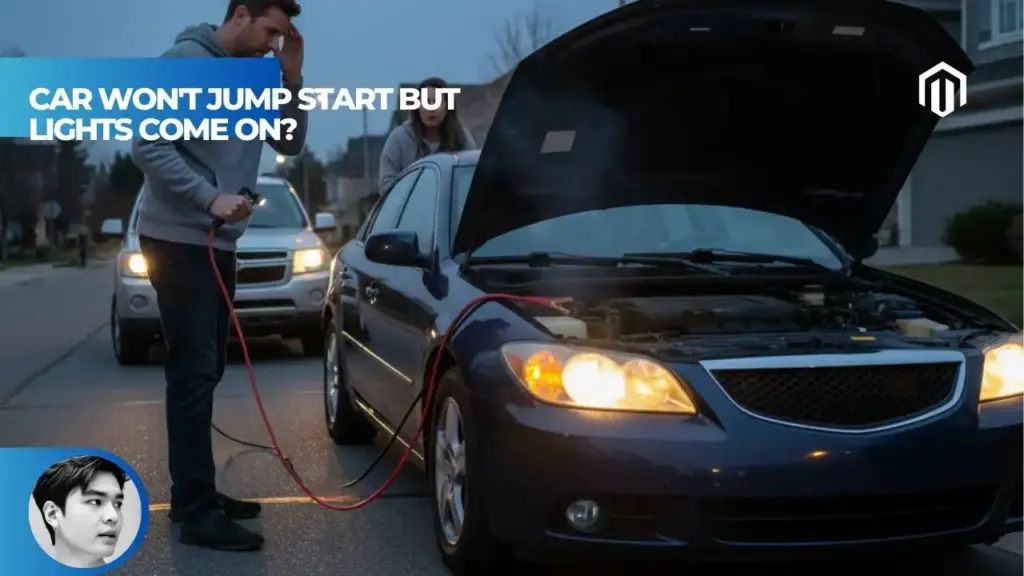
When your car won’t jump start but the lights come on, the problem usually isn’t the battery—it’s the starter motor, corroded battery terminals, or a faulty ignition switch[1]. Dashboard lights and headlights require very little power compared to the 200+ amps needed to crank the engine, which explains why they work while the starter fails[2].
Why Lights Work But the Engine Won’t Crank
This confuses a lot of drivers. The battery seems fine because the lights come on, so why won’t the car start?
Here’s the thing: your interior lights draw maybe 5-10 amps. Your headlights pull around 10-15 amps. But the starter motor? That beast demands 150-300 amps for a brief burst to spin the engine[2]. A battery or connection that can handle low-draw accessories might completely fail under the heavy starter load.
Think of it like a garden hose versus a fire hose. Both can fill a drinking glass, but only one can spray down a burning building. Your electrical system might have just enough flow for the small stuff while being totally inadequate for the big job[1].
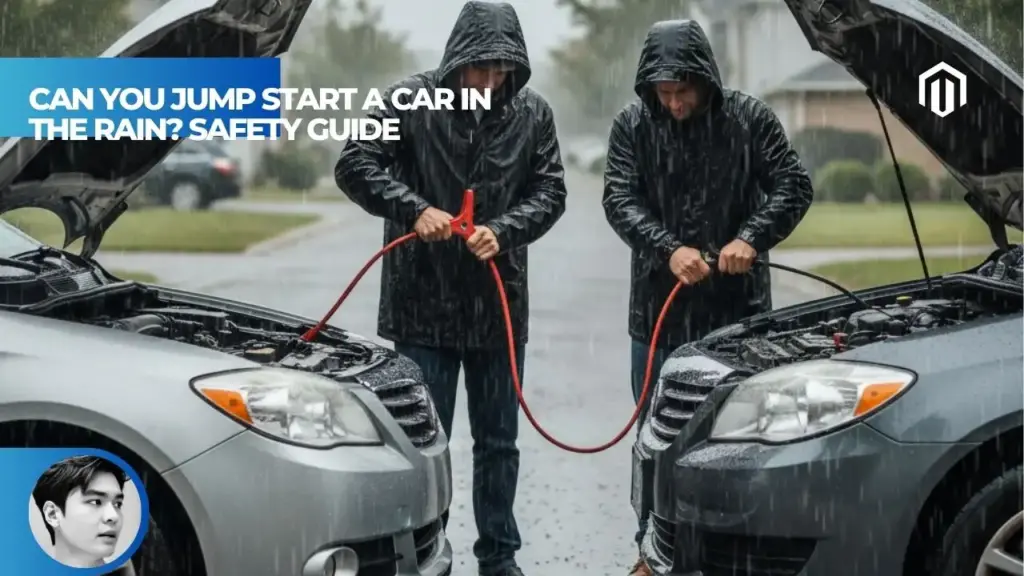
When you connect jumper cables to a running donor vehicle, you’re supposed to let the batteries charge for at least 5 minutes before attempting to start[1]. Many people try cranking immediately—and that rarely works with a severely depleted battery. But if you’ve waited, the cables are properly connected, and it still won’t crank, you’re dealing with something other than a dead battery.
Most Likely Causes (In Order)
Bad Starter Motor
The starter motor is the most common culprit when lights work but nothing happens at the key[1]. This electric motor lives near the bottom of your engine, attached to the transmission, and its only job is cranking the engine during startup.
Listen carefully when you turn the key. A single loud click usually means the starter solenoid is engaging but the motor itself isn’t spinning—often caused by worn brushes or burnt contacts inside the starter[3]. Rapid-fire clicking (click-click-click-click) points more toward insufficient power reaching the starter. And grinding? That’s the starter gear failing to mesh properly with the flywheel—a sign of serious wear[3].
Here’s a classic mechanic’s trick: if you hear a single click and suspect the starter, have someone tap the starter motor with a wrench while you try starting the car[4]. If it fires up, you’ve confirmed worn brushes inside the starter. This isn’t a fix—just a temporary workaround to get you to a repair shop.
Corroded or Loose Battery Terminals
Corrosion builds up gradually as a white, green, or bluish crusty substance on your battery posts[1]. This buildup acts as an insulator, restricting electrical flow. Low-draw systems might still work, but high-amperage demands like starting can be completely blocked.
Check both terminals on the battery itself, not just the jump points under the hood. Some vehicles hide the battery in the trunk or under the rear seat, with separate jump terminals in the engine bay. The actual battery connections need to be clean and tight[1].
Loose terminals create the same problem. A connection that’s finger-tight might pass enough current for lights but lose contact under the vibration and load of starting. After jumping a car, if everything goes dead the instant you turn the key, a loose connection is almost certainly the issue[2]. Understanding [battery replacement basics] can help you identify terminal issues during inspection.
Blown Fuse or Bad Starter Relay
Your starter circuit runs through fuses and relays in the fuse box. If the starter relay fails or the ignition fuse blows, the starter motor never receives the signal to engage[5].
The fuse box is typically under the hood or below the dashboard. Your owner’s manual shows which fuse protects the starter circuit. Pull the fuse and check if the metal strip inside is broken. For relays, you can often swap the starter relay with another identical relay in the box (like the horn relay) to test[1].
Failed Ignition Switch
When accessories work fine but nothing happens at all when you turn the key, the ignition switch might be the problem[5]. This isn’t the lock cylinder where you insert the key—it’s the electrical switch behind it that sends power to start the car.
A failing ignition switch might work intermittently, which is maddening to diagnose. The car starts fine for a week, then randomly refuses to crank. If jiggling the key while turning helps, or if different key positions produce inconsistent results, suspect the ignition switch[5].
Neutral Safety Switch (Automatic Transmissions)
Automatic cars have a switch that prevents starting unless the transmission is in Park or Neutral[1]. If this switch malfunctions, the car’s computer thinks you’re in Drive or Reverse and blocks the starter signal.
Try shifting firmly into Park, or move to Neutral and attempt starting from there. Sometimes the switch isn’t properly sensing gear position, and repositioning the shifter makes contact[1].
Diagnostic Steps to Try Right Now
Before calling a tow truck, run through these quick checks. They cost nothing and might get you moving.
Step 1: Wait and retry. If you’ve connected jumper cables, let them charge the battery for a full 10 minutes with the donor car running at a slight RPM increase[1]. Then try starting. Patience fixes more “dead batteries” than you’d expect.
Step 2: Check cable connections. Wiggle both ends of each jumper cable while attached. Ensure the clamps have solid metal-to-metal contact, not just touching paint, rust, or corrosion[2]. The negative clamp on the dead car should attach to a clean, unpainted metal surface on the engine block—not necessarily the battery terminal.
Step 3: Listen carefully. Turn the key and note exactly what you hear:
- Single click: Likely starter motor failure[3]
- Rapid clicking: Low voltage reaching starter—check connections or battery condition
- Grinding noise: Starter gear not engaging flywheel properly[3]
- Complete silence: Electrical issue in the ignition circuit, fuse, or relay[3]
Step 4: Try the tap test. Locate the starter motor (usually on the lower side of the engine near where it meets the transmission). Have someone turn the key while you tap the starter firmly with a wrench or hammer[4]. If the car starts, plan on replacing the starter soon.
Step 5: Check fuses. Find your vehicle’s fuse box and locate the starter or ignition fuse. A blown fuse is a quick, cheap fix—but investigate why it blew[1].
What a Jump Start Can’t Fix
Jumping a car only addresses one problem: insufficient battery voltage[1]. If your issue lies elsewhere, all the jumper cables in the world won’t help.
| Problem | Jump Start Helps? | What to Do |
|---|---|---|
| Dead/weak battery | Yes | Jump, then test/replace battery |
| Bad starter motor | No | Replace starter ($300-$600)[6] |
| Corroded terminals | Maybe | Clean terminals with wire brush |
| Blown fuse/relay | No | Replace fuse or relay |
| Bad ignition switch | No | Replace ignition switch |
| Faulty alternator | Temporarily | Car runs briefly, then dies again |
| Fuel system issues | No | Diagnose fuel delivery |
| Security system lockout | No | Follow anti-theft reset procedure |
And here’s something worth knowing: even if jumping a car with a bad alternator gets the engine running, it won’t last. The alternator charges the battery while driving, so a failed alternator means the battery will drain completely within minutes to an hour[1].
How to Tell If It’s the Battery or Starter
This distinction matters because a battery costs $100-$200 while a starter runs $300-$600[6]. Misdiagnosing can be expensive.
A voltmeter gives you the answer. Connect it to the battery terminals—a fully charged battery reads 12.6 volts or higher[6]. Below 12.3 volts suggests the battery needs charging or replacement. If voltage reads normal but the car won’t crank, the battery isn’t your problem.
You can also observe headlight behavior. Dim the car, turn on the headlights, then attempt to start. If the headlights go completely dark when you turn the key, the battery or connections can’t handle the load[5]. If the headlights stay bright but nothing happens, the starter circuit is likely the issue.
Jump-starting behavior provides another clue. If jumping temporarily fixes the problem and the car starts normally afterward, it was probably just a drained battery. But if the car still won’t crank even with a fully charged donor vehicle connected, you’re looking at a starter or ignition problem[6]. For cold weather situations, we’ve covered specific guidance on diagnosing cars that won’t start in cold temperatures.
Repair Costs to Expect
If you’ve diagnosed the problem, here’s what repairs typically cost:
| Component | Parts Cost | Labor Cost | Total Range |
|---|---|---|---|
| Battery | $80 – $200 | $0 – $50 | $80 – $250 |
| Battery terminals/cables | $20 – $80 | $30 – $70 | $50 – $150 |
| Starter motor | $100 – $300 | $100 – $300 | $300 – $600[6] |
| Ignition switch | $50 – $150 | $100 – $200 | $150 – $350 |
| Starter relay/fuse | $10 – $40 | $0 – $50 | $10 – $90 |
Starter replacement cost varies significantly by vehicle. Some cars have easily accessible starters that a shade-tree mechanic can swap in an hour. Others require removing exhaust components, intake manifolds, or even dropping the transmission for access—driving labor costs way up[6].
Key Takeaways
- When lights work but the car won’t start even with a jump, the problem is almost never the battery itself—it’s typically the starter motor, corroded connections, or ignition circuit components[1].
- Dashboard lights draw 5-10 amps while starters require 150-300 amps, which explains why low-power systems work when high-power systems fail[2].
- Listen to the sounds when you turn the key: single click suggests starter failure, rapid clicking indicates low voltage, grinding means gear engagement problems, and silence points to an electrical circuit issue[3].
- The mechanic’s tap test works temporarily—hit the starter with a wrench while someone turns the key—and confirms worn internal brushes if successful[4].
- Starter replacement costs $300-$600 total, while battery-related fixes typically run under $250—proper diagnosis before buying parts saves money[6].
- Always let jumper cables charge the dead battery for at least 5-10 minutes before attempting to start, and ensure solid metal-to-metal contact at all connection points[1].
FAQs
Can a completely dead battery cause the lights to work but not start?
Yes, this happens frequently. A severely discharged battery might retain just enough charge (around 10-11 volts) to power low-draw systems like dome lights and dashboard indicators while being completely incapable of delivering the 150+ amps required to turn over the starter motor[2]. This is actually the most common scenario before a battery fails entirely, and proper jump-starting technique with adequate charge time usually solves it.
Why does my car click once but won’t start?
A single click typically indicates that the starter solenoid is receiving power and engaging, but the starter motor itself isn’t spinning[3]. This usually means worn brushes inside the starter, burnt solenoid contacts, or insufficient power reaching the motor. The solenoid is working—you hear it click—but it can’t complete its job of spinning the engine over.
How long do car starters typically last?
Most starters survive 100,000 to 150,000 miles under normal conditions[6]. Frequent short trips with lots of starts accelerate wear, as does living in areas with extreme temperatures. Oil leaks that drip onto the starter can cause premature failure, as can excessive cranking when the engine is hard to start. If you’re past 100k miles, the starter should be on your watch list.
Can I drive to a mechanic with a bad starter?
If you can get the car started using the tap-test trick or by jumping it after letting the battery charge extensively, you can technically drive to a shop[4]. But don’t shut off the engine until you arrive—a failing starter might not engage again. Call ahead so the shop knows you’re coming and can take the car immediately. Driving with a known bad starter is risky because you could get stranded anywhere.
References
- RepairPal. (2024). Most Common Reasons a Car Won’t Start With a Jumpstart. https://repairpal.com/symptoms/car-battery-wont-jumpstart
-
Reddit r/MechanicAdvice. (2021). Car won’t start but the lights and everything come on.
Can someone help me out? Car won’t start but the lights and everything come on, Been told that it was battery by one person and the starter from another
byu/CSanipass inMechanicAdvice - Torque Cars. (2025). Symptoms & Warning Signs of a Failing Starter Motor.
- Auto Monkey. (2025). Common Starter Motor Issues. https://www.theautomonkey.com/blog/automotive-advice/common-starter-motor-issues/
- Car-KU. (2025). Car Will Not Jump Start But Lights Come On? 5 Common Causes And Quick Fixes. https://www.car-ku.com/news/Car-Will-Not-Jump-Start-But-Lights-Come-On-5-Common-Causes-And-Quick-Fixes.html
- AutoZone. (2024). Signs of a Bad Starter | How to Identify Your Starter is Failing. https://www.autozone.com/diy/starter/signs-of-a-bad-starter-how-to-identify-your-starter-is-failing

I am a senior automotive analyst at Autvex. Expert vehicle evaluations, in-depth reviews, and objective analysis helping readers make informed automotive decisions with years of industry experience.