You may also like:
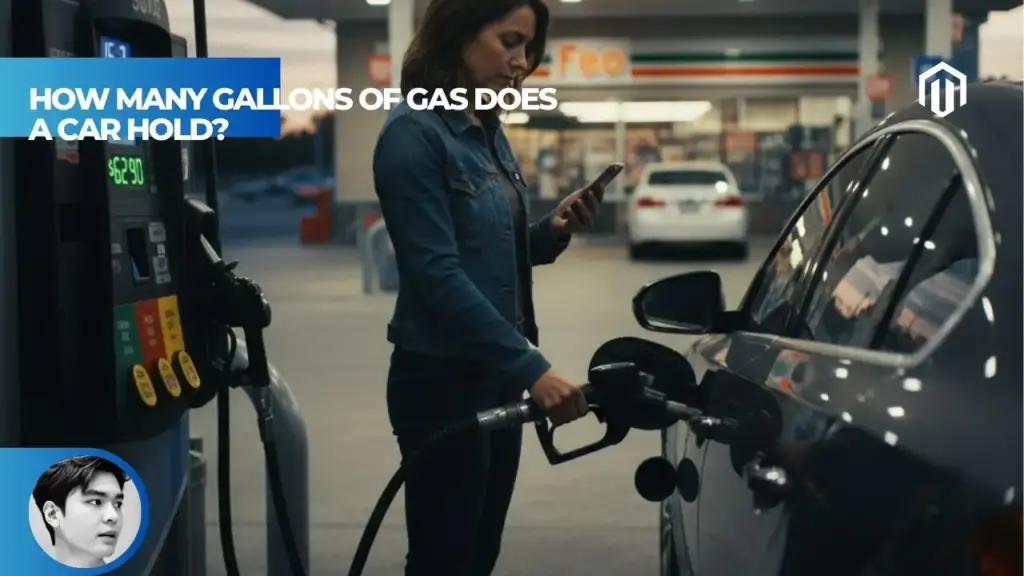
Most cars hold between 12 and 16 gallons of gas, though fuel tank capacity varies significantly by vehicle type[1]. Compact cars typically have tanks in the 10-13 gallon range, mid-size sedans hold 13-18 gallons, SUVs range from 15-24 gallons, and full-size pickup trucks can hold 20-36 gallons or more[2]. To find your specific vehicle’s capacity, check the owner’s manual or the fuel door sticker.
Understanding Fuel Tank Capacity
Fuel tank size directly affects how far you can drive between fill-ups. Manufacturers balance tank capacity against vehicle weight, interior space, and typical use cases for each model[1]. A compact car designed for city commuting does not need the same range as a full-size truck built for long-haul work.
The tank size alone does not determine range—fuel efficiency plays an equally important role. A 12-gallon tank in a hybrid achieving 50 mpg provides more range than a 20-gallon tank in a truck averaging 18 mpg. When evaluating vehicles, consider both capacity and EPA-estimated fuel economy together[1].
Modern vehicles also include a reserve portion within the stated capacity[1]. When your fuel gauge hits empty, approximately 1-2 gallons typically remain as a safety buffer to reach a gas station. For trip planning, understanding how long a car can sit without driving can also affect fuel conditions.
Gas Tank Size by Vehicle Type
Compact Cars (10-14 gallons)
Compact vehicles prioritize fuel efficiency and lower weight, resulting in smaller tanks that still provide adequate range due to better mpg ratings[2].
| Model | Tank Capacity |
|---|---|
| Nissan Versa | 10.8 gallons[3] |
| Nissan Sentra | 12.4 gallons[3] |
| Toyota Corolla | 13.2 gallons[3] |
| Mazda 3 | 13.2 gallons[3] |
| Kia Soul | 14.3 gallons[3] |
During a week with a Corolla as a rental, the 13.2-gallon tank combined with 32 mpg highway provided approximately 420 miles of range—more than sufficient for most commuters without frequent fill-ups.
Mid-Size Sedans (13-18 gallons)
Sedans offer a balance between capacity and efficiency, with tanks sized for both daily commuting and occasional road trips[2].
| Model | Tank Capacity |
|---|---|
| Toyota Avalon | 13.2 gallons[3] |
| Nissan Altima | 16.2 gallons[3] |
| Ford Fusion | 16.5 gallons[3] |
| Dodge Charger | 18.5 gallons[3] |
| Subaru Outback | 18.5 gallons[3] |
Luxury sedans often feature larger tanks to support longer distances between stops. The Mercedes-Benz S-Class, for example, holds 22.1 gallons[3].
Crossovers and Compact SUVs (14-18 gallons)
Small SUVs and crossovers have become the dominant vehicle segment, featuring tanks that balance passenger space with fuel storage[2].
| Model | Tank Capacity |
|---|---|
| Toyota RAV4 | 14.5 gallons[4] |
| Mazda CX-5 | 14.8-15.3 gallons[3] |
| 2025 Chevrolet Equinox | 14.8 gallons[5] |
| Nissan Rogue | 14.5-15.9 gallons[3] |
| Jeep Wrangler | 17.5-21.5 gallons[3] |
The 2025 Toyota RAV4 with its 14.5-gallon tank achieves approximately 435-522 miles per fill-up on gas models, and over 615 miles in hybrid variants[4].
Mid-Size and Full-Size SUVs (17-28 gallons)
Larger SUVs require more fuel to operate and include larger tanks to maintain reasonable range[2].
| Model | Tank Capacity |
|---|---|
| 2025 Ford Explorer (2.3L) | 17.9 gallons[6] |
| Toyota Highlander | 17.9 gallons[7] |
| Honda Pilot | 18.5 gallons[7] |
| 2025 Hyundai Palisade | 18.8 gallons[7] |
| 2025 Ford Explorer ST (3.0L) | 20.2 gallons[6] |
| Toyota 4Runner | 23 gallons[3] |
| Ford Expedition | 24.6 gallons[3] |
| Chevrolet Suburban | 28 gallons[3] |
For buyers comparing options in this segment, our Audi Q5 vs BMW X3 comparison includes fuel tank details alongside other specifications.
Pickup Trucks (20-36+ gallons)
Trucks are designed for heavy-duty work and towing, requiring larger fuel reserves to compensate for higher consumption rates[2].
| Model | Tank Capacity |
|---|---|
| Ford F-150 | 23-26 gallons[3] |
| Toyota Tundra | 22.5 gallons[3] |
| Dodge Ram 1500 | 23 gallons[3] |
| 2025 Ford F-150 (standard) | 36 gallons[8] |
| 2025 Ford F-150 PowerBoost Hybrid | 30.6 gallons[8] |
| Chevrolet Silverado 3500HD | 36 gallons[3] |
The 2025 Ford F-150 with its 36-gallon tank and 2.7L EcoBoost engine achieves approximately 900 miles of highway range (25 mpg x 36 gallons)[8].
Hybrids and Special Cases
Hybrid vehicles sometimes use slightly smaller tanks since electric assist improves overall range[4].
| Model | Tank Capacity |
|---|---|
| Toyota Prius | 11.4 gallons[3] |
| Toyota RAV4 Hybrid | 13.2 gallons[4] |
| 2025 F-150 PowerBoost | 30.6 gallons[8] |
The Prius achieves over 500 miles per tank despite its smaller capacity due to 50+ mpg efficiency.
How to Find Your Car’s Fuel Tank Capacity
Several methods exist to determine your specific vehicle’s tank size:
- Owner’s Manual: The specifications section lists exact fuel tank capacity[1].
- Fuel Door Sticker: Many vehicles display tank capacity on a sticker inside the fuel door alongside recommended fuel type.
- VIN Lookup: Online VIN decoders can provide detailed specifications including tank capacity[9].
- Manufacturer Website: Build-and-price tools and specifications pages list tank capacity for each model and trim.
- Fill-Up Calculation: If the tank is nearly empty, note how many gallons it takes to fill. Add approximately 1-2 gallons for the reserve portion[1].
Calculating Your Driving Range
To estimate how far you can drive on a full tank:
Formula: Tank Capacity (gallons) × Fuel Economy (mpg) = Range (miles)
Example Calculations:
| Vehicle Type | Tank | MPG | Range |
|---|---|---|---|
| Compact (Corolla) | 13.2 gal | 32 mpg | 422 miles |
| Mid-size SUV (RAV4) | 14.5 gal | 30 mpg | 435 miles |
| Full-size SUV (Suburban) | 28 gal | 18 mpg | 504 miles |
| Truck (F-150 2.7L) | 36 gal | 25 mpg | 900 miles |
Real-world range varies based on driving conditions, traffic, terrain, and driving style. Highway driving typically yields better efficiency than city driving[1].
If you’re monitoring fuel consumption closely, understanding how many quarts of oil your car takes and other fluid capacities helps with overall vehicle maintenance.
Why Tank Size Matters
Trip Planning
Knowing your tank capacity and fuel economy allows accurate planning for road trips, especially when traveling through areas with limited gas station availability[1].
Cost Management
A larger tank costs more to fill but may require fewer stops. Smaller tanks cost less per fill-up but require more frequent visits to the pump. Understanding your vehicle’s capacity helps budget fuel expenses accurately.
Vehicle Selection
When purchasing a vehicle, tank capacity affects ownership experience. Commuters may prefer smaller, more efficient tanks, while frequent long-distance travelers benefit from larger capacity[1].
Fuel System Health
Running the tank consistently low can damage the fuel pump, which uses gasoline for cooling[1]. Keeping the tank above one-quarter full extends fuel system component life. For tips on maintaining vehicle systems, see our guide on why your car might smell like gas.
Key Takeaways
- Most passenger cars hold 12-16 gallons, SUVs hold 15-24 gallons, and trucks hold 20-36+ gallons[1][2]
- Tank capacity alone does not determine range—multiply by mpg to calculate actual driving distance[1]
- Check your owner’s manual, fuel door sticker, or manufacturer website for exact specifications
- Keeping the tank above one-quarter full protects fuel system components[1]
- Hybrid vehicles often have smaller tanks but achieve similar or greater range due to improved efficiency[4]
Frequently Asked Questions
Is 16 gallons a full tank?
For many mid-size sedans and some smaller SUVs, 16 gallons represents a full tank[1]. However, exact capacity varies by make and model—always check your specific vehicle’s specifications to confirm.
How far can I drive on a full tank?
Range depends on both tank size and fuel economy. A vehicle with a 15-gallon tank averaging 30 mpg provides approximately 450 miles of range[1]. Actual range varies based on driving conditions.
Do larger vehicles always have bigger gas tanks?
Generally yes, but not always. Some large luxury sedans have tanks exceeding 20 gallons, while certain full-size SUVs may have 18-gallon tanks[2]. Hybrid versions of larger vehicles sometimes have smaller tanks due to electric assist extending range.
How much fuel is left when the gauge shows empty?
Most vehicles retain approximately 1-2 gallons as a reserve when the gauge reads empty[1]. This reserve varies by manufacturer and should not be relied upon for regular driving.
Can I increase my car’s fuel tank size?
Aftermarket fuel tank upgrades exist for some vehicles, particularly trucks, but these modifications can affect warranty coverage, safety ratings, and vehicle handling. Professional installation and compliance with regulations is essential.
References
- Mills Equipment. (2024). Understanding Average Fuel Tank Size: What You Need to Know. https://millsequipment.com/blogs/blogs/understanding-average-fuel-tank-size-what-you-need-to-know
- Oil Waste Tank. (2025). Fuel Tank Size Comparison for Trucks and Cars. https://www.oilwastetank.com/n/knowledge/fuel-tank-size-comparison-for-trucks-and-cars
-
Mechanic Base. (2023). What Is the Average Size of a Car Gas Tank?
What Is the Capacity of a Car’s Gas Tank?
- iCartea. (2025). 2025 Toyota RAV4 Fuel Tank Capacity Key Facts. https://www.icartea.com/en/wiki/2025-toyota-rav4-fuel-tank-capacity-key-facts
- Monument Chevrolet. (2025). How Many Gallons Does a 2025 Chevrolet Equinox Hold? https://www.monumentchevrolet.com/blogs/3704/how-many-gallons-does-a-2025-chevrolet-equinox-hold
- Star Ford Big Spring. (2024). 2025 Ford Explorer Fuel Economy. https://www.starfordbigspring.com/new-ford-explorer-fuel-economy.html
- Dublin Hyundai. (2024). Fuel Tank Capacity Guide: 2025 Hyundai Palisade Calligraphy. https://www.dublinhyundai.com/blogs/4638/fuel-tank-capacity-guide-2025-hyundai-palisade-calligraphy
- Permian Ford. (2025). 2025 Ford F-150 Gas Tank Size and Mileage Overview. https://www.permianford.net/blog/2025/march/28/2025-ford-f-150-gas-tank-size-mileage.htm
- EpicVIN. (2025). How to Check My Gas Tank Size by VIN Number. https://epicvin.com/blog/how-to-check-my-gas-tank-size-by-vin-number

I am a senior automotive analyst at Autvex. Expert vehicle evaluations, in-depth reviews, and objective analysis helping readers make informed automotive decisions with years of industry experience.