You may also like:
A car AC blowing hot air is most commonly caused by low refrigerant levels due to a leak, a faulty compressor, or a clogged condenser[1]. Start by checking whether the AC compressor clutch engages when the system is turned on—if the clutch cycles on and off every few seconds, refrigerant is likely low[2]. Simple fixes like cleaning debris from the condenser or replacing the cabin air filter can be done at home, while refrigerant leaks and compressor failures typically require professional repair[3].
How the Car AC System Works
Understanding the basic components helps diagnose AC problems effectively. The system uses refrigerant (R-134a in most vehicles, or 1234YF in newer models) to absorb heat from the cabin and release it outside[2].
The key components include:
| Component | Function |
|---|---|
| Compressor | Compresses refrigerant and circulates it through the system[3] |
| Condenser | Releases heat from the refrigerant to the outside air[4] |
| Evaporator | Absorbs heat from cabin air as refrigerant expands[3] |
| Expansion valve | Regulates refrigerant flow into the evaporator[1] |
| Cabin air filter | Filters dust and debris before air enters the cabin[2] |
When any component fails or the refrigerant level drops, the system cannot cool air effectively, resulting in warm or hot air from the vents[1].
Common Causes of AC Blowing Hot Air
Low Refrigerant (Most Common)
The AC system relies on a precise amount of refrigerant to absorb and release heat[4]. When levels drop—typically due to a leak in seals, hoses, or the condenser—the system cannot absorb heat effectively[5].
Signs of low refrigerant:
- Compressor clutch engages and disengages every few seconds[2]
- Air is cool at idle but warms up while driving (or vice versa)
- Visible oily residue around AC hose connections
During a summer road trip with a vehicle experiencing this exact issue, I noticed the compressor cycling rapidly every 3-4 seconds—a telltale sign the system was about a pound low on refrigerant.
Faulty AC Compressor
The compressor is the heart of the AC system[3]. If it fails to engage or has internal damage, refrigerant will not circulate, and no cooling occurs[6].
Signs of compressor problems:
- Unusual squealing or grinding noises when AC is on[3]
- Compressor clutch does not engage at all[6]
- AC works intermittently
A failing clutch or electrical issue can prevent compressor engagement even when the compressor itself is functional[1]. If you’ve encountered issues with your car overheating, check whether the cooling fans are also affecting AC performance.
Clogged or Damaged Condenser
The condenser sits at the front of the vehicle behind the grille and is exposed to road debris, bugs, and dirt[4]. When clogged, it cannot release heat from the refrigerant efficiently, causing warm air output[7].
Signs of condenser issues:
- AC works better at highway speeds than at idle
- Visible debris or damage on the condenser fins
- Refrigerant pressure readings are high
Broken Cooling Fans
Cooling fans help remove heat from the condenser when the vehicle is stationary or moving slowly[7]. Damaged fans—often from road debris—cannot cool the refrigerant adequately[7].
Signs of fan problems:
- AC cools well while moving but blows warm at idle
- Fans do not spin when AC is turned on
- Visible damage or cracks on fan blades
Electrical Issues
The AC system depends on multiple fuses, relays, sensors, and switches working together[7]. A single blown fuse or loose connection can shut down the entire system[3].
Signs of electrical problems:
- AC does not respond when turned on
- Intermittent cooling with no pattern
- Dashboard AC indicator light not illuminating
For related electrical troubleshooting, see our guide on what dashboard warning lights mean.
DIY Diagnostic Steps
Before spending money on professional diagnosis, perform these checks at home[1]:
Step 1: Check the Cabin Air Filter
A severely clogged cabin air filter restricts airflow, making the AC seem weak even when cooling properly[2].
How to check:
- Locate the cabin air filter (usually behind the glove box or under the hood)
- Remove and inspect for dirt, debris, or blockage
- Replace if dirty—filters cost $15-$40 at most auto parts stores
Step 2: Inspect the Condenser
The condenser is visible behind the front grille[4].
How to check:
- Look for visible debris, leaves, or bug buildup
- Check for bent or damaged fins
- Clean with a gentle brush or compressed air
- For thorough cleaning, use a garden hose on low pressure from the engine side
Step 3: Observe the Compressor Clutch
With the engine running and AC on maximum, observe the compressor[2].
What to look for:
- The center piece (clutch) should engage and rotate with the outer pulley when AC is on
- If only the outer pulley spins, the clutch is not engaging
- If the clutch cycles rapidly (every 2-5 seconds), refrigerant is likely low[2]
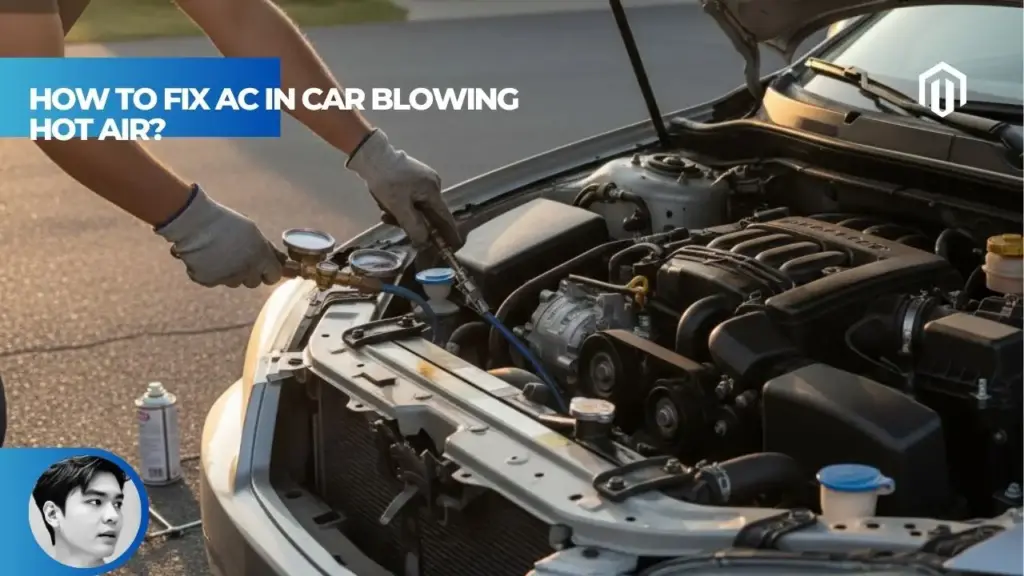
Step 4: Check Refrigerant Level
DIY refrigerant gauge kits are available at auto parts stores for $30-$60[1].
How to check:
- Locate the low-side service port (on the line between the accumulator and compressor)
- Attach the gauge according to product instructions
- Compare readings to the specifications on the refrigerant can
- If low, you can add refrigerant—but this is a temporary fix if a leak exists[1]
Important: Vehicles from 2013 and newer may use 1234YF refrigerant, which requires professional equipment and is not compatible with R-134a[2].
Step 5: Check Fuses and Relays
Locate the AC-related fuses in the fuse box (consult your owner’s manual)[3].
How to check:
- Inspect fuses for blown elements
- Replace any blown fuse with one of identical amperage
- If the fuse blows again immediately, there is an underlying electrical problem requiring professional diagnosis
When to Seek Professional Help
DIY diagnosis has limits. Seek professional AC service when[7]:
- Refrigerant needs to be added repeatedly (indicates a leak)
- The compressor makes unusual noises or does not engage at all
- You suspect a clogged expansion valve or evaporator
- Fuses blow repeatedly
- The system requires evacuation and recharging
Professionals use specialized equipment including electronic leak detectors, UV dye, and AC manifold gauge sets to pinpoint issues accurately[2].
Repair Cost Estimates
| Repair Type | DIY Cost | Professional Cost |
|---|---|---|
| Cabin air filter replacement | $15-$40 | $40-$80 |
| Refrigerant recharge (R-134a) | $30-$60 | $100-$250[8] |
| Refrigerant leak detection | Not recommended DIY | $100-$450[8] |
| Refrigerant line repair | Not recommended DIY | $200-$700[9] |
| Compressor replacement | Not recommended DIY | $600-$1,200[8] |
| Condenser replacement | Not recommended DIY | $400-$900[9] |
| Expansion valve replacement | Not recommended DIY | $250-$450[9] |
Repair costs vary significantly based on vehicle make and model. European and luxury vehicles typically cost more due to parts pricing and labor complexity[7].
How to Prevent AC Problems
Regular maintenance extends AC system life and prevents sudden failures[3]:
- Run the AC monthly: Even in winter, run the AC for 10-15 minutes monthly to keep seals lubricated and prevent refrigerant leaks[1]
- Replace the cabin air filter annually: A clean filter maintains proper airflow and reduces strain on the blower motor[2]
- Keep the condenser clean: Periodically inspect and clean debris from the condenser fins
- Address issues early: Small refrigerant leaks become large problems—fix them before the compressor is damaged from running low on refrigerant[5]
If your AC develops odors along with cooling issues, our guide on removing odors from your car may help address HVAC-related smells.
Key Takeaways
- Low refrigerant due to leaks is the most common cause of AC blowing hot air[5]
- A compressor clutch that cycles rapidly (every few seconds) indicates low refrigerant[2]
- DIY checks include cabin air filter, condenser cleanliness, and fuse inspection[1]
- Professional diagnosis is needed for refrigerant leaks, compressor failures, and electrical issues[7]
- Repair costs range from $40-$80 for filter replacement to $600-$1,200+ for compressor replacement[8][9]
Frequently Asked Questions
Can I just add refrigerant to fix my AC?
Why does my AC work at highway speeds but not at idle?
How do I know if my AC compressor is bad?
Is it safe to drive with a broken AC?
References
- AutoZone. (2024). Why Is My Car AC Blowing Hot Air? Here’s How to Fix It. https://www.autozone.com/diy/climate-control/car-ac-blowing-hot-air
- O’Reilly Auto Parts. (2020). Diagnostic: Why Is My Car A/C Not Blowing Cold? [Video]. YouTube.
-
Tserv. (2025). Car AC Not Cooling? 5 Expert Tips to Fix It Fast.
Car AC Not Cooling? 5 Expert Tips to Fix It Fast!
- PA Euros. (2025). Is Your Car’s A/C Blowing Hot? Common Cooling System Issues & Fixes. https://www.paeuros.com/is-your-cars-a-c-blowing-hot-common-cooling-system-issues-fixes
- Davis Acura. (2025). What Causes a Car AC to Blow Hot Air? https://www.davisacura.com/blog/what-causes-a-car-ac-to-blow-hot-air
-
Zima Automotive. (2025). Car AC Not Cooling? Five Simple Steps to Help Diagnose It!
Car AC Not Cooling? Five Simple Steps to Help Diagnose It!
-
BEMAC. (2024). 6 Issues Causing Your Car’s AC to Only Blow Hot Air.
Car’s Air Conditioning ONLY Blowing Hot Air? Here’s Why!
- HomeGuide. (2025). How Much Does an AC Freon Leak Repair Cost? https://homeguide.com/costs/ac-leak-repair-cost
- Classic Heat and Air. (2025). How Much Does AC Leak Repair Cost? https://www.classicheatandair.com/blog/ac-leak-repair-cost/

I am a senior automotive analyst at Autvex. Expert vehicle evaluations, in-depth reviews, and objective analysis helping readers make informed automotive decisions with years of industry experience.