You may also like:
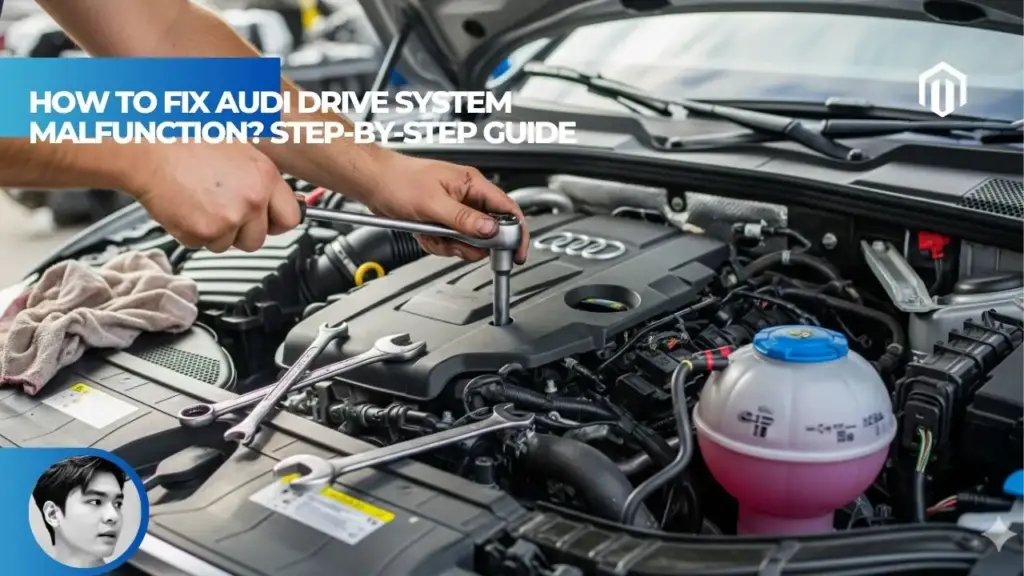
The “Drive System Malfunction” warning in your Audi signals a powertrain issue—first, safely pull over and try restarting the engine to clear temporary glitches[1]. Common causes include a weak battery triggering low-voltage faults, a failed belt starter generator (BSG), faulty wheel speed sensors, or transmission control module problems[2]. If a simple restart doesn’t clear the warning, scan for fault codes with an OBD-II scanner—many issues trace back to electrical problems rather than mechanical failures[3]. Repair costs range from $40–$80 for spark plugs to $1,500+ for mechatronic unit replacement[4].
What Does “Drive System Malfunction” Mean?
This warning indicates an issue in your Audi’s powertrain—the system that delivers power from the engine to the wheels[5]. The message is intentionally broad because multiple components can trigger it.
Components That Trigger the Warning
| Component | What It Does | Common Symptoms |
|---|---|---|
| Transmission Control Module | Manages gear shifts | Erratic shifting, stuck in gear |
| Mechatronic Unit | Controls S Tronic/DSG | Jerky shifts, transmission failure |
| Wheel Speed Sensors | Monitor wheel rotation | Traction/stability control issues |
| Belt Starter Generator (BSG) | Start/stop system | Won’t restart, electrical warnings |
| ECU/Wiring | Engine management | Multiple warning lights |
Based on diagnostic reports from Audi forums and repair shops[3][6]
When any of these components sends abnormal data to the vehicle’s computer, the drive system malfunction warning activates[3]. The car may still run—but often in reduced-power “limp mode”—or it may refuse to start[6].
Step 1: Pull Over Safely and Restart
Your first action when seeing this warning should be stopping the vehicle safely[1].
What to Do Immediately
- Pull over to a safe, flat surface
- Turn off the engine completely
- Wait 1–2 minutes for systems to reset
- Restart the car and observe
A simple restart clears temporary glitches and software hiccups in many cases[1]. If the warning disappears and the car drives normally, it was likely a minor electronic glitch. But don’t ignore it—the issue may return.
If the Warning Persists
If restarting doesn’t clear the message, don’t force extended driving. The car may enter limp mode, limiting speed and power to protect the transmission[6]. Continuing to drive in this state can cause additional damage.
Step 2: Perform a Full System Reset
A more thorough reset can clear stubborn warnings caused by sensor communication errors[4].
Battery Disconnect Method
- Turn off the ignition and remove the key (or move the key fob at least 15 feet away)
- Disconnect the negative battery terminal
- Wait 10–15 minutes for capacitors in control modules to discharge
- Reconnect the battery
- Start the engine and let it idle for 30 seconds[1][4]
This forces all control modules to reinitialize. If the warning returns immediately after reset, you’re dealing with a persistent fault requiring proper diagnosis.
Start/Stop Reset (Alternative)
Some Audi models allow a reset through the ignition system[1]:
- Turn ignition to “on” without starting the engine
- Press and hold the brake pedal for 5–10 seconds
- Or hold Start/Stop button and accelerator simultaneously (model-dependent)
Check your owner’s manual for your specific model’s reset procedure. For Audi Q5 owners, the battery disconnect method typically works best.
Step 3: Check Battery and Electrical System
Electrical issues are the most common trigger for false drive system warnings[2][3].
Battery Problems
A weak or degrading battery causes low-voltage faults across multiple systems[2]. Modern Audis rely heavily on stable voltage—when the battery drops below optimal levels, sensors and modules send erratic signals.
Signs of battery-related issues:
- Multiple warning lights appearing simultaneously
- Start/stop system malfunction alongside drive system warning
- Slow cranking when starting
- Electrical accessories acting erratically
If your battery is more than 4–5 years old, replacement may solve the problem. Audi batteries typically cost $200–$400 installed. Replacing a car battery is relatively straightforward for experienced DIYers.
Belt Starter Generator (BSG) Issues
Many Audi owners on forums report the belt starter generator as a frequent culprit[2]. There’s even a Technical Service Bulletin (TSB) covering this component. The BSG handles start/stop functionality—when it fails, you’ll see both start/stop malfunction and drive system warnings together.
Step 4: Scan for Fault Codes
An OBD-II scanner reveals which component triggered the warning[1].
How to Read Codes
- Connect an OBD-II scanner to the diagnostic port (usually under the dashboard)
- Turn ignition to “on”
- Read and record all fault codes
- Research codes specific to your Audi model
Generic OBD-II scanners work, but Audi-specific tools (like VCDS/VAG-COM) provide more detailed information about manufacturer-specific codes[3].
Common Fault Codes
| Code Pattern | Likely System | Typical Cause |
|---|---|---|
| P0300-P0312 | Engine | Misfires (spark plugs, coils) |
| P0700-P0799 | Transmission | TCM, shift solenoids, fluid |
| U-codes | Network | Wiring, module communication |
| C-codes | Chassis | Wheel speed sensors, ABS |
Codes vary by model year and configuration
Don’t just clear the codes and hope for the best. The control modules will re-assert the fault once conditions recur[6]. Modern Audis log detailed freeze-frame data—the right approach is to read that data, identify the subsystem, and fix the root cause.
Common Causes and Fixes
Worn Spark Plugs
Bad spark plugs cause incomplete combustion, triggering misfire codes and drive system warnings[4]. This typically happens after 30,000–60,000 miles depending on driving conditions.
- Symptoms: Rough idle, hesitation during acceleration, reduced fuel economy
- Cost: DIY replacement costs $40–$80 for iridium plugs; dealer service runs $300–$400 including labor[4].
Transmission Issues
Low or dirty transmission fluid causes overheating and shifting problems[5]. Check fluid level and condition—dark, burnt-smelling fluid needs replacement.
For S Tronic (dual-clutch) transmissions, mechatronic unit failures cause jerky shifts or complete transmission failure[3]. This is a serious issue requiring professional repair, with costs ranging from $1,500–$3,500[3].
Faulty Sensors
Wheel speed sensors, throttle position sensors, and transmission speed sensors can all send incorrect data triggering the warning[1][3].
Diagnosis tip: If the car drives fine but shows the warning intermittently, suspect a sensor or wiring issue rather than a mechanical failure.
Wiring and Connection Problems
Corroded connectors, frayed wires, or loose connections disrupt electrical signals[3]. This is more common in older Audis or vehicles exposed to moisture. Inspect visible wiring harnesses for damage and check that all connectors are seated properly.
When to Seek Professional Help
Some issues require specialized tools and expertise.
Situations Requiring a Mechanic
- Warning returns immediately after reset
- Car is in limp mode (limited power/speed)
- Multiple warning lights illuminate
- Transmission shifts erratically or fails to engage
- Strange noises accompany the warning
Estimated Repair Costs
| Issue | DIY Cost | Shop Cost |
|---|---|---|
| Battery replacement | $150–$250 | $200–$400 |
| Spark plugs | $40–$80 | $300–$400 |
| Wheel speed sensor | $50–$100 | $150–$300 |
| Belt starter generator | N/A | $800–$1,500 |
| Mechatronic unit | N/A | $1,500–$3,500 |
| TCM replacement | N/A | $500–$1,200 |
Costs vary by model, location, and shop[4]
For Audi Q7 and Q8 owners, quattro AWD system issues can also trigger drive system warnings. These require diagnosis of the Haldex coupling and transfer case[7].
Preventing Future Malfunctions
Regular maintenance reduces the risk of drive system issues.
- Replace battery proactively – Don’t wait for complete failure; test annually after 3 years
- Use quality fuel – Poor fuel can cause misfires and sensor contamination
- Follow service intervals – Transmission fluid, spark plugs, and air filters per Audi’s schedule
- Address warnings promptly – Small issues become expensive if ignored
- Keep electrical connections clean – Corrosion prevention extends component life
If your Audi has been sitting unused, extended dormancy can cause electrical issues that trigger drive system warnings.
Key Takeaways
- The “Drive System Malfunction” warning is a generic powertrain alert—safely pull over and restart the engine first, as many temporary glitches clear with a simple restart[1].
- Low battery voltage and belt starter generator (BSG) failures are among the most common causes, with a TSB covering BSG issues on certain Audi models[2].
- A full system reset (disconnecting the battery for 10–15 minutes) forces all control modules to reinitialize, but won’t fix persistent faults—you need proper diagnosis[4][6].
- Scan for fault codes with an OBD-II scanner before spending money; the codes reveal whether the issue is engine, transmission, sensor, or electrical related[1][3].
- Repair costs range from $40–$80 for spark plugs to $1,500–$3,500 for mechatronic unit replacement—diagnosis determines which component actually failed[4].
FAQs
Can I keep driving with a drive system malfunction warning?
It depends on the severity. If the car drives normally after restart, you can carefully continue to a shop. If the car enters limp mode (limited power/speed) or multiple warnings appear, stop driving and have the vehicle towed[6]. Continuing to drive in limp mode can cause additional damage.
Will disconnecting the battery reset the warning permanently?
Only if the original cause was a temporary glitch[6]. A battery disconnect clears the warning temporarily, but the control modules will re-assert the fault once conditions recur. You need to fix the underlying issue, not just clear codes.
What is the most common cause of Audi drive system malfunction?
How much does it cost to fix an Audi drive system malfunction?
Costs range from $40–$80 for DIY spark plug replacement to $3,500+ for mechatronic unit repair[4]. Battery replacement runs $200–$400. The specific cost depends entirely on which component caused the warning—diagnosis with a proper scanner is essential before estimating repair costs.
Does drive system malfunction affect the Audi quattro system?
References
- TIBAO. (2023). How to Fix Audi Drive System Malfunction. https://www.tibao.hk/parts/AUDI/drive-system-malfunction-audi.html
- Reddit r/Audi. (2023). Drive System Malfunction. https://www.reddit.com/r/Audi/comments/15vtfcg/drive_system_malfunction/
- Absolute Auto Repair. (2025). Fixing Audi Drive System Malfunction: Causes, Symptoms, and Repair Costs Explained. https://autorepairlebanontn.com/drive-system-malfunction-audi/
- Autvex. (2025). How to Fix an Audi Drive System Malfunction? A Step-by-Step Diagnostic Guide. https://autvex.com/how-to-fix-audi-drive-system-malfunction/
- Cars Destiny. (2025). Drive System Fault Audi – A Comprehensive Visual Guide. https://carsdestiny.com/drive-system-fault-audi/
- Autoscope Car Care. (2025). Audi Drivetrain / Powertrain Malfunction Repair in Dallas. https://www.autoscopecarcare.com/audi-forum/audi-drivetrain-powertrain-malfunction-repair-in-dallas-plano-expert-diagnostics-qua
- Masters European & Japanese. (2025). Diagnosing Problems in Audi’s Quattro AWD System. https://masterseuropeanjapanese.com/diagnosing-problems-in-audis-quattro-awd-system/

I am a senior automotive analyst at Autvex. Expert vehicle evaluations, in-depth reviews, and objective analysis helping readers make informed automotive decisions with years of industry experience.