You may also like:
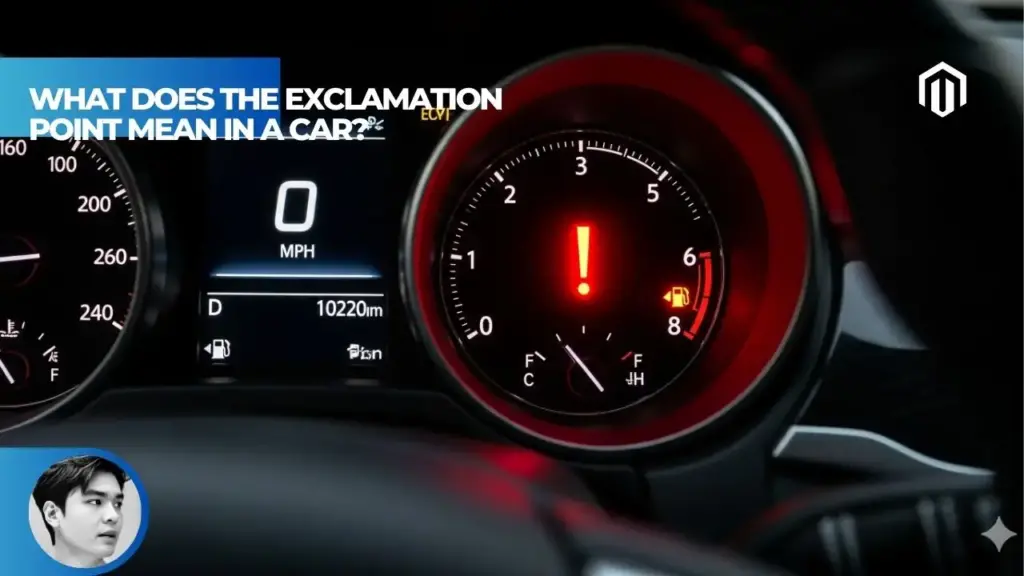
The exclamation point on your car’s dashboard can mean different things depending on its shape and color. A horseshoe shape with an exclamation point indicates low tire pressure (TPMS warning)[1]. A circle with an exclamation point signals a brake system issue[2]. A triangle with an exclamation point is the master warning light, alerting you to various potential problems[3]. Identifying which symbol you’re seeing determines how urgently you need to respond.
Exclamation Point Warning Lights at a Glance
| Symbol Shape | Light Color | Meaning | Urgency |
|---|---|---|---|
| Horseshoe (U-shape) | Yellow/Orange | Low tire pressure (TPMS)[1] | Check tires soon |
| Circle | Red/Yellow | Brake system warning[2] | Stop and check immediately if red |
| Triangle | Yellow | Master warning—multiple possible issues[3] | Investigate promptly |
| Triangle | Red | Critical system failure[3] | Pull over safely |
| Steering wheel | Yellow/Red | Power steering problem[2] | Have inspected soon |
TPMS Light: Horseshoe With Exclamation Point
The tire pressure monitoring system (TPMS) light looks like a U-shaped horseshoe with treads at the bottom and an exclamation point in the center[1]. This is the most common exclamation point warning drivers encounter.
When illuminated, this light means at least one tire has dropped 25% below the manufacturer’s recommended pressure[4]. Roughly 1 in 4 drivers can’t identify this symbol, according to a survey cited by USA Today—some guessed it meant “time to eat” or that the trunk was too heavy[4]. (Really.)
The TPMS has been required on all new vehicles since the 2008 model year, following the Firestone tire failure scandal[4]. Temperature changes often trigger this light—cold weather causes tire pressure to drop naturally.
What to Do When the TPMS Light Appears
Check all four tires plus your spare with a tire gauge[5]. Inflate any low tires to the pressure specified on the driver’s door jamb sticker (not the tire sidewall). The light should turn off after driving a few miles once pressure is corrected[2].
If the light stays on after inflation, you may have a slow leak or a faulty TPMS sensor. A flashing TPMS light typically indicates a sensor malfunction rather than actual low pressure[6].
Underinflated tires affect braking, acceleration, stability, cornering, and fuel economy[4]. Don’t ignore this warning—proper tire pressure is fundamental to safe driving.
Brake Warning Light: Circle With Exclamation Point
A circle with an exclamation point (or the word “BRAKE”) indicates a brake system issue[2]. This is one warning you shouldn’t dismiss. The light can appear for several reasons, ranging from simple to serious.
Common Causes
- Parking brake engaged: The simplest explanation. Check if your parking brake is still on—this alone triggers the warning in most vehicles[2].
- Low brake fluid: Open the hood and check the brake fluid reservoir. If fluid is below the minimum line, topping it off may resolve the warning[2]. But low fluid often signals worn brake pads, which should be inspected.
- Worn brake pads: As pads wear down, more fluid enters the calipers, dropping the reservoir level. If you hear squealing when braking, pads likely need replacement.
- ABS malfunction: A separate “ABS” light may accompany the brake warning, indicating anti-lock braking system issues[3].
A red brake light demands immediate attention—pull over safely and assess the situation. Driving with brake problems puts everyone on the road at risk. If the light is yellow, have the system inspected soon, but you’re not necessarily in immediate danger[3].
Master Warning Light: Triangle With Exclamation Point
The triangle with an exclamation point is called the master warning light or general warning light[3]. Unlike specific warnings, this symbol indicates “something is wrong” without telling you exactly what.
Think of it as your car’s way of saying “check elsewhere for details.” The master warning typically appears alongside another warning light or dashboard message that provides more specific information[7].
Yellow Triangle: Caution, Not Crisis
A yellow (or amber) triangle means a non-critical issue[3]. You’re not in immediate danger, but something needs attention. Common triggers include:
- Burned-out bulb: Headlight, taillight, or turn signal failure[7]
- Low washer fluid: Some vehicles alert you to empty reservoirs
- Door ajar: A door or trunk not fully closed
- Scheduled maintenance due: Oil change, filter replacement, or service reminder[3]
- Low fuel: Getting close to empty
When you see the yellow triangle, scan your dashboard for accompanying warnings or check your vehicle’s information display for specific messages.
Red Triangle: Stop and Assess
A red triangle with an exclamation point signals a critical issue[3]. This typically relates to:
- Overheating engine: If your temperature gauge is in the red, pull over immediately before causing serious damage. Signs of an overheating car include steam from the hood and a sweet coolant smell.
- Oil pressure drop: Running an engine without proper lubrication destroys internal components fast[3].
- Transmission problems: Slipping, shuddering, or hesitation while shifting[3].
- Hybrid system failure: In hybrid vehicles, a red triangle often indicates battery or powertrain issues[3].
Don’t keep driving with a red warning light. Pull over when safe and call for assistance if needed.
Power Steering Warning: Steering Wheel With Exclamation Point
A steering wheel icon with an exclamation point (or “PS” text) indicates power steering problems[2]. Modern vehicles use either hydraulic or electric power steering systems—both can trigger this warning.
With hydraulic systems, low power steering fluid is the usual culprit. Electric power steering failures typically involve sensors or the assist motor itself.
When power steering fails, you can still steer—but it requires significantly more effort, especially at low speeds. If this light appears while driving, don’t panic. Maintain control and pull over to assess the situation. The car remains drivable, just harder to maneuver.
Brand-Specific Variations
Honda: VSA Warning
On Honda vehicles, a yellow triangle with an exclamation point often relates to the Vehicle Stability Assist (VSA) system[8]. VSA helps maintain control when cornering, accelerating, or braking on slippery surfaces by applying brakes to individual wheels and reducing throttle[3].
When this light appears on a Honda, the stability system may be disabled or malfunctioning. The vehicle remains drivable, but you lose the added traction control safety net.
BMW and European Vehicles
European manufacturers sometimes use the triangle warning for stability control issues rather than as a general master warning[3]. If you own a BMW and notice drivetrain malfunction warnings, the exclamation point may accompany that specific alert.
What to Do When Any Exclamation Point Light Appears
- Don’t panic. Most warnings give you time to respond safely.
- Note the color. Yellow means caution; red means urgent.
- Identify the shape. Horseshoe = tires, circle = brakes, triangle = check other warnings.
- Check your dashboard display. Many modern cars provide text messages explaining the warning.
- Consult your owner’s manual. Every symbol is explained with manufacturer-specific guidance.
- Address the issue. Some problems (like low tire pressure) you can fix yourself. Others require a mechanic.
If multiple warning lights illuminate simultaneously, or if you experience drivability issues like strange noises, vibrations, or reduced power, err on the side of caution. Pull over, turn off the engine, and assess before continuing.
Key Takeaways
- The horseshoe-shaped exclamation point (TPMS) means at least one tire is 25% below recommended pressure—check and inflate all tires including the spare[4].
- A circle with an exclamation point warns of brake system issues; red means stop immediately, yellow means have it checked soon[2].
- The triangle with an exclamation point is a master warning that appears alongside other alerts—check your dashboard for specific messages[3].
- Yellow warnings indicate caution and time to address; red warnings demand immediate action[3].
- Honda vehicles may show a yellow triangle for VSA (stability assist) problems specifically, not just general warnings[8].
- When uncertain about any warning light, consult your owner’s manual or have the vehicle scanned by a qualified technician.
FAQs
What does a yellow exclamation mark mean on my dashboard?
A yellow exclamation mark typically indicates a non-critical warning that needs attention but isn’t immediately dangerous[3]. The specific meaning depends on the shape: a horseshoe shape means low tire pressure, a circle relates to brakes, and a triangle is a general warning that accompanies other dashboard alerts[1][2].
Can I drive with the exclamation point light on?
Why does my tire pressure light come on when it’s cold?
Cold weather causes air to contract, reducing tire pressure. For every 10°F drop in temperature, tires lose about 1 psi[4]. The TPMS triggers when pressure drops 25% below the recommended level. This is why the light often appears on cold mornings but may turn off as tires warm up from driving.
How do I reset the exclamation point light after fixing the problem?
For TPMS lights, driving a few miles after inflating tires usually resets the system automatically[2]. Some vehicles have a TPMS reset button near the steering column that you press and hold until the light blinks twice[6]. For other warnings, fixing the underlying issue typically turns off the light. If it persists, you may need a diagnostic scan.
What if multiple warning lights come on at once?
Multiple simultaneous warnings can indicate a serious electrical or system failure[3]. Sometimes it’s as simple as a weak car battery causing sensor malfunctions. Other times, it signals genuine multi-system problems. If you experience drivability issues alongside multiple warnings, pull over safely and seek professional diagnosis.
References
- 60 Minute Tune. (n.d.). What does the exclamation sign on your dash mean? https://60minutetune.com/blog/what-does-exclamation-sign-your-dash-mean
- McGrath Nissan. (n.d.). What Do Warning Lights on My Car Mean? https://www.mcgrathnissan.com/warning-lights-on-my-car-meaning
- CarParts.com. (2025). What Does a Triangle With an Exclamation Point Mean? https://www.carparts.com/blog/understanding-dashboard-warnings-what-does-a-triangle-with-an-exclamation-point-mean/
- Cars.com. (2025). What Does This Warning Light With an Exclamation Point Mean? https://www.cars.com/articles/do-you-know-what-this-symbol-means-1420663197854/
- Tech One Automotive. (n.d.). What does the TPMS warning light indicate? https://www.techoneauto.com/blog/what-does-the-tpms-warning-light-indicate
-
Reddit r/askcarguys. (n.d.). What does the TPMS light in my car mean?
What does the TPMS light in my car mean?
byu/Odd_Communication389 inaskcarguys - Pung Brother. (n.d.). Triangle with Exclamation Point on Dashboard: What Does This Warning Mean? https://pungbrother.com/triangle-with-exclamation-point/
-
Engineering Choice. (2025). What Does A Triangle With Exclamation Point On Dashboard Mean?
What Does A Triangle With Exclamation Point On Dashboard Mean?

I am a senior automotive analyst at Autvex. Expert vehicle evaluations, in-depth reviews, and objective analysis helping readers make informed automotive decisions with years of industry experience.