You may also like:
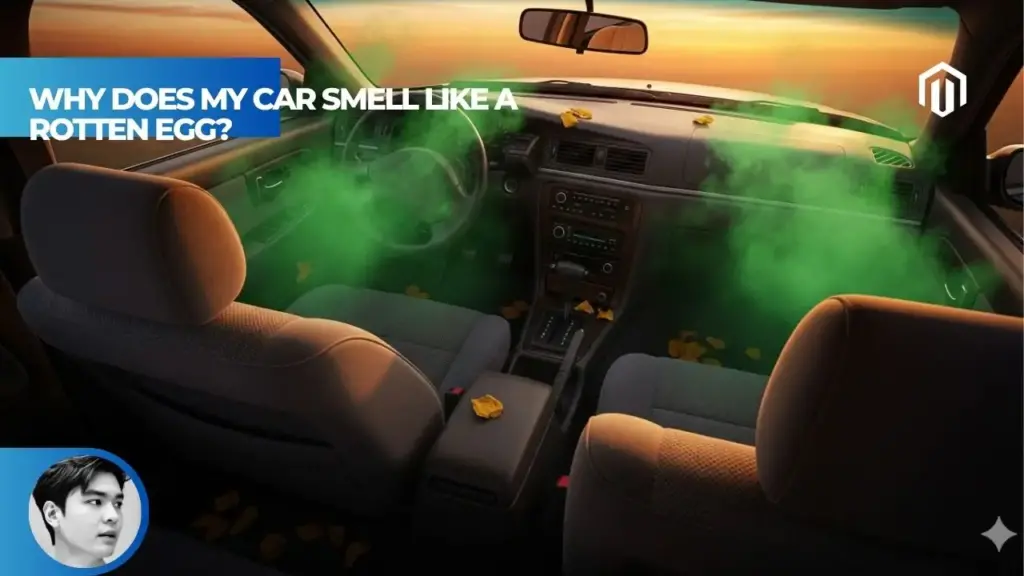
That sulfur stench coming from your vehicle is hydrogen sulfide gas—and it signals trouble[1]. The most common culprit? A failing catalytic converter that’s no longer converting this toxic gas into odorless sulfur dioxide[2]. Other sources include an overcharged car battery, fuel system issues, or exhaust leaks. Don’t ignore it—this smell indicates a problem that won’t resolve on its own and can pose health risks if inhaled repeatedly[3].
What Creates That Sulfur Smell
Gasoline naturally contains small amounts of sulfur. During combustion, this sulfur combines with hydrogen to form hydrogen sulfide (H₂S)—the compound responsible for that distinctive rotten-egg odor[4]. Under normal operating conditions, your vehicle’s catalytic converter processes this gas and transforms it into harmless, odorless sulfur dioxide before it exits the tailpipe[2].
The problem starts when something disrupts this conversion process. When the catalytic converter fails or becomes overwhelmed, hydrogen sulfide escapes untreated. You’ll notice the smell strongest near the tailpipe, but it can easily infiltrate your cabin through gaps in the exhaust system or your car’s ventilation[2].
Here’s the thing—modern vehicles with properly functioning emission systems shouldn’t produce any sulfur smell under normal driving conditions[5]. If you’re catching whiffs of rotten eggs, something has gone wrong.
The Main Culprits Behind the Odor
Catalytic Converter Failure
This is the number-one cause. Your catalytic converter sits between the engine and muffler, using precious metals like platinum and palladium to break down harmful exhaust gases[2]. When the internal catalyst material degrades, gets coated with contaminants, or becomes clogged, it loses the ability to neutralize hydrogen sulfide[6].
What damages a catalytic converter? Engine problems that send unburned fuel or a rich fuel mixture into the exhaust can overheat the converter and destroy its internal components[2]. Oil or coolant leaks that burn inside the cylinders will coat the catalyst and cause clogging[2]. Physical damage from road debris or potholes can also crush the converter. Look for symptoms like reduced fuel efficiency, sluggish acceleration, and that dreaded check-engine light.
Quick reality check: if you just had a new catalytic converter installed, some initial sulfur smell is normal and should disappear after a few days of driving[7].
Overcharged Battery
Lead-acid batteries contain sulfuric acid. When your battery overcharges—typically due to a faulty alternator or voltage regulator—the electrolyte heats up and begins to break down, releasing hydrogen sulfide gas[8]. This smell would be most noticeable when you pop the hood.
Overcharging is dangerous beyond just the odor. An overheated battery can leak, corrode nearby components, and in extreme cases, explode. If the smell originates under the hood rather than from your exhaust, have your battery tested and replaced promptly[8].
Fuel System Problems
Malfunctioning fuel injectors, clogged fuel filters, or faulty fuel pressure regulators can throw off your engine’s air-fuel ratio[6]. The result? Incomplete combustion that produces excess sulfur compounds, overwhelming your catalytic converter’s processing capacity[4].
A rich-running engine often produces black smoke from the tailpipe along with poor fuel economy[2]. If your fuel system is dumping too much gas into the combustion chamber, even a healthy catalytic converter can struggle to handle the load.
Exhaust System Leaks
Cracks or holes in your exhaust pipes allow hydrogen sulfide to escape before reaching the catalytic converter[3]. These leaks often send the smell directly into your cabin through floor gaps or the HVAC system. Listen for unusual exhaust noises—a rumbling or hissing sound often accompanies visible exhaust damage.
High-Sulfur Fuel
Some gasoline contains higher sulfur levels than others. If the rotten-egg smell appeared right after filling up at a new gas station, contaminated or low-quality fuel could be the trigger[3]. Switching to premium or a different fuel supplier might resolve this issue without repairs[9].
What to Do When You Smell Sulfur
- Step 1: Get fresh air immediately. Roll down your windows or pull over safely if the smell is strong inside the cabin. Hydrogen sulfide is toxic—the CDC classifies it as a health hazard at high concentrations[2].
- Step 2: Identify the source. Check whether the smell is strongest near the tailpipe (catalytic converter/exhaust issue) or under the hood (battery issue). This helps your mechanic narrow down the problem.
- Step 3: Look for warning signs. A glowing check-engine light, black or blue exhaust smoke, decreased fuel economy, or sluggish performance all point toward specific issues[2]. Document what you observe.
- Step 4: Get a diagnostic scan. Most auto parts stores offer free OBD-II scans. Codes related to the catalytic converter (P0420, P0430), oxygen sensors, or fuel mixture can confirm the underlying problem.
- Step 5: Address the root cause before replacing parts. This matters. If an engine problem damaged your catalytic converter, replacing the converter without fixing the engine issue will just destroy the new one[2]. A catalytic converter replacement runs $1,000 to $3,000 for most vehicles—you don’t want to do it twice.
Fair warning: this smell won’t go away on its own[3]. Ignoring it leads to worsening engine performance, increased emissions, and potential fire risk from an overheating converter[2].
How to Prevent Sulfur Smell Problems
Regular maintenance prevents most catalytic converter failures. Stick to recommended oil change intervals and fix oil leaks promptly—burning oil coats and clogs catalytic converters[2]. Address check-engine lights quickly rather than ignoring them for months.
Fuel quality matters more than most drivers realize. Use reputable gas stations and consider switching to premium if you frequently notice sulfur odors after fill-ups[9]. If your vehicle sat unused for extended periods, old fuel can contribute to incomplete combustion and converter stress—learn how long a car can safely sit without driving.
Have your charging system tested periodically. A failing alternator or voltage regulator can slowly cook your battery, creating that rotten-egg smell under the hood before the battery dies completely[8]. Understanding how your car battery charges helps you spot charging problems early.
Short trips are tough on catalytic converters. The converter needs to reach operating temperature to function correctly. If you only make short drives, take a longer highway trip occasionally to let the exhaust system heat up fully and burn off accumulated deposits[5].
Key Takeaways
- A rotten-egg smell comes from hydrogen sulfide, usually caused by a failing catalytic converter that can no longer convert this gas to odorless sulfur dioxide[2].
- Other causes include overcharged batteries, fuel system issues, exhaust leaks, and contaminated fuel—each requires different repairs[8][3].
- Don’t ignore this smell: hydrogen sulfide is toxic, and an overheating catalytic converter can cause fires[2].
- Always fix underlying engine problems before replacing a catalytic converter, or you’ll destroy the new one too[2].
- Regular maintenance, quality fuel, and occasional highway driving help prevent catalytic converter failures[3].
FAQs
Is it safe to drive my car if it smells like rotten eggs?
You can drive short distances with windows open, but address the problem quickly. Hydrogen sulfide is a toxic gas that can cause headaches, nausea, and respiratory issues with prolonged exposure[2]. An overheating catalytic converter also poses a fire risk, especially if you park over dry grass or debris[2].
How much does it cost to fix a rotten-egg smell in my car?
Costs vary dramatically based on the cause. A bad tank of gas might just require driving until the tank empties. Fuel injector cleaning runs $50-$100. Battery replacement costs $150-$300 including labor. Catalytic converter replacement is the big expense: $1,000-$3,000 for parts and labor on most vehicles, though some luxury brands run higher[2].
Can bad fuel cause a rotten-egg smell?
Yes. Gasoline with high sulfur content can overwhelm your catalytic converter’s processing capacity, especially if the converter is already marginal[3]. Try filling up at a different station with a higher-quality fuel brand. If the smell disappears after one or two tanks, you’ve found your answer.
Why does the sulfur smell appear only when I accelerate hard?
Hard acceleration dumps more fuel into the combustion chamber. If your engine runs slightly rich or your catalytic converter is borderline failing, the extra fuel produces more hydrogen sulfide than the converter can handle[5]. The smell during aggressive driving often indicates an early-stage catalytic converter problem or fuel system issue that will worsen over time.
Will the rotten-egg smell go away on its own?
References
- Automatic Trap. (2024). If Your Car Smells Like Rotten Eggs, Here’s What It Means. https://www.automatictrap.com/blogs/news/family-handyman-if-your-car-smells-like-rotten-eggs-here-s-what-it-means
- Cars.com. (2023). Why Does My Car Smell Like Rotten Eggs? https://www.cars.com/articles/why-does-my-car-smell-like-rotten-eggs-464899/
-
Detailing Experts. (2025). Car Smells Like Rotten Eggs: Causes, Diagnosis & Solutions.
Car Smells Like Rotten Eggs: Causes, Diagnosis & Solutions
- APL Cargo. (2025). What Causes a Rotten Egg Smell From a Truck Exhaust. https://aplcargo.com/what-causes-a-rotten-egg-smell-from-a-truck-exhaust/
-
Reddit r/AskMechanics. (2020). Sulfur/rotten egg smell coming from car when accelerating hard.
Sulfur/rotten egg smell coming from car when accelerating hard
byu/Blueblanketboy5 inAskMechanics - Chahel Automotive. (2024). Why Does My Car’s Exhaust Smell Like Rotten Eggs? https://chahelauto.com/blog/why-does-my-car-s-exhaust-smell-like-rotten-eggs
-
Bad Catalytic. (2024). Why Does My Catalytic Converter Have A Bad Smell?
Why Does My Catalytic Converter Have a Bad Smell?
- Car Craze Cave. (2024). Why Does My Car Battery Smell Like Rotten Eggs? https://carcrazecave.com/why-does-my-car-battery-smell-like-rotten-eggs/
-
Genuine Car Care. (2025). Why does my car smell like rotten eggs?
Why does my car smell like rotten eggs?

I am a senior automotive analyst at Autvex. Expert vehicle evaluations, in-depth reviews, and objective analysis helping readers make informed automotive decisions with years of industry experience.