You may also like:
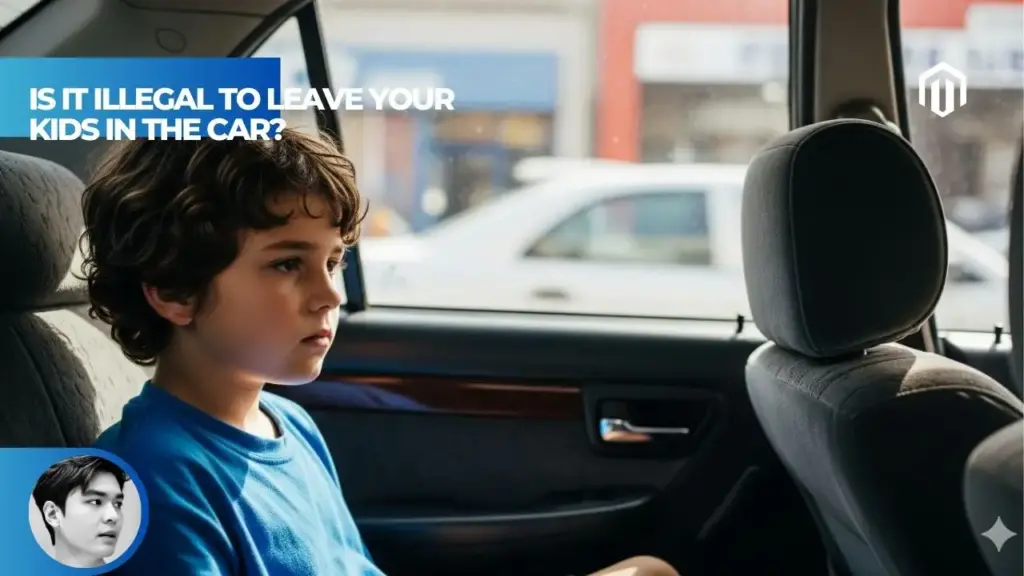
It depends on your state. Only 20 states have specific laws making it illegal to leave a child unattended in a vehicle[1]. In states without explicit laws, you could still face child endangerment or neglect charges if your child is harmed or at risk[2]. Regardless of legality, NHTSA strongly advises against ever leaving a child alone in a car—39 children died from vehicular heatstroke in 2024 alone[3].
States With Specific Laws
The following states have enacted laws that directly address leaving children unattended in vehicles. Age limits, time restrictions, and penalties vary significantly[1].
| State | Age Limit | Time Allowed | Key Conditions |
|---|---|---|---|
| California | Under 7 | Any duration | Must have 12+ yr old supervisor[4] |
| Florida | Under 6 | 15 minutes | Stricter if engine running or child in danger[5] |
| Texas | Under 7 | 5 minutes | Unless supervised by someone 14+[6] |
| Louisiana | Under 6 | 10 minutes | No exceptions[4] |
| Maryland | 0–7 years | Any duration | Supervisor must be 13+[4] |
| Connecticut | 0–11 years | Any duration | If situation poses danger[4] |
| Michigan | Any age | Any duration | If situation is potentially dangerous[4] |
The remaining states with specific laws include: Hawaii, Illinois, Kentucky, Missouri, Nebraska, Nevada, Oklahoma, Pennsylvania, Rhode Island, Tennessee, Utah, Washington (limited), and Wisconsin[1].
States Without Specific Laws
Roughly 30 states have no law specifically addressing children left unattended in vehicles[1]. But that doesn’t mean leaving your child alone is consequence-free.
In states without explicit laws, prosecutors typically pursue charges under broader statutes[2]:
- Child endangerment: Applied when the situation poses a health or safety risk to the child
- Neglect or abuse: More severe charges, especially if the child suffers harm or there’s a pattern of similar incidents
- Reckless endangerment: General criminal statute that can apply to any dangerous situation
Washington state, for example, only prohibits leaving children in cars if the engine is running or if the parent is entering a bar[7]. A bill proposed in 2023 and 2024 to ban leaving children under nine unattended has not yet passed[7].
Why Hot Cars Kill So Quickly
A child’s body temperature rises 3 to 5 times faster than an adult’s[3]. This biological reality makes minutes matter in ways many parents don’t realize.
Here’s what happens inside a parked car[3][8]:
- Internal temperatures can climb 50°F higher than outside air temperature
- Even on a mild 70°F day, the interior can reach 120°F
- Heatstroke begins when core body temperature hits 104°F
- Death occurs when core temperature reaches 107°F
Rolling down windows or parking in shade does little to change interior temperatures[3]. The physics of trapped heat in an enclosed space simply don’t favor survival.
The Statistics Are Devastating
Since 1990, at least 1,165 children have died from vehicular heatstroke in the United States[9]. Another 7,500+ survived with varying degrees of injury[9]. These aren’t just numbers—they represent families destroyed by preventable tragedies.
| Year | Hot Car Deaths | Notes |
|---|---|---|
| 2024 | 39 | 35% increase from 2023[3] |
| 2023 | 29 | Below average[8] |
| 2019 | 53 | Tied for record high[3] |
| 2018 | 53 | Tied for record high[3] |
| Average | 37/year | Since 1998[8] |
The data reveals uncomfortable patterns. Over 50% of deaths occur when a parent or caregiver forgets the child is in the car[3]. Another 230+ children since 1998 died after gaining access to unlocked vehicles on their own[3].
Think it can’t happen to you? Every grieving parent thought the same thing.
Penalties for Leaving Children Unattended
Criminal consequences vary dramatically by state and outcome[2].
If no harm occurs:
In Texas, leaving a child under 7 unattended for more than 5 minutes is a Class C misdemeanor with fines up to $500[6]. Other states impose similar minor penalties for first offenses without injury.
If harm occurs:
Missouri law (Sec 568.052) treats the situation as a felony if a child between 0–9 years is injured or dies after being left alone[4]. Many states escalate to felony child endangerment, neglect, or even manslaughter charges when outcomes are severe[2].
Beyond criminal penalties, parents may face:
- Child Protective Services investigations
- Custody challenges
- Civil liability lawsuits
- Social and professional consequences
What Bystanders Should Do
If you see a child alone in a locked vehicle, act immediately[3]. Call 911 first. Many states have “Good Samaritan” laws that protect people who break into vehicles to rescue children in distress[1].
Signs a child is in heat distress include[3]:
- Red, hot, dry skin
- Rapid pulse
- Restlessness or lethargy
- Vomiting
- Unresponsiveness
A child showing these symptoms should be removed from the vehicle as quickly as possible and rapidly cooled while waiting for emergency services[3].
How to Prevent Forgetting Your Child
NHTSA recommends several habit-forming strategies[3]:
- Always check the back seat before locking and walking away—make it automatic, every single time
- Place a personal item (phone, purse, badge) in the back seat so you must open that door
- Put a visual cue in the front seat, like a stuffed animal that moves forward when the child is buckled in back
- Ask your childcare provider to call immediately if your child doesn’t arrive as expected
- Lock your vehicle even in your driveway—children who gain access to unlocked cars account for a significant portion of deaths
These aren’t suggestions for “forgetful people.” They’re safeguards against the dangerous reality that routine disruptions—different parent doing drop-off, changed route, sleeping child in the back—can lead to tragedy for anyone.
Key Takeaways
- Only 20 states have specific laws addressing children left unattended in vehicles, but all states can pursue child endangerment charges if harm results[1][2].
- Vehicular heatstroke killed 39 children in 2024—a 35% increase from 2023—demonstrating this remains a critical and growing problem[3].
- A child’s body temperature rises 3–5 times faster than an adult’s, making even brief exposure in a hot car potentially fatal[3].
- Over 50% of hot car deaths happen when caregivers forget a child is in the vehicle, not from intentional decisions to leave them[3].
- State penalties range from small fines for first offenses to felony charges and prison time when children are harmed[2][6].
- NHTSA recommends never leaving children unattended in vehicles for any duration—create habits like checking the back seat every time you park[3].
FAQs
Can I leave my child in the car for just a minute?
It depends on your state’s law and the circumstances. Some states like Florida allow up to 15 minutes for children under 6[5]. Others like Texas only permit 5 minutes[6]. But NHTSA recommends never leaving a child unattended for any length of time—temperatures can become dangerous within minutes[3]. The risk simply isn’t worth the convenience.
At what age can kids legally stay in the car alone?
Laws specify ages ranging from 6 to 11 depending on the state[4]. California prohibits leaving children under 7 alone[4]. Connecticut’s law covers children up to 11[4]. In states without specific laws, maturity and circumstances matter more than a fixed age. Consider whether the child can unlock doors, call for help, and respond appropriately to emergencies before making any decision.
What if I leave the car running with AC on?
Running the AC doesn’t eliminate the risk. Cars can stall, batteries can die, or children can accidentally shift into gear. California’s law prohibits leaving children in vehicles regardless of whether the engine is running[4]. Some states impose harsher penalties specifically when the engine is left on due to additional hazards like carbon monoxide exposure or movement risk[5].
Can I be arrested for leaving my child in the car?
Yes. In states with specific laws, violating the statute can result in misdemeanor charges[6]. Even in states without specific laws, child endangerment charges may apply if the situation poses danger[2]. If harm occurs, felony charges including manslaughter are possible[4]. A concerned bystander or store employee could call police, triggering investigation regardless of your state’s specific statutes.
Do Good Samaritan laws protect me if I break a window to save a child?
Many states have enacted laws protecting people who rescue children from hot vehicles[1]. Requirements typically include attempting to contact the owner first and calling 911. The specifics vary—check your state’s law before assuming full protection. When a child’s life is clearly at risk, most courts and prosecutors view rescue attempts favorably regardless of property damage.
References
- Kids and Car Safety. (n.d.). Unattended Children in Vehicle State Laws. https://www.kidsandcars.org/laws/unattended-children-in-vehicle
- State Law Firm. (2024). Is It Illegal To Leave Your Kids In The Car? https://statelawfirm.com/post/is-it-illegal-to-leave-your-kids-in-the-car/
- NHTSA. (2025). Child Heatstroke Prevention: Prevent Hot Car Deaths. https://www.nhtsa.gov/campaign/heatstroke
- CarParts.com. (2023). Is It Illegal To Leave Your Kids in the Car? https://www.carparts.com/blog/is-it-illegal-to-leave-your-kids-in-the-car/
-
Rossen Law Firm. (2025). What Age is Considered Too Young to Leave Kids Alone in a Parked Car Legally?
What Age is Considered Too Young to Leave Kids Alone in a Parked Car Legally?
-
Lahood Norton Law Group. (2025). Can I Leave My Child Alone In My Car? Texas Law.
Can I Leave My Child Alone In My Car? [company-state-long] Law & Penalties
- The Northern Light. (2024). Road Rules: Leaving a child unattended in the car. https://www.thenorthernlight.com/stories/road-rules-leaving-a-child-unattended-in-the-car,32576
- National Safety Council. (2025). Hot Car Deaths – Injury Facts. https://injuryfacts.nsc.org/motor-vehicle/motor-vehicle-safety-issues/hotcars/
- Kids and Car Safety. (2025). 2025 Child Hot Car Deaths. https://www.kidsandcars.org/2025-child-hot-car-deaths

I am a senior automotive analyst at Autvex. Expert vehicle evaluations, in-depth reviews, and objective analysis helping readers make informed automotive decisions with years of industry experience.