You may also like:
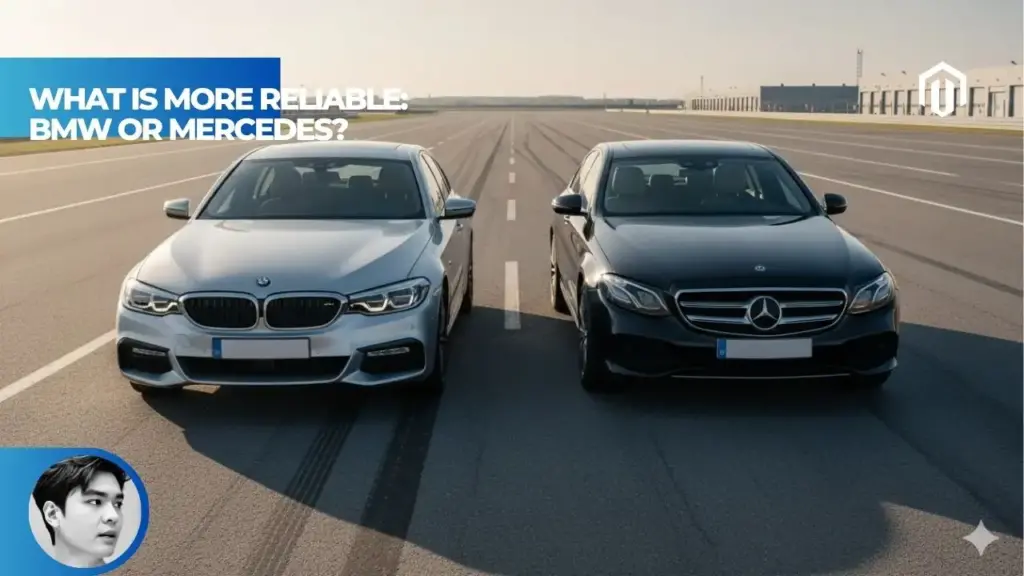
BMW is more reliable than Mercedes-Benz according to multiple industry studies. J.D. Power’s 2025 Initial Quality Study shows BMW with 196 problems per 100 vehicles compared to Mercedes’ 210 PP100[1]. The gap widens in the Vehicle Dependability Study (3-year ownership), where BMW scores 189 PP100 versus Mercedes’ 243 PP100—a 54-point difference[2]. Consumer Reports also ranks BMW 8th overall for predicted reliability, significantly ahead of Mercedes at 11th[3].
Reliability Comparison Overview
| Metric | BMW | Mercedes-Benz | Winner |
|---|---|---|---|
| JD Power 2025 IQS (PP100) | 196 | 210 | BMW |
| JD Power 2025 VDS (PP100) | 189 | 243 | BMW |
| Consumer Reports Ranking | 8th | 11th | BMW |
| RepairPal Rating | 2.5/5.0 | 3.0/5.0 | Mercedes |
| Annual Repair Cost | $968 | ~$908 | Mercedes |
| Severe Repair Probability | 15% | ~12% | Mercedes |
Lower PP100 = fewer problems = better reliability[1][2][4]
The data tells a nuanced story. BMW wins in owner-reported surveys, but Mercedes edges ahead in mechanic assessments and repair costs. Your definition of “reliable” determines the winner.
J.D. Power Reliability Ratings: BMW vs Mercedes
J.D. Power conducts two major studies that matter for reliability: the Initial Quality Study (first 90 days) and the Vehicle Dependability Study (three years).
Initial Quality Study (2025)
The 2025 IQS surveyed 92,694 buyers of 2025 model-year vehicles. BMW recorded 196 problems per 100 vehicles—slightly above the industry average of 192 PP100[1]. Mercedes-Benz scored worse at 210 PP100. Both brands trail Lexus, which led with just 166 PP100[1].
BMW actually improved from 206 PP100 in the 2024 study, showing positive momentum[1]. Mercedes also improved but remains further behind. Audi ranked worst among German luxury brands at 269 PP100[1].
Vehicle Dependability Study (2025)
The VDS tracks problems after three years of ownership—a better indicator of long-term reliability. Here, the gap between BMW and Mercedes grows significantly.
BMW scored 189 PP100, while Mercedes landed at 243 PP100—a substantial 54-point difference[2]. This suggests BMW vehicles experience fewer issues as they age. Mercedes’ weaker showing reflects ongoing problems with infotainment systems, electrical components, and exterior issues like water leaks[3].
Consumer Reports Rankings
Consumer Reports’ 2025 reliability data shows BMW ranking 8th out of 32 brands for predicted reliability, substantially ahead of Mercedes-Benz at 11th[3]. This continues a multi-year trend favoring BMW.
Over the past five years, BMW has averaged reliability scores around 60/100, while Mercedes sits in the 30s according to Consumer Reports methodology[3]. BMW performs better in crucial categories including engine, transmission, and in-car electronics[3].
That said, neither brand matches Japanese competitors. Lexus and Genesis dominate the top positions[1]. If reliability is your primary concern, you might explore whether BMW or Mercedes is worth the premium over more reliable alternatives.
Repair Costs: BMW vs Mercedes
Here’s where Mercedes gains some ground. Despite scoring worse on reliability surveys, Mercedes-Benz vehicles cost slightly less to maintain and repair.
Annual Maintenance and Repair Costs
| Brand | Average Annual Cost | Service Per 10K Miles | Severe Repair Rate |
|---|---|---|---|
| BMW | $968 | $150–$400 | 15% |
| Mercedes-Benz | ~$908 | $150–$380 | ~12% |
Based on post-warranty ownership data[4][5]
BMW averages $968 per year in repair and maintenance costs after the warranty expires[4]. Mercedes comes in slightly lower at approximately $908 annually[3]. Both brands cost significantly more than non-luxury vehicles.
The catch with BMW? Around 15% of BMW repairs are classified as “severe”—meaning repair costs three times higher than average[4]. Complex engineering in suspension and transmission components drives up labor costs when things break. Understanding BMW maintenance costs helps set expectations.
RepairPal: The Mechanic’s Perspective
RepairPal ratings reflect mechanics’ experiences rather than owner surveys—a different angle on reliability.
BMW scores 2.5 out of 5.0 stars (30th out of 32 brands) while Mercedes-Benz rates slightly higher[3]. This discrepancy from owner surveys reflects repair complexity and frequency from the shop floor.
BMW averages 0.9 annual shop visits with a 15% probability of severe repairs. Mercedes shows similar visit frequency but slightly lower severe repair probability[3]. From a mechanic’s standpoint, both brands require specialized knowledge—which is why Audi and BMW can often be serviced at independent European specialists.
Most Reliable BMW vs Mercedes Models
Reliability varies significantly by model. Some specific vehicles outperform their brand averages.
Most Reliable BMW Models
- BMW 2 Series: Exceptional reliability with scores around 88 PP100 for certain model years[3]
- BMW X3: Scores between 85–86 out of 100 in Consumer Reports[6]
- BMW X1: Similar strong scores around 85–86[6]
- BMW 7 Series: Surprisingly reliable at 85–86[6]
BMW’s average reliability score across models is approximately 82.8 out of 100[6].
Most Reliable Mercedes Models
- Mercedes C-Class: Leads Mercedes lineup with 81 out of 100[6]
- Mercedes E-Class: Scores 74 out of 100—below brand average[6]
Mercedes averages around 78 out of 100 across its lineup—notably lower than BMW[6]. Problems spread across most model lines, particularly in infotainment and electrical systems[3].
Common Problems: BMW vs Mercedes
Understanding typical failure points helps predict ownership costs.
BMW Common Issues
- Climate control systems: Frequent problem area across models
- Vehicle exterior defects: Water leaks, wind noise issues
- Oil leaks: Valve cover gaskets, oil pan gaskets on older models
- Cooling system: Water pumps, thermostats often need replacement around 60–80K miles
- Electrical components: Window regulators, seat motors[3]
For specific engine concerns, knowing which engines power different BMW models helps identify potential trouble spots.
Mercedes Common Issues
- Infotainment systems: Primary complaint area
- Electrical components: Multiple sensor and control module failures
- Water leaks: Sunroof drains, door seals
- Transmission: Some models experience rough shifting
- Air suspension: Expensive failures on equipped models[3]
Warranty Coverage Comparison
Both brands offer similar base warranties, but EV coverage differs.
| Coverage | BMW | Mercedes-Benz |
|---|---|---|
| Basic Warranty | 4 years / 50,000 miles | 4 years / 50,000 miles |
| Powertrain Warranty | 4 years / 50,000 miles | 4 years / 50,000 miles |
| EV Battery Warranty | 8 years / 100,000 miles | 10 years / 155,000 miles |
US market warranty terms[6]
Mercedes offers significantly better EV battery coverage—a two-year, 55,000-mile advantage[6]. For electric vehicle buyers, this could tip the scales toward Mercedes despite BMW’s overall reliability lead.
Which Brand Should You Choose?
The reliability data points toward BMW, but your priorities determine the right choice.
Choose BMW if:
- Reliability survey scores matter most to you
- You prefer driving dynamics over absolute comfort
- You’re buying an X3, X1, 2 Series, or 7 Series
- You don’t mind slightly higher repair costs
Choose Mercedes if:
- You prioritize lower annual maintenance costs
- You want longer EV battery warranty coverage
- Interior luxury matters more than reliability rankings
- You’re buying a C-Class (Mercedes’ most reliable model)
For a comprehensive cost comparison, see whether BMW or Mercedes costs more to own.
Key Takeaways
- BMW outperforms Mercedes-Benz in reliability according to J.D. Power (196 vs 210 PP100 in IQS; 189 vs 243 PP100 in VDS) and Consumer Reports (8th vs 11th ranking)[1][2][3].
- Mercedes costs slightly less to maintain annually ($908 vs $968) and has lower severe repair probability, despite worse reliability scores[3][4].
- Neither German brand approaches Lexus reliability (166 PP100)—if reliability is paramount, Japanese luxury should be on your list[1].
- BMW’s X3, X1, 2 Series, and 7 Series are the most reliable models; Mercedes’ C-Class leads its lineup at 81/100[3][6].
- Mercedes offers superior EV battery warranty (10 years/155K miles vs BMW’s 8 years/100K miles), making it potentially more attractive for electric vehicle buyers[6].
FAQs
Is BMW really more reliable than Mercedes?
Which German luxury brand is most reliable?
BMW ranks highest among German luxury brands in most reliability studies, followed by Mercedes-Benz, with Audi typically placing last. The 2025 J.D. Power IQS shows BMW at 196 PP100, Mercedes at 210 PP100, and Audi at 269 PP100[1].
Are BMWs expensive to maintain?
Do Mercedes or BMW hold value better?
Mercedes and BMW depreciate at similar rates—typically 40–50% after five years. Specific models vary, with SUVs generally holding value better than sedans for both brands.
References
- BMW Blog. (2025). 2025 J.D. Power Initial Quality Study Puts BMW Below Average. https://www.bmwblog.com/2025/06/29/2025-jd-power-initial-quality-study-bmw-below-average/
- Yahoo Autos. (2025). BMW vs. Mercedes vs. Audi: The Most Reliable Luxury Brand. https://autos.yahoo.com/ownership/articles/bmw-vs-mercedes-vs-audi-121958084.html
-
Autvex. (2025). What Is More Reliable: BMW or Mercedes?
What Is More Reliable: BMW or Mercedes? Data Compared
-
Fifth Gear. (2024). BMW Ownership: Cost and Common Problems.
BMW Ownership: Cost and Common Problems
- Lemon Law Car. (2023). Most Expensive Car Brands to Repair. https://lemonlawcar.com/blog/most-expensive-cars-to-repair/
- Carplus UK. (2024). BMW vs Mercedes: Side-by-Side Brand Comparison. https://carplus.co.uk/magazine/bmw-vs-mercedes/

I am a senior automotive analyst at Autvex. Expert vehicle evaluations, in-depth reviews, and objective analysis helping readers make informed automotive decisions with years of industry experience.