You may also like:
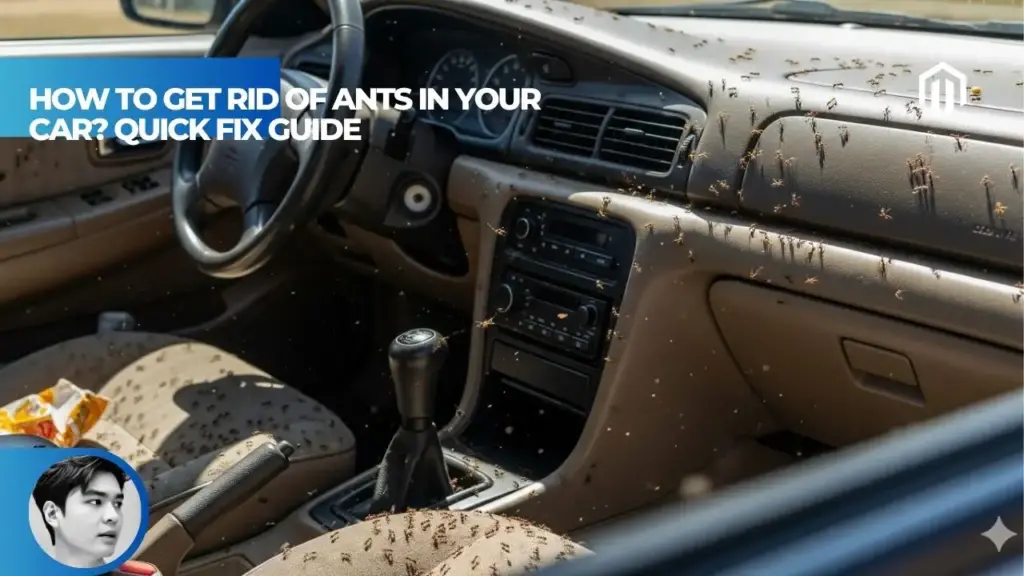
Getting rid of ants in your car requires a three-step approach: remove all food sources, deep clean the interior, and use targeted treatments like ant baits or essential oil sprays[1]. Most infestations clear up within a few days once you eliminate the crumbs and sticky residues that attracted them in the first place[2]. Avoid bug sprays inside the cabin—they leave harmful residues and strong odors that linger for weeks[3].
Why Ants Invade Your Car
Ants aren’t moving in because they like the ambiance. They’re foragers on a mission to find food and water[4].
That half-eaten granola bar shoved between your seats? A buffet. The sticky soda residue in your cup holder? An open invitation. Even the smallest crumb can trigger a full-blown infestation if worker ants mark the trail with pheromones for their colony to follow[4].
Where you park matters just as much as what’s inside. Vehicles parked near ant hills, grassy areas, or vegetated zones are prime targets[5]. If ants have already established a colony nearby, your car becomes a convenient extension of their territory. And here’s the catch: ants can also hitch a ride inside grocery bags, potted plants, or other items you load into the trunk[4].
Common invaders include sugar ants (drawn to sweet substances), pavement ants (prefer greasy foods), and red imported fire ants (aggressive, painful stings)[4]. Fire ants pose the greatest concern—they’ve been known to chew through wiring, triggering check engine lights or even creating fire hazards in severe cases[4]. If your dashboard warning lights suddenly illuminate, ants could be the culprit.
Step 1: Remove All Food Sources
Before reaching for any ant killer, start with the obvious: eliminate what’s attracting them[1].
Take everything out. Every fast food bag, candy wrapper, empty bottle, and forgotten snack needs to go. Check the glovebox, center console, door pockets, and trunk. That six-month-old french fry wedged under the passenger seat? It’s been funding an ant colony this whole time[3].
Don’t stop at visible trash. Sticky spills on cup holders, dashboard, and armrests are just as problematic[2]. Wipe down all hard surfaces with a mild cleaner or ammonia-free glass cleaner and a microfiber cloth[6]. Pay special attention to crevices around the gear shift and between seat cushions where sugary liquids pool unnoticed.
If you regularly eat in your car—and let’s be honest, most of us do—this step alone won’t fix the problem permanently. But it removes the incentive for ants to keep coming back[2].
Step 2: Vacuum Everything
Vacuuming isn’t optional. It’s the single most effective action against ants[4].
Use a vacuum with a hose attachment and hit every surface: floor mats, under seats, seat crevices, door panels, and the trunk. Focus on hidden areas where crumbs accumulate—those are the spots ants prioritize[3]. Remove floor mats entirely and shake them out before vacuuming both sides.
Here’s what most people miss: vacuuming also disrupts pheromone trails[4]. Ants leave chemical markers guiding other workers to food sources. By vacuuming these trails, you essentially erase the map. Better yet, vacuuming can capture live ants directly, preventing them from returning to the colony and recruiting reinforcements[4].
Empty the vacuum canister or bag immediately afterward—far from your car and home. Otherwise, you’re just relocating the problem[4].
Step 3: Use Ant Baits (Not Sprays)
If cleaning alone doesn’t resolve the infestation, targeted ant baits work better than sprays[3].
Gel baits like Terro are particularly effective[3]. Worker ants consume the bait and carry it back to the colony, where it spreads to other ants—including the queen. This eliminates the problem at its source rather than just killing the ants you can see[1].
Place bait stations strategically[3]:
| Location | Why It Works |
|---|---|
| Under car seats | Hidden from view but near common ant pathways |
| Inside cup holders | Ants often travel along center console routes |
| Along door panels | Common entry points for exterior ants |
| In the trunk | Food residue often accumulates here unnoticed |
A word of caution: don’t clean up bait stations too quickly[4]. Ants need time—typically 3–7 days—to find and consume the bait. Removing it prematurely defeats the purpose. And resist the urge to spray bug killer inside the cabin[3]. Those products leave behind chemical residues and odors that can persist for weeks, making your car unpleasant to drive. If you’re sensitive to lingering odors in your vehicle, avoid sprays entirely.
Step 4: Try Natural Repellents
Prefer a chemical-free approach? Essential oils can disrupt ant pheromone trails effectively[4].
Peppermint oil is the go-to choice. Mix 10–15 drops with two cups of water and a squirt of dish soap in a spray bottle[6]. Shake well and spray areas where you’ve seen ant activity—around door seals, under mats, and in crevices. The strong scent masks pheromone trails, making it harder for ants to navigate back to food sources[4]. Citrus oils work similarly.
Diatomaceous earth offers another non-toxic option[3]. This fine powder—made from fossilized algae—dehydrates ants on contact. Sprinkle it lightly under floor mats, in wheel wells, and around door panels. It’s safe for humans and pets but lethal to insects[7]. One Reddit user noted it as the most effective natural solution they’d tried[7].
White vinegar also disrupts pheromone trails[1]. Mix equal parts water and vinegar, then wipe down surfaces. The smell fades within an hour but continues repelling ants. This approach works well for routine maintenance once you’ve cleared the initial infestation.
Step 5: Use Heat to Your Advantage
Temperature control can eliminate ants without chemicals[4].
During summer months, park your car in direct sunlight with windows closed. Interior temperatures can exceed 120°F—hot enough to kill ants within hours[4]. Dark-colored vehicles absorb more heat, making this method even more effective.
| Method | Temperature | Effectiveness |
|---|---|---|
| Direct sunlight (windows closed) | 120°F+ | Kills ants quickly |
| Running car heater for 10 minutes | Elevated | Targets hidden ants in vents |
| Dark-colored vehicles in sun | Higher than light cars | More effective heat absorption |
This technique works best as a follow-up after cleaning and vacuuming[4]. It targets any remaining ants hiding in vents, under seats, or in door panels that survived your initial efforts. If you live in a cooler climate, running your car’s heater on full blast for 10–15 minutes can achieve similar results[4].
Be aware that extreme heat can affect certain interior materials over time. If you’re concerned about dashboard or upholstery damage, limit heat exposure to the duration needed for ant elimination. Understanding how long your car takes to cool down helps you plan accordingly.
Check for Nests in Hidden Areas
Persistent infestations sometimes indicate a nest inside your vehicle[3].
Carpenter ants, in particular, prefer building nests in hidden spots: the engine bay, wheel wells, door panels, or trunk compartments[3]. If ants keep returning despite thorough cleaning and baiting, inspect these areas carefully.
Look for visible ant trails leading to specific locations—that’s usually where the nest is[4]. If you find one, targeted treatment becomes necessary. EPA-approved ant sprays can work here, but exercise caution in the engine bay. Some products can damage wiring, rubber components, or sensors[3].
Severe infestations—especially involving fire ants—may warrant professional pest control[4]. Experts can identify the specific species, locate nests you might miss, and apply treatments safely. Fire ants are particularly problematic because they’re aggressive, sting repeatedly, and can cause significant wiring damage if left unchecked[4].
Prevention: Keep Ants Out Permanently
Eliminating an infestation is only half the battle. Preventing recurrence requires ongoing habits[4].
- Weekly vacuuming removes crumbs before they attract scouts. Focus on under seats, floor mats, and storage compartments—the areas most prone to accumulating debris[4].
- No eating policy dramatically reduces risk. Easier said than done, but even limiting food to non-messy items (no chips, no sugary drinks) helps[4].
- Smart parking keeps distance between your car and ant colonies. Avoid parking directly over visible ant hills, near grassy areas, or under trees where sap can drip onto your vehicle[3]. Tree sap attracts ants just as effectively as food residue[2].
- Regular exterior washes remove pheromone trails on your car’s body and tires[1]. Ants use these trails to find entry points, so washing disrupts their navigation.
- Inspect items before loading them into your car. Grocery bags, potted plants, and cardboard boxes can harbor ants that establish new colonies in your vehicle[4]. A quick check prevents hitchhikers.
If unusual smells develop in your car, investigate promptly—decomposing food or moisture issues can attract pests beyond just ants.
Key Takeaways
- Ants invade cars seeking food, water, or shelter—removing crumbs and sticky residues eliminates their primary motivation[1].
- Vacuuming is the most critical step because it removes food particles AND disrupts pheromone trails that guide other ants to your vehicle[4].
- Use gel baits instead of sprays—baits eliminate the entire colony while sprays only kill visible ants and leave harmful residues behind[3].
- Natural options like peppermint oil, diatomaceous earth, and vinegar effectively repel ants without chemicals[4].
- Heat treatment (parking in direct sunlight with windows closed) can kill remaining ants at temperatures above 120°F[4].
- Prevention requires weekly vacuuming, smart parking away from ant colonies, and inspecting items before loading them into your vehicle[4].
FAQs
Why are there ants in my car if there’s no food?
Ants may enter your car searching for water, warmth, or shelter rather than food[4]. Humid environments and spilled liquids attract them even without visible crumbs. Ants can also arrive as hitchhikers on grocery bags, plants, or items you’ve loaded from infested areas[4]. Check your parking location—if you’re near ant nests, they’ll explore your vehicle regardless of cleanliness.
What’s the best ant killer for cars?
Gel baits like Terro work best because worker ants carry the poison back to the colony, eliminating the source[3]. Avoid aerosol sprays inside the cabin—they leave residues and strong odors that linger[3]. For natural options, diatomaceous earth dehydrates ants on contact without chemicals[7]. Peppermint oil spray effectively disrupts pheromone trails as a repellent[4].
Can ants damage my car?
Certain species can cause significant damage[4]. Red imported fire ants and carpenter ants chew through wiring, triggering electrical malfunctions, check engine lights, or in severe cases, fire hazards[4]. Large infestations can compromise your vehicle’s wiring systems over time. Promptly addressing ant problems prevents these costly repairs.
How long does it take to get rid of ants in a car?
References
- Orkin. (2024). How to Get Rid of Ants in Car. https://www.orkin.com/ask-orkin/get-rid-of-ants-in-car
- Espresso Car Wash. (2023). How Do I Get Rid of Ants in My Car? https://espressocarwash.co.nz/blog/how-do-i-get-rid-of-ants-in-my-car/
-
Simple Pest Management. (2025). 5 Tips for Getting Rid of Ants in Your Car.
5 Tips for Getting Rid of Ants in Your Car
-
NaturePest. (2024). Have a Car Ant Infestation? Here Is What You Can Do.
Have a Car Ant Infestation? Here Is What You Can Do
-
Proof Pest Control. (2024). 3 Reasons Why There Are Ants in Your Car.
3 Reasons Why There Are Ants in Your Car
-
Practical Motoring. (2024). How to Get Rid of Ants in Your Car.
How to get rid of ants in your car
-
Reddit. (2023). Ants in my car… how do I get rid of them?
Ants in my car….. how do I get rid of them ? Help being eaten alive.
byu/ilovelife2- inlifehacks

I am a senior automotive analyst at Autvex. Expert vehicle evaluations, in-depth reviews, and objective analysis helping readers make informed automotive decisions with years of industry experience.